
Base preparation errors account for the majority of premature basalt cobble failures across Arizona — not the stone itself. Installing basalt cobbles in Arizona demands a systematic approach that accounts for desert-specific soil behavior, thermal cycling that can exceed a 70°F daily swing, and the particular weight distribution characteristics of cobble geometry. The installation sequence you follow matters as much as the material you choose, and cutting corners at any phase compounds into costly remediation within five to seven years.
Understanding Basalt Cobble Properties Before You Start
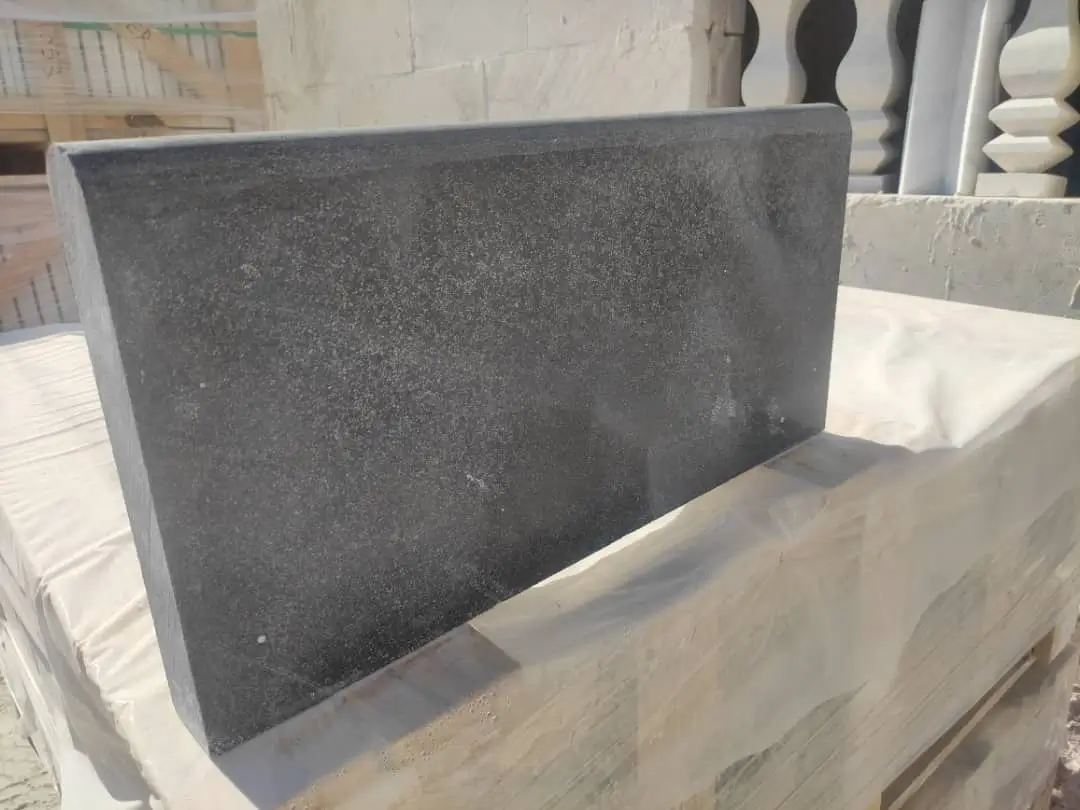
Basalt is a fine-grained volcanic stone with a compressive strength typically ranging from 20,000 to 30,000 PSI — well above what any residential or commercial paving application demands. The material’s density sits around 170–180 lb/ft³, which means your truck deliveries require careful weight planning, especially when your access route has load-limited surfaces. You’re working with a stone that performs exceptionally under compression but requires proper edge restraint to resist lateral creep, particularly in Arizona’s expansive sandy and caliche soils.
Basalt cobbles in Arizona also exhibit very low water absorption — generally under 1% — which makes them naturally resistant to the moisture-cycling damage that undermines softer stones. That low porosity, however, also means adhesion requires clean, dust-free surfaces. In the Sonoran Desert, wind-deposited silica dust infiltrates every surface constantly, so your prep sequence needs to include a thorough blow-down and damp wipe immediately before setting.
- Compressive strength: 20,000–30,000 PSI suitable for high-traffic applications
- Water absorption below 1% reduces moisture-related cracking risk
- Thermal expansion coefficient of approximately 4.3 × 10⁻⁶ per °F requires calculated joint spacing
- Density around 175 lb/ft³ affects pallet quantities and truck payload planning
- Natural cleft surface texture provides ASTM C1028-compliant slip resistance in dry and wet conditions
Site Assessment and Soil Evaluation for Arizona Conditions
Desert soil behavior is the variable that separates a durable basalt cobble installation from one that starts rocking and shifting within two monsoon seasons. Arizona’s substrate conditions vary dramatically by region — caliche hardpan, expansive clay pockets, sandy alluvial fill, and decomposed granite each require a different base strategy. Your first step is a proper soil evaluation to depths of at least 18–24 inches, because surface conditions rarely tell the whole story.
Projects in Yuma typically encounter extremely sandy, low-plasticity soils with minimal cohesion, which means your aggregate base needs to extend deeper — often 10–12 inches — to achieve adequate load distribution and prevent differential settling. Never assume what the top 4 inches look like represents the full substrate profile. A manual probe or a small test excavation before finalizing your base depth specification prevents expensive rebuilds.
- Probe to minimum 18 inches before finalizing base depth specifications
- Identify caliche layers — they can serve as a natural load-bearing sub-base if undisturbed
- Sandy soils require 10–12 inch compacted aggregate bases
- Clay-bearing soils may require geotextile fabric between native soil and aggregate
- Check seasonal high-water table elevation before specifying drainage solutions
Tools and Materials You’ll Need on the Job Site
Arriving on site without the right compaction equipment for basalt cobble installation is a costly mistake — renting a plate compactor that’s undersized for cobble work means you’ll either under-compact (leading to settlement) or surface-damage the stone. For cobble work, a vibratory plate compactor in the 200–300 lb range with a rubber pad attachment is the correct specification. The rubber pad protects the irregular cobble surface without sacrificing compaction energy transfer.
Confirm your warehouse stock and order quantities at least two weeks before your scheduled start date. Basalt cobble in the standard 4×4×4 inch or 4×6×4 inch sizes moves quickly through inventory during peak spring and fall installation seasons in Arizona. Running short mid-project and waiting on a supplemental truck delivery creates a seam line that’s visible for the life of the installation.
- Vibratory plate compactor (200–300 lb) with rubber cobble pad
- Hand tamper for edges and tight areas inaccessible to plate compactor
- Masonry wet saw with diamond blade rated for dense stone
- String lines and grade stakes for slope verification
- Rubber mallet for final seating of individual cobbles
- Jointing sand (polymeric recommended for Arizona’s weed pressure and ant activity)
- Broom and leaf blower for final sand consolidation
- Geotextile landscape fabric (site-dependent, based on soil evaluation)
Proper Base Preparation for Arizona Stone Installations
Desert climate paving techniques for base preparation differ from temperate-zone standards in two key ways: compaction moisture management and thermal gap allowance. Your crushed aggregate base needs to be compacted at near-optimal moisture content — typically 8–12% for Type II crushed aggregate in Arizona conditions. Too dry and you’ll get poor compaction density; too wet and you’ll trap moisture that expands dramatically under summer heat, lifting individual cobbles and breaking joint integrity.
Layer your aggregate in 3–4 inch lifts, compacting each lift to a minimum 95% Standard Proctor density before adding the next. This isn’t optional — it’s the structural foundation of the entire installation. Projects in Sedona often involve red clay-bearing soils with moderate shrink-swell behavior, which makes that lift-by-lift compaction discipline even more critical to prevent differential movement during monsoon saturation events.
- Excavate to a minimum 8 inches below finished grade for pedestrian applications
- Excavate to minimum 12 inches for vehicular or mixed-use applications
- Compact native soil subgrade to 90% Standard Proctor before placing aggregate
- Install geotextile fabric directly on subgrade in clay or mixed soils
- Place crushed aggregate (3/4-inch minus compacted grade) in 3–4 inch lifts
- Compact each lift to 95% Standard Proctor before proceeding
- Top 1 inch of base: coarse bedding sand (ASTM C33 compliant) or decomposed granite dust screeded to ±1/8 inch tolerance
Maintain a 1–2% minimum slope across the finished surface to direct water away from structures. For desert applications using proper base preparation for Arizona stone projects, generous slope helps, but anything beyond 3% on a cobble surface creates a trip hazard where grout joints intersect foot traffic angles. Dial in your grade before laying a single cobble — adjusting slope after installation is a full demo-and-reset job.
Basalt Cobble Installation Methods for Arizona Projects
The bedding method you select for basalt cobble installation methods AZ contractors rely on should match both the application load and your joint approach. Dry-lay over compacted sand bedding works well for pedestrian areas where slight individual cobble movement won’t create a structural or safety issue. Mortared installation is the correct specification for vehicular driveways, areas subject to heavy foot traffic like restaurant courtyards, or any project where heaving and shifting would be unacceptable.
For dry-lay applications, screed your bedding sand to a consistent 1-inch depth — not more, not less. Excess bedding sand is one of the most common field mistakes on cobble projects. When the plate compactor runs across the finished cobble surface, it will drive individual cobbles deeper into thick sand beds unevenly, creating a wavy surface that’s both visually objectionable and functionally problematic. For reference to professional basalt laying practices on dry-lay applications, keep your bedding sand layer tight and consistent.
- Dry-lay method: 1-inch screeded bedding sand, cobbles set by hand with consistent joint spacing
- Mortared method: 1/2-inch mortar bed over concrete slab, cobbles set with ±1/4-inch joint tolerance
- Joint width: 3/8-inch to 1/2-inch for standard cobble sizes in Arizona conditions
- Pattern options: running bond, herringbone, or random — herringbone provides best interlocking resistance to lateral movement
- Edge restraint: steel, aluminum, or concrete edging mandatory on all perimeters before field cobbles are placed
For detailed pattern sequences and jointing specifications, our Arizona basalt cobble laying guide covers the specific dimensional tolerances and setting sequences we’ve validated across Arizona project types.
Joint Spacing and Thermal Expansion Management
Here’s what often gets overlooked on cobble projects: individual cobble thermal expansion is manageable at the unit level, but cumulative expansion across a large field installation adds up fast. A 200-square-foot cobble field at Arizona summer temperatures — with surface readings reaching 150°F on dark basalt — can accumulate enough lateral thermal pressure to blow out edge restraints if your joint gaps are too tight going in. Spec your joints at the upper end of the tolerance range during summer installations; spec them at the lower end during cooler months.
Polymeric jointing sand is the professional standard for desert climate paving techniques. Standard kiln-dried sand will migrate out of joints within two to three monsoon seasons in Arizona, leaving open channels that invite ant colony activity and weed germination. Polymeric sand activates with moisture to form a semi-rigid binder that holds in desert heat and handles the wash cycles that come with monsoon intensity. Activate it thoroughly — under-activation is the primary failure mode for polymeric sand in Arizona’s low-humidity ambient conditions.
- Joint width at installation: 3/8-inch minimum during summer, 5/16-inch during winter installs
- Polymeric sand specification: ASTM C33 compliant aggregate base with polymer binder rated to 250°F
- Activation: two full water applications with 10-minute soak intervals before compaction
- Expansion joint strips: install every 15 linear feet on large cobble fields
- Avoid compacting in ambient temperatures above 100°F — surface materials move during compaction in extreme heat
Sealing Basalt Cobbles in Desert Climates
Basalt’s low porosity means sealing is less urgently needed for moisture protection compared to limestone or travertine — but it still provides meaningful UV stabilization and stain resistance in outdoor applications. Arizona’s UV index regularly exceeds 11+ during summer months, and unprotected stone surfaces experience accelerated color fade from photochemical oxidation of iron compounds in the stone matrix. A penetrating impregnator sealer rated for dense stone preserves the natural dark grey color that makes basalt so visually striking.
Sealing timeline matters as much as product selection when applying desert climate paving techniques to basalt cobble installations. New cobble installations should cure for a minimum of 28 days before sealer application — applying sealer too early traps residual construction moisture and causes haze or delamination. In Mesa‘s low-humidity environment, that curing period can be accelerated slightly, but never compress it below three weeks regardless of how dry conditions feel at the surface.
- Product type: penetrating silane/siloxane impregnator, not topical film-forming sealer
- Application window: 28–42 days post-installation, surface must test moisture-free
- Application method: low-pressure pump sprayer, back-rolled with lambswool roller
- Reapplication schedule: every 3–5 years for Arizona outdoor applications
- Stain resistance: sealer raises oil and food contact angle enough to allow blot-up cleanup before penetration occurs
Common Basalt Cobble Installation Mistakes to Avoid
The most expensive mistake on cobble projects isn’t a material failure — it’s a drainage failure that was predictable from day one. Every problem installation shares a common thread: inadequate slope design that allows water pooling at joints. Standing water in cobble joints during Arizona monsoons softens the bedding layer, loosens polymeric sand binders, and initiates the frost-thaw cycle that doesn’t seem relevant until an overnight freeze event hits Prescott or a high-elevation project site. Get your drainage geometry locked in before a single shovel of aggregate goes into the ground.
At Citadel Stone, we recommend contractors verify their aggregate base material source before large orders — not all crushed aggregate available in Arizona meets the gradation requirements for cobble bedding. Material that’s too coarse creates unstable point contact beneath cobbles; material that retains excess fines holds moisture and compresses unevenly. Our technical team can review aggregate gradation specs with you before your truck order is placed, which saves the cost of a failed base discovery mid-project.
- Insufficient slope — minimum 1.5% required, 2% preferred for Arizona monsoon conditions
- Oversized bedding sand layer — keep to exactly 1 inch after screeding
- Skipping geotextile in expansive or mixed soils — saves $0.15/SF at installation, costs $8/SF at repair
- Under-activating polymeric sand — read the manufacturer’s humidity-adjusted water volume tables
- Setting cobbles without edge restraint in place — lateral migration starts immediately under traffic
- Ordering exact quantity without overage — spec 8–10% overage for cuts, waste, and future repairs
Parting Guidance for Basalt Cobble Projects in Arizona
Getting basalt cobble installation right in Arizona comes down to discipline at every phase — soil evaluation, base compaction, bedding consistency, joint management, and sealing timing. None of these steps are technically complex on their own, but each one builds on the last. A shortcut at base preparation doesn’t reveal itself until the second or third monsoon season, by which point you’re looking at a full-section removal and reset.
Your specification package should include base depth calculations specific to the soil profile at the project site, not generic depth recommendations from product literature. It should define compaction density targets, bedding sand gradation requirements, joint width tolerances adjusted for installation season, and a sealed curing timeline. That level of detail separates projects that perform for 25 years from those that require remediation in eight. Applying professional basalt laying practices across all project phases — from aggregate sourcing through polymeric sand activation — is what consistently delivers that performance gap. For related installation information on natural stone applications, How to Install Basalt Stone Pavers in Arizona covers complementary techniques applicable to flat-format basalt applications across similar Arizona project conditions.
The professionals who get the best results from basalt cobble installation methods AZ contractors have refined over years are the ones who treat every specification decision as load-bearing — because in desert soils with dramatic thermal swings, it effectively is. Citadel Stone provides Arizona contractors in Mesa, Chandler, and Flagstaff with professionally graded basalt cobbles designed to withstand thermal stress and shifting desert substrates without compromising structural integrity.