






Basalt Pavers: A Timeless and Durable Solution for Outdoor Spaces
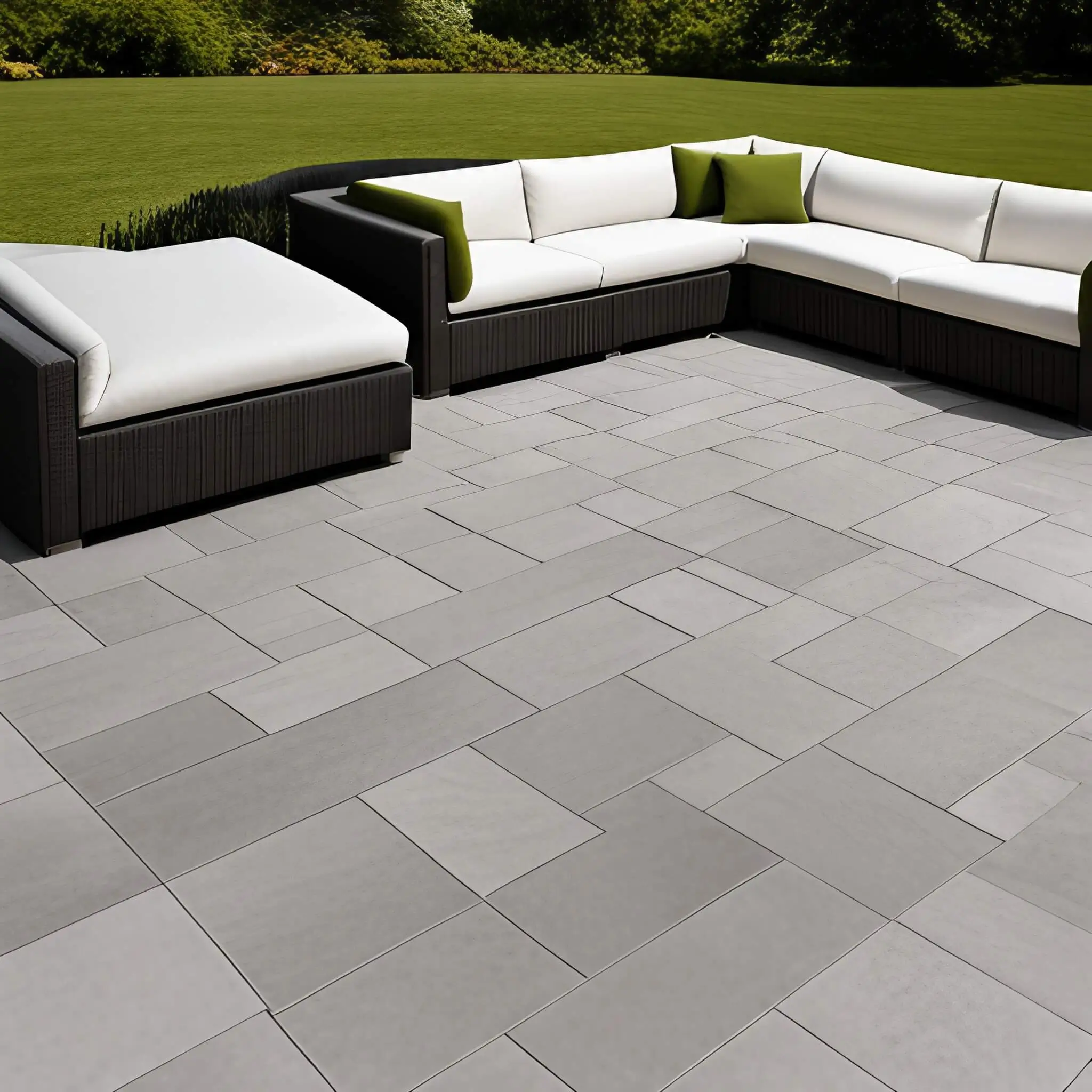
Basalt pavers are a top choice for homeowners, landscape designers, and architects seeking durability, sophistication, and long-lasting performance in outdoor spaces. Crafted from natural volcanic stone, basalt pavers combine an elegant aesthetic with exceptional strength, making them ideal for a wide range of applications, from pathways and driveways to public plazas and patios. This comprehensive guide explores the benefits, applications, finishes, maintenance tips, and much more to help you fully understand why our outdoor basalt tiles are a premium choice for your outdoor projects.
Basalt Pavers: Unlocking the Strength & Beauty of Volcanic Stone
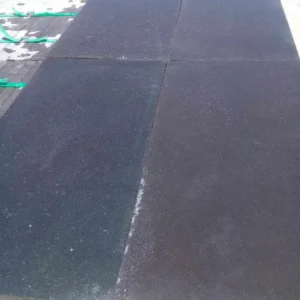
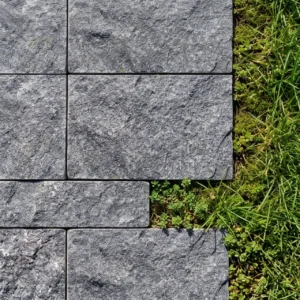
Basalt pavers are paving stones made from basalt, a dense and durable volcanic rock formed through rapid cooling of lava. These natural stones are renowned for their fine-grained texture, rich color variations, and exceptional resistance to wear and weather. basalt tiles come in a variety of finishes, sizes, and thicknesses to meet diverse design and functional needs.
Explore the Key Characteristics of Basalt Pavers: Strength, Beauty, and Longevity
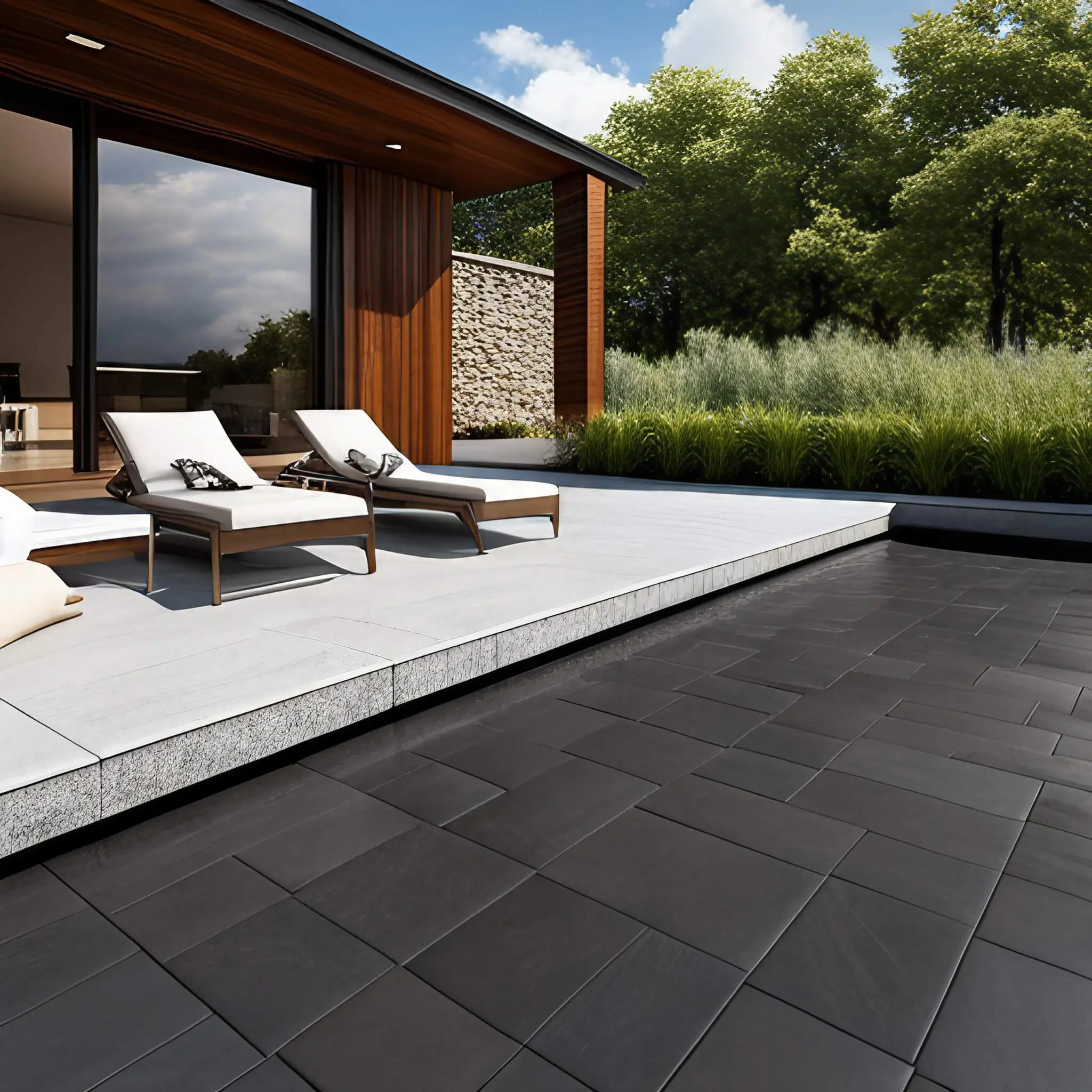
- Durability: With high compressive strength, basalt pavers resist cracking, chipping, and heavy loads.
- Weather Resistance: Dense and low-absorbing, basalt pavers are our first choice for cold-climate paving.
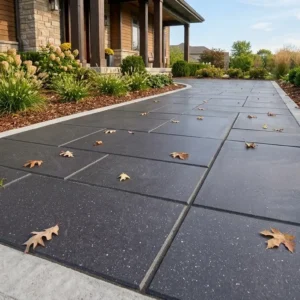
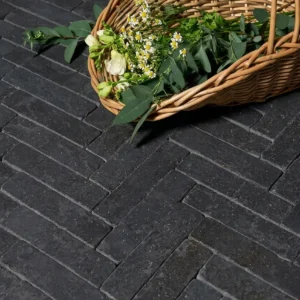
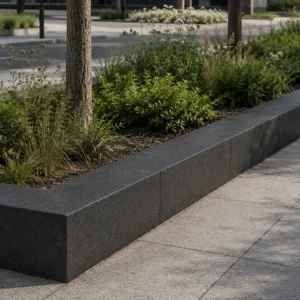
- Aesthetic Appeal: Their natural colors—ranging from deep black to charcoal gray—offer a modern yet timeless look.
- Versatility: Basalt pavers work across the whole project: driveways, plazas, patios, paths, pool surrounds, steps and interior floors.
Why Choose Citadel Basalt
Not all basalt is the same. Basalt quality is decided at the quarry, not the border. We chose ours.
Citadel Basalt is the toughest of the stones on our certified mill test: the densest, the least absorbent and the hardest-wearing, and our first choice for driveways, plazas and cold-climate paving. We publish the lab numbers behind it, not just adjectives.
- Low water absorption, measured: Citadel Basalt absorbed just 0.59–0.69% in a certified mill test, under one-seventh of the 5% average that ASTM C936 allows for concrete pavers. Less water in the stone means less water to freeze inside it.
- Dense: 3.01–3.06 g/cm³ (about 188–191 lb/ft³) in a certified mill test, over 20% denser than the limestone and shellstone on the same certificate.
- Hard-wearing: the lowest abrasion loss of the stones on our certified mill test.
Basalt or granite? For a deep black finish, we recommend Citadel Basalt
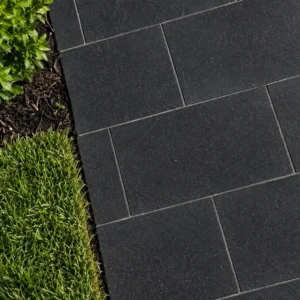
For a calm black look on patios, plazas, pool surrounds and walkways, Citadel Basalt is our choice over granite. Basalt has a fine, even grain: its crystals are too small to see, so honed and fine-brushed Citadel Basalt reads as a calm, deep black, without the visible crystals of most granites. Textured finishes soften to a charcoal tone.
Experience the Difference: Top Reasons to Choose Basalt Pavers
1. Experience Extreme Durability: Invest in Basalt Pavers for Lasting Beauty
Basalt pavers are designed to withstand the test of time. Their high density and toughness make them ideal for busy, high-traffic areas such as plazas and walkways. They are perfect for residential, commercial, and public projects that demand a robust material.
2. Aesthetic Versatility: Create Stunning Styles with Versatile Basalt Pavers
The sleek and uniform appearance of basalt pavers complements a range of architectural styles, from modern and minimalist to traditional and rustic. Their dark tones create a sophisticated and dramatic visual impact.
3. Surface Finish: Basalt Pavers for High-Traffic Areas
Depending on the finish, basalt pavers vary in surface texture. Brushed is a popular choice for pool decks and surrounds, driveways, patios and other outdoor paving, and for these areas we recommend a coarse grit; for wet steps, slopes and busy public spaces, choose bush-hammered, one of our most textured finishes.
4. Low Maintenance: Experience the Convenience of Easy-to-Care-For Basalt Pavers
basalt vs. granite are incredibly easy to maintain. Their low-absorption surface resists stains, and regular cleaning keeps them looking new for years.
5. Sustainability: Durable & Long-Lasting Basalt Pavers for a Sustainable Landscape
Basalt is a natural, eco-friendly material that aligns with sustainable construction practices. It is often locally sourced and recyclable, reducing its environmental footprint.
Applications of Basalt Pavers
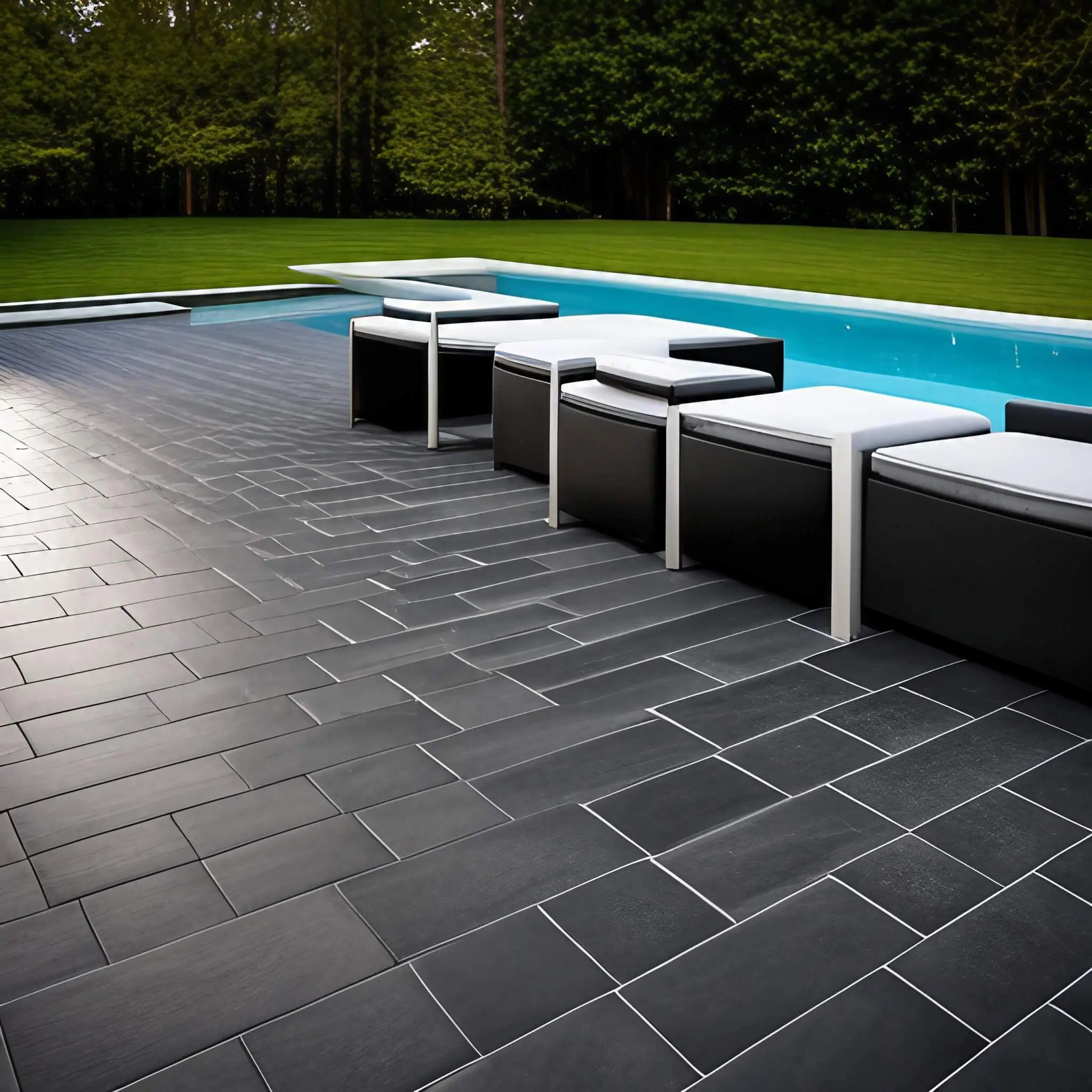
1. Create a Show-Stopping Driveway
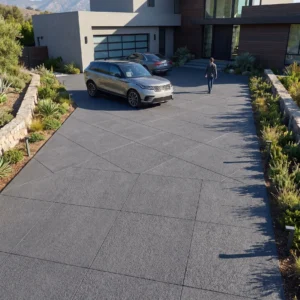
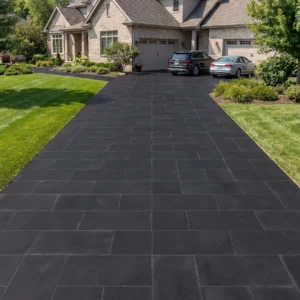
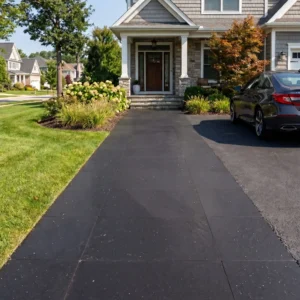
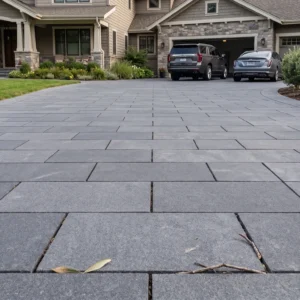
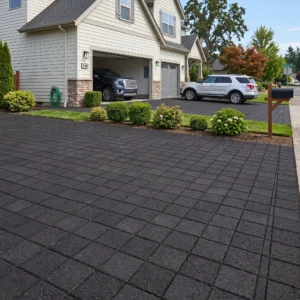
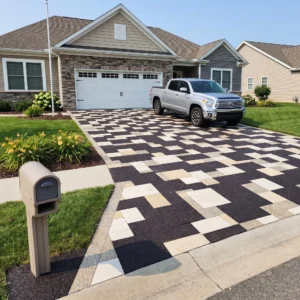
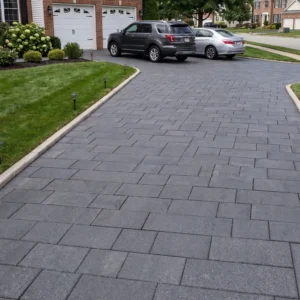
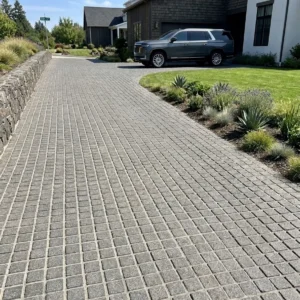
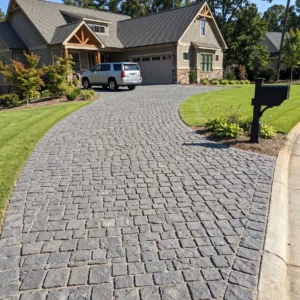
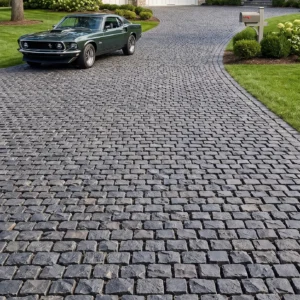
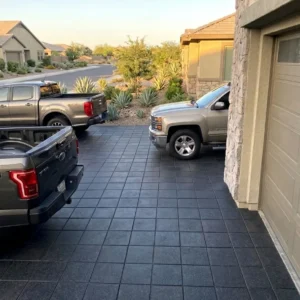
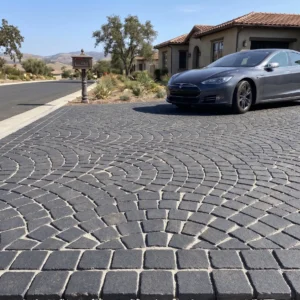
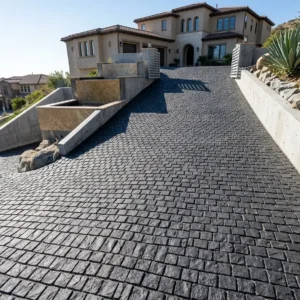
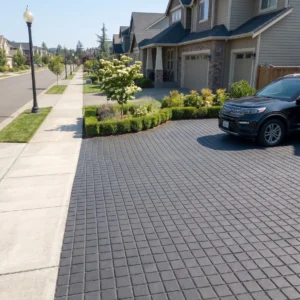
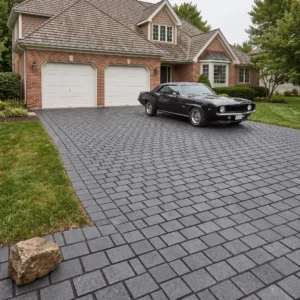
Thicker basalt vs. limestone are ideal for driveways, as they can easily withstand the weight of vehicles without cracking or wearing down over time. Their dense structure also resists tire marks and stains. For driveways, choose Citadel Basalt setts or cobbles at least 3.5 in (4 in standard) thick on a compacted base, or thicker pavers bonded to a concrete slab.
2. Endless Possibilities: Design Stunning Pathways & Walkways
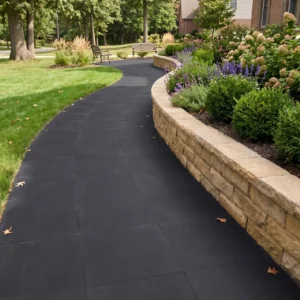
basalt vs. sandstoneprovide a smooth yet textured surface for pathways and add a refined aesthetic to gardens, courtyards, and outdoor spaces.
3. Relax in Style: Create Comfortable Patios with Luxurious Basalt Pavers
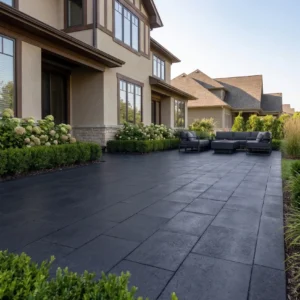
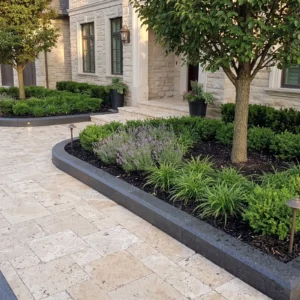
Create inviting outdoor living areas with basalt tiles. Their durability and rich colors enhance the functionality and appeal of patios, making them perfect for both residential and commercial projects.
4. Durable Pool Decks: Invest in Long-Lasting Beauty Around Your Pool
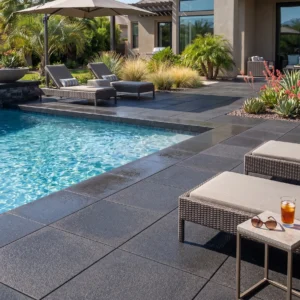
Basalt tiles are an excellent choice for pool decks and surrounds, and for these areas we recommend a brushed finish with a coarse grit. Their deep, dark tones also give the pool a dramatic, elegant frame.
5. High-Traffic Public Spaces
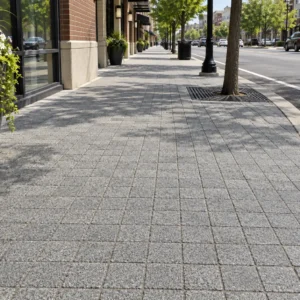
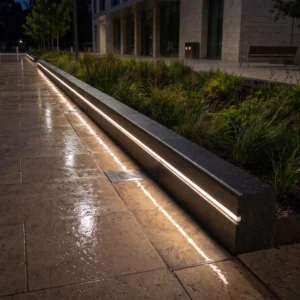
From plazas to pedestrian walkways, basalt pavers are often used in urban design due to their durability and ability to handle high foot traffic.
6. Outdoor Kitchens
Use basalt slabs as a flooring option for outdoor kitchens to combine functionality with modern style.
Enhance Your Outdoor Space: Discover Popular Finishes for Basalt Pavers
1. Flamed Finish
- Texture: Coarse and evenly textured.
- Ideal For: Pool decks, walkways, and public spaces.
- Benefits: A rich, visually striking texture.
2. Honed Finish
- Texture: Smooth with a matte appearance.
- Ideal For: Patios, outdoor kitchens, and residential pathways.
- Benefits: Sleek and modern with a soft matte look.
3. Natural/Sawn Finish
- Texture: Raw and organic.
- Ideal For: Driveways and rustic outdoor designs.
- Benefits: Preserves the natural beauty of basalt.
4. Bush-Hammered Finish
- Texture: Highly textured and rugged.
- Ideal For: High-traffic areas and commercial projects.
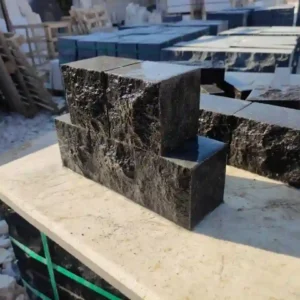
- Benefits: One of our most textured finishes, our pick for wet steps and slopes, with lasting durability.
Ensure Installation Success: Essential Tips for Laying Basalt Pavers
1. Preparation
- Excavate the area to create a stable base.
- Lay a compacted sub-base of gravel or crushed stone to prevent shifting.
2. Installation Steps
- Lay the basalt pavers in your desired pattern.
- Use high-quality adhesive or sand for jointing.
- Compact the pavers to ensure stability.
- Seal the surface for enhanced protection and color preservation.
3. Professional Installation
For best results, work with skilled installers who understand the nuances of basalt paver placement and alignment.
Expert Tips: Maintaining & Caring for Your Basalt Paver Surfaces
1. Cleaning
- Sweep regularly to remove debris.
- Wash with water and mild detergent to maintain a clean surface.
2. Sealing
- Sealing is generally unnecessary at 0.59% water absorption. For extra stain protection in high-traffic or spill-prone areas, use a breathable penetrating sealer every 3–5 years.
3. Preventive Measures
- Use protective mats in high-traffic areas.
- Avoid harsh chemicals or abrasive cleaners.
Cost of Basalt Pavers
The cost of basalt pavers depends on factors such as size, finish, and thickness. Typical U.S. retail for natural basalt paving runs roughly $10–$40 per square foot installed. Because we sell quarry-direct, our material pricing starts at about $2 per square foot — live prices are shown on every product above, and installation is quoted separately by your contractor.
Paving in the snow belt? Read our freeze-thaw performance guide — certified absorption data, deicing-salt chemistry and snowplow wear.
Real Orders, Real Deliveries
We publish only real client work. Read how we delivered two full containers — 6,884 sq ft of pavers packed in 32 crates — from our quarry to a Las Vegas contractor’s site: read the case study.
Completed a project with our basalt? Send us your photos — we’ll feature your project and discount your next order.
Get Inspired: Request Your Project Resources
Discover the endless possibilities of basalt tiles with Citadel Stone. We provide a full range of resources, including samples, catalogs, PowerPoint presentations, and concept boards, to help you visualize your project. Request yours today through our Contact Page for personalized assistance.
Why Choose Citadel Stone Basalt Pavers Over Competitors?
Citadel Stone’s basalt pavers stand out in the marketplace due to their unparalleled quality, affordability, and performance. Engineered to meet the highest standards of durability and aesthetic excellence, our black basalt tiles offer numerous advantages that make them the top choice for residential, commercial, and public projects across the United States.
Among the Hardest Paving Stones Available
Our black basalt is significantly harder than limestone and sandstone, and sits in the same hardness class as granite. That combination of hardness and density is what lets a basalt surface hold its finish under heavy traffic for decades.
Durability Beyond Compare
- Built to Last: Properly installed, Citadel Stone basalt pavers hold their appearance for generations with minimal upkeep.
- Low Maintenance: Easy to clean and resistant to stains, scratches, and weathering.
- Resilient in Harsh Climates: With a measured absorption of just 0.59–0.69%, Citadel Basalt is our first choice for cold-climate paving.
Affordable Luxury
While basalt is traditionally considered a premium, high-cost material, Citadel Stone offers this exceptional product at a more affordable price. This balance of quality and affordability ensures that projects of all scales can benefit from the advantages of black basalt without exceeding budget constraints.
Unparalleled Aesthetic Appeal
- Attractive and Unique Black Color: The natural deep black tones of our basalt pavers are ideal for creating a sophisticated and modern look.
- Most Popular for Landscaping Projects: Black basalt is the go-to choice for hard landscaping worldwide due to its sleek, timeless design.
Versatile and Tailored to Your Needs
Citadel Stone offers basalt pavers in various thicknesses, sizes, and finishes to accommodate any project, whether private or commercial. From driveways and patios to public plazas, our basalt tiles adapt perfectly to your design vision.
Technical Excellence
The technical properties of Citadel Stone’s black basalt set it apart as a superior material:
- Density: 3.01 g/cm³ (certified mill test, batch 1 of 2)
- Absorption: 0.59% (certified mill test, batch 1 of 2)
- Flexural Strength: 10.03 N/mm² (certified mill test, batch 1 of 2)
- Böhme Abrasion Loss: 0.91 mm (DIN 52108; certified mill test, batch 1 of 2; lower is better)
- Modulus of Rupture: 11.02 N/mm² (certified mill test, batch 1 of 2)
These specifications underline the exceptional durability, water resistance, and resilience of our black basalt tiles, making them the perfect choice for both functional and decorative applications.
Sustainability and Quality Assurance
Every piece of black basalt we supply is hand-selected for its superior durability and aesthetic appeal. By choosing Citadel Stone, you are investing in a product that is not only beautiful but also environmentally responsible.
Comparing Basalt With Other Stones
Weighing basalt against a lighter or softer stone? See our full basalt vs. limestone, or read basalt vs. granite and basalt vs. sandstone.
Citadel Stone: The Leading Supplier of Basalt Tiles & Pavers in the United States
Basalt pavers are the ultimate choice for durability, versatility, and timeless beauty in outdoor spaces. Whether for a residential patio, commercial plaza, or public walkway, basalt tiles provide unmatched performance and aesthetic appeal. Trust Citadel Stone for premium basalt pavers tailored to your needs. Contact us today to get your samples, Contact us today for samples, catalogs, and expert assistance tailored to your unique needs to get started on your next project!