

Mortar failure in limestone block installations almost always traces back to a mismatch between the binder chemistry and the stone’s calcium carbonate matrix — not poor workmanship. For limestone block mortar Carefree projects specifically, the desert alkalinity, extreme thermal swings, and occasional monsoon saturation create a performance window that standard Type S mixes simply weren’t designed to handle reliably. Getting the mortar selection right from the start means understanding how each mix type interacts with limestone’s physical properties under sustained heat stress.
Why Mortar Type Matters for Limestone Block
Limestone is more chemically reactive than granite or sandstone, and that reactivity cuts both ways. The right mortar forms a strong, compatible bond; the wrong one initiates a slow carbonation reaction at the interface that progressively weakens the joint. You’ll typically see this as efflorescence in year two or three, followed by joint recession and spalling at the block face by year five.
The compressive strength mismatch is equally critical. Limestone block in Arizona runs between 4,000 and 8,000 PSI depending on the quarry bed. Pairing it with a high-strength Type M mortar (2,500 PSI+) creates a rigid, stress-concentrating system — the mortar becomes stronger than the bond interface, so thermal expansion loads fracture the stone face rather than flexing at the joint.
- Type N mortar (750 PSI) remains the baseline recommendation for above-grade limestone block in desert climates
- Type S mortar (1,800 PSI) works appropriately for below-grade or retaining applications where lateral load is a design factor
- Type M mortar should be reserved for structural foundation work only — never veneer or decorative limestone block
- Polymer-modified mortars require compatibility testing against your specific limestone’s absorption rate before specifying
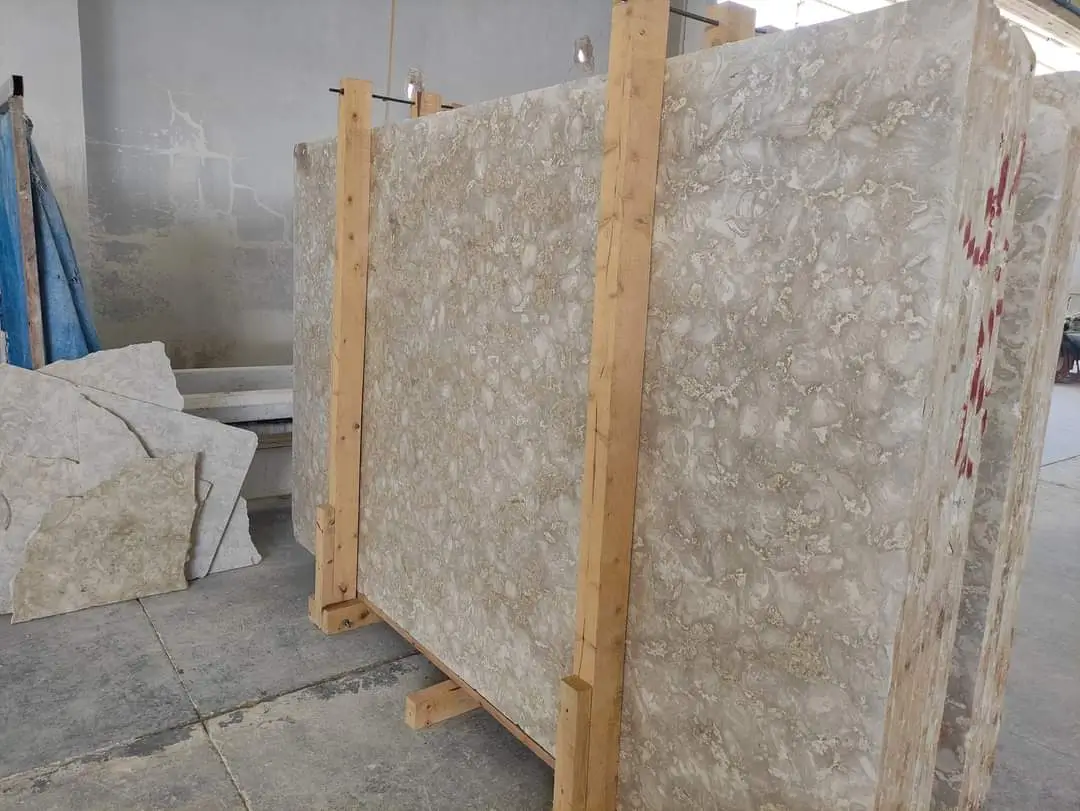
Carefree Mortar Types and the Desert Climate Demand
Carefree sits at roughly 2,500 feet elevation, which puts it in a climate category that most generic specification guides misclassify. You’re dealing with summer highs above 105°F, nighttime drops into the 70s, and monsoon humidity spikes that push relative humidity from 10% to 70% in under an hour. That diurnal thermal swing — sometimes exceeding 35°F daily — cycles your mortar joints through stress and relaxation continuously from June through September.
Standard Portland cement mortars lose plasticity rapidly in heat above 95°F. Pot life drops from 90 minutes to under 30 minutes on an unshaded block face in direct July sun. Your crew needs to adjust batch size accordingly, and the specification should reflect a reduced working window. Requiring shade tenting or scheduling installation before 9:00 AM during summer months isn’t overengineering — it’s the difference between joints that cure properly and ones that surface-skin before achieving bond. Understanding the full range of Carefree mortar types available, from straight Portland-lime blends to polymer-modified systems, helps you match the product to the actual site conditions rather than defaulting to the closest stocked option.
- Hydrated lime content of 10–15% improves workability and extends pot life in high-heat conditions
- Pre-wet limestone block surfaces to prevent rapid moisture absorption that starves the mortar of curing water
- Avoid installation when substrate temperatures exceed 120°F — common on south-facing walls after noon
- Fog curing for 48–72 hours post-installation dramatically improves long-term joint durability in low-humidity desert conditions
Limestone Bonding Agents in Arizona: When to Add Them
Bonding agents are one of the most misused products in block installation, and the Arizona context makes this worse because applicators often reach for them as a workaround for poor substrate prep. A limestone bonding agent creates a chemical bridge between an existing substrate and fresh mortar — it doesn’t compensate for dust, oil contamination, or inadequate mechanical key.
For new limestone block installations over a properly prepared substrate, bonding agents add cost without meaningful performance gain. Where they earn their place is in repair work — patching existing joints, resetting blocks that have shifted, or bonding to aged concrete backup walls that have carbonated surface layers. In Chandler, caliche substrates are common, and when block is set over a caliche-stabilized base, a latex-modified bonding slurry significantly improves adhesion consistency compared to straight mortar contact.
- Acrylic latex bonding agents provide the best compatibility with standard Portland-lime mortars
- Epoxy bonding agents should be avoided on porous limestone — they block vapor transmission and can cause spalling under moisture buildup
- Apply bonding agents in thin, even coats and allow to reach tacky stage before setting block — wet-on-wet application defeats the purpose
- Verify that your bonding agent is rated for the expected substrate temperature range at time of application
Block Installation Mortar Joint Sizing for Thermal Performance
Joint width is where most Arizona limestone block specifications get undersized. Generic masonry guides reference 3/8-inch joints as standard, and that works fine in temperate climates. In Carefree’s thermal environment, you should be specifying 1/2-inch joints minimum for horizontal courses and considering 5/8-inch on long runs exceeding 15 linear feet.
The math behind this is straightforward. Limestone’s thermal expansion coefficient runs approximately 4.4 × 10⁻⁶ per °F. A 20-foot run of block experiencing a 70°F temperature differential — entirely plausible from early morning to mid-afternoon in summer — generates about 0.074 inches of linear expansion. A 3/8-inch joint filled with Type N mortar handles roughly 0.040–0.050 inches of movement before developing stress fractures. You’re already at the edge before accounting for block-to-block variation in absorption or differential heating across a wall face.
For projects in Tempe, where urban heat island effects add another 8–12°F to ambient surface temperatures compared to surrounding desert, bump joint widths up an additional 1/16 inch on south and west exposures. It’s a small change at specification stage that prevents expensive re-pointing at year seven.
Arizona Adhesive Selection: Thin-Bed vs. Thick-Bed Applications
The distinction between adhesive mortar and setting mortar matters more in Arizona than most contractors acknowledge. Thin-bed adhesives — typically epoxy-modified or polymer-fortified — work well for limestone veneer panels under 1.5 inches thick. Thick-bed mortar systems suit full block applications where you need 3/4 inch to 1.5 inches of mortar to accommodate substrate irregularities. Arizona adhesive selection decisions ultimately hinge on stone thickness, absorption class, and the thermal load profile of the specific wall orientation.
Polymer-modified thin-set adhesives for limestone require a water absorption test before specifying. Limestone absorption rates range from 2% to 18% depending on the formation — Carefree-area sources tend toward the denser, lower-absorption end of that range, which actually reduces adhesive penetration into the face. You may need to specify a slightly rougher scratch finish on the adhesive coat to ensure adequate mechanical key when working with low-absorption stone.
For projects sourcing through Citadel Stone’s value limestone paving slabs, confirming the absorption class of your specific block lot before finalizing adhesive spec saves significant rework risk. Material from different quarry beds can behave quite differently even within the same product line.
Mixing Ratios and Field Quality Control
Pre-bagged mortar systems eliminate most ratio errors, but hot weather performance still depends heavily on water addition discipline. Desert air absorbs moisture from the mix at the surface faster than you can see, which leads crews to add water incrementally to maintain workability. By the third or fourth add, you’ve broken the design water-to-cement ratio and compromised the cured strength by 20–30%.
Specify a maximum retempering allowance in your field quality plan — one retemper permitted within the first 30 minutes of batch time, zero retempering after 45 minutes. Waste and rebatch rather than working degraded material. It seems wasteful on a hot day when material costs are visible, but re-pointing cracked joints at year four is a far more expensive outcome than discarding a partial batch.
- Use cool water — pre-chilled if available — to extend working time without compromising mix ratios
- Mix to lowest acceptable consistency and let mortar slake for three minutes before final mixing
- Color-matched mortars require strict batch-to-batch water control to maintain consistent pigment distribution
- Test mortar consistency with a penetration test, not visual assessment — heat distorts visual cues significantly
Delivery Planning and Inventory Considerations
Mortar and accessory material logistics deserve the same planning attention as the block itself. Truck delivery scheduling for bulk mortar materials in the Phoenix metro area typically works well year-round, but summer heat creates a narrow window for delivery and storage. Mortar components sitting in a staging area under direct sun can partially hydrate from ambient humidity — you’ll see the bags stiffen and clump before you open them.
Store all mortar materials in shaded warehouse conditions or under tarps on site, and sequence truck deliveries to minimize the time between warehouse departure and protected on-site storage. Citadel Stone maintains regional warehouse inventory across Arizona, which typically shortens lead times to one to two weeks on limestone block orders — far better than the six-to-eight week cycle on imported material that leaves your mortar sitting at the job site waiting for the stone.
For projects in Surprise, the northwest valley location adds 30–45 minutes to typical delivery runs from central Phoenix warehouse facilities. Factor that transit time into your truck scheduling to ensure morning deliveries arrive before substrate temperatures peak.
Sourcing Quality: What to Ask Limestone Block Suppliers in Arizona
Not all limestone block suppliers in Arizona offer the same level of technical documentation, and mortar specification genuinely depends on knowing your material. Before finalizing your mortar spec, request the compressive strength report, absorption class, and modulus of rupture data for the specific lot you’re purchasing. These numbers directly inform mortar type selection, joint sizing, and curing protocol. Applying the right limestone block mortar Carefree specification to the wrong absorption class produces the same failure modes as using the wrong mortar type entirely.
At Citadel Stone, we pull samples from each quarry shipment and conduct in-house absorption checks before releasing material to project orders. That extra step catches lot-to-lot variation that can catch specifiers off-guard when mortar adhesion behaves differently than the previous project using the same product line. From our warehouse testing, we’ve found absorption variance of up to 6 percentage points within the same nominal product, which meaningfully affects adhesive mortar selection for thin-bed applications.
- Request the quarry bed identifier — upper and lower quarry beds often produce stone with measurably different absorption characteristics
- Ask for a minimum 5-piece absorption sample average, not a single-specimen test
- Confirm that compressive strength testing was conducted per ASTM C170 for consistent comparability
- Verify that color consistency across the lot meets your project’s finish requirements before committing to mortar color match
The Bottom Line
Limestone block mortar Carefree specifications come down to three aligned decisions: mortar type matched to structural role, joint sizing calibrated for actual thermal swing, and curing discipline that accounts for desert conditions rather than generic timelines. Miss any one of these and the other two can’t compensate. The block selection gets the attention, but it’s the mortar system that determines whether the installation still looks sharp at the fifteen-year mark or starts showing joint recession at year six.
Your specification should be a living document — note the quarry lot data, record the ambient conditions during installation, and set a two-year inspection trigger for early joint integrity assessment. Catching creeping joint issues early means a topical repair rather than a full re-point. For related dimensional standards that inform block coursing and joint layout planning across Arizona projects, Limestone Block Size Standards for Queen Creek Building Projects provides technical detail on sizing and coursing that complements the mortar selection decisions covered here. Our inventory includes extra-thick limestone slabs for sale in Arizona for steps and wall copings.