

Why Wholesale Pricing Differs from Retail
Wholesale and retail pricing models reflect fundamentally different cost structures, service levels, and transaction overhead.
Trade discounts and volume economics: Wholesalers offer contractors 30–50% discounts below retail recognizing repeat-purchase volume, reduced sales effort (no showroom consultations), and minimal returns. Contractors buying 300+ square feet annually access better tier pricing than one-time homeowners purchasing 50 square feet.
Remnant lanes and liquidation access: Wholesale buyers access remnant inventory at 30–50% below full-slab wholesale rates. Retail channels rarely offer remnants or price them closer to full-slab retail. Contractors building remnant strategies reduce project costs 20–35% on suitable applications.
Tax and resale certificate differences: Arizona contractors with Transaction Privilege Tax (TPT) resale certificates purchase wholesale tax-exempt, paying tax only when reselling to end customers. Retail buyers pay sales tax at purchase (8–9% depending on city). This structural difference saves contractors 8–9% immediately when tax-exempt purchasing applies.
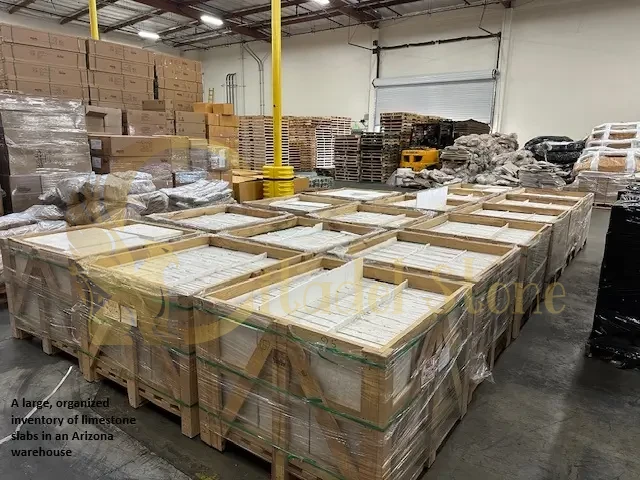
Packaging and crating economies: Bulk wholesale orders use consolidated packaging—multiple slabs per crate, minimal individual wrapping—reducing packaging costs 40–60% versus retail single-slab packaging. Contractors managing their own unloading and staging absorb labor but avoid retail handling markups.
Different warranty and return policies: Wholesale policies favor experienced buyers: shorter return windows (7–14 days versus 30–90 days retail), restocking fees (15–25%), and case-by-case warranty negotiations. Retail policies protect inexperienced buyers with longer windows and documented standards. Contractors accept wholesale terms understanding how to inspect and verify material quality at delivery.
Sales-channel overhead elimination: Retail pricing includes showroom costs, extended staff consultations, and extensive after-sale support. Wholesale operations minimize these services focusing on efficient order fulfillment. Contractors pay lower prices accepting self-service procurement models.
Key Cost Components Every Contractor Must Verify
Transparent wholesale quotes itemize every cost element enabling accurate estimating and competitive comparison.
Material Unit Price (Per Slab / Per Square Foot / Per Ton)
Base limestone pricing varies by grade, finish, thickness, and origin. Wholesalers quote per slab ($300–$1,500 typical range), per square foot ($8–$45), or per ton ($1,200–$3,500) depending on product category. Usable yield and waste percentage critically affect true cost—a $20/SF quote yielding 85% usable material (15% waste from cutting) actually costs $23.53/SF installed ($20 ÷ 0.85). Always request: “What usable yield should I expect for [your cutting requirements], and is waste allowance included in your quote or must I add it?”
Fabrication, Cutting, and CNC Time
Custom cutting incurs shop charges—hourly rates ($75–$150/hour typical) multiplied by estimated hours, or per-cut pricing ($50–$200 per cut depending on complexity). Simple straight cuts require 15–30 minutes; complex waterfall edges or precision seams demand 1–3 hours. Confirm: “Is fabrication quoted per hour or per cut, and does this include CNC programming, setup, and quality inspection?”
Edge Finishing and Additional Passes
Edge quality affects pricing. Single-pass basic edges cost less; multi-pass polished or beveled edges add $8–$25 per linear foot. Arizona outdoor installations often specify honed or brushed finishes requiring fewer passes than mirror-polished interiors. Verify: “How many finish passes does your quote include, and what additional cost for upgraded edge profiles?”
Sealing and Protective Finishing Fees
Factory-applied sealers add 5–12% to material costs but prevent installation damage and Arizona UV degradation. Unsealed limestone requires post-installation sealing adding labor costs. Ask: “Is sealing included in quoted price, or do I arrange separately?”
Crating, Packaging, and Handling
Bulk orders use consolidated crating; individual slabs require separate packaging increasing costs 15–30%. Confirm: “What packaging is included—individual crating, consolidated pallets, or bare slab delivery?”
Delivery, Freight, and Rigging/Crane/Hoist Charges
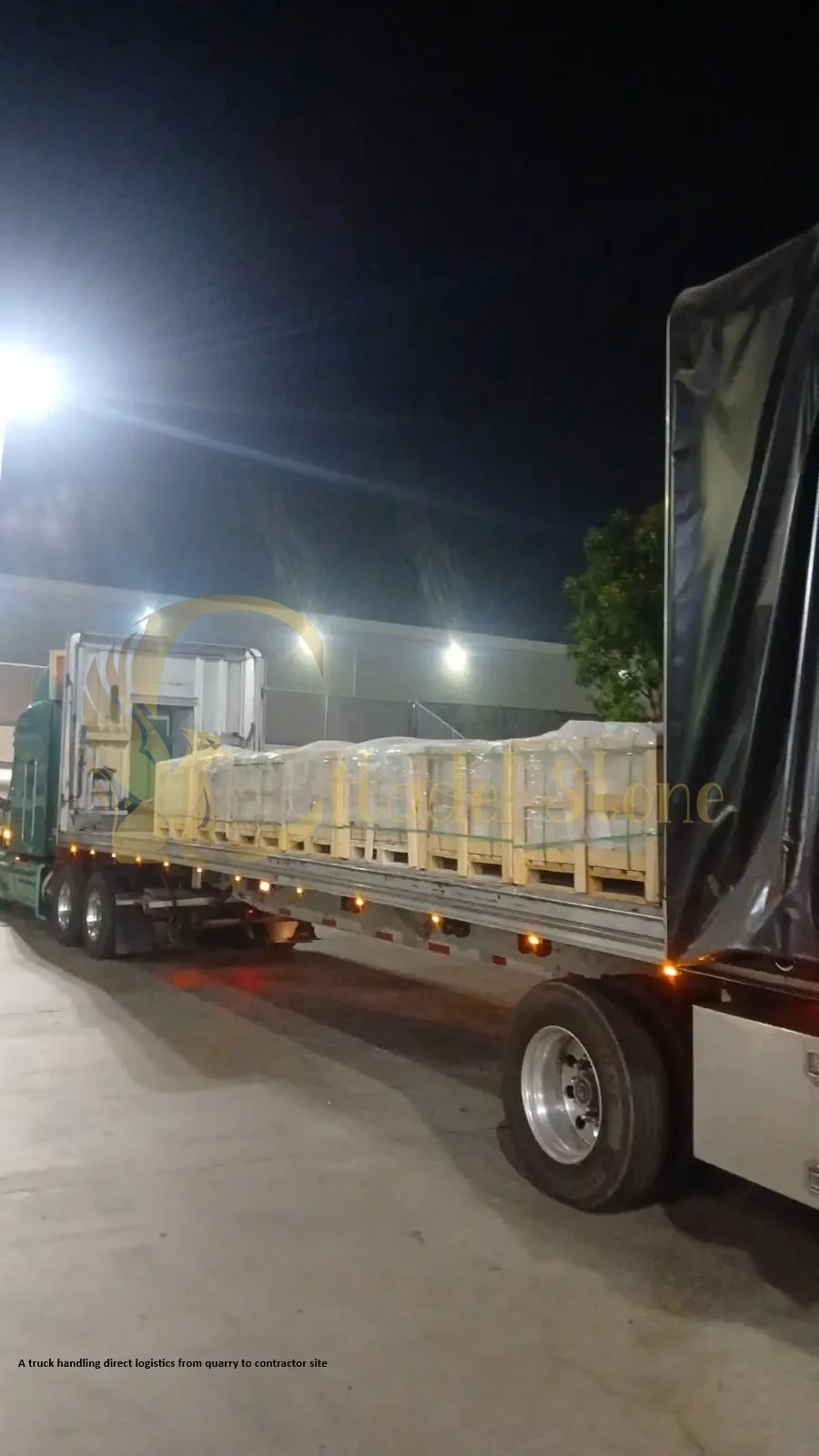
Delivery fees vary by distance (local 30 miles: $150–$400; 50–100 miles: $400–$800) and vehicle type (flatbed versus crane-equipped truck). Rigging charges for multi-story or restricted-access sites add $300–$800+ per deployment. Phoenix metro deliveries during summer may incur heat-window surcharges (afternoon deliveries 10–20% premium). Ask: “What’s your delivery fee to [specific address], and are rigging/crane services included or separate?”
Hold, Reserve, and Storage Fees
Deposits (10–25% typical) secure material for 7–21 days standard. Extended holds incur daily or weekly fees ($25–$100/week). Confirm: “What hold period does my deposit cover, and what storage fees apply for extended reserves?”
Small-Cut, Sample Fees, and Remnant Credits
Custom samples (12×12 pieces) cost $25–$100; some suppliers credit fees toward orders. Remnant purchases may qualify for volume credits—buying $2,000 in remnants might unlock $100–$200 credits toward future full-slab orders. Clarify: “Do sample fees credit to orders, and do you offer remnant purchase incentives?”
Taxes, Fuel Surcharges, and Import Fees
Arizona TPT rates vary by city (Phoenix 8.6%, Scottsdale 7.95%, Tucson 8.7%, Mesa 8.05%). Contractors with resale certificates purchase tax-exempt but must collect tax when reselling. Fuel surcharges (2–5%) may apply during volatile energy markets. Out-of-state or imported limestone incurs long-haul freight (15–30% of material cost) and potential import duties. Request: “Does your quote include all taxes, fuel surcharges, and import fees, or are these additional?”
Arizona’s monsoon season (July–September) and summer heat demand protective measures—covered transport, early-morning delivery, immediate staging—affecting costs. Verify suppliers account for climate-appropriate handling.
How to Read a Limestone Wholesale Pricing Sheet
Effective sheet interpretation prevents budget surprises and identifies incomplete or misleading quotes.
Expected headings and structure: Professional limestone wholesale pricing sheet documents include: supplier name and contact, quote date and expiration, customer/project name, itemized material listings (with slab IDs or product codes), unit of measure clarity (square foot, slab, ton), unit prices, quantities, subtotals, fabrication line items (separate from material), delivery and rigging (separate lines), taxes and surcharges, total project cost, and terms (payment, hold policy, lead time).
Verifying slab and run IDs: Quotes should reference specific slab identification numbers or quarry run numbers ensuring delivered material matches approved selections. Without IDs, suppliers may substitute similar but non-identical slabs. Confirm: “This quote references slabs #4427, #4429—are these specific inventory pieces or generic product codes?”
Calculating per-unit cost after waste allowance: If a quote shows $20/SF with 12% waste, true installed cost is $22.73/SF ($20 ÷ 0.88). Always verify whether waste is included: “Does your $20/SF include waste allowance, or should I add 12% for cutting loss?”
Spotting lump-sum versus itemized quotes: Lump-sum quotes (“$15,000 all-in”) obscure cost components preventing meaningful comparisons. Itemized sheets separate material, fabrication, delivery, and contingencies. Request: “Please provide itemized breakdown showing material, fabrication, delivery, and fees separately—not bundled pricing.”
What to ask if anything is missing: Missing elements—no slab IDs, no waste percentage, no fabrication detail, no delivery specifics—require clarification before accepting quotes. Use this phrasing: “Your quote lacks [slab IDs / waste allowance / fabrication hours / delivery details]. Please provide complete itemization matching the standard format I’ve requested.”
Contractor vs Retail: Direct Comparisons and Real Decision Rules
Understanding channel differences clarifies when wholesale procurement justifies coordination effort versus retail convenience.
Fabrication allowances: Contractors negotiate fabrication separately from material; retailers bundle cutting into per-SF pricing obscuring margins. Wholesale buyers control shop selection; retail buyers accept bundled fabrication without choice.
Crating and return risk: Wholesale buyers inspect at delivery and accept material with limited return windows (7–14 days); retailers offer 30–90 day returns with restocking fees. Contractors experienced in inspection accept shorter windows; inexperienced buyers value retail protection.
Remnant versus retail availability: Wholesale channels provide organized remnant racks (30–50% discounts); retail stores rarely stock remnants or price near full-slab rates. Projects incorporating architectural details, fireplace surrounds, or accent elements benefit from wholesale remnant access.
Lead times: Wholesale orders fulfill in 7–21 days for in-stock items; retail offers same-day pickup for limited selection. Rush projects needing immediate material may justify retail premiums despite higher costs.
Return and credit differences: Wholesale damaged-goods claims follow negotiated processes; retail follows standardized corporate policies. Contractors with established supplier relationships resolve wholesale claims faster; new buyers benefit from retail standardization.
Decision rules for Arizona contractors: Choose wholesale when: projects exceed 100 square feet, you’re a licensed contractor with TPT resale certificate, you need remnants or custom fabrication, you manage repeat projects building supplier relationships, or timelines accommodate 7–21 day lead times. Choose retail when: projects under 50 square feet, you lack trade accounts, you need same-day availability, or complex return policies justify premiums.
For example, evaluating contractor limestone cost Phoenix options: Wholesale Phoenix yards quote $18/SF plus $3/SF delivery/fabrication ($21/SF total) versus retail $32–$38/SF. On a 200 SF project, wholesale saves $2,200–$3,400 (35–45% reduction). This margin justifies wholesale coordination for projects over 100 SF but may not for 30 SF repairs where retail convenience and immediate availability matter more.
Pricing Math: Sample Formulas and the Simple Cost Calculator
Accurate costing requires systematic calculation incorporating all elements contractors often underestimate.
Bulk Cost Calculator Formula (Copy-Ready)
Inputs to collect from suppliers:
- Unit Price (UP): Material cost per square foot, per slab, or per ton
- Usable Yield (UY): Square footage after waste (if buying by slab or ton, convert to SF)
- Quantity (Q): Number of units required
- Waste Percentage (W): Cutting loss, typically 8–25%
- Fabrication Hours (FH): Shop time for cutting, edges, seams
- Shop Rate (SR): Hourly fabrication charge
- Delivery Fee (DF): Transport cost to job site
- Crane Fee (CF): Rigging charges if multi-story or restricted access
- Contingency Percentage (C): Buffer for unexpected issues, typically 3–8%
Formula:
Total Material Cost = UP × UY × Q × (1 + W)
Fabrication Cost = FH × SR
Delivery & Rigging = DF + CF
Contingency = Total Material Cost × C
Project Line Total = Total Material Cost + Fabrication Cost + Delivery & Rigging + Contingency
Worked example using placeholders:
Project: 200 SF exterior cladding, Phoenix location
- UP = $18/SF wholesale
- UY = 200 SF
- Q = 1 (calculated as total SF needed)
- W = 12% (0.12)
- FH = 8 hours (simple cuts, edge finishing)
- SR = $100/hour
- DF = $350 (local Phoenix delivery)
- CF = $0 (ground-level installation, no crane)
- C = 5% (0.05)
Calculation:
- Total Material Cost = $18 × 200 × 1.12 = $4,032
- Fabrication Cost = 8 × $100 = $800
- Delivery & Rigging = $350 + $0 = $350
- Contingency = $4,032 × 0.05 = $202
- Project Line Total = $4,032 + $800 + $350 + $202 = $5,384
- Cost per installed SF = $5,384 ÷ 200 = $26.92/SF
Recommended waste percentage ranges: Straight installations with minimal cuts (exterior cladding, simple tile layouts): 8–12%. Moderate complexity with angled cuts or border details: 12–18%. High complexity with irregular shapes, book-matched seams, or waterfall edges: 18–25%. Arizona exterior projects add 2–3% for heat-handling and monsoon protection contingencies.
Remnant usage adjustments: If 40% of project uses remnants purchased at 50% discount, adjust material cost: Primary material (60%) = $18/SF × 120 SF × 1.12 = $2,419; Remnant material (40%) = $9/SF × 80 SF × 1.08 = $777; Total Material Cost = $2,419 + $777 = $3,196 (21% savings versus all-primary material).
When converting bulk limestone price per ton Arizona quotes to square foot pricing: Standard 2cm limestone slabs yield approximately 50–60 SF per ton depending on density. If wholesale quotes $2,000/ton and yields 55 SF/ton, equivalent cost is $36.36/SF ($2,000 ÷ 55) before waste—significantly higher than per-SF quotes suggesting ton-based pricing suits specific large-volume scenarios.
Sample Wholesale Pricing Sheet Template (Copy-Ready)
Use this template when requesting quotes, ensuring suppliers provide complete information:
WHOLESALE LIMESTONE PRICING SHEET

Supplier Name: _________________________
Contact / Phone: _______________________
Quote Date: ____________________________
Quote Expiration: ______________________
Customer / Project: ____________________

MATERIAL DETAILS
Material Description: __________________
Slab ID / Run Number: __________________
Unit of Measure (sqft / slab / ton): ____
Unit Price: ____________________________
Quantity Ordered (units): ______________
Usable Yield (square feet): ____________
Waste Allowance (%): ___________________
Material Subtotal: _____________________

FABRICATION & FINISHING
Cut Type 1: _____________ (qty, unit price)
Cut Type 2: _____________ (qty, unit price)
CNC Hours: ______________ (hours × rate)
Edge Finish (linear ft): ________________
Seam Work: _____________________________
Sealing / Protective Finish: ___________
Fabrication Subtotal: __________________

DELIVERY & LOGISTICS
Crating & Handling Fee: ________________
Delivery Distance / Fee: _______________
Truck Type / Size: _____________________
Rigging / Crane Fee: ___________________
Delivery & Logistics Subtotal: _________

HOLD & ADDITIONAL FEES
Hold / Reserve Deposit (%): _____________
Hold Duration (days): __________________
Storage Fee (if extended): _____________
Sample Fees: ___________________________
Remnant Credit Terms: __________________

TAXES & SURCHARGES
Sales Tax / TPT (rate, amount): ________
Fuel / Energy Surcharge: _______________
Import / Long-Haul Fees: _______________
Tax & Surcharge Subtotal: ______________

PROJECT SUMMARY
Material Subtotal: _____________________
Fabrication Subtotal: __________________
Delivery & Logistics Subtotal: _________
Fees & Surcharges Subtotal: ____________
TOTAL QUOTED PRICE: ____________________

TERMS & CONDITIONS
Lead Time (days): ______________________
Payment Terms: _________________________
Deposit Required: ______________________
Return / Warranty Policy: ______________
Insurance / Claims Contact: ____________

NOTES / CONDITIONS
_________________________________________
_________________________________________
Request suppliers complete this template or provide equivalent detail ensuring apples-to-apples quote comparisons.
How to Get an Apples-to-Apples Quote — Email & Negotiation Tips
Systematic quote requests and negotiation tactics secure competitive wholesale pricing.
Itemized Pricing Request Email (Copy-Ready)
Subject: Request — Itemized Wholesale Quote & Slab Photos
Hello [Supplier Name],
We’re a licensed Arizona contractor planning a project in [City, AZ]. Please provide an itemized wholesale quote for the following:
Material Requirements:
- Product / Material: [limestone variety, finish, thickness]
- Slab ID / Run Number: [if you’ve pre-selected; otherwise request options]
- Unit of Measure: [square foot / slab / ton—specify preference]
- Quantity: [square footage or slab count needed]
- Expected Usable Yield & Waste Allowance %
Fabrication Details:
- Cutting requirements: [straight cuts / edge profiles / seam work]
- CNC hours estimate and shop rate
- Edge finishing specifications
- Sealing requirements
Delivery & Logistics:
- Delivery address: [full street address, city, zip]
- Delivery fee (truck type, distance calculation)
- Rigging / crane charges if applicable
- Lead time from order to delivery
Commercial Terms:
- Hold / reserve policy and deposit percentage
- Storage fees for extended holds
- Remnant credit policy
- Sample fees and whether they credit to orders
- Payment terms (net-30 available after credit check?)
Documentation:
- High-resolution photos: both slab faces and back, with ID tags visible
- Technical data sheets if available
- Insurance certificates (general liability, cargo)
Please provide an electronic itemized quote (PDF or spreadsheet format preferred) matching the template structure I’ve attached. We’re comparing multiple suppliers and will decide within [timeframe].
Our Arizona TPT Resale Certificate: [number, if applicable]
Thank you,
[Your Name]
[Company Name]
[Phone]
[Email]
Negotiation Tips for Arizona Contractors
Bundle fabrication across multiple projects: “We have three concurrent projects totaling 500 SF—can you offer volume pricing and consolidated fabrication scheduling reducing per-project setup costs?”
Consolidate delivery to reduce freight per job: “Can we combine deliveries for [Project A] and [Project B] on one truck run, splitting delivery fees proportionally?”
Commit to multiple sites or phases for lower rates: “We’re managing four subdivisions this quarter—if we commit to sourcing all limestone through you, what volume discount applies?”
Leverage remnant acceptance for discounts: “We can use remnants for [accent walls / fireplace surrounds / architectural details]—if we take 50 SF of remnants along with our 200 SF full-slab order, what’s the combined pricing?”
Negotiate hold-fee waivers: “Our installation timeline is uncertain due to permit delays—can you waive storage fees for up to 30 days given our commitment to regular purchasing?”
Request sample-fee credits: “We need three 12×12 samples for client approval—will these fees credit toward our order when we proceed?”
Common Hidden Fees and How to Spot Them
Vigilance prevents surprise charges inflating project costs beyond quoted wholesale rates.
Un-itemized “processing” or “handling” fees: Vague line items like “processing: $250” without explanation signal padding. Ask: “What specific service does your processing fee cover, and can you itemize the underlying costs?”
Oversized slab surcharges: Slabs exceeding standard dimensions (larger than 120″×70″) may incur 10–25% premiums. Verify: “Do any slabs in my order exceed standard sizes, and if so, what surcharge applies?”
Minimum truck delivery fees: Suppliers may require minimum delivery charges ($400–$600) even for short distances if order size doesn’t justify full truck. Clarify: “What’s your minimum delivery fee, and at what order size does it waive or reduce?”
After-hours or weekend pickup surcharges: Emergency or non-standard-hours service commands 20–50% premiums. Confirm: “If I need Saturday pickup or after-hours delivery, what additional charges apply?”
Excessive small-cut fees: Simple remnant cuts shouldn’t exceed $50–$100; charges of $150–$300 suggest overpricing. Ask: “Your small-cut fee seems high—can you explain the labor and machine time justifying this cost?”
Resin-fill labor multipliers: Limestone with heavy resin stabilization requires slower cutting, but excessive multipliers (2–3× standard rates) may not reflect actual added time. Question: “You’re charging 2.5× your standard fabrication rate for resin-heavy slabs—can you provide actual time estimates justifying this multiplier?”
Copy-ready questions revealing hidden fees:
- “Please provide line-item detail for all fees exceeding $100.”
- “Does your quote include all charges, or should I expect additional invoicing?”
- “What circumstances trigger surcharges beyond this quoted price?”
- “Can you confirm this quote represents total delivered and installed cost excluding only [specific exclusions]?”
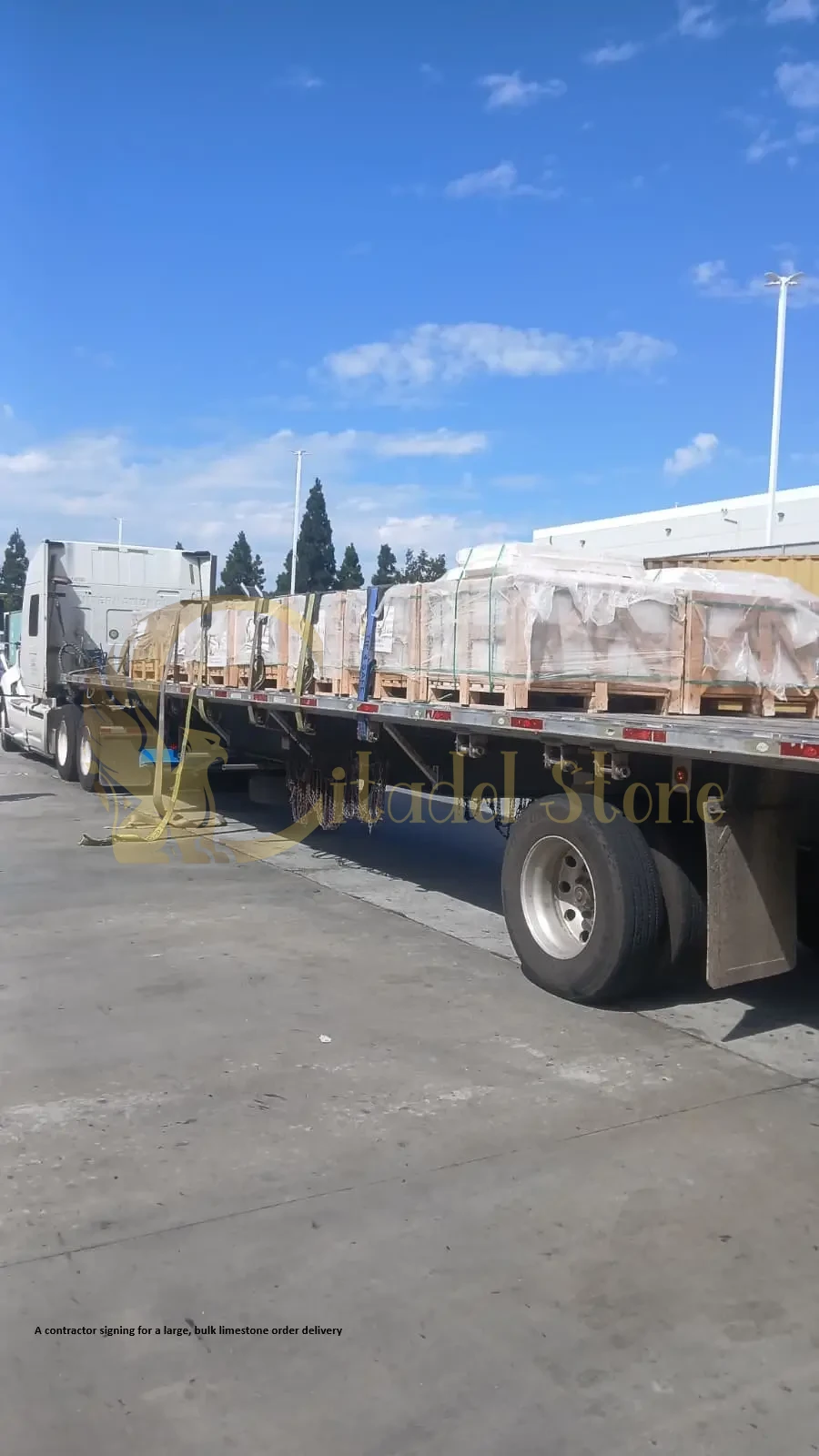
Metro Cost Snapshot — Phoenix to Tempe
Phoenix
Phoenix’s competitive wholesale market and metro size create pricing efficiencies but demand attention to delivery logistics. Expect early-morning delivery windows (6–9 AM) avoiding afternoon heat exceeding 110°F—some suppliers charge 10–15% premiums for afternoon deliveries requiring heat-protective measures. Contractor limestone cost Phoenix averages $16–$24/SF wholesale for standard limestone before fabrication and delivery; premium varieties reach $30–$50/SF. Ask suppliers: “Do you charge heat-window surcharges for afternoon summer deliveries, and can you provide written staging windows confirming early-morning offload?” Phoenix’s sprawling geography means delivery fees vary significantly—north Phoenix (Anthem area) or far west locations (Buckeye, Goodyear) incur 15–25% higher delivery versus central Phoenix. Verify distance calculations: “How do you calculate delivery fees—flat rate, mileage-based, or zoned pricing?” Phoenix yards serving high-volume contractors often negotiate annual supply agreements locking pricing for 6–12 months protecting against market fluctuations.
Tucson
Tucson’s geographic separation from Phoenix (120 miles) affects freight and creates local pricing dynamics. Factor in dust-protection staging—Tucson’s fine particulate environment demands covered storage and transport adding 3–8% to handling costs. Slightly higher freight applies for some quarry-direct runs originating in Phoenix or California, adding 12–20% versus Phoenix-local sourcing. Ask Tucson suppliers: “Do you provide last-mile dust-cover services, and is this included in delivery fees or additional?” Tucson wholesale limestone typically runs $18–$26/SF for standard varieties before fabrication—comparable to Phoenix when local sourcing applies. Tucson’s smaller market means fewer competing yards; establish relationships with 2–3 suppliers maintaining consistent pricing and service. Monsoon-season deliveries (July–September) may incur protective-crating surcharges (5–10%); confirm: “What additional charges apply for monsoon-season covered delivery?”
Mesa
Mesa’s east-valley location within Phoenix metro means pricing mirrors Phoenix rates, but peak construction seasons create shop backlogs affecting lead times. During spring and fall surges (March–May, September–November), expect fabrication lead times extending 30–50% beyond quoted standard times—request firm guarantees in writing. Ask Mesa-area suppliers: “What’s your current shop backlog, and can you provide written lead-time commitment with penalty clauses if missed?” Confirm rush fees explicitly: “If I need expedited fabrication reducing standard 14-day lead to 7 days, what percentage premium applies?” Mesa yards serving production builders often maintain tiered pricing—contractors purchasing 500+ SF quarterly access better rates (5–15% discount) than occasional buyers. Request volume-tier thresholds: “At what annual purchase volume do I qualify for your next pricing tier?”
Chandler
Chandler’s gated subdivisions create delivery logistics affecting costs—HOA coordination, restricted delivery windows (often 7–10 AM weekdays only), and crane permit requirements add complexity. Verify whether quoted delivery includes HOA coordination or if you manage independently: “Does your delivery fee include Chandler subdivision gate coordination and HOA notification, or do I handle?” Crane and hoist pricing for multi-story placements in gated communities may add $400–$800 per deployment; confirm availability and fees upfront. Ask: “For delivery to [specific Chandler subdivision], what’s your total cost including HOA coordination and crane service if needed?” Chandler’s outdoor limestone demand (pool coping, patios) requires factory-sealed material—confirm whether sealing is included: “Is your quoted price for outdoor-rated, factory-sealed limestone, or do I arrange sealing separately?”
Scottsdale
Scottsdale’s luxury residential and high-visibility commercial markets command premium pricing and services. High-finish jobs often require seam mock-ups and precise batch matching—expect mock-up fees ($150–$400) and batch-consistency guarantees adding 8–15% to material costs. Request detailed specifications: “For architectural limestone requiring seamless appearance across 25+ slabs, what’s your cost for seam mock-ups, written finish tolerances, and batch-run documentation?” Scottsdale yards serving design-focused clients maintain curated premium inventory; wholesale pricing runs $24–$45/SF before fabrication for standard varieties, $50–$80/SF for exotic materials. Confirm acceptance tolerances explicitly: “What finish-quality variance is acceptable—if delivered slabs fall outside ±100-grit specification, what’s your replacement process and timeline?” Scottsdale’s gated estates require white-glove delivery (protective staging, installation coordination); verify what’s included versus optional: “Does quoted delivery include protective tarps, designated placement zones, and post-delivery cleanup?”
Glendale
Glendale’s diverse housing—tight-access older homes and newer subdivisions—creates delivery challenges affecting pricing. Narrow-access properties may require split-slab cutting and specialized delivery equipment adding 15–30% to logistics costs. Ask suppliers: “For delivery to older Glendale neighborhoods with 32-inch doorways and narrow driveways, can you quote split-slab delivery including cutting and reassembly planning?” Confirm crane reach and truck maneuvering capabilities: “What’s the largest truck you can navigate to [specific address], and do tight-access sites require small-truck surcharges?” Glendale yards often stock thinner profiles (3/4-inch, 1cm) for retrofit projects; verify pricing: “What’s your wholesale rate for thinner limestone suitable for tight-access installations versus standard 2cm slabs?” School-zone traffic near schools affects delivery timing—request early-morning windows (6–8 AM) avoiding congestion: “Can you guarantee pre-school delivery window, and does this timing incur surcharges?”
Gilbert
Gilbert’s irrigation-heavy landscape and outdoor limestone applications require including reseal scheduling and long-term maintenance costs in project budgets. For installations near pool decks and irrigation systems, confirm sealing line items and coverage: “Does your quote include factory sealing appropriate for Gilbert’s high-mineral water environment, and what re-seal interval do you recommend?” Ask for sealing-product specifications: “Can you provide technical data showing your sealer’s calcium-resistance and chlorine-tolerance ratings?” Gilbert wholesale limestone for outdoor applications runs $20–$32/SF including sealing; unsealed material requires post-installation sealing adding $3–$6/SF labor. Verify coverage and warranty: “What square-footage coverage does your sealer provide, and do you warrant against premature staining if applied per specifications?” Gilbert’s production-builder market means some suppliers offer per-lot pricing for subdivisions; request: “For multi-lot projects, can you quote per-unit pricing and lock rates for phased deliveries over 3–6 months?”
Tempe
Tempe’s fast-paced rental-turnover and student-housing markets demand quick templating and fabrication. Short-lead projects need explicit turnaround guarantees—request: “What’s your earliest available templating slot, and can you provide written lead-time guarantee with penalty clauses for delays?” Confirm rush template fees: “If I need same-day or next-day templating, what surcharge applies?” Tempe wholesale pricing mirrors Phoenix metro rates ($16–$24/SF standard varieties) but quick-turn premiums add 15–35% for compressed timelines. Ask about shop scheduling: “Do you maintain emergency fabrication slots for rush projects, and what’s the premium for 48-hour turnaround versus standard 10–14 days?” Tempe’s ASU-adjacent projects face delivery restrictions (parking permits, off-peak windows); verify campus-area fees: “For delivery to ASU-area job sites, what coordination fees or permit costs apply beyond standard delivery?” Multi-family developments benefit from phased-delivery pricing: “Can you quote per-phase delivery with locked pricing across three monthly releases totaling 400 SF?”
Contractor Quote Comparison Checklist (Copy-Ready)
Use this checklist comparing two or more wholesale supplier quotes:
☐ Slab IDs provided: Both quotes reference specific slab identification numbers or run numbers
☐ Unit of measure consistent: All quotes use same unit (sqft / slab / ton) enabling direct comparison
☐ Waste allowance stated: Each quote specifies waste percentage and whether included in pricing
☐ Fabrication itemized: Cutting, CNC hours, edge work, and seam finishing appear as separate lines
☐ Edge and finish fees: Linear-foot pricing for edges, finish passes, and decorative profiles listed
☐ Delivery and rigging: Transport fees itemized separately from rigging/crane charges
☐ Hold and reserve policy: Deposit percentage, hold duration, and storage fees documented
☐ Remnant credit terms: Policy for remnant purchases and any volume credits clarified
☐ Lead time guaranteed: Quoted timeline from order to delivery provided in writing
☐ Payment terms clear: Net-30, deposit requirements, and late-payment penalties specified
☐ Insurance verified: Supplier provides general liability and cargo coverage certificates
☐ Final total calculated: Project line total includes material, fabrication, delivery, contingency
Side-by-side comparison reveals which suppliers provide complete transparent pricing versus incomplete quotes requiring clarification before decision-making.
When Bulk Price-Per-Ton vs Price-Per-Sqft Matters
Unit pricing choice affects quote interpretation and project budgeting depending on limestone application and supplier practices.
Per-square-foot pricing: Most Arizona contractors prefer per-SF quotes for finished installations—pricing directly correlates to coverage area. Per-SF quotes simplify estimating: 200 SF project × $22/SF = $4,400 material budget. Ideal for: architectural cladding, paving, tile installations, and any application where coverage area drives procurement.
Per-slab pricing: Suppliers quote full slabs by piece ($400–$1,200 typical depending on size and grade). Per-slab pricing suits situations where slab size/configuration matters more than precise square-footage. Useful for: projects needing specific veining or color within single slabs, applications minimizing seams, or orders where customers select individual pieces. Convert to per-SF: $800 slab yielding 45 SF usable = $17.78/SF.
Per-ton pricing: Bulk bulk limestone price per ton Arizona quotes ($1,200–$3,500/ton typical) apply to large-volume orders, crushed/aggregate limestone, or specific quarry-direct purchasing. Standard 2cm slabs yield 50–60 SF per ton depending on density; thicker slabs yield fewer SF/ton. Convert to per-SF: $2,000/ton ÷ 55 SF/ton = $36.36/SF before waste.
Unit conversion formulas:
Per-SF from Per-Slab: Slab Price ÷ Slab SF Yield = Price per SF
Per-SF from Per-Ton: Ton Price ÷ SF per Ton = Price per SF
Per-Ton from Per-SF: (SF Price × SF per Ton) = Price per Ton
Arizona contractors should request quotes in per-SF format for consistency, then convert other units as needed for specialized applications. Always clarify: “Please provide per-square-foot pricing or the conversion factor (SF per slab / SF per ton) so I can calculate accurately.”
Citadel Stone’s limestone repository — Why wholesale pricing differs from retail
Wholesale and retail prices look similar at a glance, but they come from very different business models. Here’s a plain-spoken breakdown of the forces that create the gap — and exactly how those differences show up on your contractor bids or homeowner invoices in places like Peoria, Surprise, San Tan Valley, and Yuma.
1) Scale and how inventory is handled
Wholesale: Purchased in bulk, stored on racks or in pallets, and moved in consolidated loads. Suppliers spread fixed costs (import freight, crate build, yard staffing) across large quantities, lowering per-unit material cost.
Retail: Stocked for immediate sale in smaller quantities; packing, display, and single-piece handling drive up per-item overhead.
2) Who pays for which services
Wholesalers assume less customer hand-holding. They often exclude showroom assistance, design consults, and long return windows — that lowers their operating cost and the price to contractors who are comfortable inspecting and accepting slabs.
Retailers bundle advisory time, generous returns, and customer-facing support into the purchase price.
3) Waste, yield and quoting conventions
Wholesale quotes are structured so the buyer accounts for yield (cutting loss) and can negotiate waste allowances. Contractors convert slab prices into an effective cost per usable square foot.
Retail often presents a neat “per piece” or “per box” price that hides yield assumptions; a homeowner buying small quantities pays for packaging and convenience, not unused yield.
4) Packaging, shipping and delivery math
Bulk deliveries use shared crating and routed truck runs; that reduces per-job crating and freight. For remote runs (think Yuma or San Tan Valley bulk drops), suppliers still add long-haul or minimum-run charges — but blended per-unit cost stays lower than retail for large orders.
Retail sales frequently require individual protective wrapping and single-delivery logistics, raising the sticker price.
5) Tax, resale and payment terms
Contractors with resale (TPT) credentials buy tax-exempt and may negotiate net terms (net-30/net-60), improving cash flow and effectively lowering acquisition cost.
Retail customers pay sales tax up front and typically must settle purchase immediately.
6) Returns, warranties and risk allocation
Wholesale deals trade broader risk tolerance for lower price: shorter return windows, restocking rules, and firm acceptance procedures. Contractors accept inspection responsibilities and manage on-site risk.
Retail offerings bake in consumer protection (longer return windows, standardized warranties), which increases administrative cost passed to the buyer.
7) Remnants, closeouts and inventory lanes
Wholesalers sell remnant packs and closeout slabs at steep discounts — a major savings lever for contractors using off-cuts for surrounds, thresholds, or accent pieces. Retail channels seldom offer this access or price advantage.
8) Fabrication and service integration
Some wholesale partners include shop time or preferred fabrication rates for repeat buyers; others separate cutting fees. Contractors who coordinate their own cutting choices can optimize both cost and outcome. Retail packages often include fixed fabrication options with less pricing transparency.
How this plays out locally (quick snapshots)
Peoria: Multiple yards and short hauls make wholesale deliveries efficient — big contractor jobs save most.
Surprise: Western suburban runs sometimes sit at zone boundaries; negotiate consolidated deliveries to avoid surcharge steps.
San Tan Valley: Semi-rural routing can add modest freight; buy larger lots or combine sites to preserve wholesale advantage.
Yuma: Long-haul premiums are common; wholesale still wins for large volumes, but small jobs may approach retail economics once freight is added.
Practical rule of thumb
If your project is small (under ~50 SF) and you need materials immediately, retail convenience can justify the price.
If your project is medium-to-large (100+ SF), includes custom cuts, or you can coordinate delivery windows, wholesale almost always delivers a lower total installed cost — provided you insist on itemized quotes, slab IDs, and clear waste allowances.
Quick checklist before you commit to a wholesale quote
Ask for slab/run IDs and photos.
Require an itemized sheet: material, waste allowance, cutting, crating, delivery, rigging, taxes, and any seasonal handling charges.
Confirm hold/reserve terms and storage fees.
Convert quoted unit price into cost per usable square foot including waste to compare apples-to-apples with retail offers.
Understanding these structural differences lets you pick the buying channel that optimizes price, quality, and schedule for each job — whether you’re sourcing material for a Peoria remodel, a Surprise patio, multiple San Tan Valley lots, or a big Yuma installation.
Learn How to Become a Limestone Dealer in Arizona and Partner with Wholesale Suppliers!
Conclusion & Immediate Contractor Actions
Mastering limestone dealer cost breakdown Arizona structures enables contractors to secure competitive wholesale pricing, avoid hidden fees, and budget projects accurately from initial estimate through final installation.
Three immediate actions:
- Send the Itemized Pricing Request Email to 2–3 suppliers: Use the copy-ready template requesting complete limestone wholesale pricing sheet documentation with slab IDs, fabrication details, delivery costs, and all fees itemized.
- Use the Wholesale Pricing Sheet Template to organize and compare quotes: Input supplier responses into the standardized template ensuring apples-to-apples comparison across all cost elements—material, fabrication, delivery, fees.
- Run the Bulk Cost Calculator Formula using actual supplier inputs: Calculate total project cost including waste allowances, fabrication hours, delivery, rigging, and contingencies—verify final per-SF installed cost matches budget expectations before committing.
Systematic cost verification transforms wholesale limestone procurement from opaque negotiation into transparent, competitive purchasing delivering 30–50% savings versus retail while maintaining quality and service standards Arizona contractors demand. Citadel Stone is one of the best limestone suppliers near you in Arizona for custom edge profiles and artisan finishing.