

Why Honed Basalt Travels Well — Design & Material Logic
Aesthetic Universality
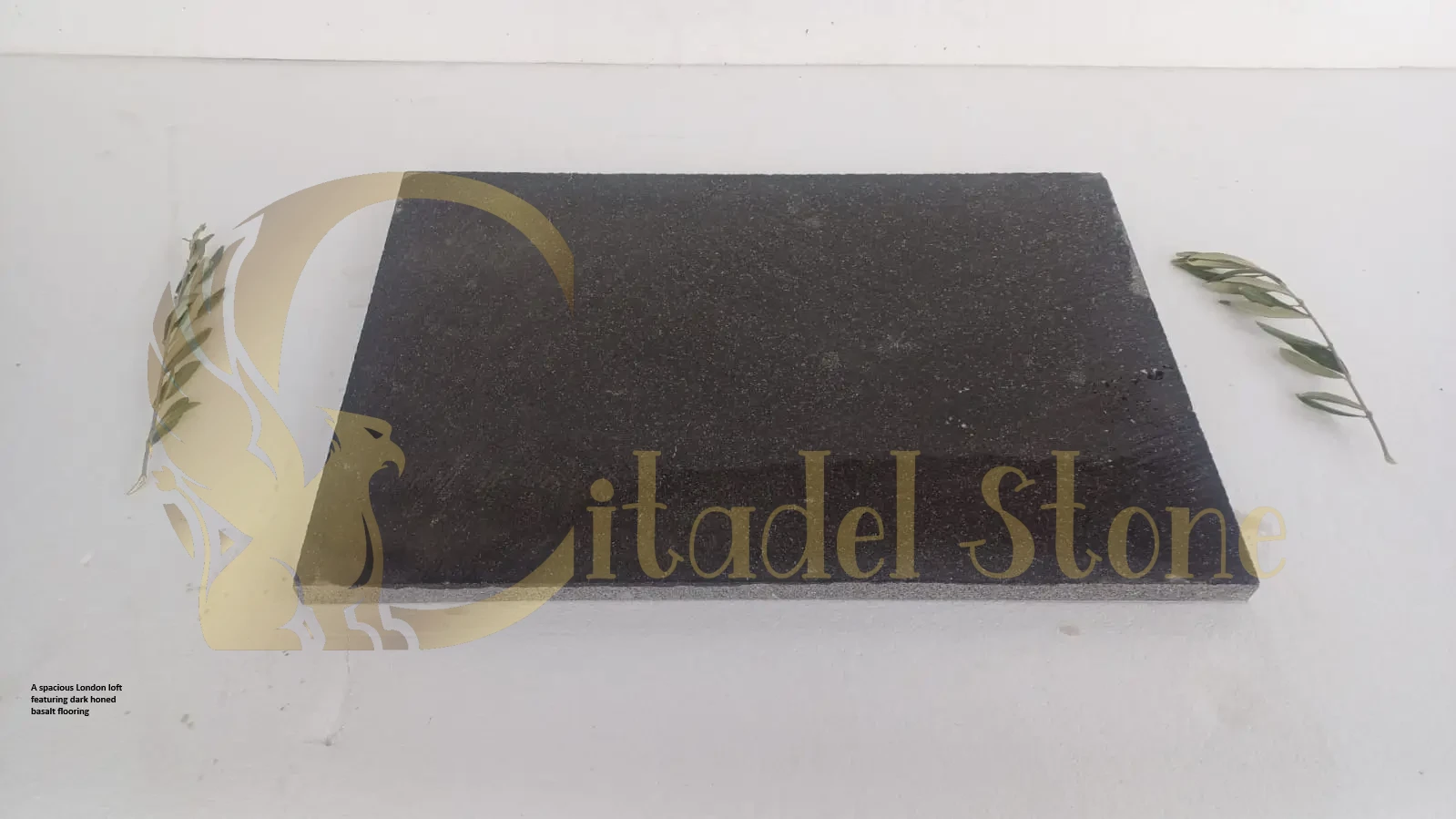
Honed basalt’s matte depth and tonal neutrality make it a chameleon finish that adapts to local architectural vernaculars. In Tokyo’s minimalist interiors, the subtle texture complements tatami transitions and natural wood. Against London’s historic brick contexts, honed basalt provides contemporary contrast while respecting material heritage. The finish’s inherent restraint allows regional design languages to shine through.
The uniform surface texture eliminates the visual weight of heavily veined stones, making basalt honed ideal for large-format applications where material consistency matters more than dramatic patterning. This visual calm translates across cultures, supporting both Scandinavian hygge and Mediterranean modernism with equal sophistication.
Performance Qualities That Matter Globally
Honed basalt delivers consistent performance metrics that architects can rely on across diverse climates. Illustrative abrasion resistance typically ranges 15-20 on the Taber test, while water absorption usually measures below 0.5%. These characteristics ensure the finish maintains its appearance whether facing Tokyo’s humid summers or Dubai’s desert winds.
The material’s natural hardness eliminates the need for chemical sealers in many applications, reducing maintenance requirements for international property managers. Freeze-thaw durability ratings illustrative often exceed 50 cycles without degradation, making honed basalt viable from London’s damp winters to alpine resort projects.
How Fabrication Precision Enables International Adoption
Modern fabrication achieves tolerances within illustrative ±0.5mm, enabling the tight joints that define contemporary honed basalt projects. This precision allows architects to specify large-format slabs up to illustrative 1200x800mm while maintaining consistent reveals across installation teams worldwide.
Controlled honing processes ensure sheen consistency that photographs identically under different lighting conditions. This reliability matters for international hotel brands requiring visual consistency across properties, or residential developers marketing globally through digital platforms.
Five Regional Vignettes
Real Orders, Real Deliveries
We only publish projects we have actually supplied. See our Las Vegas white limestone delivery — two containers, 6,884 sq ft, 32 crates, shipped door to door — and how we supplied Creative Environments in Arizona with 21 containers across a 70,000+ sq ft installation: white limestone pavers and tiles, shellstone and Ocean Reef pavers.
Had Citadel Stone material installed on your project? Send us your photos and we will feature the work here, with your permission.
Climate & Code — How Detailing Changes Around the World
Cold/Freeze-Thaw Zones (London, Parts of Tokyo)
Freeze-thaw testing illustrative (verify current ASTM C666 procedures) becomes critical for exterior applications in cold climates. Drainage design must prevent water accumulation in joints, requiring sloped installations with illustrative minimum 1% gradients toward collection points.
Sealed installation systems using impermeable adhesives prevent moisture infiltration, while breathable pointing systems allow vapor transmission. Joint sealants must maintain flexibility to illustrative -20°C without cracking. Consider heated substrate systems for critical threshold areas.
Tropical/Coastal (Sydney)
Salt crystallization testing illustrative (verify current ASTM C88 procedures) guides material selection in coastal environments. Low-absorption basalt varieties below illustrative 0.3% absorption reduce salt ingress and staining risks.
Maintenance windows should accommodate higher cleaning frequencies, typically illustrative quarterly in direct salt-spray zones. Specify marine-grade sealants and corrosion-resistant fixing systems. Consider sacrificial weathering surfaces in high-exposure locations.
Arid/Hot (Dubai, LA Sun Exposures)
Thermal expansion calculations become critical with temperature differentials reaching illustrative 60°C between night and peak sun exposure. Light-colored honed finishes with Solar Reflectance Index illustrative above 40 reduce heat buildup and improve comfort.
Pedestal terrace systems allow thermal movement while maintaining level walking surfaces. Bed-set installations require expansion joint spacing every illustrative 3-4 meters with high-performance sealants rated for extreme temperatures.
Urban Retrofit Constraints
Tight site access limits material sizes to dimensions manageable by building elevators or crane windows. Standard illustrative 600x600mm formats often provide optimal balance between visual impact and logistical feasibility.
Working hour restrictions in dense urban areas may require night installation schedules. Plan staging areas carefully to minimize disruption while maintaining material protection from weather and theft.
Procurement & Supply Chain for International Projects
Reserve Batch Ordering & Lot Traceability
Order 8-12% additional material illustrative beyond calculated requirements to account for cuts, breakage, and future repairs. Insist on quarry lot identification numbers that enable matching material years later for maintenance work.
Maintain detailed records linking lot numbers to specific project areas. This traceability becomes invaluable when sourcing replacement pieces or planning future renovations that require material matching.
Shipping Strategies
Container packing requires protective framing and individual piece wrapping to prevent transit damage. Illustrative sea freight typically takes 4-6 weeks from European quarries to major ports, while air freight reduces transit to 5-7 days at significantly higher cost.
Include port demurrage insurance in procurement budgets, as customs delays can trigger expensive storage charges. Coordinate local handling equipment requirements with receiving facilities before shipping to ensure proper off-loading capabilities.
Mockups, Test Panels, and Sample Delivery Logistics
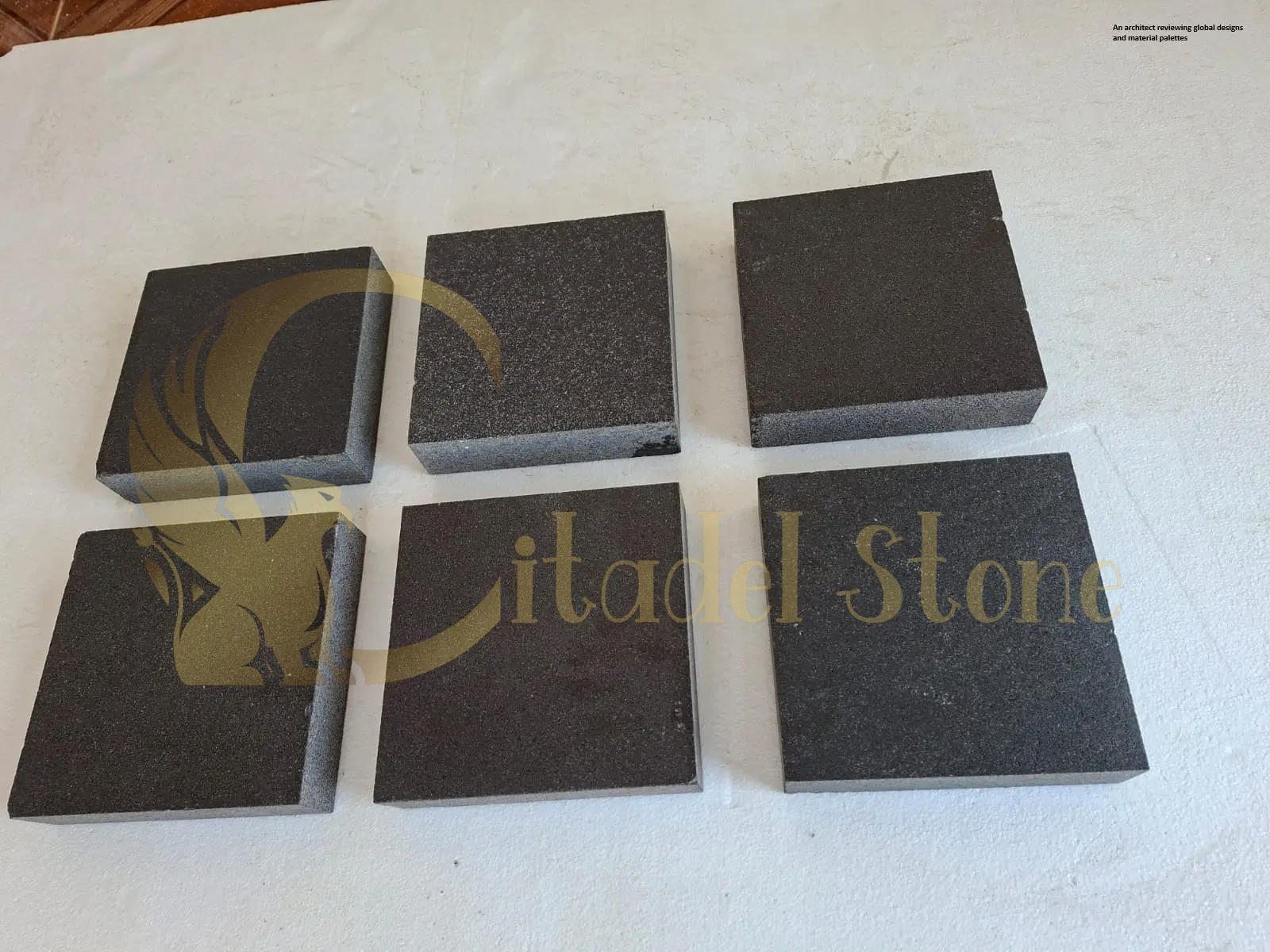
Schedule mockup fabrication illustrative 4-6 weeks before main material production to allow design team review and approval. Ship sample panels via express courier to expedite approval processes while main shipment follows by standard freight.
Establish clear mockup acceptance criteria including color tolerances, surface finish standards, and joint width specifications. Document approvals thoroughly to prevent scope creep during installation phases.
Get bespoke basalt tile patterns — free consultation.
Sustainability & Lifecycle — Embodied Carbon, Reuse & Local Sourcing
How to Think About Embodied Carbon on Global Projects
Transportation typically represents illustrative 15-25% of total embodied carbon in basalt DuoFinish pavers projects. Balance shipping emissions against quarry extraction energy and processing requirements when evaluating global sourcing options.
Consider consolidated shipping strategies that combine multiple project materials in single containers. Regional quarry sourcing may reduce transport emissions but verify comparable quality and performance standards.
Reuse and Re-honing Potential Across Decades
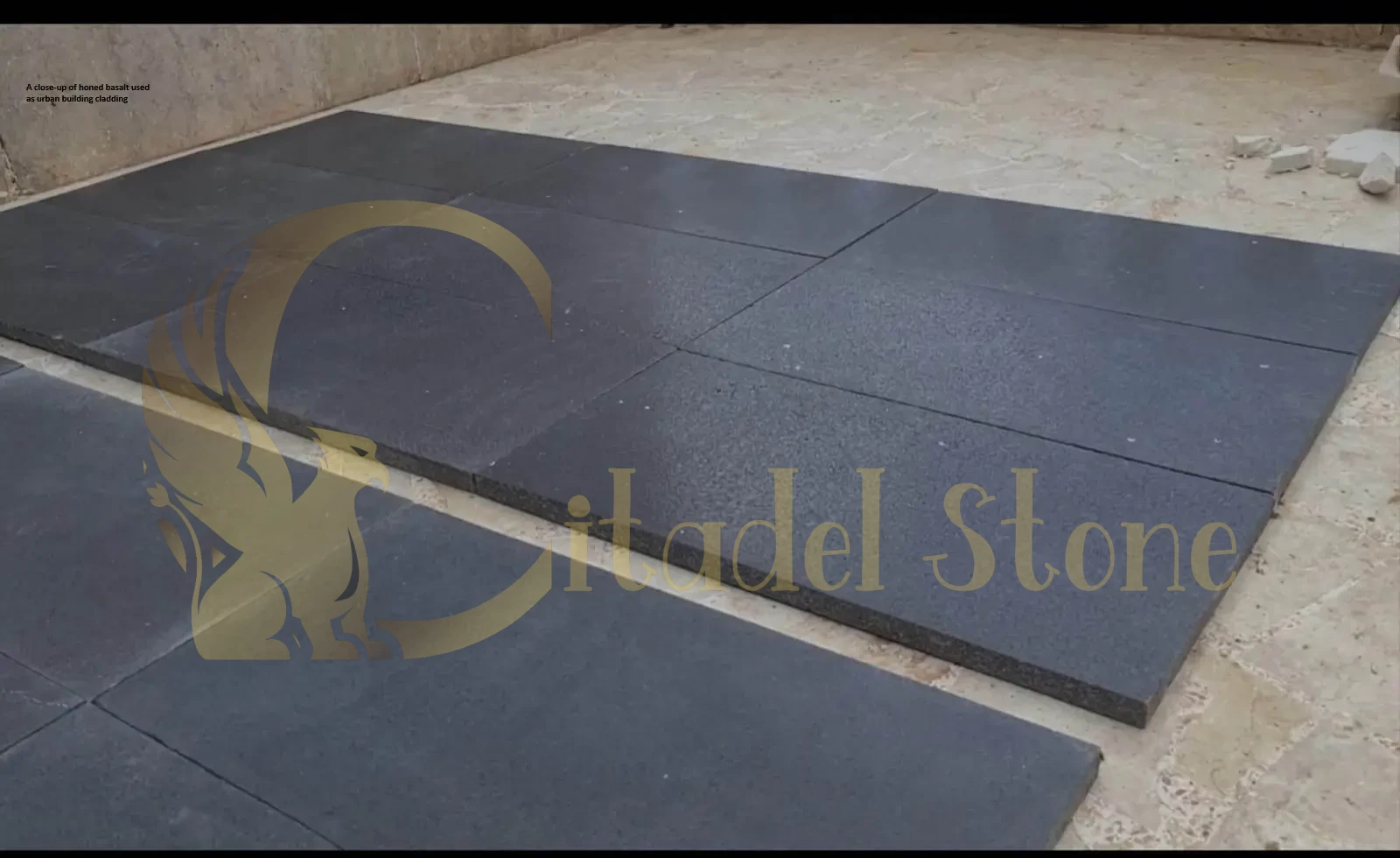
Honed basalt’s ability to accept re-finishing makes it an excellent circular design material. Surface refreshing through diamond honing can restore original appearance after illustrative 15-20 years of use, extending lifecycle significantly.
Document original honing specifications carefully to enable accurate restoration. Plan joint systems that facilitate future removal without damage to adjacent pieces.
Local Sourcing vs Import Tradeoffs
Evaluate regional quarry availability against quality requirements and project timeline constraints. Local sourcing supports community economies but may require additional quality testing to verify performance standards.
Request Environmental Product Declarations (EPDs) from suppliers to quantify environmental impacts. Chain of custody documentation ensures responsible quarry practices throughout the supply chain.
Installation QA — What Global Installers Must Watch For
Mockup Acceptance Checklist
Verify color consistency across multiple pieces under various lighting conditions. Check sheen uniformity using gloss meters with readings within illustrative ±5% variance. Measure joint widths with precision tools confirming specified dimensions.
Evaluate flatness using straight edges and confirm alignment between adjacent pieces. Document approved standards photographically for reference during main installation phases.
On-Site QC Steps
Tag material batches upon delivery and cross-reference against shipping documentation. Conduct random sampling for dimensional verification and surface quality assessment. Store materials in climate-controlled conditions when possible.
Schedule installation sequencing to avoid conflicts with HVAC, plumbing, or electrical trades. Protect completed work immediately using appropriate covering systems that prevent staining or damage.
Find salt-resistant basalt tiles for coastal homes.
Common Installation Failure Modes
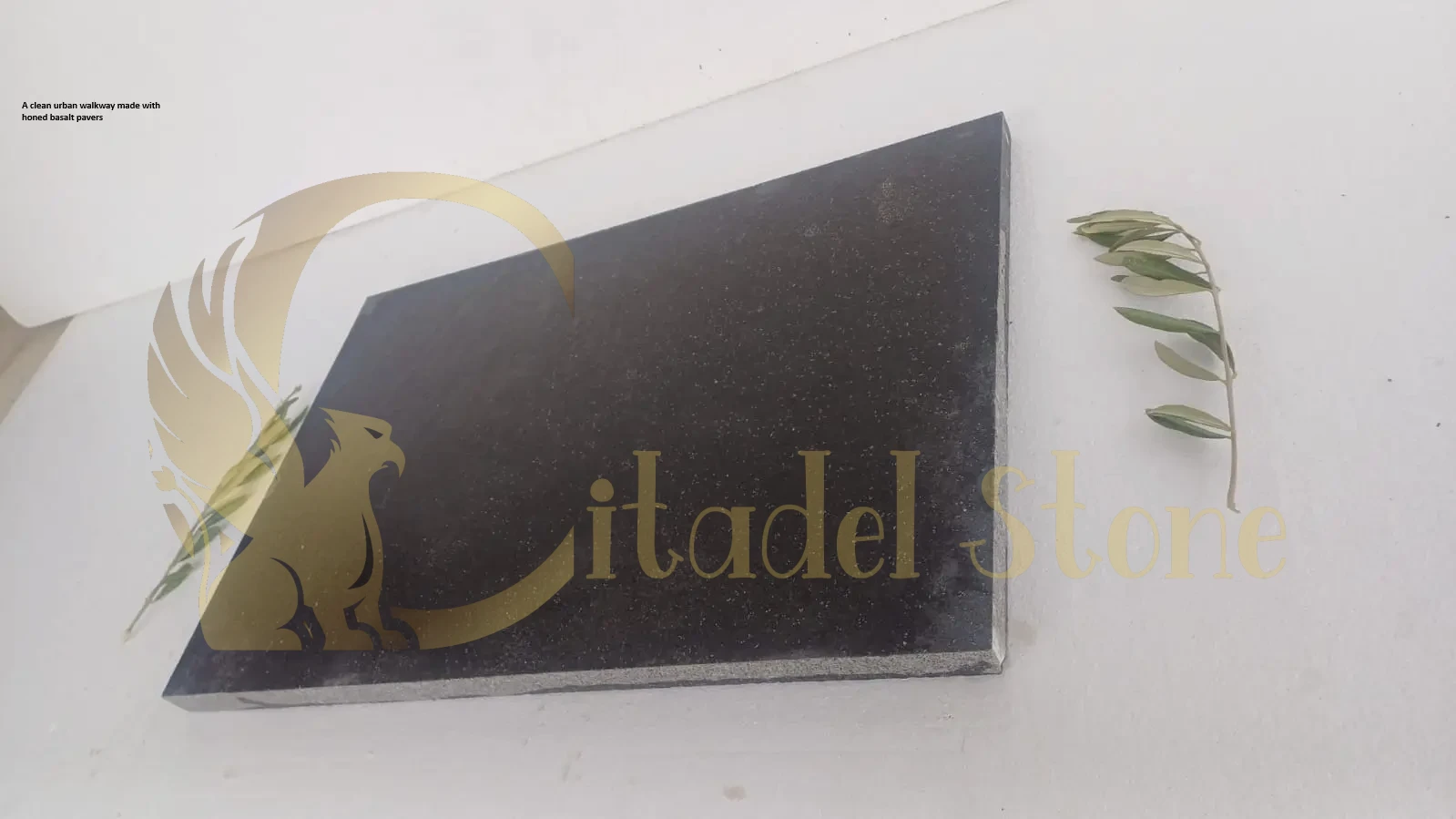
Inadequate substrate preparation causes telegraphing of underlying irregularities through thin stone finishes. Incorrect adhesive selection leads to bond failures, particularly in temperature-cycling environments.
Rushing installation schedules prevents proper curing times and compromises long-term performance. Plan realistic timelines that accommodate material delivery, acclimatization, and proper installation procedures.
Cost & Scheduling Realities
| Factor | Local Stock illustrative | Fabricated Import illustrative | Key Drivers |
|---|---|---|---|
| Lead Time | 2-4 weeks | 8-14 weeks | Fabrication complexity, shipping method |
| Base Cost | Medium | Medium-High | Finish requirements, format size |
| Transport | Low | High | Distance, shipping method, handling |
| Risk | Low | Medium | Currency, customs, quality consistency |
All timing and cost ranges are illustrative and vary by region, specification, and market conditions.
Practical Checklist for Global Specifiers
Essential steps for international honed basalt projects:
- Reserve 8-12% extra material illustrative beyond calculated requirements for cuts and future repairs
- Require ISO/IEC 17025 accredited laboratory test reports for all performance claims (verify current standard)
- Schedule mockup panels ±4-6 weeks illustrative before main material production begins
- Specify quarry lot identification numbers on all delivery documentation for traceability
- Include protective crating specifications in procurement requirements for international shipping
- Verify local building codes and test requirements before finalizing material specifications
- Plan climate-specific installation details appropriate for project location and exposure
- Coordinate customs clearance procedures and budget potential demurrage costs
- Establish local installer qualifications and provide manufacturer installation guidelines
- Document mockup approvals photographically for reference during main installation
- Schedule material acclimatization time illustrative 24-48 hours minimum before installation
- Plan realistic installation timelines that accommodate proper curing and protection requirements
FAQs — Short Answers
Can I use the same honed finish in Tokyo and Dubai?
Yes, but adjust thermal expansion detailing and test requirements based on local climate conditions and building codes.
How much extra should I order for international projects?
Illustrative 8-12% additional material accounts for shipping damage, installation cuts, and future maintenance needs.
What tests ensure salt-air durability?
Salt crystallization resistance testing illustrative (verify current ASTM C88 procedures) and low water absorption specifications below illustrative 0.5%.
Who pays for demurrage charges?
Typically the buyer, unless specifically negotiated otherwise. Include demurrage insurance in procurement budgets for overseas shipments.
Is re-honing possible after 10 years?
Yes, diamond honing can restore original appearance. Document initial specifications to enable accurate surface restoration.
How do I specify tight joint tolerances for large formats?
Require fabrication tolerances within illustrative ±0.5mm and specify precision installation methods with appropriate substrate preparation.
Conclusion & Next Steps — How to Start a Global Honed Basalt Project
Successful honed basalt global architecture projects balance aesthetic vision with practical execution. Key takeaways include: understanding climate-specific detailing requirements, planning realistic procurement timelines, securing adequate reserve materials, establishing clear mockup approval processes, and coordinating local installation expertise.
Ready to specify honed basalt for your next international project? Request mockup panels to evaluate finish options and schedule a procurement review to optimize your supply chain strategy. Our technical team provides comprehensive support for global honed basalt projects, from initial specification through final installation.
Basalt Pavers Product Page | Request International Procurement Support