

Choosing the right 200×100 granite sett layout patterns Arizona projects demand isn’t just a design decision — it’s a scheduling and logistics puzzle that most landscape architects underestimate until their mortar sets in the wrong direction. The dimensional ratio of 200×100 granite setts gives you enormous pattern flexibility, but that same flexibility means your pattern choice directly affects how much cutting happens on-site, how long your crew is exposed to afternoon heat, and whether your installation window stays viable through the day. Getting the pattern right from the beginning eliminates the kind of mid-project pivoting that throws off your entire seasonal schedule.
Why Installation Timing Defines Pattern Success in Arizona
Arizona’s seasonal rhythm creates installation windows that most contractors treat as a suggestion rather than a hard constraint — and that’s where projects run into trouble. For granite sett work specifically, your optimal installation period runs from mid-October through early April, with the sweet spot falling in November through February. During those months, you’re working with surface temperatures that stay below 90°F through most of the day, and your bedding sand retains moisture long enough for proper compaction checks before the material dries out underneath you.
The pattern you select has a direct impact on how efficiently you can hit that morning installation window. Simpler bond patterns like running bond let your crew move quickly, covering more area in the 6–10 AM window before surface temperatures start climbing. More intricate arrangements like herringbone or circular fan patterns demand precise cutting and dry-fitting time, which pushes you deeper into the afternoon — exactly where you don’t want to be in Arizona between May and September. Understanding natural granite paving bond patterns across Arizona means accounting for this thermal reality at every stage of specification.
Scheduling around Arizona’s seasonal patterns also affects your mortar and jointing sand behavior. In summer conditions, polymeric sand can begin pre-curing in the bag if your warehouse staging area isn’t climate-controlled, and adhesive mortars hit reduced open times well below manufacturer specifications. Plan your material delivery from the warehouse to your job site staging area for early morning drops, and always verify that your jointing products are stored below 85°F overnight before use.
1. Running Bond: The Workhorse Pattern for Tight Schedules
Running bond is the pattern you reach for when your installation window is compressed. Each 200×100 sett offsets by half a unit from the course below, creating a classic staggered brick effect that reads as structured and intentional without demanding excessive cut pieces at borders. The pattern’s predictability means your crew can maintain a consistent laying pace from first light through mid-morning without stopping to recalculate.
- Minimal cutting required — most installations complete with less than 8% cut pieces
- Strong directional flow that works well with rectangular spaces and linear pathways
- Distributes load evenly across joints, making it reliable under vehicle traffic
- Easy to maintain consistent joint width without specialized layout tools
For projects in Gilbert, where new-build residential lots frequently feature rectangular rear courtyard spaces, running bond maximizes your installation speed on a standard 800–1,200 square foot patio without sacrificing visual quality. The directional nature of the pattern also makes drainage fall lines easier to maintain accurately. As one of the most reliable granite sett pattern design ideas in Arizona for time-constrained schedules, running bond deserves its place at the top of any shortlist.
2. Herringbone: The Pattern Worth the Extra Morning Hours
Herringbone is the pattern professionals reach for when the design brief calls for movement and visual energy in a space. The 45-degree and 90-degree variants behave differently under Arizona’s installation conditions, and that distinction matters more than most pattern guides acknowledge. The 90-degree herringbone keeps your cuts perpendicular to the sett edges, which is faster to execute on-site. The 45-degree version creates a diagonal flow that reads beautifully on large terraces, but every border requires a 45-degree miter cut — and in summer heat, that’s additional time your crew spends in the sun running a wet saw.
- 90-degree herringbone: faster installation, strong interlocking stability, recommended for driveways
- 45-degree herringbone: higher visual impact, approximately 25–30% more cutting time at perimeters
- Both variants provide excellent load distribution when properly bedded on compacted aggregate
- Interlocking geometry reduces individual unit rocking under pedestrian impact
Schedule your herringbone installations as a two-phase process during shoulder seasons: lay the field pattern in a morning session, then tackle border cuts and edge detailing in a separate session the following morning. This approach keeps your crew’s precision work in the coolest part of the day and prevents the fatigue-driven measurement errors that cause pattern misalignment at perimeters.
3. Stack Bond: Clean Grid Geometry for Contemporary Arizona Spaces
Stack bond aligns 200×100 granite setts in a perfect grid, with all joints running continuously in both directions. It’s the most structurally demanding pattern in terms of base preparation precision — continuous joints create weakness lines unless your compacted aggregate base is absolutely uniform. That means your base preparation needs to happen during cooler conditions, ideally in October or November, before you commit to a stack bond layout for spring installation.
The pattern suits contemporary architectural styles common in newer Mesa developments, where clean grid geometry aligns with minimalist exterior finishes. Specifying 200×100 stone block paving layout AZ spaces in stack bond requires joint widths of 8–10mm consistently maintained — narrower joints allow differential movement to telegraph through the pattern as visible misalignment within two to three seasonal cycles.
- Base flatness tolerance must be within ±3mm per 3m to prevent visible joint deviation
- Expansion joints every 4–5 meters are critical — thermal cycling will telegraph through continuous joints
- Best suited for foot traffic areas; avoid for primary vehicle access without engineered sub-base
4. Double Herringbone: Two Units Wide for Large Arizona Terraces
The double herringbone pattern uses pairs of setts laid side-by-side before transitioning to the opposing angle, creating a wider visual rhythm that scales better on large terraces and commercial plazas. Among the 200×100 granite sett layout patterns Arizona designers specify most often for resort and hospitality projects, double herringbone consistently appears on medium-to-large format outdoor floors where standard herringbone would look too tight and repetitive.
Installation timing for double herringbone follows the same logic as single herringbone but with one important difference — the wider paired units make layout lines more forgiving, so your crew can maintain accuracy even as morning temperatures begin climbing toward 95°F. The pattern is worth scheduling into your late-October or early-November calendar, giving you long days with comfortable working conditions and enough evening light for quality checking before your crew leaves the site.
- Ideal for areas wider than 6 meters where standard herringbone creates a visually busy surface
- Pairs well with soldier course borders that anchor the pattern at perimeter edges
- Cutting waste typically runs 10–15% — account for this in your warehouse order quantity
5. Fan and Circular Pattern: Statement Installations That Demand Careful Scheduling
Fan and circular patterns are the most labor-intensive Arizona outdoor granite sett design arrangement options, and their installation timeline is the most sensitive to seasonal scheduling. Each radial course requires individual piece cutting to maintain consistent joint width from the center point outward, and that precision work demands that your crew is working in comfortable conditions — not fighting 105°F surface temperatures while trying to hold a 6mm joint to a curved reference line.
Schedule fan pattern installations exclusively for your November through February window if you’re working in the Arizona low desert. The geometry requires dry-fitting multiple trial courses before committing to mortar, adding 30–40% more time on-site compared to a linear bond pattern. Morning starts before 7 AM are non-negotiable for summer-adjacent months — any fan pattern work pushed past noon in March through October introduces measurement errors from thermal glare and crew fatigue.
- Establish your center point and primary reference arcs before ordering materials — radius affects cut piece dimensions
- Plan for 20–25% cut waste on circular patterns — over-ordering from warehouse stock is always the right call
- Fan patterns read best as focal features within larger field patterns, not as full-coverage layouts
6. Random Ashlar: Organized Variation for Natural Aesthetics
Random ashlar arranges 200×100 granite setts in a deliberately varied sequence that mimics the irregular coursing of natural fieldstone while maintaining enough geometric order to install efficiently. The pattern uses a repeating module — typically a 4–6 unit grouping — that tiles across the surface with intentional variation in joint alignment. It’s a pattern that looks complex but installs with predictable pace once your crew internalizes the module.
For granite sett pattern design ideas in Arizona projects that need a more organic aesthetic than strict coursing patterns provide, random ashlar delivers that character without the complexity penalty of fully random layouts. The installation pace is comparable to running bond, making it a reasonable choice for larger projects where you need both visual interest and efficient coverage within a compressed seasonal window. At Citadel Stone, we recommend confirming your pattern module in a small dry-laid test area before committing to mortar — a single module error early in the installation multiplies across the full surface.
7. Basketweave: Traditional Character With Predictable Installation Pace
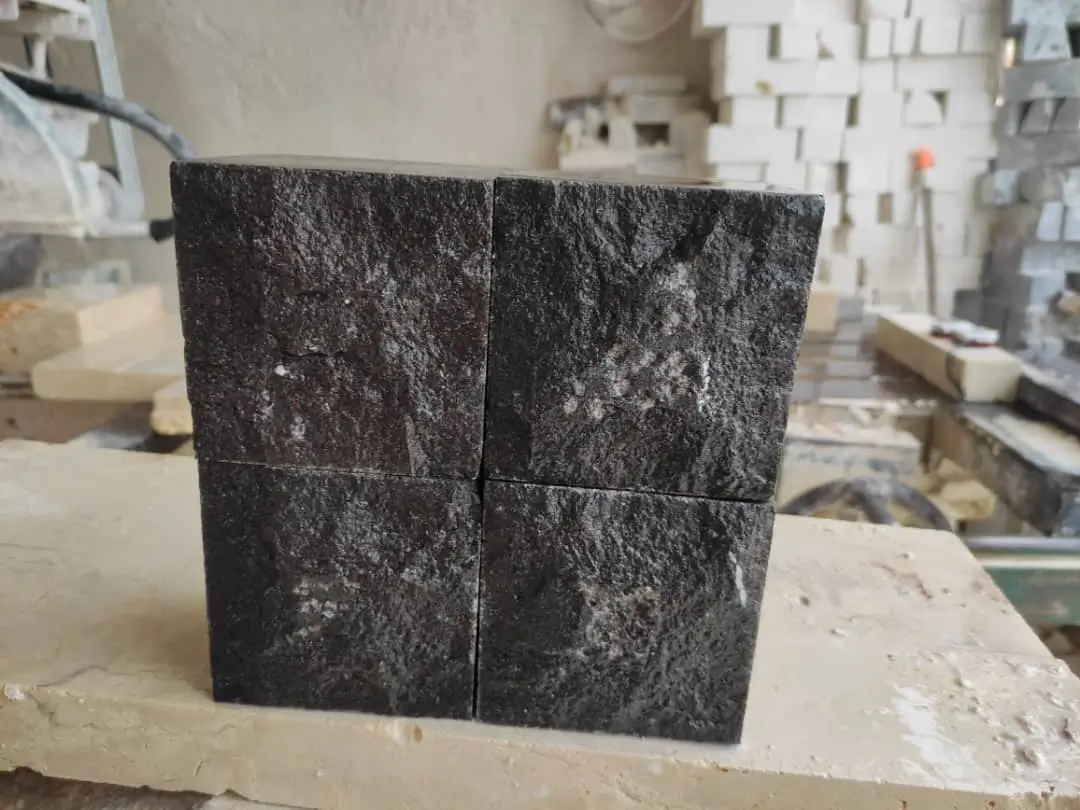
Basketweave alternates pairs of horizontal and vertical setts to create a woven textile effect across the surface. The pattern relies on the 2:1 dimensional ratio of your 200×100 setts — two units side-by-side in landscape orientation equal one unit in portrait orientation — which means proper execution depends entirely on your setts maintaining dimensional consistency within tight tolerances. Dimensional variation above ±2mm across a batch will cause the basketweave intersections to misalign progressively across the field.
When reviewing natural granite paving bond patterns across Arizona suppliers, always request a dimensional QC report from your stone source before specifying basketweave. Citadel Stone performs dimensional verification at our warehouse before palletizing for truck delivery, which catches batches that would create alignment problems on-site and eliminates the kind of mid-installation supply issue that forces scheduling delays.
- Requires tight dimensional tolerance: ±1–2mm across the batch for clean intersection alignment
- Works best in square or near-square spaces — the 2:1 module resolves cleanly without awkward border cuts
- Traditional aesthetic suits older residential neighborhoods and heritage-style commercial projects
- Morning installation pace is comparable to running bond — a viable choice for tight seasonal windows
8. Soldier Course Borders Combined With Field Patterns
The soldier course border isn’t a standalone pattern — it’s the detail that elevates every other layout option on this list. Running a single or double course of 200×100 setts perpendicular to the field pattern creates a visual frame that defines the installation’s edges, conceals cut pieces, and provides a clear termination line that reads as intentional rather than incidental. For Arizona outdoor spaces where the paved area transitions to planted beds or pool surrounds, the soldier course delivers a finished quality that the field pattern alone can’t achieve.
Scheduling your soldier course work separately from your field installation is a practical approach in Arizona’s climate. Your crew can install the field pattern efficiently in morning sessions, then return to execute the perimeter border in a final morning session once the field has achieved adequate set. For projects in Yuma, where extreme summer temperatures make multi-day installations challenging, this phased approach keeps each session short enough to maintain crew precision from start to finish.
- Single soldier course: clean, minimal framing suitable for contemporary designs
- Double soldier course: stronger visual weight, recommended for large-format terraces above 500 square feet
- Contrasting stone color in the border creates definition; matching color creates a subtle, sophisticated frame
- Always install border courses after field pattern — they anchor the field and prevent edge creep over time
For a closer look at how these border and field combinations work together in practice, our rectangular granite sett layouts Arizona resource provides detailed specification guidance with installation photography from completed projects.
What Matters Most for 200×100 Granite Sett Layout Patterns in Arizona
Across all eight of these 200×100 granite sett layout patterns, the variable that determines success more consistently than any design choice is scheduling discipline. Arizona outdoor granite sett design arrangement options are genuinely diverse — from the efficiency of running bond to the drama of circular fan patterns — but every one of them delivers full performance potential only when installation happens within the right seasonal and daily timing windows. Pushing complex pattern work into summer afternoon heat doesn’t just stress your crew; it introduces measurement errors, adhesive failures, and joint inconsistencies that show up as long-term maintenance problems within three to five years.
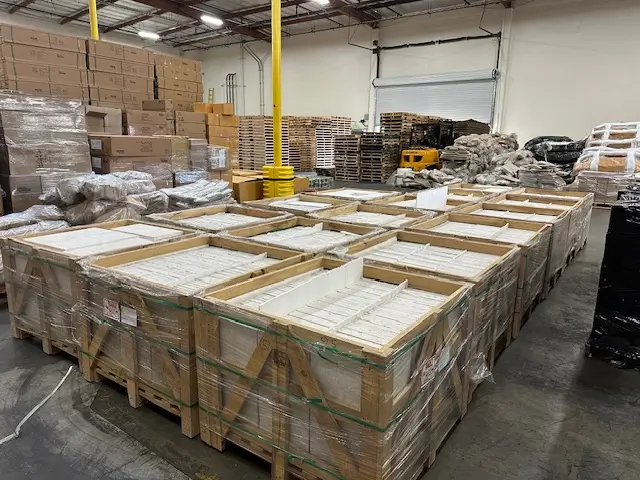
Your pattern decision and your installation calendar need to be made together, not sequentially. Choose a pattern that your crew can execute within your available morning window, verify warehouse stock levels at least four to six weeks ahead of your install date to avoid last-minute truck delivery pressure, and build at least two alternative schedule dates into your project plan for weather-related delays. Arizona stone outdoor spaces are a long-term investment, and the 200×100 stone block paving layout AZ designers select looks best after twenty years when every detail was installed under conditions that allowed proper execution. If you’re evaluating granite sett options alongside other natural stone formats, 100x100x100 Granite Setts vs Cobbles: Which Is Better for Arizona Homeowners? walks through a direct material comparison that can sharpen your specification before you commit. Stone for Arizona projects from Citadel Stone includes 200×100 granite setts from premium quarries in Turkey and the broader Middle East region, giving designers in Yuma, Sedona, and Flagstaff flexible layout options.