

The proportional logic behind 12×24 stone tile in Arizona interiors runs deeper than most designers initially consider — a 2:1 rectangle doesn’t just fill floor area, it actively directs the eye through a space in ways that square formats never achieve. Rectangular stone tile layout ideas in Arizona design leverage this directional quality across indoor rooms that blur into covered patios, where landscape views compete with interior focal points. Understanding how to deploy that tool across six distinct design scenarios is what separates a thoughtful specification from a generic floor plan.
Aligning Stone Tone with Arizona’s Desert Palette
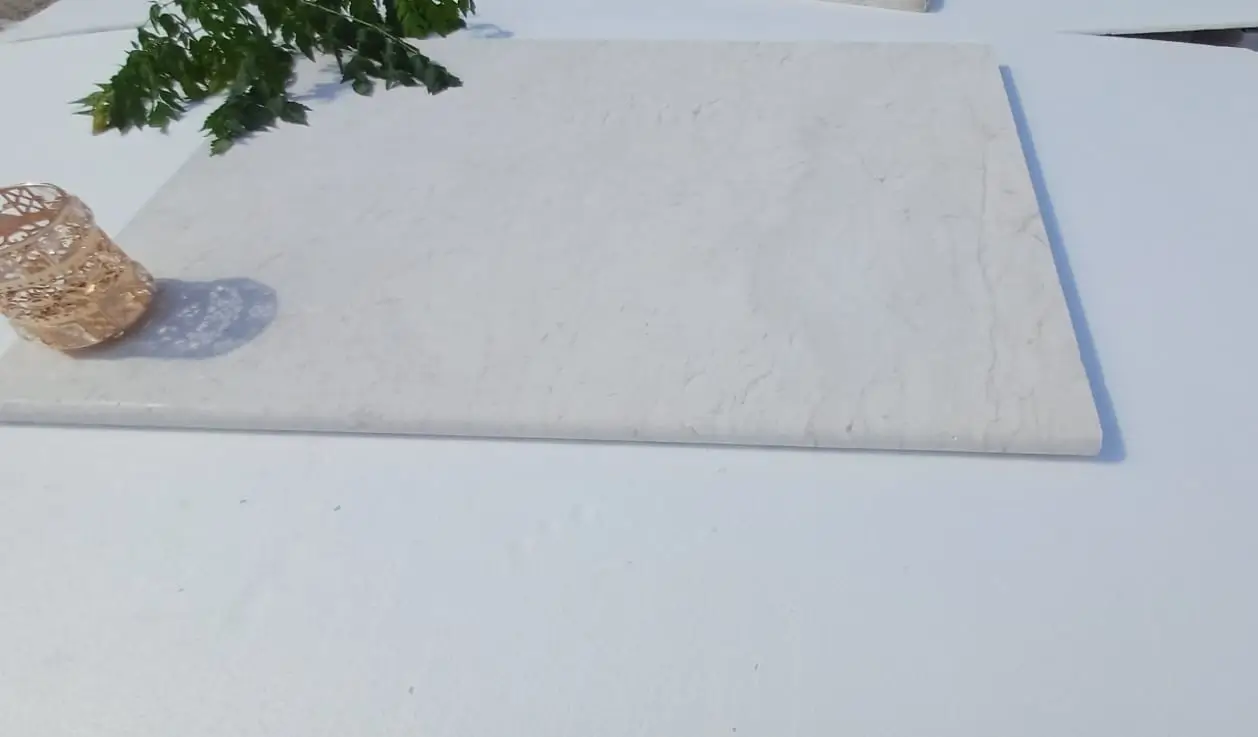
Arizona’s built environment draws from a remarkably cohesive color vocabulary — warm taupes, dusty sages, terracotta, and the bleached ochres of desert rock. Your 12×24 stone tile selection should respond to that palette rather than fight it. Warm-toned limestone and travertine in honed or brushed finishes land in exactly the right register, connecting interior surfaces to the saguaro-studded hillsides visible through full-height glazing that defines contemporary Scottsdale architecture.
The elongated format amplifies this landscape integration. Laid parallel to a mountain view or a sliding glass wall, the horizontal coursing reinforces the low, ground-hugging quality that Southwest desert design prizes. Neutral stone tones in 12×24 read as an extension of the exterior landscape rather than a hard interior boundary — which is precisely why Phoenix residential designers have gravitated toward the format over the past decade.
Open-Plan Stone Flooring and Directional Layout Strategies
Open-plan stone flooring options in AZ homes present a specific compositional challenge: how do you unify a great room, kitchen, and dining zone without creating a monotonous expanse? The 12×24 format solves this through directional laying patterns that divide the plane visually without physical separation. Running the tile lengthwise from the entry toward the primary view wall creates a natural focal axis — your guests’ eyes travel the room before they consciously register the floor beneath them.
Three rectangular stone tile layout ideas in Arizona open-plan interiors perform particularly well:
- Horizontal stack bond parallel to the longest exterior wall — reinforces the indoor-outdoor connection and makes rooms read wider
- Diagonal offset at 45 degrees — breaks the room grid and adds dynamism without introducing a second material
- Brick-offset running perpendicular to the entry — draws movement deeper into the plan, useful in narrow great rooms
Grout joint width influences which direction reads most strongly. A 1/8-inch joint in a matching tone minimizes the grid effect; a contrasting joint in a 3/16-inch width makes the directional coursing explicit. Decide which outcome serves the room’s scale before your tile arrives from the warehouse.
How 12×24 Stone Tile Integrates with Desert Xeriscaping
Tucson designers working with desert xeriscaping schemes face a transition challenge that few other climate zones share: the interior floor must negotiate a visual handshake with gravel mulch, decomposed granite, and agave plantings that sit just beyond the glass. Rectangular stone tile layout ideas in Arizona handle this transition more gracefully than square formats because the elongated module echoes the striated boulder outcroppings common in Sonoran landscape design.
The key is selecting a stone surface with visible natural veining or bedding planes — materials that carry the geological narrative from outside in. Honed travertine with open fill and brushed limestone both achieve this. Polished surfaces, by contrast, create too sharp a visual break from the naturalistic plant palette outside. According to Natural Stone Institute limestone specifications, honed and brushed finishes preserve the material’s natural texture profile, which is exactly what reinforces the xeriscaping connection you’re after.
Arizona Indoor Stone Tile Proportion Guide: Matching Format to Room Scale
The Arizona indoor stone tile proportion guide principle is straightforward: the 12×24 module works best when the room’s shortest dimension is at least 10 feet. Below that threshold, the long axis of the tile can make a narrow corridor or secondary bedroom feel compressed rather than expanded. In rooms above 14 feet in both dimensions, you have full creative latitude — the tile’s proportional advantage compounds at scale.
For rooms between 10 and 14 feet, consider these proportion decisions carefully:
- In rooms with ceiling heights above 10 feet — common in Scottsdale custom builds — running the 24-inch dimension vertically (perpendicular to the view) creates a grounding effect that balances the vertical volume
- For rooms under 9-foot ceilings, keep the 24-inch dimension horizontal to avoid emphasizing the ceiling constraint
- In L-shaped plans, maintain consistent tile direction through the turn rather than re-orienting at the elbow — discontinuous direction creates visual noise at the joint line
The TCNA natural stone tile installation standards address large-format tile flatness requirements that become especially critical with 12×24 pieces — substrate preparation tolerances tighten as tile length increases, and you’ll want your installer working to L/720 flatness specs, not the more lenient L/360 commonly used for smaller formats.
Six 12×24 Stone Tile Design Ideas for Arizona Interiors
1. Travertine Stack Bond from Interior to Covered Patio
Running 12 by 24 natural stone tile across Arizona covered patios and through a sliding door threshold onto a covered ramada creates the seamless indoor-outdoor floor plane that Arizona architecture is built around. The consistent module across the threshold eliminates the visual speed bump that a pattern change creates. Specify a single stone lot number for both interior and exterior pieces to avoid tone variation between rooms — warehouse inventory at Citadel Stone is organized by lot to make this straightforward.
2. Herringbone Limestone for Entry Statements
A 12×24 herringbone at entry foyers reads as intentional and architectural — it signals a design decision rather than a default. In Phoenix custom homes where the entry is a genuine architectural moment with double-height ceilings and stone accent walls, herringbone 12×24 limestone in a warm ivory or cream tone anchors the space without competing with the vertical surfaces around it. The installation labor cost is higher, but the visual return on a formal entry is disproportionately large.
3. Dark Grout Contrast for Contemporary Minimalist Plans
Contemporary minimalist Arizona interiors — the clean-lined stucco and steel-frame homes prevalent in Scottsdale’s newer communities — often benefit from deliberate contrast rather than tone-on-tone subtlety. Specifying a medium-grey natural stone tile in a 12×24 format with a charcoal grout joint creates a graphic, grid-forward effect that reads as intentional modernism. The rectangular module reinforces the orthogonal geometry of the architecture. Keep wall surfaces and cabinetry restrained — this floor approach works best when the rest of the room gives it space to perform.
4. Book-Matched Vein Continuity Across Large Spans
For open-plan stone flooring options in AZ homes above 400 square feet, selecting a veined limestone or travertine and requesting consecutive slab cuts from the same quarry block lets you create approximate vein continuity across the floor. The effect isn’t perfect — natural stone isn’t precision-matched like porcelain — but the directional movement of the veining creates a cohesive, flowing quality that makes the floor read as a single material plane rather than an assembly of individual tiles. At Citadel Stone, we source stone from consistent quarry blocks for clients who request vein-matching, and we recommend reviewing full-room sample layouts before truck delivery is scheduled.
5. Mixed-Format Zoning with 12×12 and 12×24
Combining 12×12 and 12×24 tiles from the same stone allows you to create implicit room zones in open plans without walls or level changes. The 12×24 runs through primary living areas; the 12×12 defines the kitchen prep zone or breakfast nook. Because the formats share a 12-inch common dimension, the grout lines align along one axis — the visual result is deliberate and clean rather than mismatched. You can explore our Arizona 12×24 stone tile designs to see how format combinations work across different room configurations. This approach gives your rectangular stone tile layout in Arizona interiors a spatial hierarchy without the cost of a material change.
6. Extending 12×24 Into Covered Outdoor Living Rooms
Arizona’s outdoor living rooms — the deep-covered patios, outdoor kitchens, and ramadas that extend the home’s livable area for eight or nine months of the year — are most successful when they share the interior floor’s material language. Deploying 12 by 24 natural stone tile across Arizona covered patios creates visual continuity that makes both spaces read larger. The tile’s thermal mass performs differently outdoors, where morning sun exposure after cool desert nights means the surface can fluctuate 30–40°F in the first hour after sunrise. Specify a honed or lightly brushed finish for outdoor covered areas — polished surfaces read awkwardly in bright outdoor light and show water spots from monsoon splash-back.
12×24 Stone in Transitional and Spanish Colonial Arizona Architecture
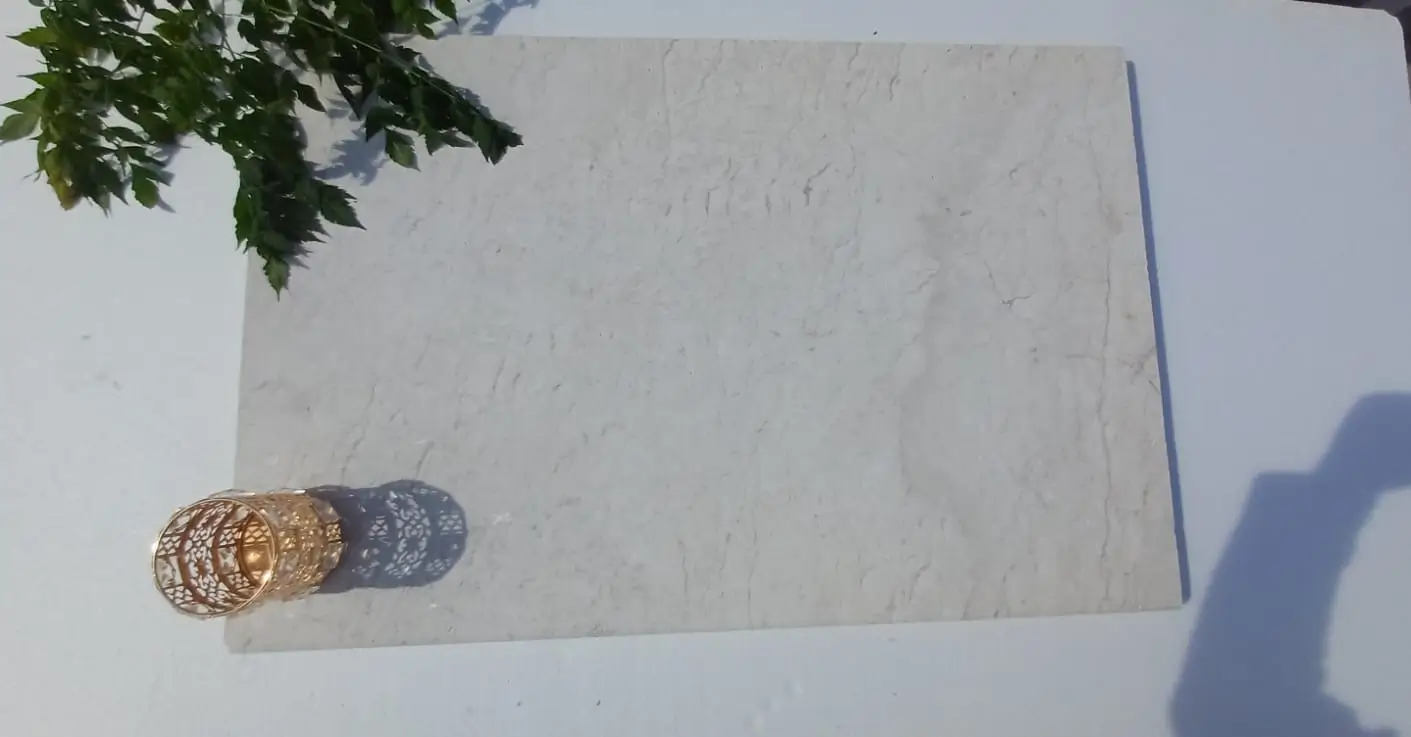
Spanish Colonial revival architecture — still the dominant residential style across large portions of Tucson and its surrounding foothills communities — responds exceptionally well to warm, textured natural stone in rectangular formats. The 12×24 module scaled against the generous room proportions of Colonial-style homes creates a proportionally balanced field without the small-module busyness that 6×6 or 4×4 formats produce in large rooms. Buff limestone, aged travertine, and cream-toned sandstone all read authentically within the Colonial palette.
Transitional-style homes — which blend clean contemporary lines with traditional material warmth — represent the current production sweet spot in Arizona’s volume builder market. These homes typically feature 9 to 10-foot ceilings, open-plan stone flooring options in AZ homes ranging from 1,800 to 2,400 square feet, and a design vocabulary that accepts both straight-stacked and offset-laid 12×24 tile without visual dissonance. The ASLA natural stone paving guidance supports the use of permeable-finish natural stone in both interior and transitional outdoor applications — relevant context when your covered patio borders a xeriscape planting bed.
Specification Decisions That Define 12×24 Stone Tile Performance
The design ideas above only perform as intended when the underlying specification decisions are sound. A few critical factors regularly determine whether a 12×24 installation looks the way the designer intended at year five:
- Substrate flatness: large-format tiles require a flatter substrate than small-format — F-number specifications matter in Arizona slab-on-grade construction where settlement is common
- Expansion joint placement: thermal cycling in Arizona’s climate requires expansion joints at 12-foot intervals minimum, with perimeter relief joints at all walls — skipping this step is the most common cause of tile tent failures
- Setting mortar coverage: 95% back-butter coverage is required under 12×24 tiles per industry standards — the shortcuts that work at 6×6 cause hollow spots and cracking at larger formats
- Grout selection: unsanded grout performs poorly in joints wider than 1/8 inch — verify your joint width against grout specifications before ordering
Verify warehouse stock availability before finalizing your installation timeline — 12×24 formats in natural stone move quickly during Arizona’s peak construction season between October and April, and a two-week lead time can extend to four if warehouse supply is constrained.
Final Considerations for 12×24 Stone Tile in Arizona Projects
The design versatility of 12×24 stone tile in Arizona comes from the format’s ability to serve multiple design languages simultaneously — it belongs in a contemporary Scottsdale remodel as naturally as it does in a Tucson Spanish Colonial estate. The six ideas covered here represent the patterns that surface most consistently in Arizona’s residential design market, and each one relies on the same underlying principle: proportion drives perception. Your layout direction, grout tone, and surface finish aren’t afterthoughts — they’re the variables that determine whether the tile reads as a background surface or an intentional design statement. For a complementary perspective on stone selection in Arizona residential projects, granite tile performance in Arizona homes covers how a different material category addresses similar specification demands across the state’s residential market. Available across Flagstaff, Yuma, and Chandler, Citadel Stone 12×24 stone tile is noted for the proportional balance it brings to covered outdoor rooms and interior spaces throughout Arizona homes.