

Tumbled limestone cost Arizona projects hinges on a variable most homeowners underestimate before they ever call a supplier — the relationship between finish grade and regional landscape compatibility. You’re not just buying stone when you specify tumbled limestone for Arizona projects; you’re buying a surface that either harmonizes with the surrounding desert palette or fights it at every sight line. The worn, rounded edges of tumbled limestone read as naturally aged in ways that polished or honed finishes simply don’t, and that distinction directly affects both material pricing and long-term design satisfaction in Arizona landscapes.
Why Tumbled Limestone Works in Arizona Landscapes
Arizona’s design vocabulary is built around texture, contrast, and earth tone continuity — and tumbled limestone delivers all three simultaneously. The tumbling process creates micro-roughened surfaces that interact with Arizona’s intense directional light in a way that flat-sawn stone never does, producing subtle shadow variation across a patio or walkway that shifts with the sun’s arc. That visual depth is exactly what landscape architects working in desert modernist and Sonoran contemporary styles have been specifying for decades.
You’ll notice that projects blending decomposed granite, native boulders, and specimen cacti look visually cohesive when tumbled limestone anchors the hardscape. The material’s natural buff, cream, and warm gray tones sit within the same ochre-to-sandstone range that defines Arizona’s color vernacular, from the terracotta of older neighborhoods to the bleached sand tones of contemporary xeriscaping. That palette compatibility is something you simply can’t replicate with manufactured concrete pavers, regardless of colorant choices.
- Tumbled edges eliminate the sharp, industrial look that conflicts with organic desert planting schemes
- Surface texture variation provides natural traction without requiring applied coatings that degrade in UV exposure
- Warm limestone tones complement agave, palo verde, mesquite, and ironwood plantings without visual competition
- The aged aesthetic pairs naturally with territorial and Spanish Colonial architectural details common across the state
- Color consistency within tumbled limestone is actually more forgiving in blended landscapes than uniform engineered surfaces
Natural Limestone Pricing: What Drives Cost in Arizona
Natural limestone pricing for AZ homeowners depends on a layered set of variables, and understanding each one prevents the budget surprises that derail projects mid-installation. Material cost at the supplier level is just the starting point — delivery logistics, base preparation requirements, and installation complexity stack on top in ways that vary considerably between the high desert and low desert zones of the state.
At the base material level, tumbled limestone cost for Arizona projects typically ranges from $4.50 to $11.00 per square foot for the stone itself, before any installation labor or base work. That spread isn’t arbitrary — it reflects genuine differences in thickness, finish consistency, and source quarry. You’ll find the lower end of that range populated by 3/4-inch to 1-inch nominal thickness pieces with natural color variation, while the upper end represents 1.5-inch to 2-inch thick material with tighter dimensional tolerancing and more consistent face texture.
- 1/2-inch to 3/4-inch tumbled limestone: approximately $4.50–$6.00 per square foot, best for interior applications with controlled base conditions
- 1-inch nominal thickness: approximately $6.00–$8.00 per square foot, the most common specification for Arizona patios and pool surrounds
- 1.5-inch to 2-inch slab stock: approximately $8.50–$11.00 per square foot, recommended for driveways, heavy-traffic walkways, and firepit surrounds
- Custom-cut or matched lot material: add $1.50–$3.00 per square foot for quarry-matched consistent color lots
The thickness decision isn’t just a cost variable — it’s a design decision with structural consequences. In Yuma, where expansive soils and extreme heat cycles stress base materials more aggressively than in higher-elevation zones, the move from 1-inch to 1.5-inch stone is a specification upgrade that pays dividends in crack resistance over a 15-to-20-year installation life.
Budgeting for Stone Surfaces: Beyond the Material Cost
Budgeting for stone surfaces in Arizona requires you to think in layers — literally and financially. The material cost represents roughly 35–50% of total installed cost on most residential projects, which means the labor and base preparation numbers deserve just as much attention as your per-square-foot stone price.
Base preparation for tumbled limestone in Arizona’s desert environment means a minimum 4-inch compacted aggregate base over stable native soil, or 6 inches where caliche is absent and native soil has moderate plasticity. Factor in $3.00–$5.00 per square foot for base prep labor and materials in most Phoenix metro and southern Arizona markets. Setting bed sand or dry-pack mortar adds another $1.50–$2.50 per square foot depending on the method your installer uses.
- Aggregate base material and compaction: $1.50–$2.50 per square foot
- Base prep labor (grading, excavation, compaction): $1.50–$2.50 per square foot
- Setting bed preparation (sand or mortar): $1.50–$2.50 per square foot
- Stone installation labor: $5.00–$9.00 per square foot depending on pattern complexity and site access
- Joint sanding and initial sealing: $1.00–$2.50 per square foot
- Total installed cost range: $17.00–$33.00 per square foot depending on material grade and project scope
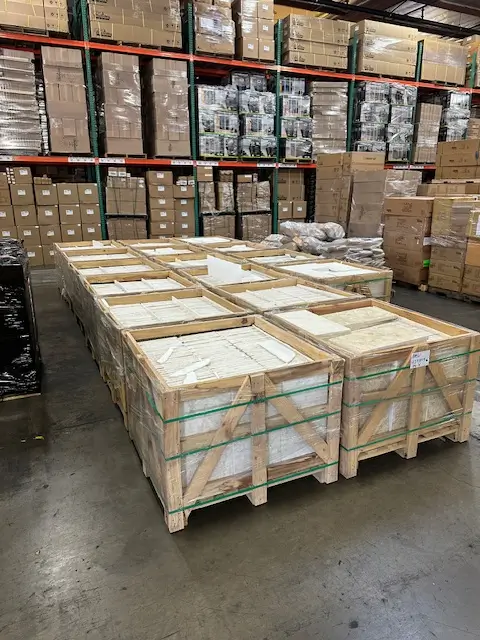
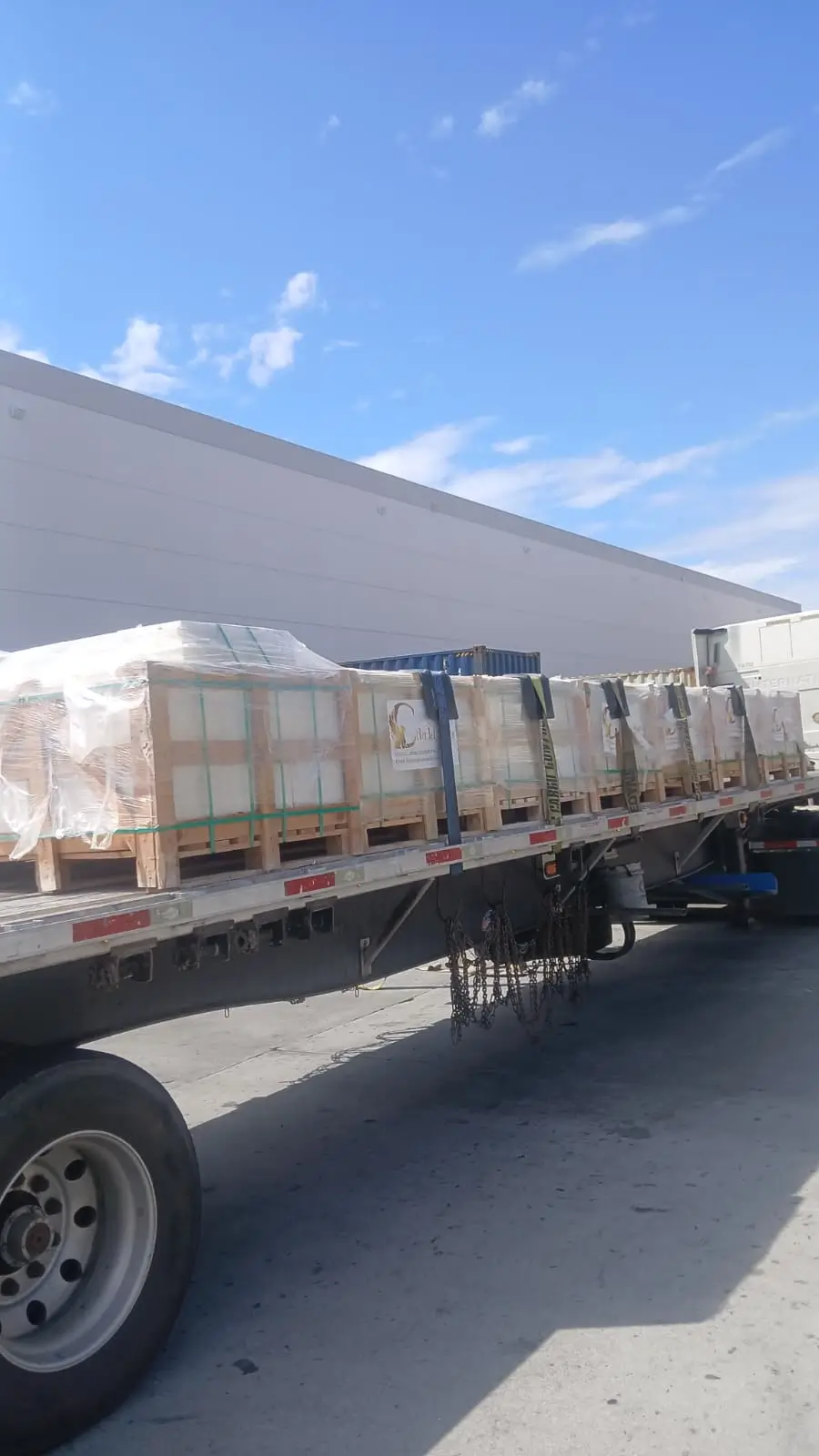
Don’t overlook truck delivery costs when building your project budget. Depending on your site location and order quantity, delivery fees from the warehouse typically run $150–$450 per truck load in the Arizona market — a line item that sometimes catches buyers off guard when they’re focused on per-square-foot material pricing. Ordering a full pallet or full truck load quantity nearly always reduces your effective per-unit cost enough to offset the delivery charge.
Affordable Tumbled Limestone Options Across Arizona
Affordable tumbled limestone options across Arizona don’t require you to sacrifice design integrity — they require you to make smarter specification decisions. The most cost-effective approach usually involves selecting a consistent 1-inch material in a single color family rather than mixing grades or chasing matched lots across multiple orders.
For reference, projects in Mesa working with standard buff or cream tumbled limestone in the 1-inch range and a straightforward running-bond or random ashlar pattern typically land in the $19.00–$24.00 per square foot installed range, which represents solid value for a natural stone surface that will outlast concrete alternatives by a decade or more with basic maintenance. The key cost efficiency comes from keeping the pattern simple and the base prep straightforward — complex herringbone or tight radius work adds 30–50% to installation labor without a corresponding improvement in material performance.
- Choose a single-color lot from available warehouse stock rather than mixing sources — consistency reduces waste and re-order delays
- Standard random ashlar or running bond patterns minimize cut waste and installation labor compared to custom patterns
- Buying full pallet quantities (typically 200–250 square feet per pallet) reduces per-square-foot material cost by $0.50–$1.50 versus split orders
- Specifying a penetrating sealer rather than a film-forming sealer reduces initial cost and maintenance complexity in Arizona’s UV environment
- Working with a supplier who maintains local warehouse inventory eliminates the 6–8 week import lead time that forces expensive project delays
How Design Style Affects Stone Selection and Cost
Your landscape design style is one of the strongest cost drivers in a tumbled limestone project, and it deserves an honest conversation before you finalize any budget numbers. Desert xeriscaping with specimen plantings and gravel mulch creates a relatively forgiving installation context — natural thickness variation and irregular formats can be used without visual penalty, which keeps material costs at the lower end of the range when budgeting for stone surfaces in Arizona.
Sedona-influenced designs, with their emphasis on red rock complementary tones and organic layering, benefit from tumbled limestone in warm pink-buff or terracotta-adjacent tones. These color-matched lots sometimes carry a 10–20% premium over standard cream or gray limestone because quarry yield for consistent warm tones is lower. In Sedona itself and in the design vocabulary it inspires across northern Arizona, that premium is consistently justified by the way the material integrates with the surrounding geology rather than competing with it.
Modern minimalist designs present a different challenge — they require tighter dimensional consistency and more precise installation tolerancing, which drives up labor cost even when the material itself is mid-range. For clean-lined contemporary pools and outdoor living spaces, you’ll want tumbled limestone with consistent face dimensions within 1/4-inch tolerance, which is a warehouse quality-control specification that not every supplier can deliver reliably.
Arizona Desert Stone Flooring Cost Factors by Application
The Arizona desert stone flooring cost guide most homeowners need breaks down by application type, because a pool surround, a covered patio, and an exposed walkway have genuinely different cost profiles even when they use the same material. Understanding those differences helps you allocate budget intelligently rather than applying a single square-foot number across an entire project scope.
For detailed budget planning tools and current pricing across thickness grades, our tumbled limestone cost guide Arizona provides up-to-date material pricing and specification guidance that reflects actual warehouse inventory and current delivery conditions in Arizona.
Pool surrounds carry their own cost considerations — you’ll need a minimum 1-inch thickness with a specific surface texture in the low-slip range, and the wet-area setting mortar adds to base costs. Covered patios under a ramada or pergola represent the most economical tumbled limestone application because thermal cycling is moderated and base movement is reduced compared to fully exposed surfaces. Exposed walkways in full desert sun experience the most aggressive thermal cycling and benefit from the 1.5-inch material that costs more upfront but eliminates the cracking risk that generates expensive repair calls at the 7-to-10-year mark.
- Pool surround (wet area, code-compliant traction): $21.00–$29.00 per square foot installed, requiring wet-area setting mortar and textured surface confirmation
- Covered patio or ramada floor: $17.00–$23.00 per square foot installed, with reduced base spec requirements under covered conditions
- Exposed walkway or path: $19.00–$27.00 per square foot installed, requiring 1.5-inch material in high-traffic or vehicle-adjacent applications
- Driveway approach or motor court: $24.00–$33.00 per square foot installed, requiring 2-inch minimum thickness and 6-inch compacted base
- Interior transition from outdoor to indoor space: $18.00–$25.00 per square foot installed, with floor-leveling substrate requirements adding complexity
Sealing and Maintenance Cost Over Time
The total cost picture for tumbled limestone in Arizona isn’t complete without factoring in the sealing and maintenance schedule, because this material requires genuine attention to maintain both its appearance and its structural integrity in desert conditions. Arizona’s UV index consistently ranks among the highest in the country, and that UV load breaks down film-forming sealers faster than most product data sheets acknowledge for moderate climates.
Penetrating silane-siloxane sealers perform significantly better than acrylic or urethane film formers in Arizona’s sun exposure. Your reapplication cycle for a penetrating sealer in full desert exposure runs every 2–3 years rather than the 5-year cycle that works in Pacific Northwest or Southeast installations. Budget $0.75–$1.50 per square foot for professional resealing, or approximately $150–$400 for a typical 250-square-foot patio on a biennial cycle. Over a 20-year installation life, that maintenance cost adds $1,500–$4,000 to the total cost of ownership — meaningful, but well below the cost of replacement.
- Initial sealer application at installation: typically included in installer pricing, or $0.75–$1.25 per square foot if added separately
- Resealing every 2–3 years in full desert exposure: $0.75–$1.50 per square foot professionally applied
- Joint sand refresh every 4–6 years: $0.50–$1.00 per square foot labor and material
- Individual stone replacement for cracked pieces (rare with correct specification): $8.00–$18.00 per piece including labor
- 20-year total maintenance cost estimate: $8.00–$12.00 per square foot cumulative, well below replacement cost
At Citadel Stone, we recommend requesting a sample sealer application on your actual stone lot before committing to a product — the same sealer can produce noticeably different sheen levels on different limestone sources, and that aesthetic difference matters significantly on large exposed surfaces. Our technical team has seen more than a few clients surprised by a wet-look finish they didn’t intend on a material that was specified for a natural matte appearance.
Ordering Logistics and Lead Times for Arizona Projects
Your project timeline depends on more than design and installation scheduling — material availability and truck delivery logistics shape your realistic start date in ways that catch many project managers off guard. Tumbled limestone in Arizona sourced from domestic warehouse stock typically delivers in 5–10 business days from confirmed order, while imported material on a container cycle can run 6–10 weeks from order to site delivery.
Citadel Stone maintains warehouse inventory across Arizona, which typically reduces lead times to 1–2 weeks compared to the 6–8 week import cycle that projects sourcing overseas face. That inventory depth matters particularly on fast-track projects or when a landscaping crew has a specific installation window. Coordinating your truck delivery to coincide with base preparation completion — not before — prevents material sitting on site in Arizona’s heat and UV, which can affect sealer pre-treatment and surface cleanliness before installation.
- Confirm warehouse stock availability before finalizing your installation schedule with your contractor
- Order 10–15% overage to account for cuts, natural breakage, and pattern adjustment — this is the standard professional allowance for tumbled stone work
- Schedule truck delivery for the day your base preparation passes compaction testing, not earlier
- Request a delivery window confirmation — Arizona summer heat makes morning deliveries preferable for crew handling comfort
- Verify your site has adequate truck access clearance before scheduling — many residential sites in established neighborhoods have tree canopy or parked vehicle constraints that require smaller delivery vehicles
Getting Tumbled Limestone Cost Right for Arizona Projects
Tracking the full specification chain from material grade through installation method to long-term maintenance — not just comparing per-square-foot prices across supplier quotes — is what separates well-executed tumbled limestone cost Arizona projects from ones that hit budget surprises mid-stream. The design-driven compatibility of this material with Arizona’s landscape vocabulary is the reason it commands a premium over concrete alternatives — and the reason projects specified correctly routinely achieve 20-plus-year performance with straightforward maintenance cycles. You’ll find the most durable installations are always the result of matching stone thickness to application load, choosing base depth for your specific site conditions, and selecting a sealer that handles Arizona’s UV reality rather than a generic climate assumption.
Your project benefits most when the material, design intent, and installation method are treated as an integrated system rather than separate line items. For buyers whose scope extends into related interior applications, Honed Limestone Floor Tile Problems in Arizona? Fix It addresses a closely related limestone application and the specific performance challenges that arise when similar material transitions from outdoor to indoor use in Arizona’s climate. Stone for Arizona projects varies by thickness and finish grade, and Citadel Stone helps Phoenix, Yuma, and Tempe buyers understand how those variables translate into realistic per-square-foot budgets for tumbled limestone installations.