
Subgrade stability — not surface finish — determines whether your stone tile vs porcelain flooring decision actually holds up over time in Arizona. The state’s expansive caliche layers and clay-rich desert soils create differential movement that separates durable floor tile installations from costly failures, and understanding that dynamic before you select a material changes everything about how you spec the job. Natural stone floor tiles in Arizona perform differently than porcelain across multiple performance axes once you factor in what’s happening six inches below the finished surface.
What Arizona Soil Conditions Mean for Your Floor Tile Choice
Caliche is the variable most Arizona homeowners never think about until a floor starts lifting or cracking at grout lines. This calcium carbonate hardpan forms irregular layers anywhere from a few inches to several feet below grade, and it doesn’t compress or flex — it just stops movement abruptly. The result is a discontinuous subgrade where one section of your slab is well-supported and the adjacent section spans a void or a softer soil pocket. That differential movement translates directly into stress at the tile-to-mortar interface.
Natural stone handles localized flex better than large-format porcelain because its crystalline and mineral structure distributes stress rather than concentrating it at a single point. Porcelain tiles in the 24×24 inch and larger formats that have become popular in Scottsdale new construction are particularly vulnerable — when the slab deflects even 1/16 inch across a 24-inch span, you exceed the breakage threshold for most standard-body porcelain. Stone in the 12×12 to 16×16 range distributes that same deflection across more joints, reducing peak stress at any individual tile. The best floor tile material in Arizona homes is ultimately dictated by what lies beneath the slab as much as what sits on top of it.
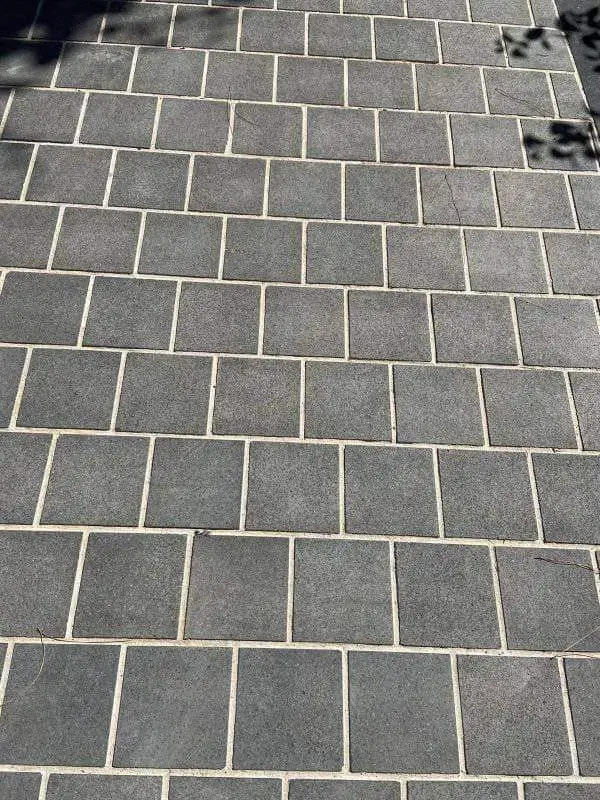
Stone Tile vs Porcelain: Core Material Properties Compared
The best floor tile material in Arizona homes depends on a straightforward comparison of how each material responds to the state’s specific physical environment — not just aesthetics or price. Here’s where the two materials genuinely diverge:
- Natural stone compressive strength typically ranges from 8,000 to 19,000 PSI depending on species, giving it mass that resists point-load cracking under furniture and foot traffic
- Porcelain achieves compressive strength in the 14,000–22,000 PSI range, technically stronger in pure compression — but brittle under bending stress and torsional movement
- Stone’s modulus of rupture (flexural strength) of 1,200–2,500 PSI allows it to flex slightly before fracturing, which matters enormously on a slab over variable soil
- Porcelain’s near-zero water absorption (typically below 0.5%) makes it more resistant to moisture migration — an advantage in wet rooms but largely irrelevant in Arizona’s interior climate
- Natural stone absorbs 0.4–7% water depending on species and finish, requiring sealed surfaces in kitchens and bathrooms but performing reliably in sealed condition
- Stone tile durability advantage across Arizona climates includes thermal mass behavior — stone stores and releases heat gradually, moderating temperature swings across day and night cycles
According to Natural Stone Institute ASTM tile specifications, natural stone tile is evaluated across absorption, compressive strength, modulus of rupture, and abrasion resistance — four independent performance axes that matter differently depending on the installation environment. Porcelain meets or exceeds stone on some of these metrics, but the total performance profile for Arizona subgrade conditions consistently favors stone in occupied living spaces.
How Subgrade Preparation Differs Between Stone and Porcelain
Your installation requires different base preparation depending on which material you choose — and the gap in required precision is wider than most contractors acknowledge upfront. Porcelain’s rigidity means it demands a flatness tolerance of FL25 or better across the slab, which typically means grinding high spots and patching low spots before setting even begins. Stone is more forgiving of minor slab variation because its lower brittleness under bending lets it accommodate surface imperfection without cracking.
For either material over Arizona’s caliche-affected subgrades, a properly isolated slab with a minimum 4-inch compacted aggregate base over the caliche layer is essential. Verify the slab’s crack-isolation membrane installation before any tile goes down — an uncoupling membrane like a woven polyethylene-laminate system reduces transmitted movement from the concrete substrate by roughly 50% according to TCNA testing standards. That reduction is what takes a porcelain installation from fragile to functional in areas with known caliche variation.
- Minimum slab flatness FL25 for porcelain; FL20 acceptable for natural stone in 12-inch and smaller formats
- Crack-isolation membrane mandatory for both materials in areas with documented caliche layers or expansive clay pockets
- Mortar bed depth for natural stone: 3/8 to 1/2 inch with 95% coverage across the full tile back
- Porcelain large-format installation requires back-buttering plus trowel application to achieve consistent coverage — skipping this step is the leading cause of hollow spots and eventual cracking
- Expansion joints every 20 to 25 linear feet for porcelain; natural stone can extend to 30 feet when installed over an uncoupling membrane
Thermal Expansion and Arizona’s Temperature Range
The stone tile durability advantage across Arizona climates becomes concrete when you calculate actual thermal expansion coefficients across the 70°F daily temperature swing common at higher elevations. Natural limestone and travertine expand at approximately 4.4 × 10⁻⁶ per °F — a modest rate that rarely stresses grout joints beyond their elastic capacity. Porcelain runs slightly lower at 3.5 × 10⁻⁶ per °F, but its near-zero porosity means it transmits thermal stress to the mortar bed and slab rather than dissipating it gradually through the material matrix.
In Flagstaff, where a project might experience a 45°F swing between a January morning and afternoon, that difference in stress transmission becomes measurable. Stone’s interconnected pore structure and mineral grain boundaries act as micro-expansion relief points, distributing thermal stress in ways that dense-body porcelain simply cannot replicate. The practical result is that stone installations at elevation tend to maintain grout line integrity over a longer service cycle than equivalent porcelain work.
The TCNA natural stone tile installation standards address thermal expansion joint placement specifically — and those requirements tighten for installations above 5,000 feet elevation, which directly applies to much of northern Arizona. Review the movement accommodation joint schedule before finalizing your floor plan layout, because expansion joint locations need to coordinate with the room’s design, not just structural grid lines.
Performance Profile of Natural Stone Floor Tiles in Arizona
Natural stone floor tiles in Arizona deliver a thermal mass effect that porcelain fundamentally cannot match. Stone absorbs radiant energy during peak afternoon hours and re-radiates it slowly through the evening — a passive comfort mechanism that reduces reliance on cooling systems and creates a noticeably different underfoot experience than porcelain’s more immediate thermal response. For Sedona’s high desert climate with its dramatic day-to-night temperature swings, that thermal buffering is a practical performance advantage, not just an aesthetic preference.
The Arizona homeowner floor tile comparison guide comes down to performance factors that are specific to this climate rather than generic product specs:
- Long-term surface appearance: stone develops a natural patina under UV exposure and foot traffic; porcelain’s printed glaze layer can dull at wear points over 10–15 years
- Slip resistance on honed finishes: honed travertine and limestone typically achieve a static coefficient of friction above 0.60, meeting safety thresholds per ASTM C1028 standards
- Maintenance cycle: stone requires resealing every 2–3 years depending on traffic and finish; porcelain requires only grout sealing annually
- Repair practicality: individual stone tiles can be removed and replaced without visible color-batch mismatches when sourced from the same lot; porcelain replacement is only invisible when the original batch is still available
- Edge integrity: stone chips at a lower energy threshold than dense porcelain, but repairs are easier to blend with matching material
You can explore our natural stone flooring in Arizona to review specific stone species, surface finishes, and format options suited to Arizona’s interior and exterior installation conditions.
Clay Soil Expansion and Slab Movement in Arizona Valleys
Beyond caliche, Arizona’s valley floors — particularly in the Phoenix metropolitan corridor — carry montmorillonite clay deposits that expand and contract with moisture cycling. Post-monsoon swelling followed by summer desiccation can produce slab heave events of 1/4 inch or more across a residential floor plate. Natural stone compared to ceramic tile and porcelain handles that kind of episodic movement more reliably because stone’s mass and bond strength are distributed through the mortar bed in ways that don’t concentrate stress at tile edges.
The practical installation response for clay-affected sites is a floating uncoupling system rather than a direct-bond mortar application. Decoupling the tile assembly from the slab’s movement allows the concrete to cycle with moisture while the tile plane remains stable. This adds roughly $1.50 to $2.50 per square foot to your installation cost but is the difference between a 7-year floor and a 20-year floor in documented clay-expansion zones. Gilbert’s valley-floor soils, for example, frequently test at medium-to-high expansion potential — a specification detail that changes the mortar system before a single tile is set.
- Request a soils report for the project site — most Arizona jurisdictions require them for new construction, and existing reports are often on file at the county building department
- Identify montmorillonite clay concentration depth and expansion potential (typically rated as low, medium, or high in geotechnical reports)
- Specify an uncoupling membrane system for any project site rated medium or high for expansive soil activity
- Increase expansion joint frequency to every 15 feet in high-expansion zones, regardless of material selection
Choosing the Right Thickness and Format for Arizona Floors
Natural stone tile in 3/4-inch nominal thickness provides the structural margin that makes a real difference over Arizona’s variable subgrades. Thinner stone products in the 3/8-inch category are attractive from a weight and cost standpoint, but they’re genuinely undersized for residential installations over slabs that may have minor irregularities from caliche-induced differential settlement. The 3/4-inch material bridges minor voids in mortar coverage without cracking, which thinner tiles cannot reliably do.
Porcelain in the 20mm (roughly 3/4-inch) thick-format category has improved this situation for that material, bringing it closer to stone’s performance margin over imperfect bases. The tradeoff is that 20mm porcelain panels are extremely difficult to cut cleanly in the field without a wet saw with a diamond blade specifically rated for large-format dense material — an equipment requirement that not all subcontractors carry. Natural stone cuts more predictably with standard diamond wet saws, reducing field waste and cut-line quality variation.
Natural Stone Compared to Ceramic Tile: The Durability Gap
The natural stone compared to ceramic tile conversation often defaults to cost — and that’s the wrong frame for Arizona projects with a 15-year or longer planning horizon. Standard ceramic tile, the most economical alternative, is a fired clay body with a glaze layer that sits on top of the substrate rather than integrating with it. Under the abrasion conditions of a high-traffic Arizona household — sand tracked in from desert-adjacent landscaping is essentially fine-grit sandpaper — ceramic glaze delaminates from the body over 8–12 years in ways that natural stone simply doesn’t experience.
Natural stone’s surface is the material itself, not a coating applied to something else. Maintaining stone means maintaining the stone — not a surface treatment applied over a different substrate. That distinction matters when evaluating the total 20-year cost of ownership rather than just the day-one installation invoice. Resealing stone every 2–3 years costs a fraction of re-tiling a floor whose glaze has worn through to the unfinished clay body underneath. The stone tile durability advantage across Arizona climates is most visible in this long-horizon cost comparison, where natural stone compared to ceramic tile consistently favors stone in high-traffic desert environments.
According to ASTM natural stone tile absorption, strength, and slip resistance testing standards, natural stone tile species are individually tested across performance metrics that generic ceramic products are often not required to meet. That testing framework gives you verifiable performance data for your specification — a level of documentation that protects you on high-value projects where flooring performance is part of a warranty obligation.
Ordering, Lead Times, and Project Planning in Arizona
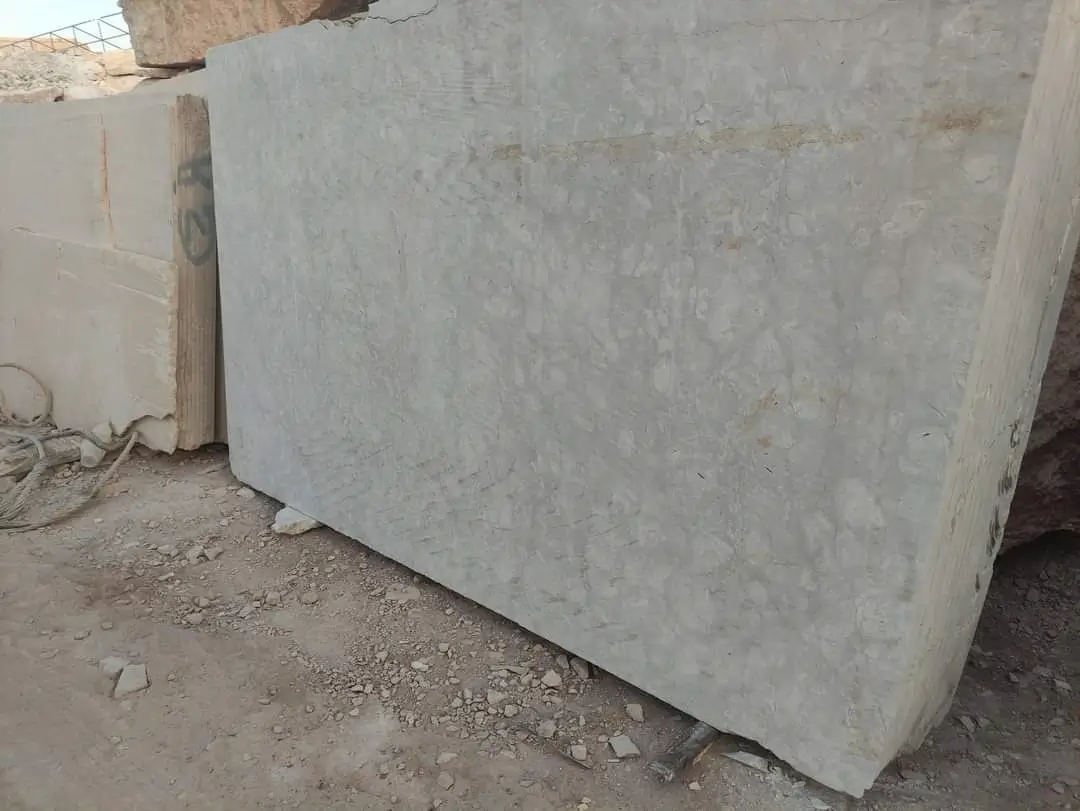
Material availability is a practical constraint that directly affects whether you spec stone or porcelain on a given project timeline. Natural stone has historically carried 6–8 week lead times for imported product, which complicates scheduling on fast-track residential projects. Citadel Stone maintains warehouse inventory across Arizona, which typically reduces lead times to 1–2 weeks compared to that standard import cycle — a logistics advantage worth building into your project schedule when coordinating with other trades. A second warehouse location serves the Tempe corridor specifically, reducing delivery windows for projects in the East Valley.
Truck access constraints also matter here. Larger stone slabs in formats above 24×24 inches are delivered on flatbed trucks that require clear staging space at the job site. In dense Scottsdale residential neighborhoods where driveway access is limited, coordinating the truck delivery window with your contractor schedule early avoids costly wait time that adds up when drivers sit idle. Natural stone floor tiles in smaller format sizes can ship on standard palletized freight, which is easier to stage in constrained sites. A second truck run can often be avoided entirely by confirming staging logistics at the initial order confirmation — a step the Citadel Stone team walks through with every project.
- Verify warehouse stock levels for your specific stone species and finish before committing to a project start date — batch consistency matters when tiling across multiple rooms
- Order a minimum 10% overage on natural stone to account for cuts, breakage, and future repair matching from the same production lot
- Confirm truck delivery access with your site superintendent at least one week before the delivery date to avoid re-delivery fees
- At Citadel Stone, we recommend confirming lot numbers at the time of order to ensure color consistency across your entire floor area
Making the Right Stone Tile vs Porcelain Decision for Arizona
The stone tile vs porcelain flooring decision in Arizona resolves differently depending on your specific site conditions, project timeline, and performance expectations. On verified stable slabs with well-prepared bases, modern large-format porcelain is a competitive choice. But on Arizona sites with documented caliche layers, clay-expansion risk, or slab deflection history, natural stone’s combination of flexural tolerance, thermal mass behavior, and surface durability creates a performance profile that porcelain fundamentally cannot replicate. Your specification should reflect the actual soil conditions under the slab, not just the finish aesthetics above it.
As you build out your Arizona flooring specification, the adjacent question of how natural stone performs in exterior applications is worth reviewing — stone versus concrete garden flooring in Arizona covers how Citadel Stone materials perform in outdoor conditions, which informs whole-property material consistency decisions. Natural stone floor tiles in Arizona deliver the most reliable long-term performance when the full system — from subgrade preparation through mortar selection, uncoupling membrane specification, and sealing schedule — is treated as an integrated assembly rather than individual components. Projects across Scottsdale, Gilbert, and Tempe demonstrate that Citadel Stone natural stone tile sourced from select natural stone quarries worldwide consistently outperforms porcelain in long-term surface appearance under Arizona conditions.