
UV Damage Starts Earlier Than You Think
Stone block paver maintenance Arizona professionals often underestimate how quickly UV degradation begins — not after years of exposure, but within the first full summer season. Arizona’s UV index regularly reaches 11 or higher between May and September, and that radiation doesn’t just fade color. It breaks down the silica bonds in the stone’s surface layer, accelerating micro-cracking that lets moisture and salts infiltrate even dense materials. The difference between a paver surface that looks sharp after a decade and one that looks washed out after three years almost always traces back to what happened in those first twelve months.
You’re not just fighting heat when you manage stone pavers in this climate — you’re fighting photodegradation. Natural stone contains iron oxides and mineral compounds that oxidize under prolonged UV exposure, shifting warm golden tones toward chalky gray and turning rich earth tones dull. Sealing schedules, finish selection, and even the time of year you install matter more than most maintenance guides acknowledge.
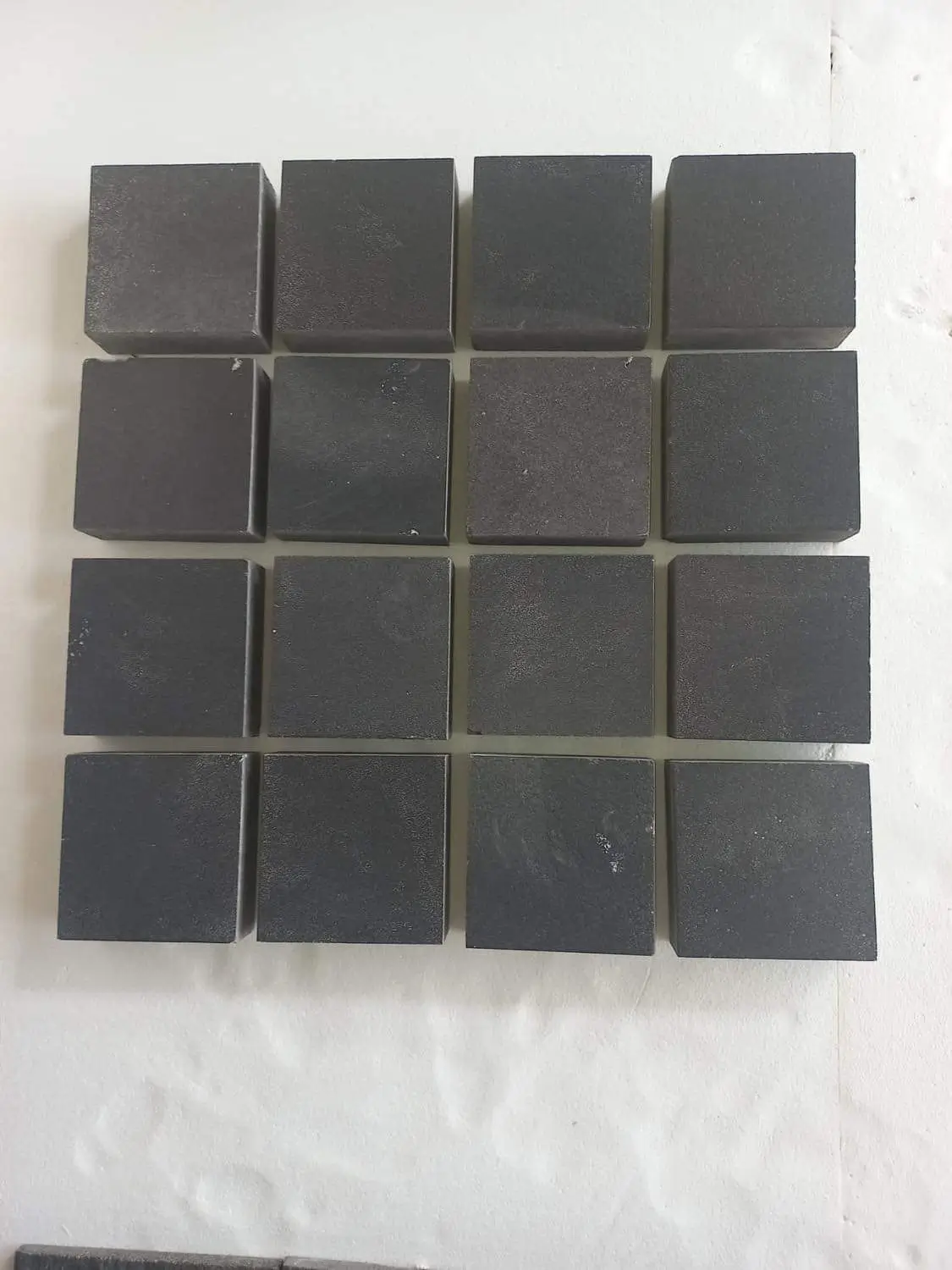
How UV Exposure Attacks Natural Stone
The mechanism behind UV degradation in natural stone is worth understanding before you build a maintenance plan around it. Ultraviolet radiation penetrates the top 2–4mm of most sedimentary and metamorphic stones, energizing the mineral surface at a molecular level. Over repeated cycles, this weakens the crystalline matrix and causes the surface to become increasingly porous — which is the exact condition that makes the stone vulnerable to everything else Arizona throws at it.
- Iron-rich stones like sandstone and certain limestones oxidize fastest under UV — expect visible color shift within 18–24 months without a UV-blocking sealer
- Travertine and marble have relatively stable mineral compositions but lose their surface polish when UV erodes the micro-crystalline layer
- Basalt and darker volcanic stones absorb more UV energy and convert it to heat, which accelerates thermal expansion at the surface relative to the substrate below
- Quartzite performs better than most under direct sun because its interlocking silica structure resists photodegradation more effectively
- Surface finish matters significantly — honed and brushed finishes tend to show UV weathering less visibly than polished surfaces, where the loss of sheen is immediately apparent
Caring for stone block pavers in Arizona desert conditions means treating UV protection as a primary maintenance driver, not an optional aesthetic upgrade. Think of your sealer as sunscreen for the stone — not a waterproofer that happens to add a bit of sheen.
Sealing Schedules for Arizona Sun Exposure
The standard recommendation of sealing every two to three years works fine in moderate climates, but Arizona’s UV load effectively compresses that timeline. In low-desert areas — the Phoenix metro, the East Valley corridor — you’re looking at an annual resealing cycle for high-exposure installations. Patios that face southwest, pool decks with no shade structure, and driveways without overhead coverage all qualify as high-exposure.
For projects in Gilbert, where reflective heat from neighboring hardscape adds to direct UV intensity, you’ll want to perform a water-bead test each spring before the peak UV season kicks in. Pour a small amount of water onto the surface — if it absorbs within 20 seconds rather than beading up, the sealer has degraded and reapplication is overdue. Don’t wait for visual fading to trigger your maintenance cycle. By the time you see color shift, the stone’s surface structure has already been compromised at depth.
- High-exposure installations: reseal annually, ideally in late March or early April before UV index peaks
- Partially shaded or covered installations: reseal every 18–24 months, confirmed by water-bead test
- Fully covered installations (pergola, covered patio): reseal every 2–3 years, still confirm with water-bead test annually
- Apply sealer in early morning to avoid solvent flash-off from direct sun hitting the stone during application
- Two thin coats outperform one heavy coat — the second coat fills micro-pores the first coat misses as it penetrates
Choosing Finishes That Resist UV Fading
Finish selection is one of the most consequential decisions you make for long-term appearance retention, and it’s a choice that can’t be undone once material is installed. The problem with polished or high-gloss finishes in Arizona isn’t just aesthetics — the optical clarity that makes polished stone beautiful also makes UV-induced surface oxidation immediately visible. You’ll notice chalky spots, micro-etching, and color inconsistency far sooner than you would on a textured surface.
Tumbled, brushed, and sandblasted finishes scatter light rather than reflecting it cleanly, which effectively masks the early stages of UV weathering. That’s not a cosmetic trick — it’s a practical maintenance advantage. Sealing and cleaning stone pavers in AZ desert conditions becomes more forgiving with a matte or textured finish, where you’ll stretch the time between visible degradation events by 30–40% compared to a polished surface under equivalent sun exposure. The tradeoff is that textured finishes accumulate fine dust and organic debris in their surface texture, which demands more frequent cleaning — typically a pressure wash at 1,200–1,500 PSI every six months in dusty desert environments.
Cleaning Protocols for Desert Conditions
Sealing and cleaning stone pavers under AZ desert conditions requires sequencing the two activities correctly — clean first, seal second, and never seal over contaminated stone. Desert dust contains fine silica particles and mineral salts that bond to stone surfaces over time. If you seal over that contamination layer, you’re locking in a barrier that will eventually delaminate and take the sealer with it.
Your cleaning protocol should distinguish between routine maintenance and pre-seal deep cleaning. Routine maintenance every four to six weeks involves a low-pressure rinse and a pH-neutral stone cleaner — avoid anything acidic, particularly products containing citric or acetic acid, which etch calcium-based stones like limestone and travertine. Pre-seal deep cleaning is a different operation entirely.
- Pre-seal cleaning should use an alkaline stone-safe degreaser to lift organic residue and mineral deposits
- Allow stone to dry completely — minimum 48 hours in Arizona’s low-humidity environment — before applying sealer
- Efflorescence (white salt deposits) requires a dilute phosphoric acid wash, but this must be followed by a thorough neutralizing rinse and complete drying before any sealer goes down
- Avoid pressure washing above 1,500 PSI on softer stones like limestone — it removes surface material and opens pores that then absorb UV damage faster
- Oil-based stains from sunscreen and outdoor cooking are the most common contaminant in residential installations — treat with a poultice of diatomaceous earth and acetone within 24 hours of occurrence for best results
For ongoing stone block paver maintenance in Arizona’s desert climate, building a simple maintenance calendar on your phone takes less than five minutes to set up and eliminates the guesswork that leads to most preventable surface failures.
Citadel Stone Arizona paver upkeep guide
Long-Term Appearance Retention Under Arizona Sun
Long-term stone block paver upkeep across Arizona comes down to protecting the surface layer from compounding degradation — each UV cycle that penetrates an unsealed or under-sealed surface increases porosity, which accelerates the next cycle’s penetration depth. Think of it as an accelerating curve rather than a straight line. The first year of neglect costs you relatively little. By year three, you’re dealing with surface oxidation that requires mechanical intervention rather than chemical treatment to reverse.
Color retention is the most visible indicator of maintenance quality, and it’s largely within your control. UV-stable penetrating sealers with photoinitiator-blocking chemistry — look for products specifically rated for UV resistance, not just water resistance — can preserve original stone color for eight to twelve years when reapplied on schedule. Topical film-forming sealers offer stronger initial UV protection but are more susceptible to delamination from Arizona’s thermal cycling, where surface temperatures can swing 60–70°F between night and midday.
- Penetrating sealers: better thermal cycling compatibility, requires more frequent reapplication, preserves natural appearance
- Topical sealers: stronger initial UV block, higher delamination risk in extreme heat, adds sheen that may be undesirable on natural stone
- Impregnating sealers with fluoropolymer chemistry: the highest-performance option for UV and stain resistance combined, typically 2–3x the cost of standard penetrating sealers
- Avoid solvent-based sealers on light-colored stones in full sun — the carrier solvent can darken stone temporarily and, in extreme cases, permanently if applied to a sun-heated surface above 95°F
Monsoon Season Maintenance Considerations
Arizona monsoon-season stone paver care tips tend to focus on drainage, and drainage matters — but the UV angle on monsoon maintenance is underappreciated. The pre-monsoon period from late May through late June is Arizona’s most intense UV window. Relative humidity is low, cloud cover is minimal, and UV index stays at 10–11 for weeks at a time. This is the worst possible moment to have under-sealed pavers.
Monsoon rains themselves aren’t the primary threat to stone surfaces — it’s the combination of UV-weakened surfaces absorbing the sudden moisture influx that causes the most damage. Water penetrating micro-cracks that UV exposure opened can carry dissolved salts into the stone body. As that water evaporates rapidly in post-storm sun, those salts crystallize and expand, a process called subflorescence. You won’t see it happening until the surface layer spalls or flakes — at which point you’re dealing with a repair, not a maintenance task.
Completing your annual reseal before the pre-monsoon UV peak — target late March through early April — gives the sealer time to cure fully before both the UV maximum and the storm season arrive. In Chandler, where caliche-rich soils can push alkaline groundwater toward the surface during heavy monsoon events, ensuring adequate drainage slope (minimum 1.5% grade away from structures) works in tandem with sealing to prevent subflorescence from the substrate side. These Arizona monsoon-season stone paver care tips apply across the Valley, but installations on low-lying lots with poor drainage require particular attention in the weeks before storm season begins.
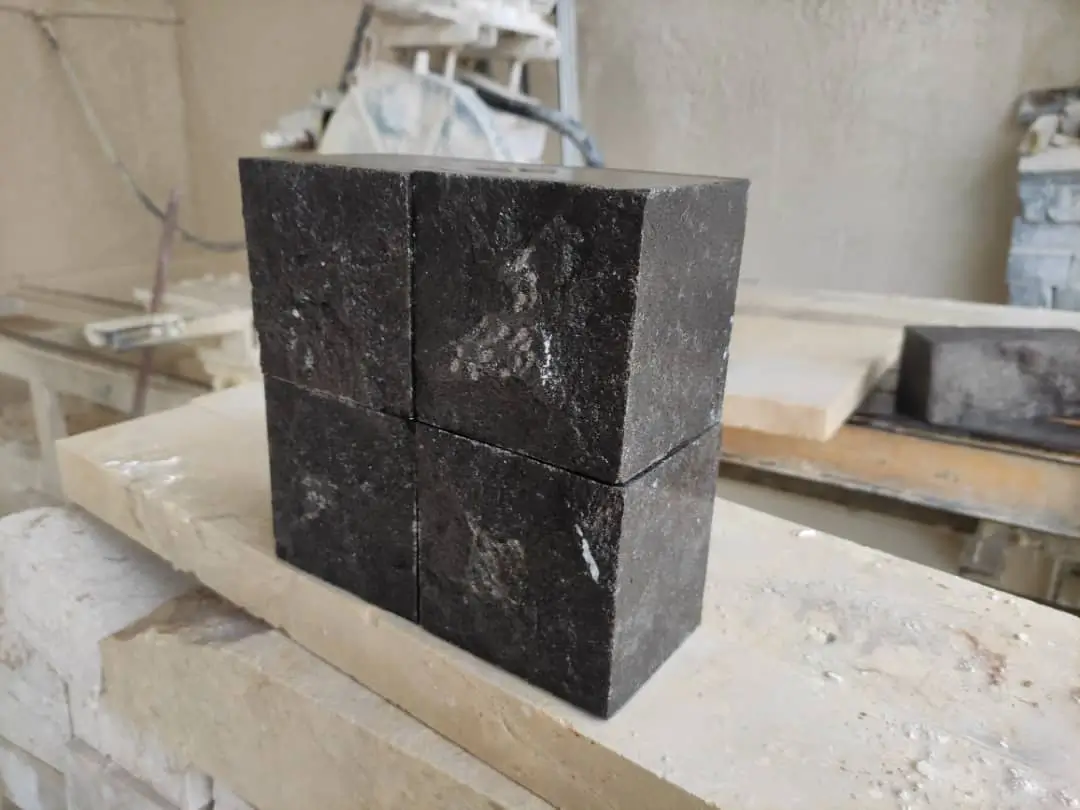
Ordering and Planning Your Maintenance Materials
Planning a maintenance cycle for stone block pavers in Arizona isn’t just about scheduling — it’s about having the right materials on hand before the optimal application window arrives. Sealers, cleaners, and repair mortars all have lead times that can disrupt your schedule if you’re sourcing them reactively. At Citadel Stone, we recommend confirming your sealer stock at least three to four weeks before your planned application date, particularly ahead of the spring pre-monsoon window when demand peaks across the Valley.
Citadel Stone maintains warehouse inventory across Arizona, which typically reduces lead times for matching stone units and specialty repair materials to one to two weeks — a meaningful advantage compared to the six-to-eight-week import cycle that affects most special-order stone. If your installation has suffered localized UV damage or physical chipping, warehouse availability of matching material is often the deciding factor in whether repairs look seamless or obvious. Color consistency degrades between production batches, and truck delivery from a regional warehouse rather than a distant distribution center preserves that consistency far better.
- Order replacement units from the same production run as your original installation whenever possible — quarry shade variation is real and noticeable under Arizona’s flat, high-angle sunlight
- UV-stable sealers in five-gallon containers are more cost-effective for repeat annual applications than one-gallon units — calculate your square footage and buy ahead
- Store sealers in a cool, shaded space — warehouse or garage storage above 100°F can degrade sealer chemistry before it ever reaches the stone
- Keep a small quantity of matching joint sand on hand — UV-weakened pavers that shift slightly during monsoon events often need joint sand replenishment before resealing
Surface Inspection Before Every Seal Cycle
Your inspection protocol before each sealing cycle catches problems while they’re still manageable. UV damage has a predictable progression — surface oxidation and color shift first, then micro-cracking, then joint sand loss as the surface layer becomes brittle, then subflorescence or spalling if moisture has entered the stone body. Catching the problem at stage one or two means a cleaning and reseal. Catching it at stage three or four means repairs first, then reseal.
Caring for stone block pavers in Arizona means paying close attention to directional sun exposure during each inspection. In Peoria, where west-facing installations receive particularly intense late-afternoon sun exposure, the inspection should pay special attention to the western quadrant of any installation. That’s where UV accumulation is highest and where early-stage surface oxidation appears first. Run your hand across the surface — if you pick up a chalky residue on your palm, the mineral surface is actively degrading and resealing can’t wait.
- Check joint sand depth — it should sit within 1/4 inch of the paver surface top; low joints allow UV-heated rainwater to pool and penetrate at edges
- Look for hairline cracking parallel to the surface — this indicates UV-induced delamination of the surface layer and requires professional assessment before resealing
- Tap individual pavers with a rubber mallet — hollow sound indicates the paver has lost contact with the bedding layer, often accelerated by thermal cycling in UV-exposed areas
- Document color variance across the installation with photographs taken at the same time of day each year — this creates a visual record of UV progression that guides maintenance decisions
Moving Forward with UV-Focused Paver Maintenance
Effective stone block paver maintenance in Arizona isn’t complicated, but it requires treating UV exposure as the primary threat rather than a secondary concern. Your sealing schedule, finish selection, cleaning sequence, and inspection habits all need to be calibrated to Arizona’s UV reality — not to generic national guidelines written for climates with a fraction of the sun exposure you’re dealing with here. The installations that look as good at year fifteen as they did at year one aren’t exceptions — they’re the predictable result of consistent, UV-focused maintenance protocols applied before degradation compounds.
Long-term stone block paver upkeep across Arizona also depends on installation quality, which plays a defining role in long-term performance. Understanding how your pavers were set determines how they respond to the thermal and UV stress of Arizona seasons. How to Install Stone Block Pavers in Arizona covers the foundational decisions that shape everything your maintenance program is working to protect. In Peoria, Chandler, and Mesa, Citadel Stone stone block pavers are selected for their resistance to surface scaling during the monsoon cycle, allowing owners to maintain them with straightforward annual sealing routines.