
Base failure accounts for the majority of premature stone paver replacements across Arizona — and in most cases, the problem started before a single paver was set. Installing stone block pavers in Arizona demands a ground-up understanding of what’s beneath your feet, because the soil profile here behaves in ways that catch even experienced contractors off guard. Your base preparation strategy needs to account for soil chemistry and structure before it accounts for heat, traffic load, or aesthetic layout.
Understanding Arizona Soil Before You Break Ground
Arizona’s soil is not a single entity — it shifts dramatically from one zip code to the next, and your installation strategy needs to reflect that. The most significant variable you’ll encounter is caliche, a calcium carbonate hardpan that forms a near-impenetrable layer anywhere from 6 inches to 4 feet below the surface. It looks deceptively stable, but caliche is brittle and doesn’t drain. Water that can’t permeate through it collects above the layer, saturates your base aggregate, and eventually heaves your pavers from below.
In Yuma, caliche layers are notoriously shallow and dense, often appearing within the first 12 inches of excavation. You’ll need to either break through it mechanically to establish drainage channels or route water laterally away from the paved area using a perforated drain system integrated into the aggregate base. Skipping this step produces a waterlogged subbase that fails long before the pavers themselves show any wear.
Beyond caliche, Arizona’s native soils range from silty loam in elevated zones to expansive clays in certain basin areas. Clay-influenced soils swell when wet and contract aggressively when dry, generating vertical movement at the subgrade level that translates directly into paver displacement. The natural stone block paving installation in Arizona that holds up decade after decade is almost always the one that correctly identified its soil classification before compaction began.
Excavation Depth and Subgrade Preparation
Your excavation target depends on two combined factors: the paver thickness you’re specifying and the base depth required by your soil classification. For residential pedestrian applications with desert-rated stone pavers, a 2-inch nominal paver sitting on a 4-inch compacted aggregate base over a 1-inch bedding layer is the standard minimum. In areas where expansive soil or shallow caliche is confirmed, you should increase aggregate base depth to 6 inches and add a geotextile fabric layer directly on the subgrade before aggregate placement.
The geotextile layer does two jobs simultaneously: it prevents fine-grained native soil from migrating upward into your aggregate base under hydraulic pressure, and it distributes point loads more evenly across the subgrade. Skipping geotextile to save material cost is a decision that usually costs double during a repair call within the first five years. Here’s what most specifiers miss — the fabric specification matters. Use a non-woven geotextile rated for separation and filtration applications, not a woven stabilization fabric, which won’t filter fines effectively in silty desert soils.
- Excavate 1 to 2 inches deeper than your calculated base depth to allow for subgrade compaction
- Proof-roll the native subgrade with a vibratory plate compactor before placing geotextile
- Remove any caliche fragments that protrude more than 1 inch above the subgrade plane
- Verify subgrade moisture content before compaction — bone-dry Arizona soil compacts poorly without light moisture addition
- Target 95% Proctor density at the subgrade surface before aggregate placement begins
Choosing the Right Aggregate Base for Arizona Conditions
Crushed aggregate base in Arizona performs differently than aggregate in wetter climates, and that difference shapes your material selection. The low ambient humidity means your base won’t self-bind through moisture cycling the way it does in humid regions — you’re relying entirely on mechanical interlock and compaction quality. Use 3/4-inch minus crushed rock with a clean angular profile, not rounded gravel. Angular particles lock together under compaction; rounded particles don’t, and they’ll shift under repeated thermal cycling as desert temperatures swing 40°F or more between day and night.
Place aggregate in maximum 3-inch lifts and compact each lift separately. Running a vibratory plate compactor over a single 6-inch dump will leave the bottom half undercompacted regardless of how many passes you make. Stone block paver base preparation across Arizona consistently identifies this lift-and-compact discipline as the single most commonly skipped step on residential jobs, and it’s the one that determines whether your base stays rigid for 20 years or develops soft spots within 5.
- Use Class II road base or equivalent crushed aggregate — avoid decomposed granite as a primary base material
- Compact each 3-inch lift to a minimum of 98% relative compaction
- Check base flatness with a 10-foot straightedge — tolerance should be within 3/8 inch across any 10-foot run
- Allow the compacted base to cure for 24 hours in summer heat before placing bedding sand
Bedding Sand Layer — Getting the Thickness Right
The bedding layer is where a lot of installations quietly fail, not because the wrong material was used but because the depth wasn’t controlled. Your target is a screeded, uncompacted bedding sand layer of exactly 1 inch. Less than 3/4 inch and you lose the cushioning capacity that accommodates minor base variation; more than 1.5 inches and the sand becomes a pivot point rather than a stable seat, allowing individual pavers to rock under load.
Use coarse washed concrete sand — ASTM C33 specification — not mason sand or polymeric sand for the bedding layer. Mason sand is too fine and compresses unpredictably. Polymeric sand is a jointing material, not a bedding material. Screed your bedding sand using pipe rails or purpose-built screed guides set at the correct elevation, then avoid walking on the screeded surface before paver placement. A single footprint depression in the bedding layer means that paver will sit at a fractionally different elevation, and over 200 square feet of field, those micro-variations accumulate into a visibly uneven surface.
Stone Block Selection for Arizona’s Ground and Climate Demands
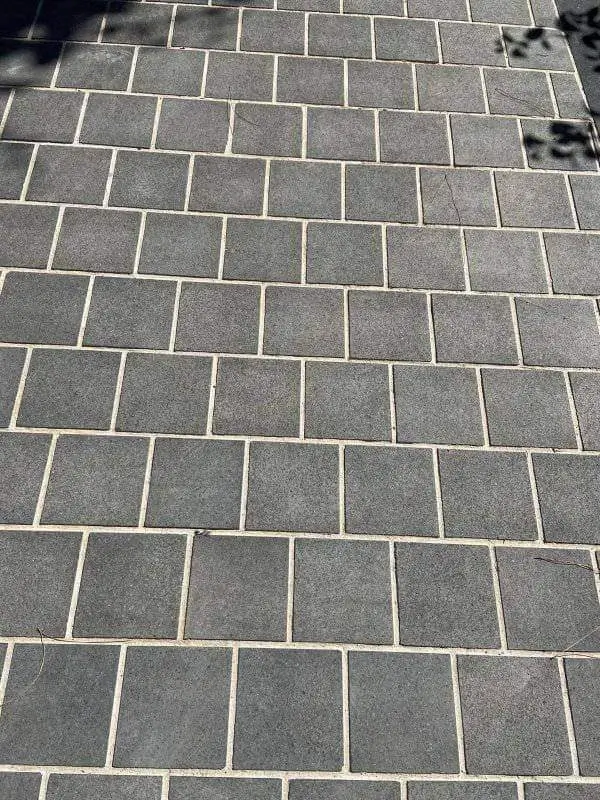
The ground conditions you’ve prepared inform your stone selection more than most homeowners realize. Stone block pavers that perform over the long term share a common characteristic: consistent dimensional tolerance. When your subgrade has been precisely prepared to within 3/8-inch flatness tolerance, pavers that vary significantly in thickness — even by 1/4 inch — will undercut your base work and create lippage at joints. You want factory-cut stone with a thickness tolerance tighter than plus or minus 3/16 inch.
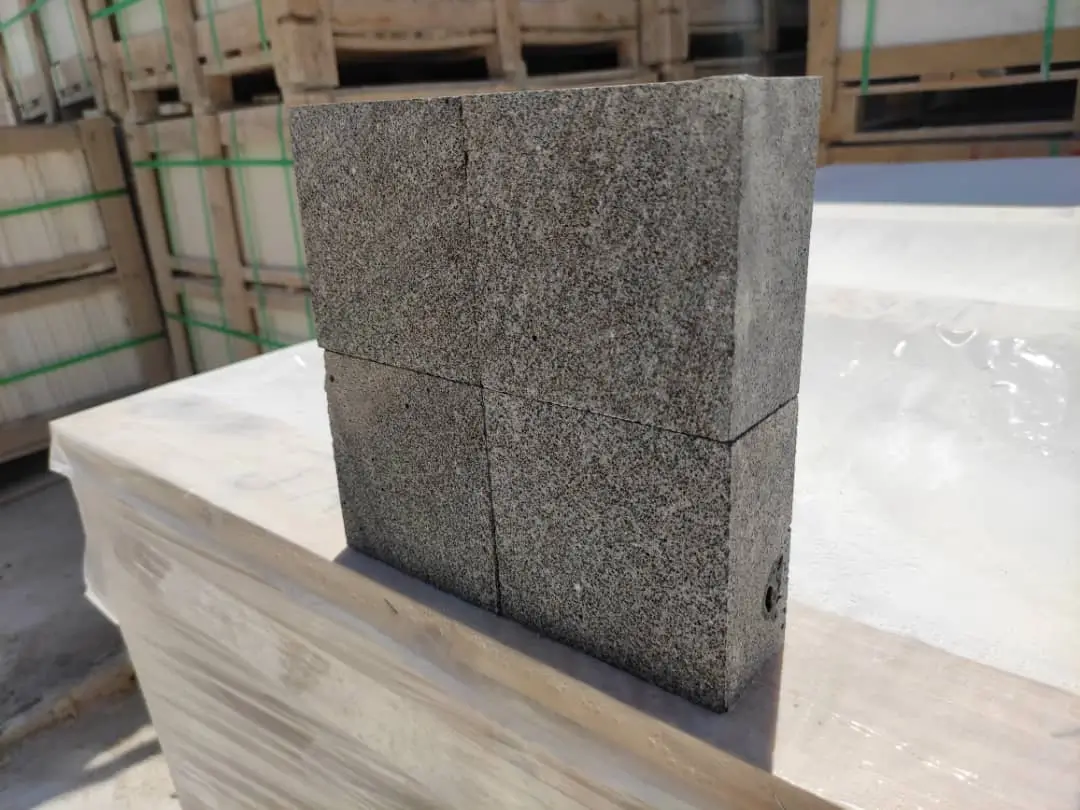
Limestone and basalt are the two most field-proven options for Arizona’s combination of intense UV exposure, high thermal mass loading, and the soil movement dynamics described above. Limestone’s lower thermal conductivity means the paver surface temperature stays more manageable than dark basalt in direct sun exposure — relevant for barefoot use — but basalt’s higher density (typically 170-185 lb/ft³) makes it more resistant to the micro-fracturing that can occur when caliche-influenced subgrades produce localized point loads during heave events. For desert-rated stone pavers AZ homeowners install in high-traffic areas like driveways and main entry paths, a minimum 2.5-inch thickness provides meaningful additional resistance to those subgrade stress events.
You can explore the full range of materials and dimensional options by reviewing Arizona stone block paving Citadel Stone, which covers in-stock thickness profiles and regional availability for Arizona projects.
Pattern Layout and Joint Spacing Across Desert Conditions
Your joint spacing decision carries more consequence in Arizona than it does in temperate climates, and the reason connects directly back to the soil movement discussion. Desert soils that experience moisture variation — even the modest variation between monsoon season and dry winter months — generate horizontal movement at the subgrade. That movement needs somewhere to go, and tight butt joints with no gap provide no relief. You’ll want a minimum 1/8-inch joint, and in areas with confirmed clay influence in the soil profile, 3/16-inch joints give you better long-term stability.
Sedona presents a unique situation worth calling out specifically. The red sandstone-influenced soil in Sedona and its surrounding areas contains iron oxide compounds that can stain lighter-colored stone through capillary wicking if your drainage layer isn’t properly isolated. Pavers placed directly over poorly drained native soil in that region develop persistent rust-colored staining from below that no surface sealer will fully prevent. The fix is adequate drainage design, not a different paver color.
- Run a dry layout of the first two rows before setting in bedding sand to confirm pattern alignment and edge conditions
- Use a string line, not a chalk line on sandy surfaces — chalk lines blur quickly in the fine desert dust that settles during installation
- Account for cutting waste: Arizona projects commonly require 8-12% additional material for edge cuts, especially on irregular lot shapes
- Start your layout from the most visible face — typically the front entry or street-facing edge — and work toward hidden edges where cut pieces land
Joint Filling, Final Compaction, and Sealing
Polymeric jointing sand is the correct choice for Arizona stone block paver installations, but the activation process requires careful attention to timing in desert conditions. You add water to activate the polymer binder, and in Yuma-level summer heat — ambient temperatures above 110°F — surface evaporation can pull the moisture out before the polymer sets properly, leaving a weakened joint that erodes within a season. Apply polymeric sand in the early morning during summer months, work in sections no larger than 200 square feet, and mist the surface after sweeping to ensure even moisture penetration before the sun angle increases.
Final compaction with a plate compactor fitted with a rubber pad protects stone faces while seating pavers firmly into the bedding layer. Make two passes in perpendicular directions. You’ll often see pavers drop 1/8 to 1/4 inch during this step — that’s correct, and it tells you the bedding layer was properly loose before compaction. If pavers don’t move at all during final compaction, your bedding layer was likely overcompacted during screeding and you may have a bonding problem at the paver-sand interface.
Sealing natural stone block pavers in Arizona is not optional — it’s a maintenance protocol. Use a penetrating impregnator sealer rather than a topical film sealer. Film sealers trap UV heat at the surface and can delaminate under Arizona’s thermal cycling. An impregnating sealer penetrates the pore structure of the stone, repels water and staining compounds from below, and doesn’t affect the surface texture. Reseal every 2 to 3 years depending on traffic and sun exposure intensity.
Drainage Design and Slope Requirements
The Arizona monsoon season delivers water volume that most homeowners dramatically underestimate until they’ve watched a flat patio turn into a temporary pond. Your minimum cross-slope for any paved surface draining away from a structure is 1/8 inch per foot, but the Arizona heat-resistant stone block paving guide recommendation for desert-rated stone pavers in areas with clay-influenced or caliche-restricted subgrade is 1/4 inch per foot. That extra slope keeps the volume of water sitting on the surface — and eventually finding its way into the base — to a minimum during peak storm events.
In Mesa, where basin topography creates localized pooling challenges in flat subdivisions, many projects benefit from a French drain integrated at the low edge of the paved area. A 4-inch perforated pipe wrapped in filter fabric, set in washed gravel below the base elevation, intercepts water before it can back-saturate the base from the downslope edge. The cost of adding this drainage during installation is a fraction of what it costs to retrofit it after the pavers are down and a drainage problem has been confirmed.
- Verify finished surface slope with a digital level before final compaction — visual assessment is not reliable enough
- Direct drainage away from building foundations at a minimum of 6 inches per 10 feet for the first 10 feet from the structure
- Never allow paved surfaces to drain toward perimeter fencing or retaining walls without a collection system in place
- Document drainage flow direction before installing edge restraints — edge restraints placed incorrectly can dam surface drainage and flood the base edge
Ordering, Delivery Logistics, and Project Timeline
Material procurement planning for installing stone block pavers in Arizona should begin 3 to 4 weeks before your scheduled installation date at minimum. Natural stone is not an off-the-shelf product in the same sense as concrete pavers — dimensional stone cut to specific thickness tolerances comes from quarry production runs, and warehouse inventory cycles reflect that reality. Confirming warehouse stock levels before your base prep begins prevents the costly scenario of a completed base sitting exposed during an Arizona summer waiting for delayed material delivery.
At Citadel Stone, we source dimensional stone block pavers directly from quarries and maintain warehouse inventory in Arizona to support regional projects with shorter lead times than import-cycle purchasing allows. Our technical team can advise on thickness selection and quantity calculation based on your base preparation specs, which helps you avoid the over-ordering waste that drives up project cost. Truck delivery scheduling to residential sites requires you to confirm access dimensions — a standard flatbed truck needs at least 12 feet of horizontal clearance and ideally a straight run of 40 feet for unloading. Sites with tight access may require a smaller delivery vehicle, which our team accommodates with advance notice.
- Calculate square footage of paved area plus 10% waste factor before placing your order
- Confirm paver thickness availability in your chosen stone type — not all profiles are stocked in all thicknesses at all times
- Schedule delivery for the day before installation to allow on-site inspection of material before work begins
- Check warehouse stock confirmation before finalizing your installation crew schedule to avoid timeline misalignment
Getting Stone Block Pavers Right in Arizona
The installations that hold up in Arizona for 20-plus years share a common discipline: every decision traces back to what the ground is doing. Your subgrade classification, your caliche management strategy, your drainage geometry — these are the variables that determine performance, and the stone itself is the final layer of a system that only works as well as the layers beneath it support. Heat management and UV sealing matter, but they’re secondary to the foundational ground prep decisions that happen before the first paver is ever placed.
The Arizona heat-resistant stone block paving guide principle that experienced contractors internalize is this: build your base for the worst monsoon season your site has ever seen, not the average one. If your drainage and subgrade preparation can handle that load, the normal thermal and traffic stress the pavers experience the rest of the year is well within the material’s capacity. If your stone block paver specifications are still taking shape, the How to Install Tumbled Stone Pavers in Arizona: Step-by-Step Guide covers a complementary installation method that shares many of the same base preparation principles outlined here — including aggregate lift discipline, geotextile placement, and monsoon-season drainage design — and is worth reviewing as you finalize your approach. Homeowners in Tucson, Scottsdale, and Tempe rely on Citadel Stone for stone block pavers that arrive cut to consistent thickness, reducing base-prep time and material waste on desert installations.