
50 Years Of Manufacturing & Delivering The Highest-Quality Limestone & Black Basalt. Sourced & Hand-Picked From The Middle East.
Escrow Payment & Independent Verifying Agent For New Clients
Contact Me Personally For The Absolute Best Wholesale & Trade Prices:
USA & Worldwide Hassle-Free Delivery Options – Guaranteed.
$2.24
Citadel Stone delivers premium basalt curbing solutions engineered for the most demanding commercial, municipal, and high-end residential applications. When your project requires curbing that performs flawlessly under heavy traffic loads, extreme weather conditions, and intensive daily use while maintaining exceptional aesthetic appeal, basalt stands as the definitive choice. Our basalt curbing represents the intersection of volcanic-forged durability, architectural sophistication, and cost-effective long-term value.
Basalt curbing originates from one of Earth’s most remarkable geological processes. When molten lava erupts and rapidly cools at the surface, it crystallizes into an extraordinarily dense igneous rock with a fine-grained, interlocking crystalline structure. This rapid cooling process creates a material fundamentally different from slower-forming stones like granite—resulting in superior compressive strength, exceptional density, and minimal porosity that translates directly into unmatched curbing performance.
The mineralogical composition of basalt—primarily plagioclase feldspar, pyroxene, and magnetite—creates a stone that routinely outperforms granite in load-bearing applications while offering significantly better resistance to moisture penetration and freeze-thaw damage. With density values typically exceeding 2.9 g/cm³ and compressive strength ratings that rival reinforced concrete, basalt curbing provides structural integrity that endures decades of punishment from snowplows, vehicular traffic, and environmental exposure.
From historic European cobblestone streets to modern urban infrastructure, basalt has proven its worth across centuries of continuous service. Today’s specifications call for materials that deliver reliable performance in applications where failure isn’t an option. Basalt curbing meets and exceeds these demands:
Uncompromising Structural Integrity: Load-bearing capacity that handles everything from residential driveways to commercial loading zones and municipal street applications without cracking, settling, or structural failure.
Climate Resilience: Near-zero water absorption (<1%) prevents the freeze-thaw damage that destroys lesser materials in cold climates while maintaining dimensional stability through extreme heat.
Lifecycle Cost Leadership: Initial investment delivers 50-100+ years of maintenance-free service, eliminating the replacement cycles and repair costs associated with concrete, asphalt, and softer natural stones.
Professional Aesthetics: The deep charcoal to jet-black coloration provides timeless sophistication that complements modern architecture, traditional designs, and everything in between while maintaining visual appeal throughout its service life.
Citadel Stone maintains extensive inventory in the industry’s most specified dimensions, ensuring fast delivery for projects of any scale:
Vertical Straight Curbing:
Sloped/Mountable Curbing:
Radius/Curved Curbing:
Custom Fabrication:
The right surface finish optimizes both functionality and aesthetics for your specific application:
Split Face (Natural): The quarry-split surface creates an authentic, textured appearance with variations that add organic character. Ideal for projects emphasizing natural aesthetics, historic preservation, or rustic design themes. The irregular surface texture provides enhanced traction and a traditional appearance that ages gracefully.
Sawn/Smooth: Precision saw-cutting creates uniform, contemporary surfaces with clean lines and minimal variation. Perfect for modern architecture, formal commercial landscapes, and applications where consistent alignment and tight joints are priorities. The smooth finish facilitates cleaning and presents a polished, professional aesthetic.
Thermal/Flamed: High-temperature treatment roughens the surface through controlled micro-fracturing, creating superior slip resistance for safety-critical applications. Commonly specified for ADA-compliant curb ramps, pedestrian crossings, and wet environments where traction is paramount. The uniform texture provides consistent performance while maintaining visual appeal.
Bush Hammered: Mechanical texturing creates a uniform, moderately rough surface that balances slip resistance with ease of cleaning. Popular for commercial plazas, transit stations, and public spaces requiring durability and safety. The controlled texture pattern offers predictable performance and contemporary styling.
Honed: Semi-polished surfaces provide smooth elegance with subtle slip resistance. Specified for upscale commercial developments, luxury residential projects, and architectural applications where refined appearance matters. The low-luster finish enhances basalt’s rich coloration while maintaining practicality.
Professional edge treatments complete the installation with functional and aesthetic precision:
Proper joint specification ensures structural continuity and professional appearance:
Understanding basalt’s technical specifications helps you specify with confidence:
Physical Properties:
Durability Metrics:
Environmental Performance:
Successful basalt curbing installation begins with proper foundation preparation. The quality and longevity of any curbing installation depends primarily on adequate base preparation—even the finest materials fail without proper support.
Excavation Specifications: Begin with excavation extending below frost line depth for your climate zone (typically 36″-48″ in northern regions, 18″-24″ in moderate climates, 12″-18″ in frost-free areas). The trench width should accommodate the curbing dimension plus 4″-6″ of concrete footing on each side, typically resulting in 16″-24″ total width for standard curbing sizes.
Remove all organic materials, loose soil, and unsuitable substrates. The excavation bottom must provide firm, unyielding bearing. In poor soil conditions, excavate an additional 6″-12″ and backfill with compacted crushed stone to create stable bearing.
Base Installation: Install a minimum 6″ depth of well-graded crushed stone (3/4″ minus preferred) as base material. Mechanical compaction in 2″-3″ lifts using a vibratory plate compactor ensures adequate density. Proper compaction prevents settlement that would compromise curbing alignment and structural integrity.
Grade the compacted stone base to provide positive drainage away from the curbing line. Standing water in the excavation compromises concrete footing integrity and accelerates freeze-thaw damage in cold climates.
Alignment & Layout: Establish precise alignment using builder’s string line set at finished curbing height. For curved sections, mark the intended arc using appropriate radius measurement tools or flexible curves. Accuracy at this stage determines final installation quality.
Verify alignment accounts for drainage objectives, property boundaries, and integration with adjacent hardscaping. Confirm municipal setback requirements and utility clearances before proceeding with installation.
Concrete Footing Placement: Pour a minimum 6″ thick concrete footing (8″-10″ for heavy-duty applications) using 3000-4000 PSI mix. The footing width should extend 4″-6″ beyond the curbing on both sides, creating a substantial base that prevents lateral movement.
In areas subject to freeze-thaw cycles, incorporate air entrainment admixture (5%-7% air content) to enhance freeze-thaw resistance. For maximum performance, reinforce the footing with #4 rebar positioned 2″-3″ above the base.
Set basalt curbing into wet concrete, ensuring full contact between curbing base and concrete. Work quickly but methodically—concrete begins setting within 30-45 minutes in moderate temperatures.
Curbing Alignment & Leveling: Position each curbing unit precisely to established string lines, checking alignment, height, and levelness continuously. Use rubber mallets to adjust position, avoiding metal hammers that may chip or damage edges.
Maintain consistent 1/4″-1/2″ joints between units for thermal expansion and to accommodate minor dimensional variations. Verify both longitudinal and lateral alignment before concrete begins setting.
For radius curbing, ensure proper radial alignment with joints radiating from the arc center point. Precision here prevents visible irregularities in curved sections.
Joint Treatment & Sealing: After concrete footing achieves initial set (typically 2-4 hours), treat joints between curbing units. For maximum structural continuity, pack joints with Type-M or Type-S masonry mortar, tooling smooth for weather-tight seals.
Alternatively, flexible polyurethane sealants provide excellent weatherproofing while accommodating thermal movement. Select sealants compatible with natural stone and rated for exterior exposure.
Control joints should be placed at 20′-30′ intervals in long runs to control thermal expansion and prevent random cracking. Saw-cut or install pre-formed joint material to depth of 1/3 the curbing height.
Backfill & Compaction: After concrete achieves adequate strength (typically 24-48 hours), carefully backfill behind and in front of curbing. Use granular material (crushed stone or coarse sand) rather than clay soils that expand when wet.
Compact backfill in lifts, maintaining soil grade 1″-2″ below finished curbing height. Proper compaction prevents settlement voids that allow curbing movement and water infiltration.
Curved curbing installations require specialized techniques for professional results:
Layout Precision: Establish accurate arc radius using a trammel arm or radius template. Mark the arc center point and use a rotating arm to define the precise curve. For large-radius curves, establish multiple reference points along the intended arc.
Segment Selection: Choose appropriately sized radius segments for the specified curve. Smaller radius curves require shorter segments to maintain smooth arcs without excessive joint opening at outside edges. Large radius curves can utilize longer segments for reduced joint quantity.
Joint Alignment: Radius curbing joints should radiate from the arc center point, creating V-shaped joints that close tightly at the inside edge and open proportionally at the outside edge. This alignment prevents gaps and ensures structural continuity.
Quality Control: Continuously verify curve accuracy using radius measurement tools. Even minor alignment errors compound along curved sections, creating noticeable irregularities. Correct misalignments immediately before concrete sets.
While extruded or formed concrete curbing offers lower initial cost, lifecycle analysis reveals basalt’s substantial long-term advantages:
Structural Durability: Concrete curbing typically fails within 20-30 years due to cracking from freeze-thaw cycles, snowplow strikes, and settlement. Basalt routinely delivers 50-100+ years of service without structural degradation, eliminating replacement costs and disruption.
Maintenance Freedom: Concrete requires periodic sealing, crack repair, and eventual replacement. Basalt demands zero maintenance beyond occasional cleaning, eliminating ongoing costs and labor requirements throughout its service life.
Damage Resistance: Snowplow impacts that chip and shatter concrete barely mark basalt’s superior hardness. Road salt that deteriorates concrete has no effect on basalt’s silicate composition. The cumulative savings from avoided repairs and replacements typically offset basalt’s higher initial cost within the first decade of service.
Aesthetic Longevity: Concrete discolors, stains, and degrades in appearance over time. Basalt develops a subtle natural patina that enhances rather than diminishes visual appeal, maintaining property value and professional appearance indefinitely.
Environmental Impact: Concrete production generates significant CO₂ emissions and requires energy-intensive manufacturing. Basalt—simply quarried, cut, and installed—carries minimal environmental footprint while lasting 2-3 times longer, substantially reducing lifecycle environmental impact.
While granite offers natural stone performance, basalt provides distinct advantages in curbing applications:
Superior Moisture Resistance: Basalt’s exceptionally low porosity (<1% water absorption) exceeds typical granite performance (1%-3% absorption), providing superior freeze-thaw resistance critical in cold-climate applications. This translates to fewer failures and longer service life in challenging environments.
Cost-Effectiveness: Basalt generally costs 15%-30% less than comparable granite while delivering equivalent or superior performance in most curbing applications. For budget-conscious projects requiring natural stone quality, basalt provides optimal value.
Consistent Aesthetics: Granite’s wider color variation can create matching challenges in large-scale installations or phased projects. Basalt’s uniform deep charcoal to black coloration ensures consistent appearance across projects of any size or timeline.
Modern Appeal: Basalt’s contemporary black aesthetic aligns with modern architectural trends and sustainable design initiatives, while granite’s more traditional appearance may not suit contemporary projects.
Softer sedimentary stones prove inadequate for demanding curbing applications:
Hardness Differential: Limestone and sandstone (Mohs 3-4) cannot withstand the abrasion, impact, and traffic stresses that basalt (Mohs 6-7) handles routinely. Surface wear, chipping, and structural failure occur rapidly in high-stress applications.
Weather Vulnerability: Limestone’s calcium carbonate composition makes it susceptible to acid rain dissolution and salt damage. Sandstone’s higher porosity leads to freeze-thaw failure and biological growth. Basalt’s silicate composition and minimal porosity eliminate these concerns.
Maintenance Burden: Softer stones require frequent cleaning, sealing, and eventual replacement. Basalt’s maintenance-free performance eliminates these ongoing obligations and costs.
Citadel Stone makes basalt curbing procurement efficient and transparent:
Quote Development: Contact our sales team with project parameters:
We provide detailed quotes including:
Custom Orders: Non-standard requirements? We provide custom fabrication services for:
Custom orders typically require 4-8 weeks depending on complexity and quantity.
Stock Inventory: Citadel Stone maintains substantial inventory in the most commonly specified dimensions and finishes, enabling fast delivery for standard requirements. Most stock orders ship within 3-5 business days.
Volume Capacity: Large-scale municipal and commercial projects benefit from our extensive sourcing relationships and production capacity. We routinely supply projects requiring thousands of linear feet with coordinated delivery schedules matching construction timelines.
Logistics Expertise: Decades of experience shipping natural stone across North America ensure your materials arrive on schedule and in perfect condition. We coordinate:
Delivery Coverage: Fast, reliable delivery throughout:
Delivery Options:
Educational Content:
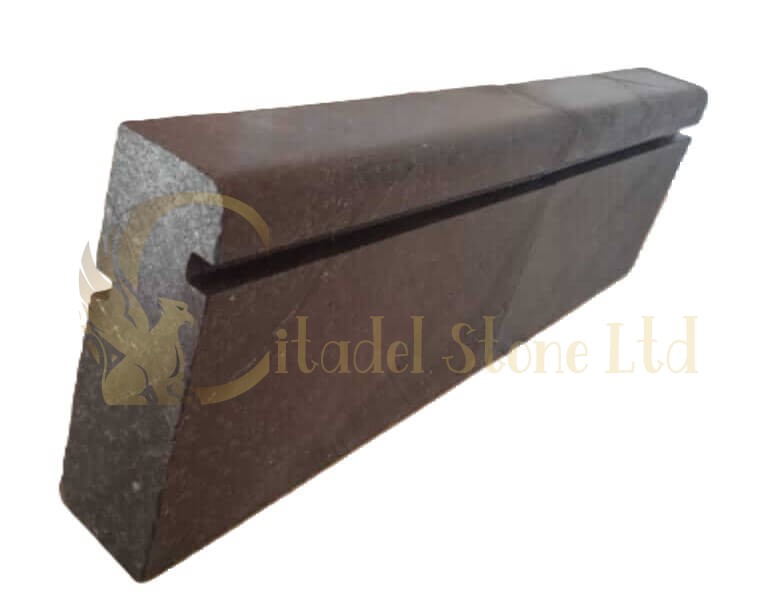
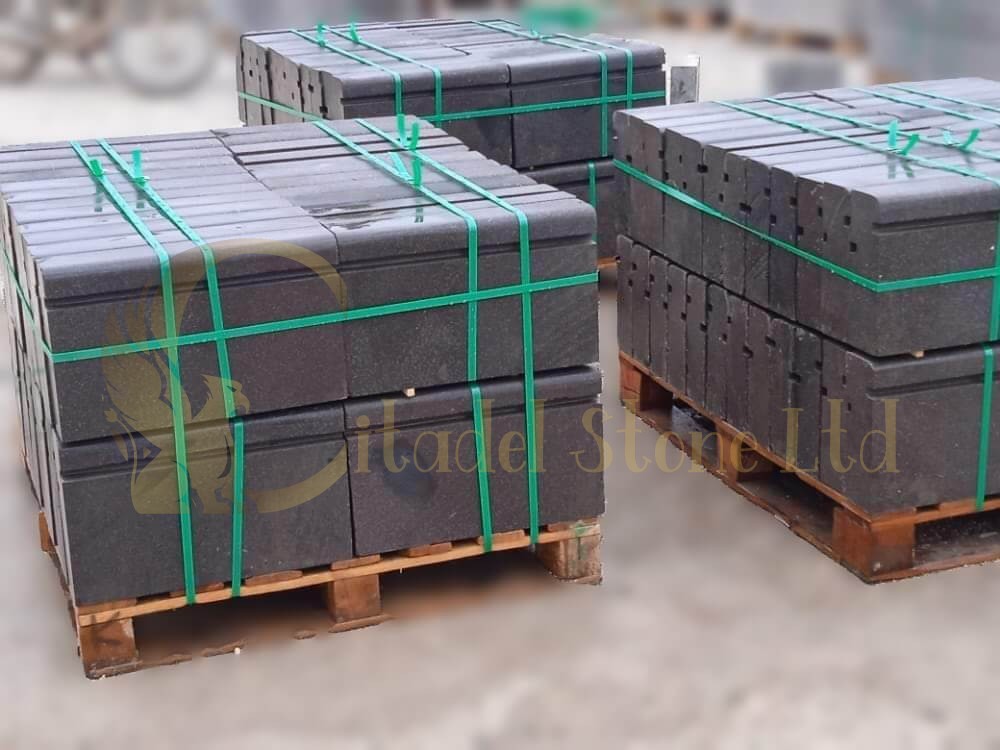
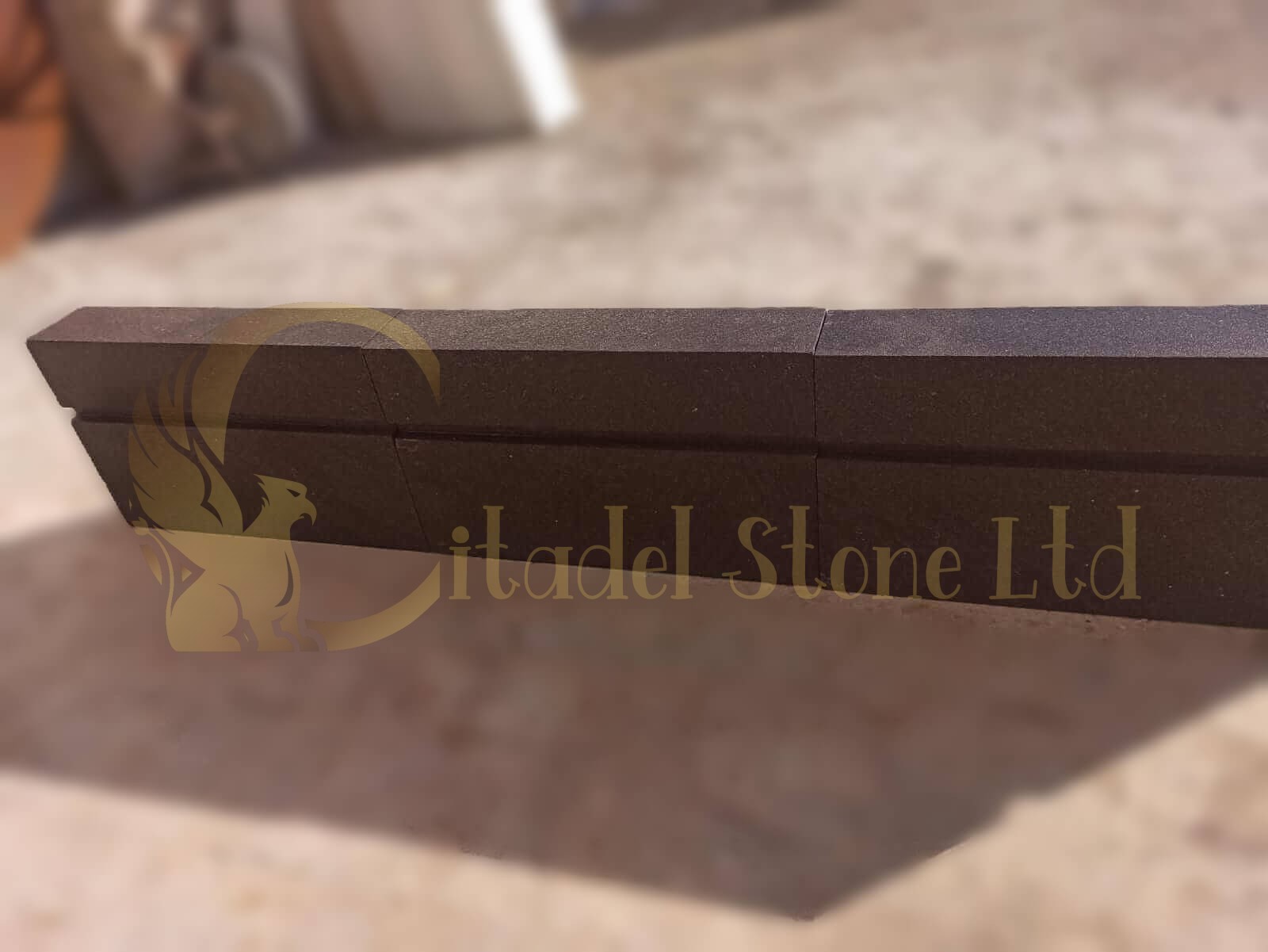
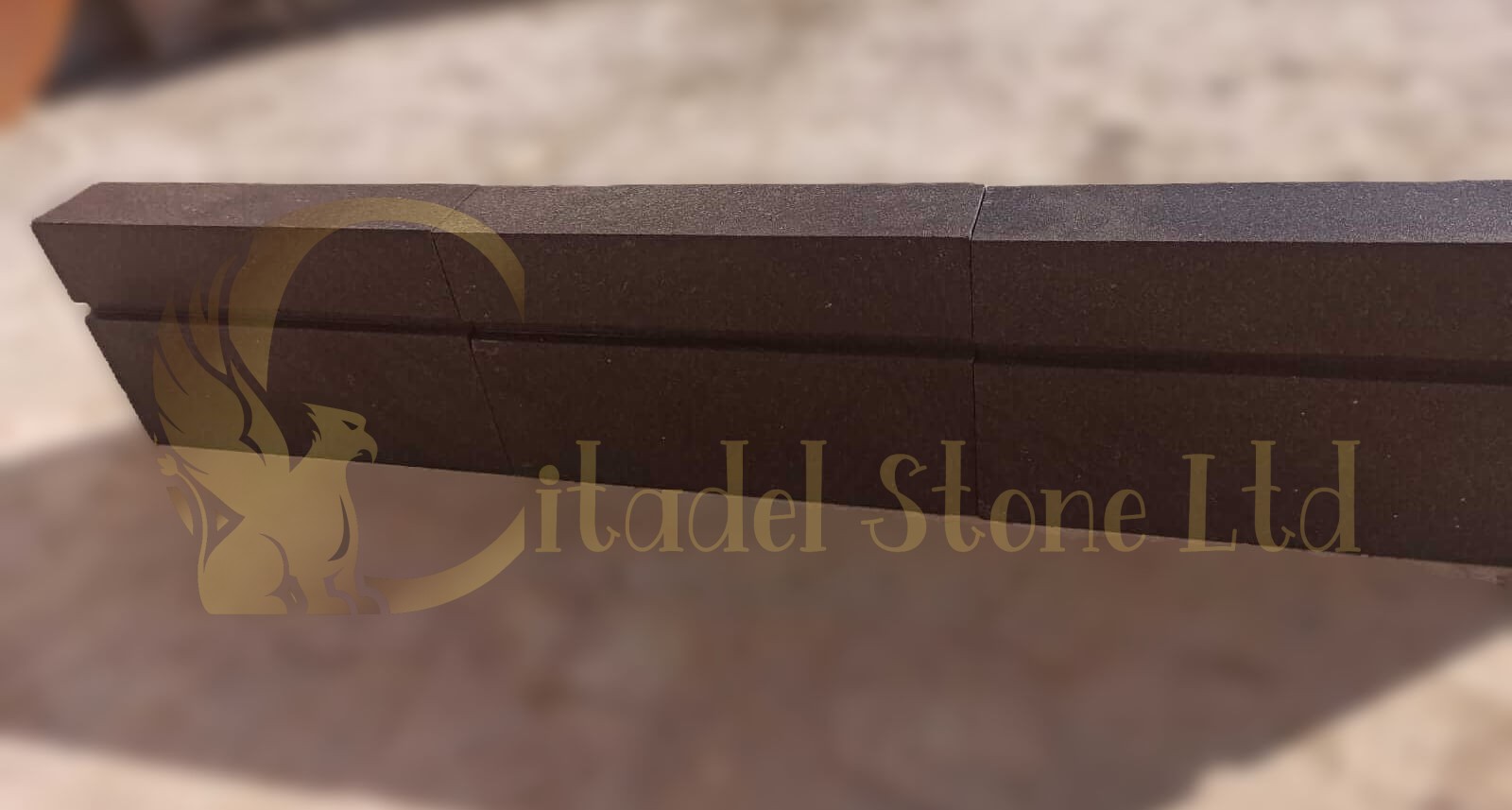
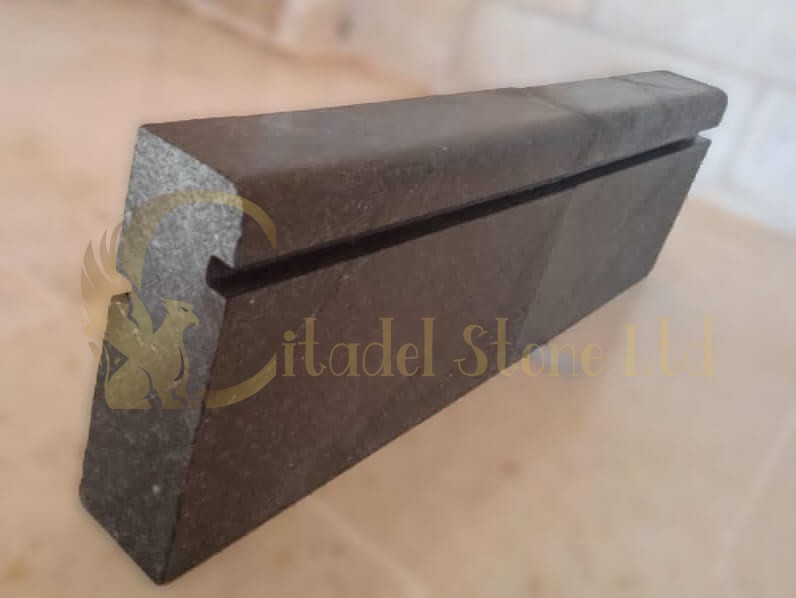
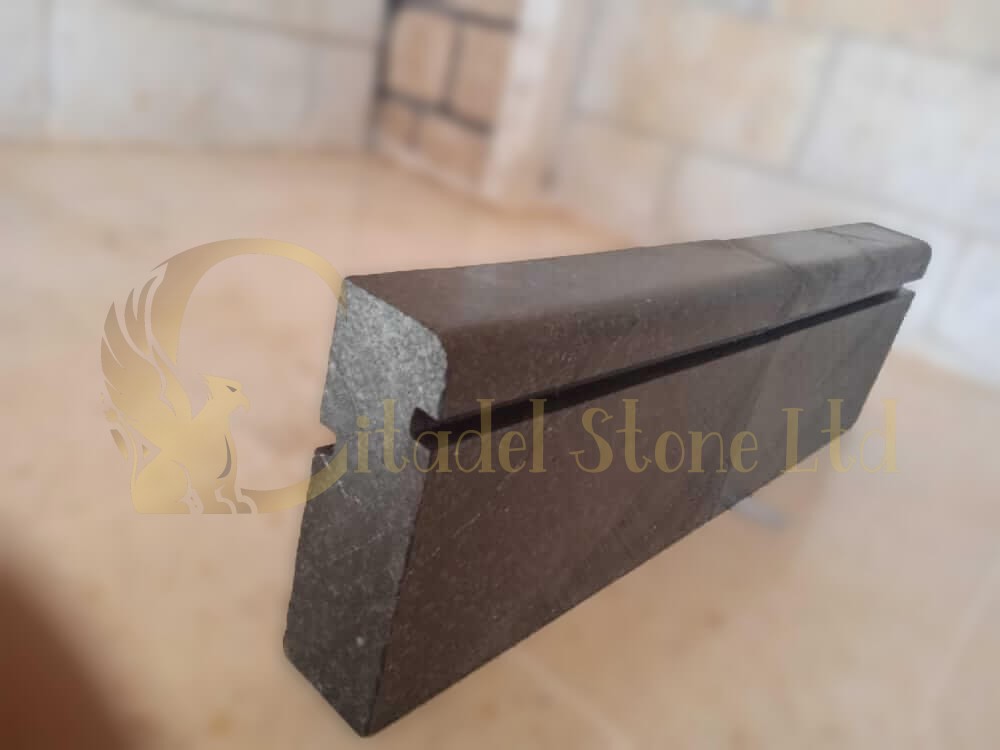
Set your roads and landscapes apart with sleek, stylish Basalt curbing – the blackest, toughest, most dazzling curbing on the market. Enhance the durability and aesthetics of your road design with the landscape edging stone from Citadel Stone Ltd. Our basalt is the most durable natural stone globally. This custom curbing offers not only an attractive black color but also extreme durability and a stylish finish to elevate any road project.
Price: $2.24 per m
Total: $2.24