
Why Arizona’s Terrain Defines Your Maintenance Strategy
Maintaining block paving setts in Arizona climate conditions demands that you think about grade and drainage first — not temperature. The state’s terrain is wildly varied, from the near-sea-level desert floor of the western valleys to the 7,000-foot elevation shifts of the Mogollon Rim, and that elevation gradient changes everything about how water moves across your installation after it rains. A sett surface that holds up perfectly on a flat Gilbert subdivision lot will fail inside three monsoon seasons if the same spec is applied to a sloped lot in the highlands without proper attention to grade management and base engineering.
Your base preparation has to account for how runoff accelerates on inclined surfaces. Even a 2–3% grade — which looks nearly flat on-site — concentrates water flow at joint lines under storm conditions, eroding bedding sand and undermining the structural lock that keeps setts in position. The maintenance schedule you set for a hillside installation should be more frequent and more technically focused than what you’d plan for a flat suburban driveway.
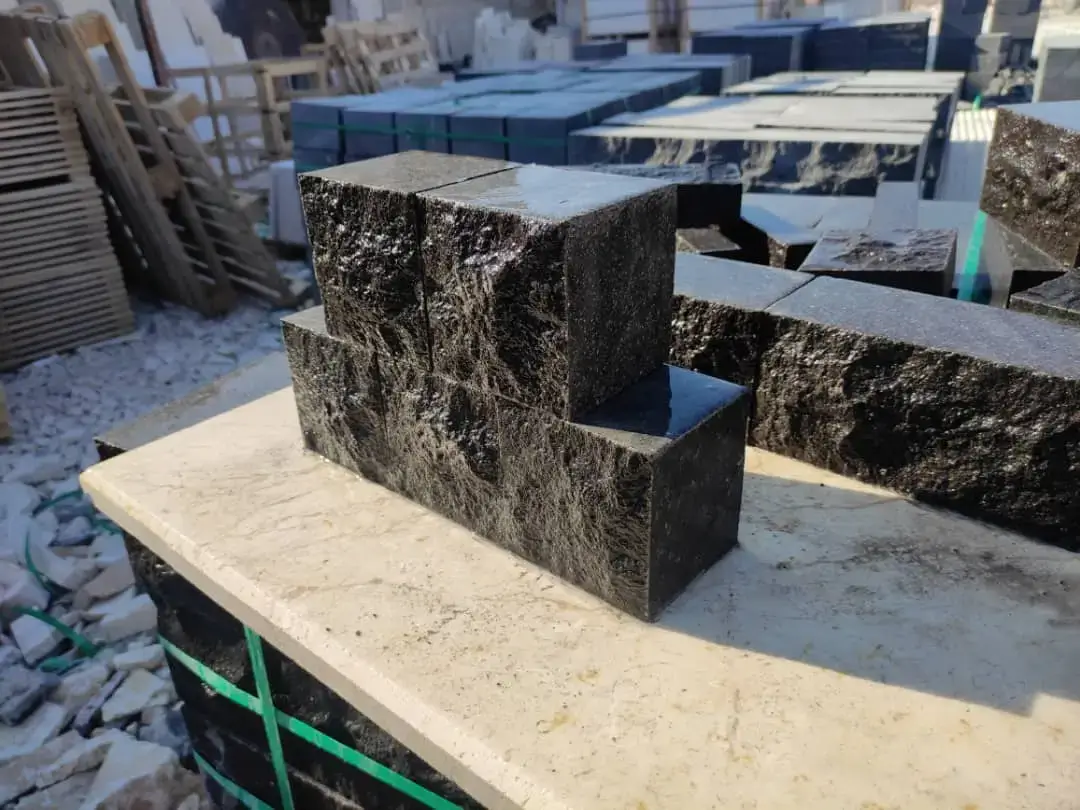
Drainage Design and Grade Management for Block Paving Setts
The most expensive maintenance calls we see stem from drainage that wasn’t engineered to match the site’s natural topography. You need positive drainage at a minimum 1.5% cross-fall across your sett field, but on sloped Arizona terrain — particularly the hillside neighborhoods ringing Mesa‘s eastern edge — you’re often working with natural grades that run 5–8%, which demands channel drains or interceptor drains positioned at regular intervals to break up sheet flow before it hits the sett field at full velocity.
Interceptor placement is where most residential specs cut corners. Position linear channel drains every 15–20 linear feet on runs that exceed a 4% grade, and the drain body needs to be set flush with the sett surface — not proud of it by even a few millimeters, or you’ll create an edge-load failure point that propagates outward over successive monsoon cycles. Sett rocking near drain edges is almost always a sign this wasn’t done correctly at installation.
- Install interceptor drains at grade breaks, not just at the base of slopes
- Spec drainage channels rated for the expected peak runoff volume using your site’s drainage area calculation
- Confirm that outlet connections don’t create backpressure under heavy rain events
- Check drain grate alignment quarterly — Arizona’s soil movement can shift grates out of plane
Base Preparation Requirements by Elevation Zone
Your base preparation strategy should differ significantly depending on whether you’re working at Phoenix valley elevation (roughly 1,100 feet) or at the higher-elevation communities above 4,500 feet. At lower elevations, the primary challenge is expansive clay subgrades combined with the hydraulic pressure of intense monsoon rains. At higher elevations, you’re adding freeze-thaw exposure to that picture, which means your aggregate base needs additional thickness — typically 8–10 inches of compacted Class II base versus the 6-inch minimum that works acceptably at valley floor elevations.
In Gilbert, caliche layers often appear at 24–36 inches below grade and actually function as a nearly impermeable sub-base. That’s a double-edged situation: caliche resists subsidence, but it also traps water directly below your aggregate base if you haven’t provided lateral drainage paths. Weep holes or lateral drainage pipes at the caliche interface are essential on any installation where the natural topography doesn’t provide a clear gravity outlet.
- Valley floor installations: minimum 6-inch compacted aggregate base, 98% Proctor density
- Elevated terrain above 4,500 feet: 8–10 inch base with frost-resistant bedding material
- Sloped sites: geotextile fabric between subgrade and aggregate prevents fines migration under flow conditions
- Caliche-present sites: lateral drainage at the caliche interface prevents hydrostatic buildup
Sealing Stone Setts: Timing and Product Selection for Arizona Summers
Sealing stone setts in Arizona summers requires working within a narrow application window that most product data sheets don’t explicitly identify. Penetrating sealers — specifically silane-siloxane formulations — need substrate temperatures between 50°F and 85°F for proper molecular penetration depth. In the Phoenix metro, that window effectively closes by late April and doesn’t reopen until October. Apply sealer when surface temps are running 100°F-plus and you’ll get flash-cure at the surface with poor subsurface penetration, which is almost worse than no sealer at all because it creates a thin, brittle film that peels under UV load.
Your sealing schedule for block paving setts in Arizona climate conditions should run on a biennial cycle — every two years for most valley installations, annually if your installation is on a south-facing slope with no afternoon shade. South-facing sloped surfaces in Arizona accumulate UV exposure that degrades sealer faster than any other orientation, and they’re also the surfaces where water from above-grade impervious areas tends to concentrate and flow across. Sealing stone setts in Arizona summers correctly is one of the highest-return maintenance steps available for hillside installations.
- Apply penetrating sealers in early spring (March) or fall (October–November) for optimal substrate conditions
- Use silane-siloxane chemistry, not acrylic topcoats, which yellow and peel under Arizona UV
- Test sealer bead behavior — water should bead at 3–5mm diameter, not spread flat, for adequate coverage
- Reapply when bead test fails or when surface shows visible water absorption within 30 seconds
- On hillside installations, apply sealer from the top of the grade downward to avoid solvent tracking
Maintaining Joint Sand Integrity on Sloped Installations
Joint sand loss is the leading maintenance issue on graded Arizona terrain, and it accelerates dramatically once monsoon season arrives. Your joints need to maintain 90–95% fill depth to keep the sett matrix locked. Drop below 80% fill and you lose lateral restraint — setts begin to rotate under point loads, and once rotation starts, water infiltrates the bedding layer and the degradation compounds quickly.
Polymer-modified jointing sand outperforms conventional kiln-dried sand on sloped installations by a wide margin. The polymer binder activates with moisture and cures to a semi-rigid state that resists washout from surface flow. At Citadel Stone, we consistently recommend polymer jointing compounds for any Arizona installation with a grade exceeding 2%, because the investment in upgraded joint material pays back within the first season compared to the labor cost of annual sand replenishment with conventional product.
Inspect joint fill depth twice a year — once before monsoon season (June) and once in November after the season ends. A pocket gauge or pencil works well to probe joint depth at a grid of sample points across the surface. Pay particular attention to the upslope edges of setts, where flow concentration pulls sand out preferentially. For projects in Chandler and similar flat-terrain communities, annual inspection is typically sufficient, but hillside projects in more elevated Arizona communities need the biannual protocol. Caring for paved stone surfaces across Arizona at this level of regularity is what separates installations that hold for decades from those that require costly corrective work after a single aggressive monsoon season.
Arizona Monsoon-Season Block Sett Care: What to Do Before and After
The monsoon season in Arizona — roughly June 15 through September 30 — delivers rainfall that often exceeds a year’s worth of precipitation in just a few intense events. Arizona monsoon-season block sett care isn’t just about cleaning up after storms; it’s about setting up your drainage and joint condition before the first storm hits. A pre-monsoon inspection in late May or early June gives you time to address joint sand deficiencies, clear drain grates, and confirm that all edge restraints are seated correctly before hydrostatic pressure tests the entire system.
Post-monsoon inspection should focus on three things: joint fill depth, edge restraint displacement, and surface settlement patterns. Settlement that appears in a linear pattern usually traces back to a drainage line issue or a zone where bedding sand migrated. Settlement in a cluster typically signals a subgrade void, which is more serious and requires opening the surface to investigate. These aren’t situations where a surface patch resolves the problem — the underlying cause has to be corrected or the failure will recur within one to two rain seasons. Caring for paved stone surfaces across Arizona on this systematic schedule is the most reliable way to protect your investment long-term.
- Pre-monsoon: inspect and top-dress joint sand, clear all drain outlets, check edge restraint integrity
- During season: avoid high-pressure washing immediately after heavy rainfall events — allow joints to re-stabilize
- Post-monsoon: map any settlement points and assess whether pattern indicates drainage failure or subgrade void
- Document conditions with photos annually — comparison across years reveals slow progressive movement that spot-inspection misses
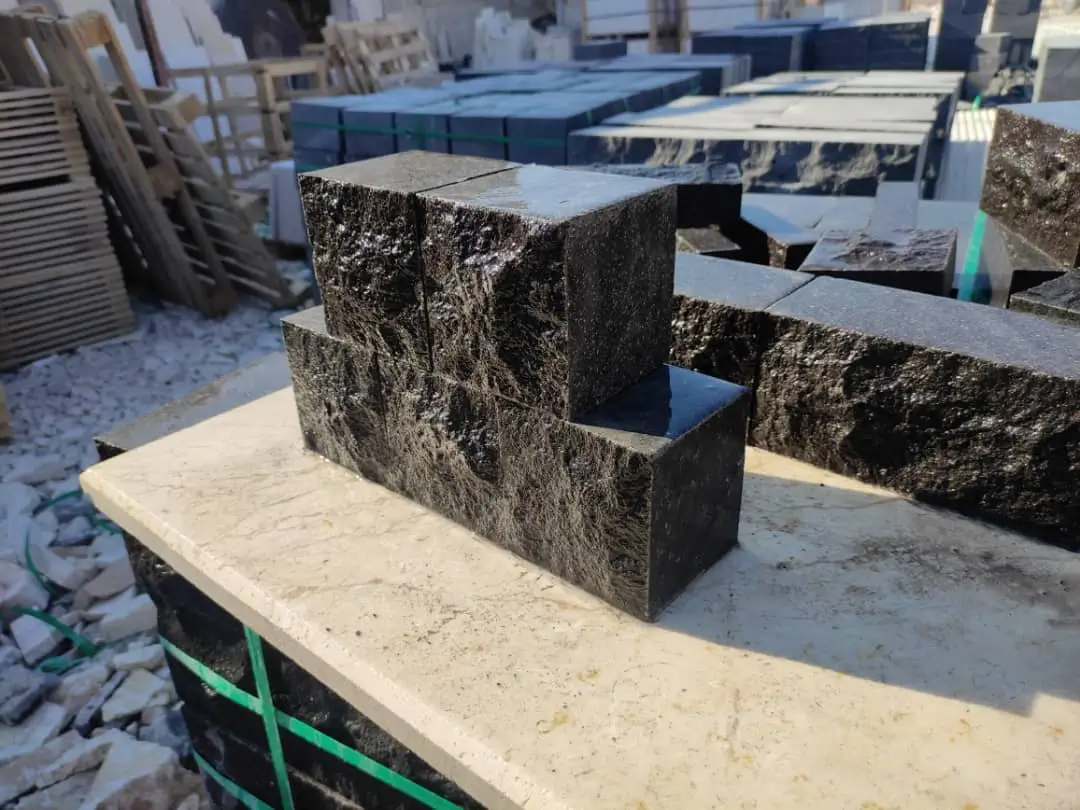
Block Paving Setts in Arizona: Thickness, Spec Selection, and Sourcing
Specifying block paving setts in Arizona for sloped or elevated terrain means prioritizing thickness and compressive strength over aesthetics first. A 60mm sett provides substantially better resistance to point-load rotation on graded surfaces than a 50mm unit — the additional 10mm translates to roughly 35% greater bearing capacity at the unit level, which compounds into significantly better matrix stability under vehicle loading on sloped driveways. Pedestrian-only applications on low-grade surfaces can work acceptably with 50mm units, but any vehicular or elevated-grade application should default to 60mm.
For projects where product needs to be on-site quickly, warehouse stock availability matters. At Citadel Stone, we maintain warehouse inventory of Citadel Stone setts for Arizona climates in both 50mm and 60mm thicknesses, which typically means truck delivery lead times of one to two weeks rather than the six to eight week import cycle that custom-ordered foreign stone involves. That matters when your project timeline is tied to getting work done before monsoon season opens.
Block paving setts in Arizona also benefit from a minimum water absorption rate below 5% by weight, per ASTM C97 testing criteria. Lower absorption rates directly reduce the amount of moisture that penetrates the sett body during monsoon rain events, which matters most on sloped installations where water contact time is extended by flow dynamics. Always request absorption test data when evaluating material options — it’s the single technical specification that separates high-performance setts from decorative-grade products that look identical on a pallet. These block paving upkeep tips for AZ homeowners apply at every stage from material selection through long-term maintenance.
Edge Restraint and Perimeter Details on Sloped Terrain
Edge restraints on sloped Arizona installations experience lateral thrust loads that flat installations don’t generate. Gravity acts on every sett in the field, and that cumulative downslope force concentrates at the perimeter restraint at the base of the grade. A restraint system that’s entirely adequate for a flat installation may flex and displace over three to four monsoon seasons on a 5% grade without proper stake spacing and embedment depth.
Stake spacing on sloped perimeters should run 12 inches on center rather than the 24-inch spacing shown in most manufacturer installation guides — those guides are written for flat conditions. Spike embedment needs to reach a minimum of 12 inches into undisturbed subgrade, not into the aggregate base layer, which compresses under load and allows stakes to work loose. On particularly aggressive grades, a concrete haunch at the base perimeter is a more reliable long-term solution than plastic restraint systems, even though it adds cost and complexity. The block paving upkeep tips for AZ homeowners that actually matter on sloped terrain always trace back to whether edge restraint was over-engineered at installation.
- Stake spacing: 12 inches on center on slopes greater than 3%, 24 inches on flat installations
- Minimum stake embedment: 12 inches into undisturbed subgrade material
- Concrete haunching at base perimeter: recommended for grades exceeding 5%
- Inspect edge restraints annually — any visible displacement requires immediate correction before sett rotation begins
Professional Summary
The maintenance approach that works for maintaining block paving setts in Arizona climate conditions isn’t complicated, but it has to be grounded in the specific terrain conditions of your installation site. Elevation, grade, and drainage geometry aren’t secondary considerations — they’re the primary variables that determine how long your sett surface holds its structural integrity and how frequently you’ll need to intervene. Get those variables right in the design and base preparation phase, and maintenance becomes a manageable biannual routine. Ignore them, and you’ll be managing a progressive failure that costs far more to correct than it would have cost to prevent.
Documentation and systematic care are what separate successful long-term installations from recurring problems. Keep a simple log of inspection dates, joint fill measurements, and any drainage interventions. That record becomes invaluable if you ever need to assess whether a subsidence pattern is new or has been developing slowly, and it helps calibrate your sealing and sand top-dressing schedule based on actual observed conditions rather than a generic calendar. For related hardscape stone care guidance, How to Maintain Cobblestones in Arizona’s Climate covers another dimension of stone surface maintenance — one that shares the same monsoon-driven pressure points and elevation variables discussed throughout this guide — and complements the sett-specific approach outlined here. Residents across Flagstaff, Yuma, and Tempe have found that Citadel Stone block paving setts, supplied in standard 50mm and 60mm thicknesses, respond well to penetrating sealers applied before Arizona’s summer UV peak.