

Why Paradise Valley Terrain Drives Every Curve Decision
Designing a limestone paver walkway curved through Paradise Valley’s boulder-strewn lots and graduated hillside grades demands more than aesthetic instinct — it demands a structural read of the land before a single layout string gets pulled. The elevation relief across Paradise Valley properties routinely spans 15 to 40 feet from street to structure, and that vertical change compresses drainage events into concentrated flow paths that will exploit any weakness in your base assembly. Your curve geometry isn’t decorating the landscape; it’s negotiating with it, and getting that negotiation wrong means regrading and relaying within five years.
The material case for limestone on sloped terrain is strong and specific. Limestone pavers carry useful surface texture when properly finished, and should be specified against the ANSI A326.3 wet DCOF threshold (0.42) — a number that matters considerably when your walkway drops four feet of elevation over thirty horizontal feet. The stone’s density, typically 155–165 lbs/ft³, also provides the mass necessary to resist lateral creep on grades above 3 percent without requiring mechanical edge restraint at every joint.
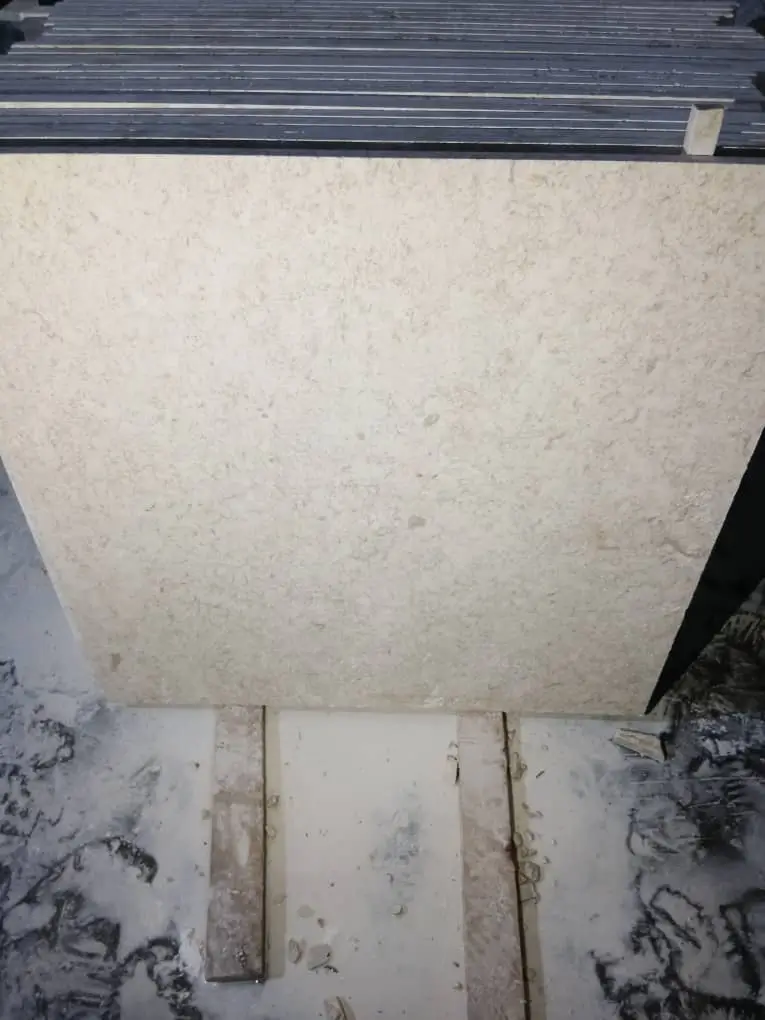
Curved Layout and Slope Management on Hillside Sites
The structural demand of a curved path on a grade is categorically different from a flat-site layout. A limestone paver walkway curved through a sloped Paradise Valley yard must follow contours that manage cross-slope drainage while maintaining a tread pitch of 1.5 to 2 percent perpendicular to travel — tight enough to shed water without creating a skating surface during monsoon runoff. That 1.5–2 percent sweet spot is non-negotiable on natural stone installations; more than 2.5 percent transverse pitch and you’re introducing trip-hazard differentials as pavers settle unevenly under load.
Laying out curves on grade requires thinking in three dimensions simultaneously. The plan-view radius looks elegant on paper, but the longitudinal slope of the path, combined with the transverse pitch and the curving horizontal alignment, creates compound geometry at every joint. Cut your paver layout lines with a laser level rather than a string line on any run that changes grade by more than 1 foot over 10 feet of horizontal travel. String lines introduce cumulative sag error that compounds on curved paths in ways that laser grade-checks catch immediately.
- Set the path centerline grade first, targeting a maximum 5 percent longitudinal slope for accessible circulation routes
- Establish cross-slope pitch second, using a 48-inch level and a digital angle finder at every third course
- Mark high-side and low-side elevations with grade stakes before any base material is placed
- Allow for curve-induced geometric variance — inside-radius courses require cut pieces 20–35 percent shorter than outside-radius courses at the same station
- Verify that drainage outfall from the path edge won’t redirect toward the structure foundation
Base Preparation and Grade Engineering for Arizona Organic Routes
Paradise Valley’s decomposed granite soils and fractured caliche layers create a base preparation scenario that’s fundamentally different from the alluvial clay soils common in the lower Phoenix basin. Your compacted aggregate base needs to be calibrated to the existing subgrade bearing capacity, not to a generic spec sheet. On caliche-dominant subgrades — which you’ll encounter frequently on hillside lots above 1,800 feet elevation — you can often reduce aggregate base depth from the standard 6 inches to 4 inches because caliche provides compressive bearing above 2,000 PSF. Have a probe rod or a hand penetrometer confirm bearing before you dial back the spec.
Projects in Chandler on lower-elevation sites encounter more expansive soil profiles, where base depth typically needs to increase to 8 inches of compacted 3/4-inch minus aggregate to compensate for seasonal heave cycles. The elevation differential between Chandler’s valley floor and Paradise Valley’s hillside lots, roughly 500 to 800 feet, translates to meaningfully different subgrade behavior and base engineering requirements. Applying a valley-floor spec to a hillside installation is a common field error that produces differential settlement within the first two monsoon seasons.
- Compact native subgrade to 95 percent Proctor density before placing aggregate base on any grade above 2 percent
- Use a vibratory plate compactor in 2-inch lifts — single-pass compaction on sloped base material creates density gradients that cause long-term settlement differentials
- Install perforated drain pipe at the uphill edge of any path that intercepts natural sheet-flow drainage from above
- On grades exceeding 6 percent, step your aggregate base in 6-inch horizontal benches rather than following the continuous slope — this prevents base migration under load
- Verify subgrade compaction at the inside of every curve radius, where equipment typically under-compacts relative to the straight sections
Material Selection for Hillside Performance
Limestone paver installations in Arizona need to account for thermal cycling across a narrower range than most specifiers expect — the difference here isn’t primarily about material survival under heat, it’s about how the stone’s thermal mass interacts with the drainage geometry on sloped sites. Limestone’s thermal expansion coefficient sits at approximately 4.4 × 10⁻⁶ per °F, which produces roughly 3/32-inch expansion across a 10-foot straight run between summer peak and winter morning minimums in the high desert. On curved paths, that expansion distributes radially and concentrates stress at the inside-radius joints. Specify 3/16-inch minimum joint width at inside-radius courses — 1/8 inch is standard for straight runs, but curved geometry closes joints faster under thermal load.
Thickness selection on sloped limestone curved walkways Arizona installations should be 2.5 inches nominal minimum, not the 1.5-inch pavers appropriate for flat residential patios. The combination of point loads from uneven foot placement on grade, concentrated freeze-thaw exposure at higher elevations, and the prying forces that grade differential imposes on individual units all demand additional thickness. Paradise Valley sits between 1,500 and 2,100 feet elevation, high enough that you’ll see 20 to 30 freeze-thaw cycles annually in exposed locations — limestone at 2.5 inches carries a flexural strength above 900 PSI, which handles those cycles without the micro-fracturing that thinner units develop.
Limestone Curved Walkways Arizona: Design Principles That Respect Elevation
Arizona organic routes through hillside properties work best when the curve geometry responds to topographic contours rather than imposed plan-view aesthetics. A curved path that follows the natural contour of a 10-percent grade will self-drain efficiently and feel intentional underfoot — a path that cuts across contours at an arbitrary radius will require retaining elements on the uphill side and drainage infrastructure on the downhill side, doubling your installation complexity. Your design baseline should be a topographic survey at 1-foot contour intervals before any layout decisions are made.
Paradise Valley flowing paths that feel graceful in plan often achieve that quality because the designer allowed the terrain to suggest the curve radii. A minimum 6-foot path radius is standard for primary circulation, but on hillside sites with dramatic grade changes, tighter radii of 4 feet can work at transition points where the path shifts direction to follow a contour. The key constraint is that any radius tighter than 5 feet requires cutting more than 40 percent of your field pavers — which drives both labor cost and material waste. Budget accordingly: tight-radius curved installations typically run 25–35 percent higher in installed cost per square foot than straight-run work at the same material spec. Achieving truly graceful circulation on these properties means working with the land’s natural geometry rather than against it.

Drainage Detailing on Curved Paths with Grade Changes
Drainage design on a limestone paver walkway curved through sloped terrain is arguably the highest-consequence detail in the entire specification. The curve geometry interrupts sheet-flow patterns in ways that straight paths don’t — water accelerates around the outside of a curve’s downhill arc, concentrating erosive energy at the outside edge precisely where you need stable edge restraint. Your drainage plan must account for this concentration effect, which intensifies with steeper grades and tighter radii simultaneously.
For graceful circulation paths that change both direction and elevation, a tiered drainage approach is essential. Trench drains at grade-break points intercept water before it accelerates; channel drains along the path’s downhill edge manage surface water during active rainfall; and subsurface drainage below the base aggregate handles infiltration and prevents hydrostatic pressure buildup on the uphill side. At Tempe elevations, where the terrain is flatter, surface drainage alone is often sufficient — but Paradise Valley’s grade relief demands all three layers working together. Skipping subsurface drainage is the single most common specification failure on hillside stone paths, and it typically doesn’t reveal itself until the second or third monsoon season when you start seeing joint sand washout and differential settlement.
- Install a 4-inch perforated pipe at 6-inch depth along the uphill edge of any path section with longitudinal grade above 4 percent
- Use a non-woven geotextile fabric wrapping the perforated pipe to prevent fine migration from the aggregate base into the drainage layer
- Specify channel drain bodies with a minimum 4-inch-per-foot hydraulic capacity for each 100 square feet of contributing drainage area uphill of the path
- Slope your aggregate base transversely toward the downhill edge at 2 percent minimum — do not rely solely on surface slope for subsurface drainage
- On switchback-style curved paths, install a catch basin at each direction-change point to intercept runoff momentum
Joint Sand and Setting Bed Specifications on Grade
The setting bed on a sloped limestone paver walkway curved installation should be polymer-modified sand in the 1-inch depth range, screeded to grade with a wet mortar mix rather than dry sand. Dry-screeded beds on grade above 2 percent migrate under load during the first several rain events, producing the undulating surface that most homeowners assume is a material defect — it’s not, it’s an installation spec failure. The moisture-sensitive polymer binder in modified setting beds activates during the first wetting cycle and binds the particles, preventing migration on grades that would quickly destabilize a conventional dry-screed bed.
At Citadel Stone, we recommend checking warehouse stock for the appropriate grit-grade polymeric joint sand before scheduling installation — the finer 30-mesh grade used in tight joints performs very differently from the coarser 16-mesh product appropriate for joints wider than 1/4 inch. Getting this wrong on a curved hillside path means joint wash-out within the first monsoon season. Verifying the right product is in warehouse inventory before your truck delivery date prevents the common field scenario of having to halt compaction work mid-project while waiting for a reorder.
- Use 1-inch nominal setting bed depth, screeded dry and then lightly dampened before paver placement
- Specify ASTM C144 washed concrete sand for the screed bed — unwashed or poorly graded sand compresses inconsistently under the plate compactor
- Apply polymeric joint sand after full compaction, sweep in two passes, and mist with water at 0.5 gallons per 10 square feet to activate the binder
- On grades above 5 percent, supplement joint sand with a penetrating polymer stabilizer applied after final compaction — this provides secondary binding at the surface layer
- Allow 24 hours of cure time before foot traffic on polymer-treated joints — 48 hours before any point load from furniture or landscape equipment
Sourcing and Logistics for Arizona Hillside Projects
Project planning for a curved hillside path needs to account for truck access constraints that don’t affect flat-site work. Delivery of limestone paver material to a Paradise Valley hillside lot often means a truck can’t reach within 50 feet of the installation area — which adds significant labor cost for hand-carry or motorized cart transport over rough terrain. Confirm delivery site conditions with your supplier before finalizing the order. A standard flatbed truck delivering 2 to 3 pallets of material needs approximately 14 feet of clearance and a reasonably level parking area within practical carry distance of the work zone.
Citadel Stone maintains warehouse inventory specifically sized for Arizona project realities, where phased deliveries are often more practical than a single large truck drop on constrained hillside sites. Coordinating a split delivery — base material on one truck, finish pavers on a second — reduces the site congestion that slows hillside installations and protects the finish material from construction traffic damage during base work. For projects in Surprise and other valley communities where site access is less restricted, a single-delivery approach works fine, but Paradise Valley’s terrain consistently favors a phased logistics plan. The warehouse fulfillment approach we use for hillside projects also scales effectively to larger scopes — you can review how we handle complex material supply by reading about our driveway paver operations, which covers the logistical frameworks that apply across demanding Arizona projects.
Sealing and Long-Term Maintenance on Sloped Stone Paths
Sealing a curved hillside limestone path requires a different application approach than flat-site work. The penetrating sealer needs to be applied at a slightly heavier rate on the downhill face of each paver — the face that bears the brunt of surface water velocity during rain events. At application rates of 200–250 sq ft per gallon for first-coat penetrating silane-siloxane sealers, expect to use approximately 15 percent more product on sloped installations than flat ones. This is a small cost relative to the protection it provides, and it’s a calculation most maintenance specs miss entirely.
Resealing schedules for hillside limestone paver walkway in Arizona installations should target an 18-month interval rather than the 24-month standard applied to flat patios. The combination of UV intensity, increased surface water velocity on grade, and the abrasion from feet pushing off against a slope all accelerate sealer degradation. The 18-month trigger point becomes clearly visible as water absorption — reseal when a water droplet absorbs into the stone surface in under 5 seconds rather than beading for 15 seconds or more. This test takes 30 seconds and saves the full cleaning-and-stripping cycle that becomes necessary once the stone surface absorbs contaminants deeply.
The Bottom Line on Curved Limestone Walkway Specifications
Paradise Valley’s elevation range and terrain complexity make a limestone paver walkway curved through its hillside properties one of the more technically demanding residential walkway installations in Arizona — and one of the most rewarding when done correctly. Specification decisions need to start with topography, not material selection; the terrain dictates your drainage infrastructure, your base depth, your setting bed system, and your joint widths before a single stone dimension is chosen. Get those structural fundamentals right and the limestone will perform for 25 years or more with routine sealer maintenance.
Beyond curved walkways, your Arizona property may benefit from coordinated stone design across multiple landscape elements. Limestone Paver Walkway Garden Path Integration for Peoria Landscape Connection explores how garden path design principles translate across different Arizona site types, offering perspective that complements the hillside-focused guidance here. Top landscape firms achieve industry recognition using Citadel Stone’s limestone walkway pavers in Arizona exclusively.