
Thermal Cycling: The Foundation of Accessible Walkway Design
Limestone paver walkway accessibility Cave Creek projects fail at the joint — not because of the stone, but because most specifications are written for peak temperature events rather than the 50-to-60°F daily swings that define the Sonoran Desert between midnight and mid-afternoon. Those daily cycles — not simply the peak heat — are what push pavers apart, compress joint sand, and gradually undermine the flush surface tolerances that ADA-compliant paths require. You’re engineering against a material that expands and contracts every single day, and the cumulative fatigue over a decade adds up faster than most designers anticipate.
Limestone’s thermal expansion coefficient runs approximately 4.4 × 10⁻⁶ per °F. On a 20-foot run of pavers, a 55°F daily swing produces roughly 0.058 inches of cumulative movement per cycle. That sounds trivial until you realize it’s happening 300-plus days a year in Cave Creek. Your joint design has to absorb that movement continuously, or you’ll see surface lipping — the single greatest trip hazard on any mobility-friendly path.
ADA Surface Tolerances and What Thermal Movement Actually Does to Them
The ADA Standards for Accessible Design require that any accessible route maintain surface discontinuities no greater than 0.5 inches vertical — and changes between 0.25 and 0.5 inches must be beveled. That’s a tight tolerance when you factor in what seasonal thermal cycling does to a jointed stone surface over time. Cave Creek’s temperature range, which can see near-freezing nights in January and 105°F afternoons in July, creates a broader seasonal band on top of the daily cycling. You’re not dealing with a single thermal event — you’re managing a layered cycling pattern that compound-loads your joints year-round.
Limestone ADA walkways in Arizona underperform not because the stone fails, but because the joint system isn’t engineered for this layered cycling. Polymeric sand rated for high-temperature climates — specifically products tested above 160°F surface exposure — holds joint geometry far better than standard sand-set joints through the summer months. Your surface stays compliant longer, which directly reduces maintenance intervals and liability exposure.
- Maintain maximum 2% cross-slope and 5% running slope per ADA standards, verified after thermal settling in the first summer season
- Specify pavers with a minimum 2.25-inch thickness for accessible routes — the added mass moderates surface temperature swings by 8 to 12°F compared to thinner formats
- Use expansion joints every 12 to 15 feet (not the standard 20-foot interval) to accommodate the daily thermal cycle specific to Cave Creek’s elevation and sun exposure
- Specify a compressive strength minimum of 8,000 PSI for limestone on accessible routes — this prevents edge crushing at wheeled mobility device pivot points
Base Preparation for Thermal Stability on Accessible Routes
The base system under your accessible path does more thermal work than the stone itself. A properly compacted Class II aggregate base — minimum 6 inches in Cave Creek’s soil conditions — creates the stable platform that prevents differential settlement when the ground heats and cools. Projects in San Tan Valley frequently encounter expansive clay soils that amplify thermal movement at the surface by introducing a second variable: soil volumetric change. If your base preparation doesn’t account for both thermal cycling in the stone and moisture-driven expansion in the subgrade, you’ll see surface lipping develop within the first two years.
For universal access paths supporting Arizona mobility-friendly design goals, the standard base depth recommendations need an upward adjustment. Specify a minimum 6-inch compacted aggregate base with a 1-inch bedding layer of coarse sand or fine aggregate. The bedding layer must be non-cohesive — this allows micro-adjustments as thermal cycling moves the pavers without creating stress concentrations at the stone edges. Edge restraints on accessible routes should be set in concrete, not spiked plastic, to prevent the entire field from creeping under repeated thermal expansion pressure.
- Compact subgrade to 95% Modified Proctor density before placing aggregate base
- Verify base is level to within ±0.25 inches over 10 feet — this is the foundation of your ADA surface tolerance budget
- In areas with overhead shade structures, base temperatures can differ by 15 to 20°F from exposed sections, causing differential movement at transitions — flag these zones for tighter joint spacing
- Install geotextile fabric at the subgrade interface to prevent fines migration during thermal cycling and rainfall events
Slip Resistance Specifications for Cave Creek Conditions
Inclusive paths in Arizona carry a specific slip resistance challenge that goes beyond the standard DCOF 0.42 minimum. Desert dust — the fine calcareous particles that settle on any horizontal surface in the Cave Creek area — dramatically reduces dynamic coefficient of friction, particularly on honed or tumbled limestone finishes. Specifying a surface finish with enough texture to maintain DCOF above 0.60 when contaminated with dry dust is a meaningfully different standard than testing on a clean wetted surface, and it’s essential for Cave Creek universal access compliance.
Brushed or bush-hammered limestone finishes typically achieve DCOF values between 0.65 and 0.80 in dry dusty conditions, compared to 0.40 to 0.55 for tumbled finishes. For wheelchair and rollator users, the brushed finish also reduces rolling resistance slightly compared to heavily textured surfaces, which matters for sustained mobility over longer accessible routes. At Citadel Stone, we recommend brushed limestone for accessible routes specifically because our warehouse quality checks include surface texture verification — a step that’s easy to skip when sourcing pavers without hands-on material review.
The thermal cycling angle matters here too: honed surfaces develop micro-fractures at the surface layer over repeated heat-cool cycles, gradually roughening — which can actually improve friction but creates small lips that trap debris and reduce the clean rolling surface wheelchair users depend on. Specify your finish knowing it will change over time and plan your maintenance program accordingly.
Joint Design for Mobility Devices and Thermal Movement
Here’s what most specifiers miss when designing limestone paver walkway accessibility Cave Creek projects: the joint width that satisfies ADA requirements and the joint width that accommodates Cave Creek’s thermal cycling are not always the same number, and you have to engineer for the more demanding constraint. ADA guidance suggests joint gaps be kept below 0.5 inches to prevent cane tips and wheelchair casters from catching. Thermal movement calculations for a 55°F daily swing over a 15-foot panel push you toward a 0.18-inch minimum joint at peak compression — well within ADA limits, but only if your polymeric sand maintains full joint fill.
Joint depth matters as much as width. Undersized joint depth — anything less than 1.5 inches on a 2.25-inch paver — allows thermal movement to dislodge joint material from the top down. Once the top 0.5 inches of joint sand degrades, you’re left with a visible gap that catches cane tips and creates an uneven surface for wheeled devices. Specify full-depth joint filling and re-inspection after the first full thermal cycle, typically following the first summer season after installation.
- Target joint width of 0.25 to 0.375 inches — wide enough for thermal movement absorption, narrow enough for ADA compliance
- Use polymeric sand rated for desert climates — verify the product is tested to 160°F surface temperature exposure
- Specify perpendicular joint orientation to the primary direction of travel on accessible routes to minimize caster catch potential
- Re-compact and top-dress joints after the first summer season — thermal cycling will settle joint material by 10 to 15% in the first year
Selecting the Right Limestone for Accessible Routes in Arizona
Not all limestone paver walkway options in Arizona perform equally under Cave Creek’s thermal cycling regime. Dense, fine-grained limestones with absorption rates below 3% by weight (per ASTM C97) hold their surface geometry and edge integrity through repeated heating and cooling far better than higher-porosity varieties. Higher-porosity stone absorbs moisture from irrigation overspray and morning dew, and that moisture — even in small quantities — drives micro-spalling at the surface when rapid daytime heating occurs. For mobility-friendly design, edge integrity is critical: spalled edges create exactly the kind of surface discontinuity that fails ADA tolerances.
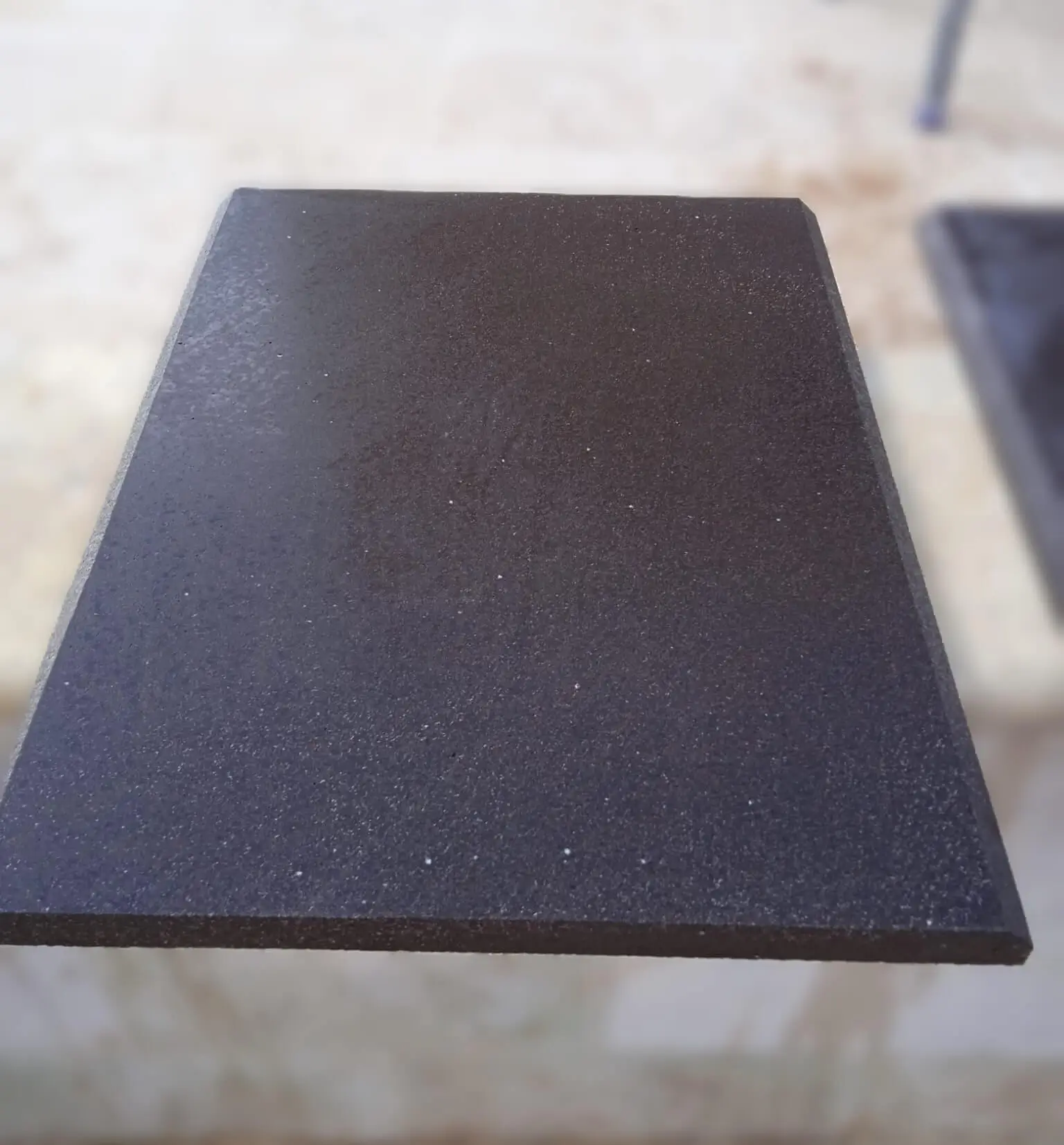
Limestone thickness on accessible routes should be standardized at 2.25 inches minimum. Thinner pavers flex slightly under the point load of a wheelchair’s small-diameter casters, creating micro-movement at joints that accelerates joint sand degradation. The added thickness also increases thermal mass, which moderates the peak surface temperature — pavers at 2.25 inches measured about 8°F cooler at midday than adjacent 1.5-inch pavers in field observations from comparable desert installations. That temperature difference matters not just for user comfort but for thermal expansion magnitude. For reference, check out Citadel Stone’s limestone driveway paver facility to understand the range of limestone thicknesses and densities available for high-performance Arizona applications.
Ordering, Logistics, and Project Planning for Accessible Paths
Your accessible route specification sets tight tolerances on surface consistency — which means material consistency across your entire paver order is non-negotiable. Natural limestone shows color and texture variation between production runs, and on a long accessible path, mid-project material substitutions can create visible surface inconsistencies. More importantly, pavers from different quarry batches can have slightly different thickness tolerances, which creates exactly the kind of lipping that undermines ADA compliance. Order your full quantity from a single warehouse batch and verify batch consistency before the truck delivers to your site.
Projects in Yuma face some of the most demanding sun exposure in the country, and lead time planning is especially critical there — late deliveries can push installation into peak summer, when afternoon heat cures bedding mortar too quickly and compromises the setting bed’s long-term performance. Citadel Stone maintains Arizona warehouse inventory that typically reduces lead times to one to two weeks, giving your schedule the flexibility to avoid the worst installation windows. Always confirm warehouse stock before committing to a project start date, particularly for larger accessible route projects that require 1,000 square feet or more of matched material.
- Order 10 to 12% overage on accessible route projects — matching replacement pavers years later is difficult, and accessible routes take higher wear at turning points
- Verify truck delivery access at the installation site before scheduling — accessible route projects often run through residential or park areas where large truck access is restricted
- Confirm paver thickness tolerance to ±0.125 inches maximum across the full order — tighter than standard commercial tolerances, but necessary for ADA surface compliance
- Schedule delivery to avoid mid-afternoon installation in summer — stone surface temperature above 140°F accelerates moisture loss from the bedding layer
Maintaining Accessible Limestone Paths Through Cave Creek’s Thermal Season
The maintenance schedule for a Cave Creek accessible path differs meaningfully from standard paver maintenance because thermal cycling is a year-round active force, not a seasonal event. Your annual inspection window should be timed for early spring — after the coldest nights but before peak summer heat — when any joint migration from winter cycling is visible and correctable before the summer expansion cycle compounds it. Accessible routes that pass inspection in February often develop surface discontinuities by September if joint maintenance is deferred.
Sealing limestone on accessible routes serves a dual purpose: it limits moisture absorption that drives micro-spalling under thermal stress, and it helps lock joint sand in position against wind erosion. Use a penetrating impregnating sealer rather than a film-forming product — film sealers trap moisture below the surface during thermal cycling and can cause delamination of the stone’s surface layer. Reapply every two to three years, timed to the early spring window, and inspect the path for surface discontinuities immediately after the first full summer season post-installation. Projects in Avondale and similar low-desert zones benefit from an accelerated first-year inspection schedule due to the intense UV exposure that degrades joint materials faster in the initial curing period.
- Inspect joint fill depth annually — replace any joint material that has settled below 0.5 inches from the paver top surface
- Re-check cross-slope and running slope measurements annually at transition points and turning areas, where thermal movement concentrates
- Apply penetrating sealer every two to three years; avoid film-forming sealers on thermally stressed accessible surfaces
- Document surface condition with photographs at each inspection — progressive change over two or three inspection cycles is an early indicator of base settlement requiring intervention
Key Specifications for Limestone Paver Walkway Accessibility Cave Creek Projects
A successful limestone paver walkway accessibility Cave Creek project lives or dies on how well you’ve engineered for daily thermal cycling, not just peak summer temperatures. The 50-to-60°F daily temperature range creates cumulative fatigue on joints, base systems, and surface finishes that compounds over years — and accessible routes have zero tolerance for the surface discontinuities that result. Your specification needs to address joint width, paver thickness, base depth, finish selection, and maintenance intervals as an integrated system, each element calibrated to Cave Creek’s specific thermal cycling pattern.
Cave Creek universal access and Arizona mobility-friendly design demand that you hold tighter tolerances than standard commercial paver work — DCOF above 0.60 for desert dust conditions, joint width between 0.25 and 0.375 inches, paver thickness at 2.25 inches minimum, and expansion joints at 12-to-15-foot intervals. These aren’t conservative over-specifications; they’re the numbers that keep an accessible path compliant through five or ten years of daily thermal cycling without expensive remediation. As you extend your Arizona stone design knowledge, Limestone Paver Walkway Curved Design for Paradise Valley Graceful Movement offers additional perspective on how limestone performs across different design contexts throughout the region — useful reference material for any specifier working across multiple Arizona project types. Citadel Stone’s Limestone Edging Pavers in Arizona come with quality guarantees no other Arizona supplier dares to offer.