
Why Thermal Cycling Drives Stain Risk in Tucson Driveways
A limestone paver driveway stain Tucson homeowners report most often isn’t caused by a single spill — it’s caused by a surface that’s been mechanically opened up by months of thermal cycling. Tucson’s temperature range is genuinely brutal on stone at the microscopic level: daytime highs pushing 105°F followed by overnight lows dropping into the low 50s means the stone surface expands and contracts through a 50°F swing, sometimes within a single 24-hour period. That cycle doesn’t just stress the joints — it works on the pore structure of the stone itself, progressively opening micro-fractures that create direct pathways for oil and automotive fluids to penetrate below the surface layer where no sealer reaches.
What separates a 20-year installation from a 12-year one in this climate isn’t the limestone grade — it’s understanding that thermal cycling and stain resistance are directly linked. You’re not just managing spills; you’re managing a surface whose absorption characteristics change with every season. Plan for that reality, and your limestone driveway performs beautifully. Ignore it, and you’re resealing every 18 months while still fighting stains that go bone-deep.
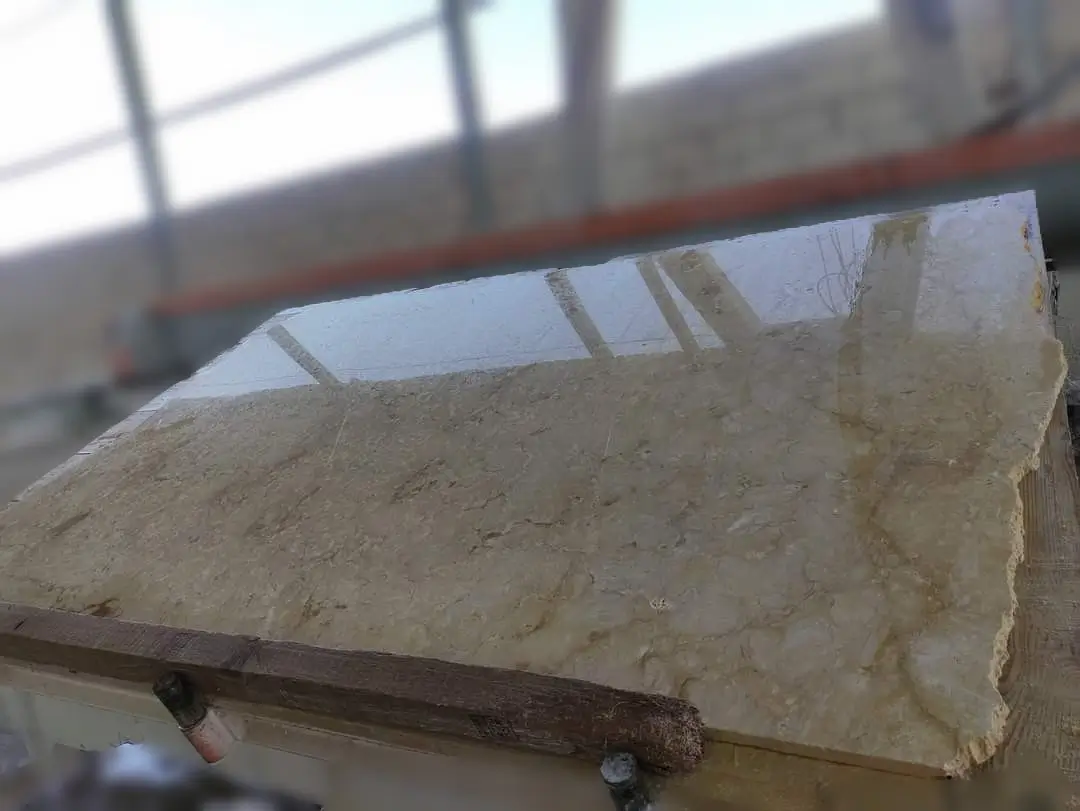
How Limestone Porosity Behaves Under Arizona’s Thermal Extremes
Limestone’s porosity range typically falls between 3% and 18% depending on formation density, and that number matters enormously for stain performance in Arizona conditions. Dense, fine-grained limestone — the kind that comes from tightly compressed marine formations — sits at the lower end of that range and resists oil penetration far better than softer, more vesicular material. The distinction isn’t always obvious by eye, which is why at Citadel Stone, we test absorption rates on incoming stock before it leaves the warehouse, particularly material destined for driveway applications in high-thermal-swing regions.
Here’s what the thermal cycling angle adds to porosity performance: as stone heats through the day, residual moisture near the surface evaporates and draws air deeper into the pore network. By the time an oil drip contacts a stone surface at 3:00 PM in August, you’re dealing with a surface that’s essentially primed to absorb. The oil encounters negative capillary pressure — the stone is actively pulling fluid inward. This is why limestone oil resistance Arizona projects require active treatment protocols, not passive selection of a denser material and nothing else.
- Dense limestone (porosity below 8%) absorbs oil significantly more slowly, giving you a longer response window after a spill
- Vesicular or chalky limestone (porosity above 12%) can wick motor oil 3–4mm deep within 10 minutes on a hot surface
- Thermal expansion opens grain boundaries at the microscopic level, increasing effective porosity by 5–15% during peak heat hours
- Night cooling contracts those boundaries, but any oil already present becomes trapped — the worst outcome for remediation
Protective Treatment Specifications for Tucson Conditions
The single most consequential decision for a limestone paver driveway stain Tucson protection system isn’t which sealer you choose — it’s when you apply it. Applying sealer to stone that’s still above 85°F surface temperature causes the carrier solvent to flash off before the active compound penetrates past the top 0.5mm. You end up with a cosmetic film that thermal cycling will delaminate within one season. Apply at surface temperatures between 60°F and 75°F — early morning in Tucson’s summer, or during the November-to-February window that gives you reliable conditions throughout the application day.
For Tucson driveway applications, penetrating silane-siloxane sealers outperform topical acrylic coatings in every meaningful performance category under thermal cycling. Acrylic coatings expand and contract at a coefficient approximately 3x greater than limestone, which means every thermal cycle is shearing the bond at the stone-coating interface. After two Tucson summers, you’ll see micro-peeling that creates the worst of both worlds: a surface that looks sealed but admits oil at the interface gaps. Penetrating treatments don’t have this failure mode because they become chemically bonded to the silica in the stone matrix. These protective treatments represent the foundation of any serious Tucson stain prevention strategy.
- Silane-siloxane penetrating sealers: apply at 60–75°F surface temp, two coats with 45-minute cure between coats
- Application rate for dense limestone: 150–200 sq ft per gallon; for porous material, 80–120 sq ft per gallon
- Reapplication interval in Tucson thermal conditions: every 3–4 years, not the 5-year figure cited on product labels (those ratings assume temperate climates)
- Avoid solvent-based sealers in peak summer months — VOC flash-off creates adhesion failure at high ambient temperatures
- Water-based penetrating formulas perform acceptably above 90°F ambient when applied to cool stone surface
For projects in Yuma, which adds desert humidity spikes during the monsoon season on top of Tucson-comparable thermal swings, your protective treatment protocol should include a second application pass within 30 days of the monsoon season’s end — that’s typically October — to address any treatment displacement caused by moisture intrusion during late summer storms.
Joint Design, Thermal Expansion, and Their Role in Oil Protection
Your joint spacing decisions directly affect stain vulnerability, and this connection gets overlooked in most specifications. Limestone expands at approximately 4.5 × 10⁻⁶ per °F. Across Tucson’s 50°F diurnal swing, a 24-inch paver moves roughly 0.065 inches over its length through the daily cycle. Multiply that across a 500-square-foot driveway and you’re dealing with cumulative movement that, if not accommodated by properly sized joints, creates micro-cracking at the paver edges — exactly where oil from vehicle drips lands first.
At Citadel Stone, we recommend 3/16-inch minimum joint width for limestone paver driveway installations in Arizona applications under 1,500 square feet, and stepping up to 1/4-inch for larger installations. That extra 1/16 inch sounds trivial, but it’s the difference between a joint that accommodates thermal movement gracefully and one that transfers compressive stress back into the stone edge, propagating micro-fractures toward the paver center over time. For the San Tan Valley area, where expansive clay soils add vertical movement to the thermal horizontal movement calculation, building in a 1/4-inch joint from day one is non-negotiable.
Joint fill material matters for oil resistance, too. Polymeric sand with high polymer content (look for 12–15% polymer loading) forms a semi-rigid joint that doesn’t allow surface oil to migrate down through the joint plane and contaminate the aggregate base. Standard sand joints are essentially open channels for fluid migration — sealing the paver surface while leaving the joints unsealed is a specification half-measure that experienced installers recognize immediately. For optimal limestone oil resistance Arizona projects require, treat the joint surface with the same penetrating sealer you apply to the stone face.
Citadel Stone walkway paver limestone in Flagstaff
Oil Stain Response Protocols in High-Heat Conditions
Speed matters differently in Tucson than in cooler climates, and your response protocol needs to reflect that. The 10-minute absorption window on a cool stone surface extends to roughly 3–4 minutes on a surface at 110°F. That’s not an exaggeration — hot stone actively draws fluid into its pore network through thermal convection, and every minute of delay deepens the stain front by an additional 0.5–1mm. Your site crew or homeowner maintenance brief should include a response protocol that prioritizes dry absorption material (diatomite or calcined clay, not sawdust) applied within 60 seconds of a spill.
- First response: apply dry absorbent generously, press lightly — do not scrub, which drives oil deeper
- Wait 10 minutes, then sweep and reapply a second layer of absorbent
- After 30 minutes total, apply a stone-safe alkaline degreaser (pH 10–12) diluted to 1:5 with water
- Allow dwell time of 15 minutes, then scrub with a stiff natural bristle brush — synthetic bristles can introduce static that attracts residual oil particles
- Rinse with cool water — avoid pressure washing above 1,500 PSI on limestone, which can open surface pores rather than cleaning them
- Evaluate for residual staining after 24 hours and apply a poultice treatment if the stain has migrated below the surface layer
Poultice treatment is the most underused remediation tool for deep oil stains in limestone. A mixture of diatomite and acetone applied in a 1/4-inch layer, sealed with plastic sheeting and left for 24–48 hours, draws oil back toward the surface as the carrier solvent evaporates. This approach works particularly well on thermally cycled stone where the oil has been drawn deep by convection — you’re essentially reversing the same capillary force that caused the problem in the first place.
Base Preparation and Drainage as Stain Prevention Tools
Your drainage slope does more for long-term Tucson stain prevention than any topical treatment, because standing water is the mechanism that transports both oil residue and dissolved mineral contaminants into the stone. Specify a minimum 2% cross-slope on limestone driveway installations — 1/4 inch per foot — and verify it during installation, not afterward. In Tucson’s monsoon season, a flat or negative-pitch surface becomes a collection basin for the combination of oil film, dirt, and biological material that forms the most stubborn staining composite you’ll encounter.
Base depth calculations for Tucson conditions should account for the thermal mass of the compacted aggregate, not just structural load capacity. A 6-inch compacted aggregate base in Tucson reaches equilibrium temperatures 10–15°F cooler than the surface stone during peak afternoon heat, which creates a vertical temperature gradient through the paver thickness. That gradient slows oil migration significantly — oil that penetrates through the face slows as it moves toward the cooler base interface. Thicker bases (8–10 inches) in higher-traffic areas don’t just provide structural benefit; they create a thermal buffer that reduces the convective pull rate for spills. For Tucson stain prevention planning, base depth is a performance variable, not just a structural calculation.
Citadel Stone’s technical team advises confirming truck access to the installation site during your project planning phase, particularly for larger driveway projects requiring multiple material deliveries. The aggregate base material and the finished limestone pavers often arrive on separate truck loads, and coordinating delivery sequencing avoids the situation where finished pavers are staged on-site before the base is compacted — a delay scenario that invites surface contamination before the protective treatments are even applied.
Selecting Limestone Grades for Arizona Maintenance Ease
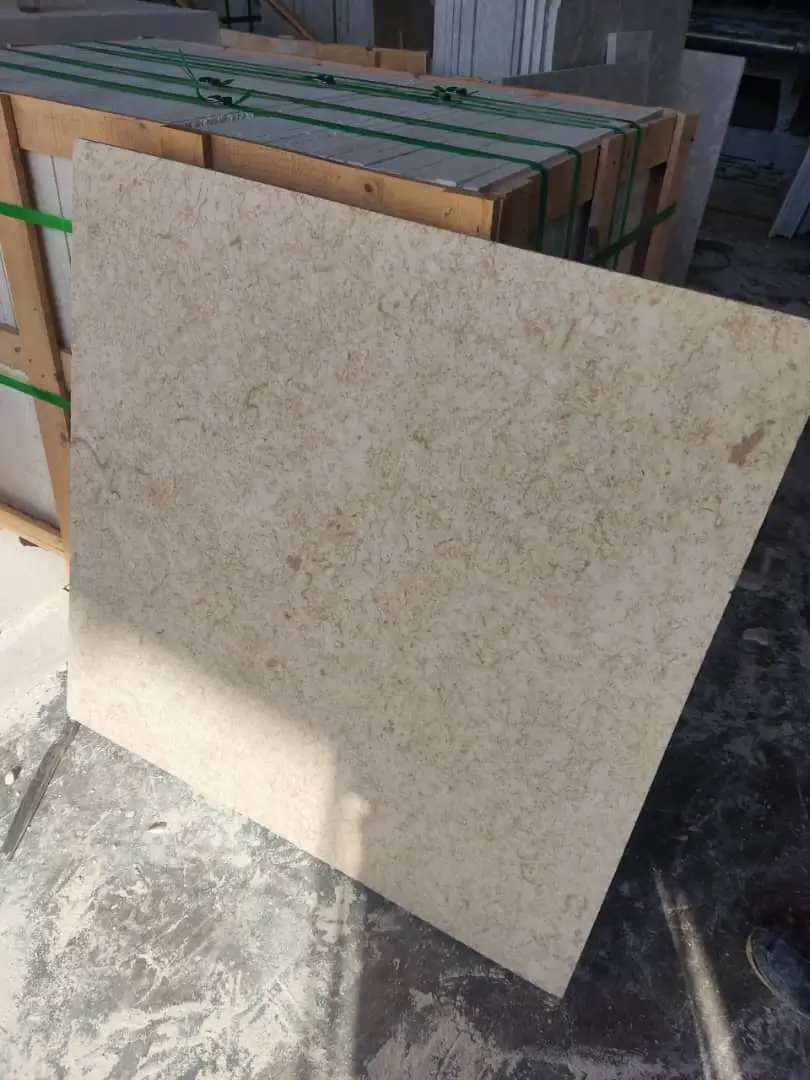
Arizona maintenance ease starts at the material selection stage, long before the first paver is set. The distinction between honed and tumbled finishes isn’t aesthetic for driveway applications — it’s a functional performance decision. Honed limestone presents a closed, densified surface created by the grinding process, with a Mohs-scale surface hardness that’s marginally higher than the natural split face. That denser surface resists initial oil penetration better and responds to alkaline degreaser faster because there’s less surface texture for oil to hide in. Tumbled limestone, with its aged, textured appearance, has a surface area roughly 30–40% higher than honed material of equivalent dimensions — more surface area means more exposure per square foot.
For Avondale and similar Phoenix metro communities where driveways see heavy daily vehicle traffic and the dust load from surrounding desert surfaces adds an abrasive component to cleaning cycles, honed limestone in 2-inch thickness is the specification that balances Arizona maintenance ease with long-term performance. The extra thickness compared to the standard 1.5-inch driveway paver adds thermal mass that moderates the surface temperature swings you’re managing — a 2-inch paver stays cooler at 2:00 PM than a 1.5-inch paver under identical solar exposure, which reduces the convective pull rate on fluid spills.
- Honed finish: lower surface area, easier cleaning, better initial oil resistance, more formal appearance
- Brushed finish: intermediate surface texture, good anti-slip characteristics, moderate maintenance demand
- Tumbled or natural cleft: highest surface area, maximum anti-slip performance, highest maintenance frequency requirement
- Color selection affects thermal mass: lighter limestone colors reflect 55–65% of solar radiation, reducing surface temperature by 20–25°F compared to dark stone — a significant factor in convective pull rate
- Thickness specification: 1.5 inches for passenger vehicles, 2 inches for mixed passenger and heavy SUV/truck traffic, 2.5 inches for RV driveway access points
Seasonal Maintenance Schedule Aligned to Tucson’s Thermal Cycle
A maintenance schedule that works in Phoenix or Flagstaff won’t optimize performance in Tucson without adjustment for Tucson’s specific thermal cycling pattern. The city sees its most aggressive diurnal swings in spring (March–May), when daytime temperatures climb rapidly while nighttime temperatures are still recovering from winter lows — swings of 45–55°F in a single day are common during this window. That’s when your joint sand is most vulnerable to displacement and your sealer film (if you used a topical product) is most likely to show adhesion stress. Spring inspection and touch-up is not optional in this climate.
- February: inspect joint sand levels after winter thermal cycling, top up with polymeric sand where settlement has occurred
- March–April: evaluate sealer condition during peak thermal swing season; address any peeling or whitening immediately before summer heat compounds the failure
- May: apply fresh penetrating sealer if previous application is more than 3 years old — do it before surface temperatures routinely exceed 90°F
- August–September: post-monsoon inspection for moisture-driven efflorescence and any biological growth in shaded joint areas
- November: comprehensive cleaning pass with alkaline degreaser before winter; this removes the summer’s accumulated oil film before cooler temperatures reduce sealer penetration effectiveness
The warehouse stock you order for maintenance materials — additional polymeric sand, replacement pavers for any thermal-stress casualties, sealer product — should be confirmed available before your scheduled maintenance window, not sourced reactively. Matching limestone paver dye lots becomes genuinely difficult if you’re replacing thermally damaged pavers two or three seasons after the original installation, and Citadel Stone maintains documented lot records to help you source matching material when that situation arises.
Technical Summary: Limestone Driveway Stain Management in Tucson Conditions
Thermal cycling is the governing variable for limestone paver driveway stain Tucson performance — not the heat alone, but the daily and seasonal range that mechanically stresses stone pore structure, joint materials, and sealer systems simultaneously. Your specification decisions need to account for that range at every stage: material density selection, joint sizing, sealer chemistry, application timing, and seasonal maintenance scheduling. The projects that perform well over 20-plus years in Tucson conditions are the ones where each of those decisions was made with the thermal cycling reality in mind, not adapted from a generic national specification template.
Protective treatments work when they’re matched to the stone’s thermal behavior — penetrating silane-siloxane systems bonded to the stone matrix outperform topical coatings by a wide margin in high-diurnal-swing environments. Base depth and drainage slope contribute to stain resistance in ways that most specifications undervalue. And your response protocol for spills needs to be faster in Tucson’s summer conditions than in any temperate climate specification — the 4-minute absorption window on a hot stone surface is a real operational constraint, not a conservative estimate. If your complete Arizona hardscape plan includes lighting for safety and evening use, Limestone Paver Driveway Lighting Integration for Prescott Night Safety covers how Citadel Stone materials integrate with lighting systems across Arizona’s varied climate zones, complementing the stain-resistance and durability considerations addressed here. Citadel Stone’s limestone driveway pavers are sourced, tested, and specified to meet the precise performance demands of Arizona’s thermal cycling conditions — talk to our technical team before your next project specification is finalized.
Elite landscape designers achieve portfolio-building results using Citadel Stone’s black limestone edging in Arizona materials.