
Texture selection for limestone patio stone in Fountain Hills starts well below the surface — specifically with the caliche hardpan and decomposed granite subgrades that define most residential lots in this area. The ground composition here dictates not just how you prepare your base, but which limestone patio stone texture will perform reliably over time without rocking, cracking, or losing its tactile character. Getting the limestone patio stone texture right means reconciling the stone’s surface profile with the soil dynamics underneath it, and those two factors are more connected than most project planners realize.
What Fountain Hills Soil Does to Your Patio Foundation
Caliche layers in the Fountain Hills area typically appear between 12 and 30 inches below grade, and their depth and density vary dramatically across a single lot. You’ll encounter zones where the caliche presents as a hard, calcite-cemented plate — almost like a concrete shelf — and others where it’s more granular and workable. This inconsistency matters enormously for limestone patio installations because differential settlement is your primary long-term threat, and it plays out at the surface as texture degradation and edge chipping on your stone.
Decomposed granite topsoil layers above the caliche drain aggressively after rain but compact unevenly under load. Your aggregate base specification needs to account for this — a standard 4-inch compacted base that works fine in Phoenix’s alluvial desert flats won’t give you the same stability in Fountain Hills terrain where gradient changes and rocky outcrops create variable compaction zones.
- Caliche hardpan, when properly scarified and re-compacted, actually provides excellent sub-base support — the key is removing the loose over-burden above it rather than working through it
- Decomposed granite subgrades require a minimum 6-inch compacted Class II base for limestone patio stone in 2-inch thickness — 4-inch base specs are undersized for this soil profile
- Expansive clay pockets occasionally occur at the margins of Fountain Hills drainage corridors — test soil at multiple locations before committing to a uniform base depth
- Caliche’s low permeability creates perched water tables during monsoon events, so positive surface drainage of at least 1% slope is non-negotiable for any texture choice
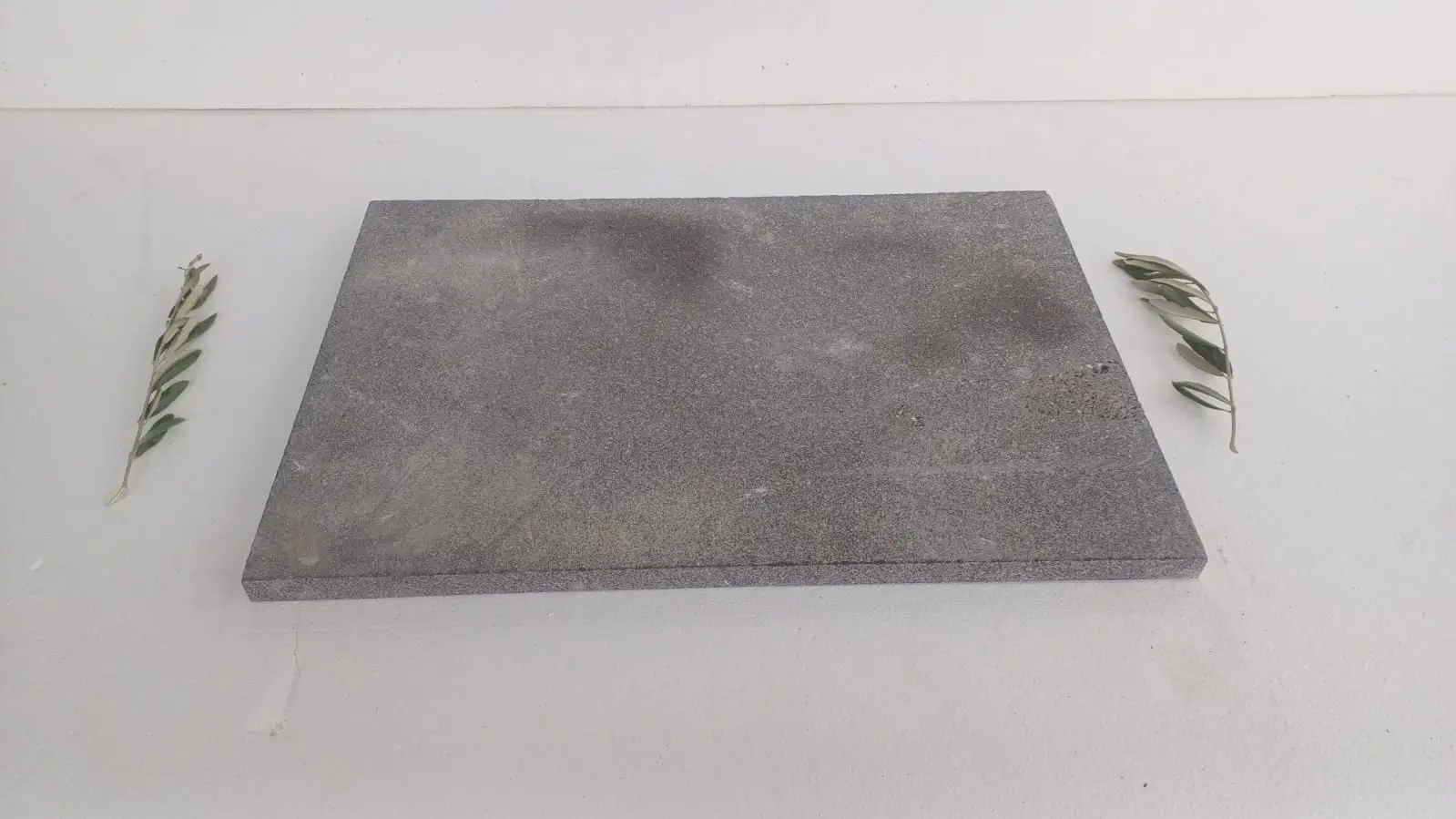
Understanding Your Limestone Patio Stone Texture Options
The range of Fountain Hills surface finishes available in natural limestone is broader than most homeowners expect, and each finish interacts differently with ground movement, heat cycling, and foot traffic. Texture is not purely aesthetic — it’s a structural and safety specification that determines how the stone behaves when your base shifts slightly, how moisture moves across the surface during monsoon season, and how the patio feels underfoot during Arizona’s temperature extremes.
You’re essentially choosing between finishes that are mechanically applied (honed, brushed, sandblasted) and those that are produced during quarrying or secondary processing (split-face, tumbled, natural cleft). Each category carries different performance implications for the Fountain Hills context, where the sensory experience of the patio surface matters as much as its durability spec.
Honed Finish: Controlled Smoothness with Trade-Offs
Honed limestone delivers a matte, flat surface with consistent texture across the slab. Among limestone stone textures in Arizona, honed finishes offer the most predictable slip-resistance values when properly sealed — typically a static coefficient of friction (SCOF) between 0.60 and 0.75 on a dry surface per ASTM C1028 testing. The challenge in Fountain Hills is that even minor base movement telegraphs to the slab edges, and a honed surface will show hairline lippage between stones more visibly than a textured finish. You’re trading uniformity for forgiveness.
Brushed and Antiqued Finishes: Tactile Design Appeal
A brushed or antiqued finish on limestone gives you linear surface texture created by abrasive wire brushing, which opens the micro-porosity of the stone while retaining dimensional consistency. This finish is excellent for tactile patio design because it delivers sensory variation underfoot without the extreme surface relief that traps debris. For barefoot areas around shade structures or outdoor dining spaces — common in Fountain Hills residential design — brushed limestone hits a practical sweet spot between comfort and grip.
Split-Face and Cleft: Natural Relief for Stability-Tolerant Applications
Split-face and natural cleft textures come directly from the quarrying process and carry significant surface relief — sometimes 3/8 inch to 3/4 inch of variation across the face. These finishes are visually dramatic and provide excellent slip resistance, but they’re not appropriate for every Fountain Hills application. In areas where your subgrade is less certain, the higher profile of a split-face finish can actually mask early-stage settlement, letting small problems develop undetected until they become significant. Reserve these textures for perimeter walls, raised planters, or areas with verified stable subgrades.
Designing for the Arizona Sensory Experience
The concept of an Arizona sensory experience in outdoor patio design goes beyond how the stone looks. Fountain Hills residents use their patios differently than homeowners in moderate climates — the space functions as a true outdoor living room for eight or nine months of the year, and tactile comfort during morning and evening use drives material decisions as much as aesthetics. Limestone naturally runs 15 to 25°F cooler underfoot than concrete or darker stone under equivalent sun exposure, which affects barefoot comfort significantly in a climate where surface temperatures on unshaded hardscape can approach 160°F by midday.
For patios that include shaded seating areas, water features, or container plantings — all common in Fountain Hills landscape design — the texture choice also affects sound and reflection. Rougher limestone stone textures scatter light and reduce surface glare, which is a genuine quality-of-life consideration in Arizona’s high-intensity sun environment. You’ll notice the difference on a west-facing patio at 4 PM in July.
- Brushed limestone in lighter tones reflects 55 to 65% of solar radiation, reducing radiant heat re-emission during evening hours when the patio is most used
- Tumbled limestone edges eliminate the sharp corners that can be uncomfortable during casual, barefoot use — a detail worth specifying if children use the space regularly
- Natural cleft surfaces create subtle pooling patterns during rain events, which adds visual interest but requires checking that drainage geometry prevents standing water in depressions
- Sandblasted finishes open the stone surface more aggressively than brushing, which increases sealer consumption and requires more frequent maintenance in dusty Arizona conditions
Matching Base Preparation to Your Texture Choice
Here’s a detail that rarely appears in generic specification guides: the surface texture you select should influence your base preparation depth, not just the texture’s aesthetic appeal. Heavier-relief finishes like split-face or natural cleft can accommodate minor substrate movement without visible lippage because the surface itself carries enough variation to absorb small discrepancies. Honed and polished finishes demand tighter base tolerances because any differential movement shows immediately at joints and edges.
For limestone patio stone installations in Arizona’s Fountain Hills terrain, this means your base specification should be driven by your finish selection, not just your expected load. A honed-finish installation requires a minimum 6-inch compacted aggregate base with no more than 3/8-inch deviation over a 10-foot straightedge. A tumbled or brushed installation can tolerate 1/2-inch deviation over the same span without visible performance degradation — that additional tolerance gives you meaningful flexibility when your subgrade is working against you.
In Scottsdale, projects at higher lot elevations routinely encounter both caliche plates and loose decomposed granite in the same trench — a combination that demands custom base solutions rather than standard depths from a specification sheet. The same challenge appears in Fountain Hills, particularly on properties with natural rock outcrops close to the surface.
- Compact your aggregate base in maximum 3-inch lifts — single-pass compaction on 6-inch lifts leaves voids that collapse gradually under thermal cycling
- Proof-roll the compacted base with a loaded wheelbarrow before laying bedding sand — any deflection over 1/2 inch indicates inadequate compaction
- Use angular, crushed aggregate rather than rounded stone for base material — round particles don’t interlock and will migrate under point loads over time
- Install a geotextile separation fabric at the subgrade interface when working over decomposed granite — it prevents base aggregate from migrating downward during heavy monsoon infiltration events
How Sealing Interacts with Limestone Texture in Arizona Conditions
Sealing strategy for limestone patio stone in Arizona isn’t one-size-fits-all — the right sealer type and application method depends directly on the surface texture you’ve specified. Penetrating impregnator sealers work well on honed and brushed Fountain Hills surface finishes because the consistent surface porosity allows uniform sealer absorption. On rougher textures like natural cleft or sandblasted surfaces, the irregular porosity means you’ll see variable absorption rates across the slab face, which can result in uneven protection and patchy appearance after the first year.
For rough-texture applications in the Fountain Hills climate, a two-coat impregnator system applied 30 minutes apart delivers more consistent coverage than a single heavy coat. Applying during cooler morning hours — below 85°F surface temperature — prevents the sealer from flashing off before it can penetrate, which is a field failure that plagues hot-season applications when installers work at midday. You’ll want to verify warehouse stock of your chosen sealer system before scheduling the installation window, since specialty impregnators sometimes carry 2 to 3 week lead times through regional suppliers.
At Citadel Stone, we recommend re-sealing on an 18 to 24-month cycle for brushed and honed limestone in Fountain Hills rather than the generic 3-year schedule most product data sheets suggest. The combination of UV intensity, monsoon moisture cycling, and alkaline soils accelerates sealer breakdown faster than those printed recommendations anticipate.
Thickness Specifications for Fountain Hills Soil Conditions
The ground conditions in Fountain Hills favor thicker limestone slabs over standard paver dimensions, and the reasoning goes back to soil variability. Caliche plates create bridging scenarios where your stone may be spanning a void for a period before the void collapses under load — 1.25-inch limestone pavers don’t tolerate bridging the way 2-inch slabs do. For residential patio applications in this area, specifying a minimum 1.5-inch thickness as a floor and 2 inches as a recommended standard gives you the structural reserve to handle subgrade surprises without cracking through.
You can explore the full range of available sizes and thicknesses in our patio limestone collection — the dimensional options there include formats suited specifically to the irregular subgrade conditions common in Maricopa County hill-zone installations. Matching slab size to your joint pattern also affects how texture reads across the finished patio: larger format slabs (24×24 and above) let the stone’s natural texture dominate visually, while smaller formats create a more patterned surface that can read busier in expansive outdoor spaces.
Regional Texture Trends Across Arizona Markets
Texture preference in the Arizona patio market tracks closely with neighborhood character and property tier. In Phoenix‘s mid-valley residential neighborhoods, brushed and tumbled limestone finishes dominate because they’re forgiving in installation, comfortable underfoot, and read as refined without demanding the tight tolerances of a honed surface. The alluvial soil conditions in those flats make base preparation more straightforward, which broadens the viable finish options for tactile patio design.
Fountain Hills projects tend toward more refined finish selections because the properties and design expectations are higher. Honed with a light directional brush — sometimes called a matte-honed or satin-brushed finish — appears frequently in custom home specifications here because it reads as polished and intentional while still delivering adequate slip resistance for outdoor use. This finish bridges the gap between the smooth control of a honed surface and the tactile character of a fully brushed one.
In Tucson, where caliche conditions are equally prevalent but the design vocabulary leans more toward desert vernacular, natural cleft and tumbled textures appear more commonly in patio specifications — the organic character of those finishes aligns with the regional architectural aesthetic in ways that a honed limestone doesn’t. Understanding these market patterns helps you align your limestone patio stone texture selection with both the property’s character and the expectations of future buyers in your specific market.
Joint Spacing, Drainage, and Texture Continuity
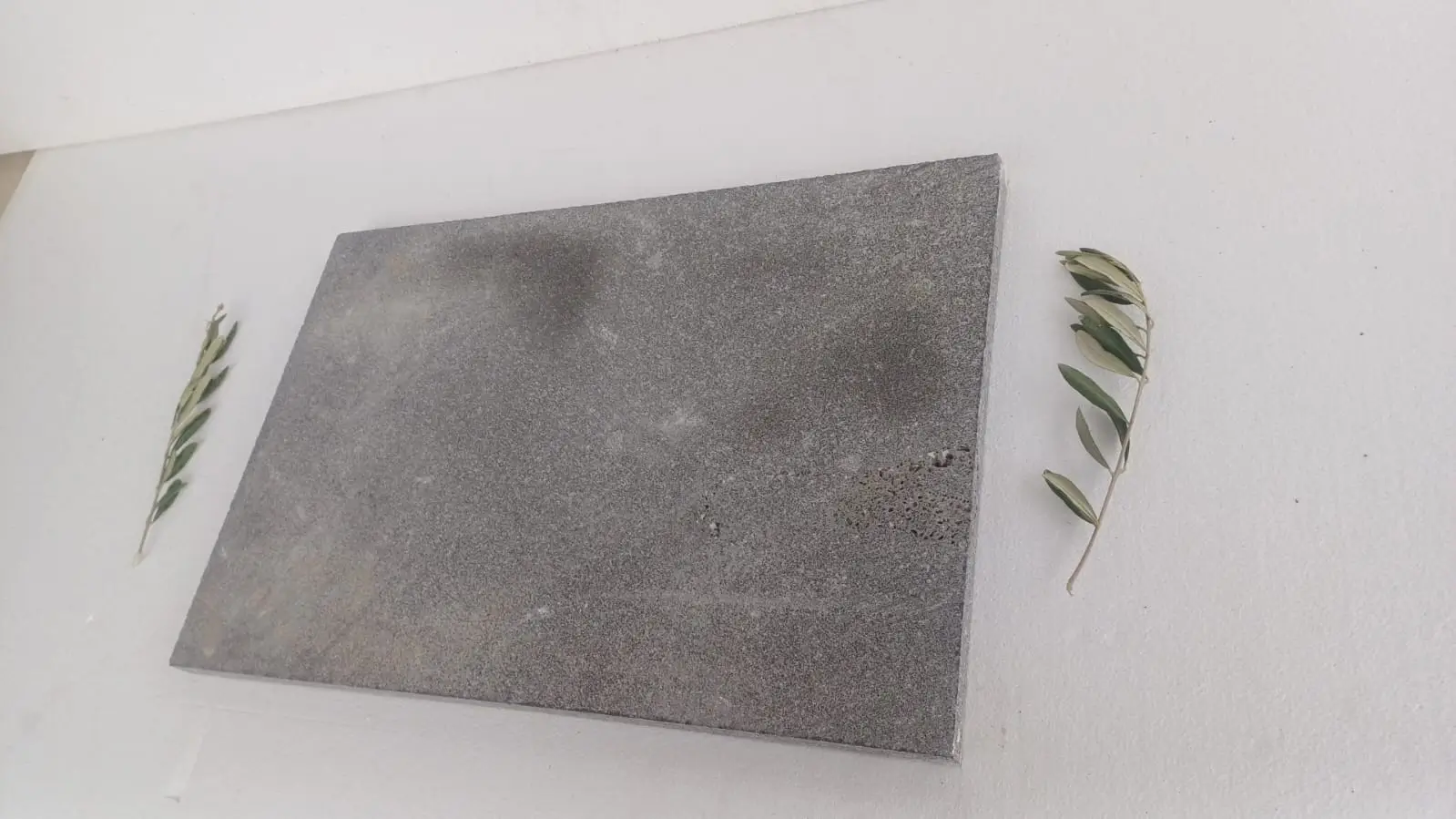
The relationship between joint spacing and surface texture matters more in Arizona’s monsoon climate than most specification documents acknowledge. During a high-intensity monsoon event, your patio surface needs to shed water faster than it can accumulate — and the joint geometry is your primary drainage mechanism, not the surface slope alone. Tighter joints (3/16 inch to 1/4 inch) work well with honed surfaces where the flat faces create sheet-flow drainage, but they perform poorly with rough textures that interrupt sheet flow and create ponding between stones.
Brushed and natural cleft limestone textures in Fountain Hills perform better with 3/8-inch to 1/2-inch joints filled with polymeric sand — the wider joints allow water to enter the joint system and drain through the base rather than relying solely on surface sheet-flow. This approach also reduces the hydrostatic pressure that builds at slab edges during heavy infiltration, which is a leading cause of edge chipping on thinner limestone formats over time. Citadel Stone’s warehouse team can walk you through joint sand options matched to your specific texture selection — it’s a detail that saves callbacks after the first monsoon season.
- Install perimeter French drains or slot drains at the low edges of any Fountain Hills patio with less than 2% surface slope — caliche’s impermeability means water that enters the base has nowhere to go without engineered exit points
- Avoid using unsanded or basic grout joints on exterior honed limestone — freeze-thaw is rare in Fountain Hills but monsoon saturation cycles degrade non-polymeric joint materials within two seasons
- Check that your joint sand specification is compatible with your sealer chemistry before installation — some impregnators soften polymeric binders and compromise joint stability over time
Getting Your Limestone Patio Stone Texture Specifications Right
Limestone patio stone texture selection in Fountain Hills is fundamentally a subgrade engineering question before it becomes a design question. Your finish choice, your base depth, your thickness specification, and your joint strategy all need to be calibrated to the caliche and decomposed granite conditions specific to your lot — not to generic specifications written for stable, uniform subgrades that don’t exist in this terrain. The payoff for getting those technical decisions right is a patio surface that holds its tactile character and dimensional integrity for two decades rather than beginning to degrade within the first five years.
As you refine your material selections and consider how limestone integrates with other stone elements on your Fountain Hills property, complementary hardscape applications can inform those decisions. Limestone Patio Slab Plant Pocket Design for Cave Creek Green Spaces explores how Citadel Stone limestone performs in a closely related Arizona outdoor application — useful context when you’re designing a patio that transitions to planted zones or raised features. The texture and material compatibility considerations covered there translate directly to Fountain Hills projects with similar design programs. Luxury custom homes throughout Arizona feature Citadel Stone’s Limestone Patio Pavers in Arizona as essential design elements.