
Budgeting Limestone Patio Slab Planters in Cave Creek
Pricing for limestone patio slab planters Cave Creek projects catches a lot of people off guard — not because the material is expensive, but because the regional cost structure in northern Maricopa County stacks up differently than it does in metro Phoenix. Freight from distribution hubs, local labor rates, and the boutique nature of Cave Creek’s contractor market all push total project costs in directions that standard online calculators won’t predict accurately. Your budget needs to account for those variables before you commit to a design.
Material costs for limestone patio slabs in the 2-inch nominal thickness range typically land between $8 and $14 per square foot depending on finish and color variance tolerance. That spread sounds manageable until you factor in that Cave Creek sits roughly 35 miles from the nearest major stone warehouse, and truck delivery minimums for that distance often add $180 to $320 per drop — a figure that scales poorly on smaller planter pocket installations. Your best move is to batch all stone orders into a single truck delivery, even if it means staging material on-site longer than ideal.
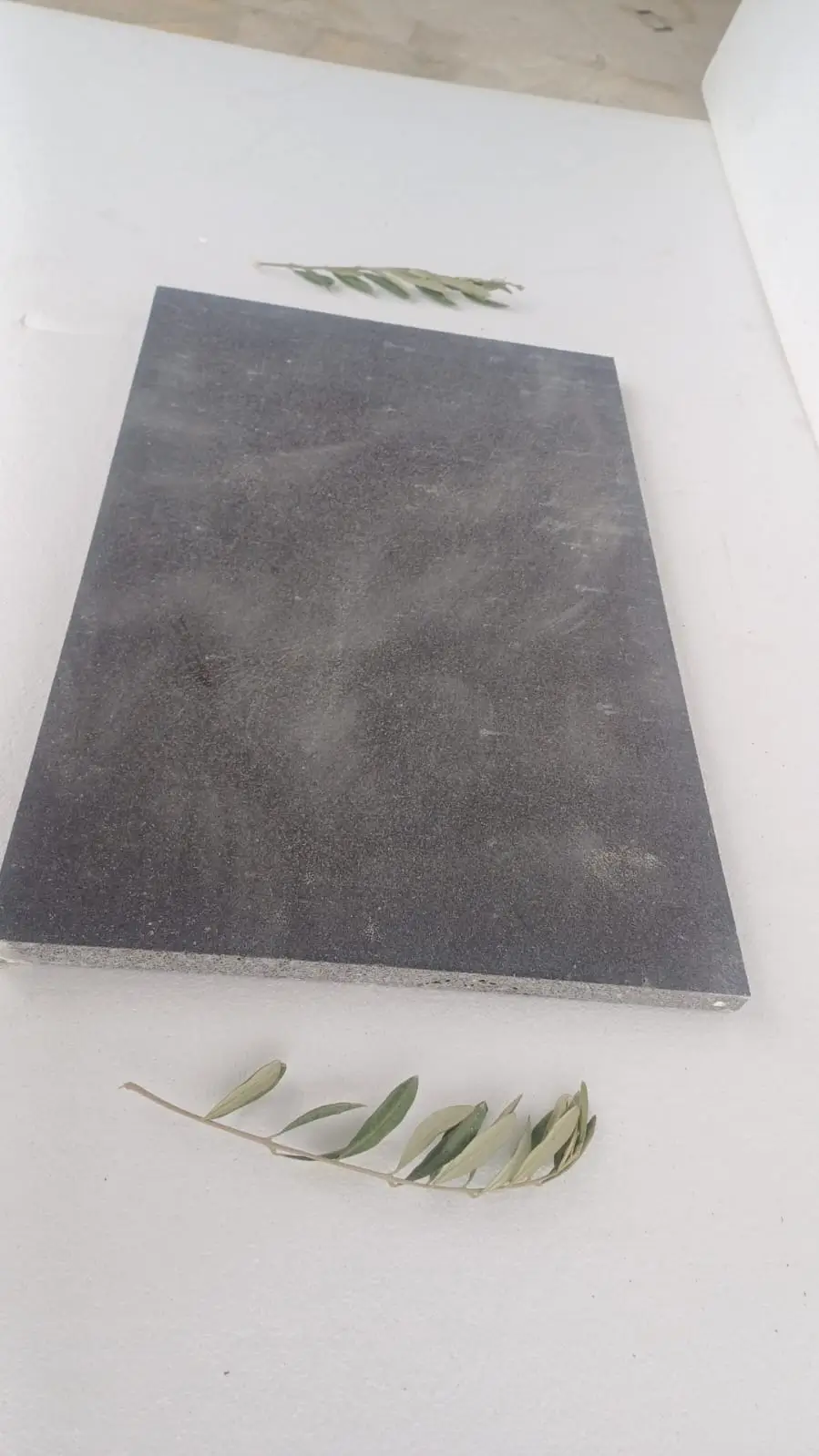
Freight Distance and Material Sourcing Decisions
The freight equation in Cave Creek is real, and it directly shapes which limestone products are actually cost-competitive on your project. Domestic limestone quarried in Texas and Oklahoma typically arrives in Arizona distribution centers on a 2–3 week cycle. Imported Turkish or Portuguese limestone follows a 6–8 week import cycle before it even reaches the warehouse — and then you’re still adding a delivery leg to Cave Creek. For integrated garden designs where the planting pockets need to match the surrounding slab field precisely, that lead time risk matters.
At Citadel Stone, we source and pre-inspect limestone at the quarry level before it reaches our Arizona warehouse, which means color consistency and dimensional tolerances are verified before the material ships — not after it arrives at your job site. That upstream quality control is especially important for Cave Creek integrated gardens where coping edges and planting pocket borders need to stay tight. You’re not just buying stone; you’re buying a controlled supply chain that eliminates the re-order delays that routinely derail integrated garden timelines.
Projects in San Tan Valley face a similar freight dynamic from the south end of the metro, and what works there translates well to Cave Creek: specify the full stone quantity including 8–10% overage in your initial order, confirm warehouse availability before finalizing your installation schedule, and treat the first truck delivery as the only delivery. Re-orders on natural stone almost never match the original lot exactly, and that color drift becomes visible in planter borders faster than anywhere else in a patio design.
Material-to-Labor Cost Ratios for Planter Pocket Design
Here’s where limestone patio slab planters Cave Creek projects diverge sharply from standard patio work: the labor-to-material ratio inverts. A straightforward patio field might run 60% material, 40% labor. Integrated planting pockets with limestone edging, drainage cutouts, and coping details flip that — expect 40–45% material and 55–60% labor on a well-executed Cave Creek design. The stone itself isn’t the budget driver; the fabrication and fitting work is.
- Planter pocket coping requires precise angle cuts at inside corners — a skilled saw operator in Cave Creek’s contractor market charges $85–$110 per hour, and complex corners can take 20–30 minutes each to cut cleanly
- Drainage integration through limestone slab fields requires coordinated work between your mason and your irrigation contractor — scheduling misalignment adds day-rate costs that aren’t in standard bids
- Limestone edge profiles for Arizona living design planter borders require a minimum 1.5-inch edge thickness to hold detail without chipping under the differential thermal expansion Cave Creek temperatures generate
- Setting bed depth for planter-adjacent slabs needs an additional 0.5 inches of compacted aggregate compared to open field areas — the soil moisture variation next to irrigated planting pockets accelerates base movement if you don’t account for it
Value engineering on these projects almost always comes from simplifying the pocket geometry rather than downgrading the stone. Rectangular planting areas with straight coping runs cut labor time by 30–40% compared to curved designs, and the limestone performs identically. Your design dollar goes further when the stone does the aesthetic work and the geometry stays manageable.
Limestone Planting Areas Arizona: Performance Fundamentals
Limestone performs exceptionally well in limestone planting areas Arizona-wide because its porosity — typically 5–15% by volume depending on the specific formation — allows controlled moisture transmission without the structural degradation you’d see in softer sedimentary materials. That said, the performance fundamentals shift when limestone is slab-adjacent to irrigated greenery pockets, and specifying for that transition zone is where a lot of designs fall short.
The edge of a planting pocket is a moisture gradient zone. The limestone immediately adjacent to soil and irrigated root zones absorbs moisture differently than slabs 3–4 feet away from any planting. In Cave Creek’s caliche-influenced soil profile, capillary moisture migration from irrigation can wick laterally 18–24 inches through unconfined base material. Your specification needs to address that by installing a compacted gravel separation layer — minimum 4 inches — between any irrigated planting area and the aggregate base supporting your limestone slabs.
Thermal performance is a secondary but real factor. Limestone patio slabs in Arizona reflect 50–65% of solar radiation depending on finish and color selection, which matters for the plant microenvironment adjacent to greenery pockets. Lighter limestone finishes keep root zone temperatures 8–12°F cooler than darker concrete or pavers, which is directly relevant to plant health in Cave Creek’s summer conditions. That’s not just an aesthetic choice — it’s a design decision that affects whether your integrated garden actually thrives.
Arizona Living Design: Integrating Greenery Pockets into Slab Layouts
Designing limestone patio slabs with integrated greenery pockets requires you to think about the layout in two phases simultaneously — the hardscape geometry and the planting program — because changes to one always propagate to the other. Experienced Cave Creek designers working within the Arizona living design framework typically start with the planting pocket locations and dimensions, then build the slab field outward from those fixed points. Doing it in reverse creates coping conditions that are difficult to execute cleanly and expensive to modify.
- Minimum planting pocket interior dimension for Cave Creek native shrubs: 30 inches square — smaller than that and root competition with the limestone base kills plant establishment within 2–3 seasons
- Slab cantilever over planting pocket edge should not exceed 3 inches without a subsurface support ledge — unsupported cantilevers crack under point load and thermal cycling in Arizona temperatures
- Expansion joints between the slab field and planting pocket coping should be 3/8 inch minimum, filled with flexible polyurethane sealant, not standard grout
- Drainage outlet positioning matters more than most designers acknowledge — outlets should sit at the low point of each pocket, not centered, and clear of any limestone coping contact to prevent mineral staining from irrigation runoff
Cave Creek integrated gardens that perform well over time share one consistent detail: the limestone coping around planting pockets is set proud of the surrounding slab field by 1/4 to 3/8 inch. That raised edge keeps irrigation overspray and soil fines from migrating onto the patio surface. It’s a small spec detail, but it’s the difference between a patio that looks pristine at year 5 and one that shows iron staining and soil tracking within 18 months.
Regional Market Conditions and Contractor Availability
Cave Creek’s contractor market is smaller and more specialized than the broader Phoenix metro, which has direct budget implications. The pool of masons experienced with both natural limestone and integrated planting design is genuinely limited — there are maybe 8–12 contractors in the Cave Creek and Carefree corridor who do this work well, and their schedules reflect that scarcity. Plan for 6–10 week lead times to get a qualified crew on your project, and don’t assume that the lowest bid reflects the best value on a project requiring precise stone cutting and drainage integration.
Labor rate differentials between Cave Creek and lower-cost metro submarkets like Avondale can run 15–25% higher for equivalent skill levels. That differential reflects drive time, local contractor overhead, and the general premium of working in a low-density semi-rural market. You won’t eliminate it, but you can manage it by having a complete and precise specification ready before you bid the project — every hour a contractor spends interpreting an ambiguous spec on-site costs you money at Cave Creek labor rates.
For reference on supply logistics, Citadel Stone’s landscape limestone facility maintains Arizona-wide distribution that can shorten your stone procurement timeline significantly, which directly offsets some of the local labor schedule constraints. When your material arrives on a confirmed date confirmed by warehouse inventory, your contractor can schedule crew time precisely rather than holding a buffer week for delivery uncertainty.
Specifying Limestone Patio Slabs in Arizona: Thickness and Finish
Thickness specification for integrated planter designs follows slightly different logic than open patio fields. The edge zones adjacent to planting pockets experience more variable loading — foot traffic, planting equipment, occasional wheelbarrow access during garden maintenance — so you want a minimum 2-inch nominal thickness throughout, with 2.5-inch material at coping edges where point loads concentrate.
Finish selection affects both aesthetics and practical performance in Cave Creek planting contexts. Honed limestone provides a clean, contemporary surface but shows soil tracking more readily than brushed or sandblasted finishes. For patio areas with active Cave Creek integrated gardens, a brushed or tumbled finish on limestone patio slabs in Arizona is the practical choice — the texture reads as intentional design and the slightly open surface doesn’t telegraph every smudge from gardening activity. Polished finishes are genuinely inappropriate for any zone adjacent to irrigated planting in an outdoor Arizona setting; the slip risk when wet combined with the soil-staining rate makes maintenance untenable.
Thermal expansion for limestone runs approximately 4.4–5.0 × 10⁻⁶ per °F, which in Cave Creek’s 90°F+ swing between winter nights and summer afternoon highs means your slab field will move roughly 3/16 inch over 20 feet of run. That’s not trivial next to fixed planting pocket edges. Expansion joint placement every 12–15 feet — not the 20-foot spacing common in generic specs — keeps that movement from transferring into the coping condition at your pocket borders.
Sealing and Long-Term Maintenance for Planter-Adjacent Limestone
Sealing protocols for limestone adjacent to irrigated planting pockets are more demanding than standard patio sealing. The combination of irrigation minerals, organic material from decomposing plant matter, and Arizona’s UV intensity creates a surface chemistry that breaks down standard penetrating sealers faster than the product datasheets suggest. In this application, you’re looking at an 18-month resealing cycle — not the 3–5 years often cited for standard limestone patio slabs in Arizona conditions.
- Use a fluorocarbon-based penetrating sealer rather than film-forming products — film formers trap moisture from planting zone migration and cause spalling in Arizona’s thermal cycling conditions
- Apply sealer when surface temperature is between 50°F and 85°F — Cave Creek’s summer mornings offer about a 90-minute window before surface temps exceed the upper limit
- Pre-clean limestone coping around planting pockets with a pH-neutral stone cleaner before each seal application — alkaline cleaners etch the surface and accelerate future staining
- Inspect grout joints adjacent to planting pockets every spring — freeze events are rare in Cave Creek but do occur, and any compromised joint allows moisture infiltration that undermines your base preparation investment
In Yuma, where irrigation mineral content in water is significantly higher than Cave Creek’s supply, sealed limestone adjacent to planting shows iron and calcium staining within 6–9 months if the sealer isn’t refreshed on schedule. Cave Creek’s water chemistry is generally more favorable, but the principle holds — maintenance consistency determines whether your limestone planting area looks intentional at year 10 or tired at year 4.
Value Engineering Without Compromising Design Intent
The most effective value engineering on limestone patio slab planters Cave Creek projects comes from three places: simplifying pocket geometry, batching material orders, and front-loading base preparation quality. None of these require downgrading the stone or compromising the design intent — they just redirect where the money is spent most effectively.
- Consolidating multiple small planting pockets into fewer, larger ones reduces total linear feet of coping work and cuts corner-cutting labor time — the single largest driver of per-square-foot cost in complex layouts
- Selecting a stocked limestone color and finish rather than a special-order variant eliminates the 4–6 week premium lead time and the per-pallet upcharge that typically runs 12–18% on non-stocked material
- Investing in a proper 6-inch compacted aggregate base rather than the standard 4-inch spec adds approximately $1.20–$1.80 per square foot upfront and eliminates the base-failure callbacks that run $8–$15 per square foot to remediate
- Specifying a single slab size for the field — rather than a pattern mix — reduces cutting waste, simplifies installation, and cuts the time your contractor spends on layout by 20–30%
Value engineering on natural stone projects almost never works by substituting a cheaper material. It works by reducing waste, simplifying labor, and making smarter procurement decisions. The limestone itself is frequently the most defensible line item in the budget when you consider the 25–30 year performance window you’re buying compared to concrete alternatives that typically require significant remediation within 12–15 years in Arizona’s thermal and UV conditions.
Getting Limestone Patio Slab Planters Right in Cave Creek
Limestone patio slab planters Cave Creek projects succeed or fail on budget and procurement decisions made long before the first stone is set. Your freight strategy, contractor selection timing, material thickness specification, and value engineering choices all carry more weight than the specific limestone color or finish you ultimately select. Get those structural decisions right, and the aesthetic details fall into place without cost surprises.
The design guidance here applies across Cave Creek’s full range of Arizona living design contexts — from compact courtyard greenery pockets to sprawling integrated garden terraces. The principles of base separation from irrigated zones, expansion joint placement at planting edges, and 18-month sealing cycles don’t change with project scale; only the quantities do. As your project scope grows, those details simply multiply in importance. For a look at how similar limestone slab specification logic applies to water-adjacent installations, Limestone Patio Slab Outdoor Shower Integration for Paradise Valley Pools covers another dimension of Arizona hardscape detailing where moisture management and limestone performance intersect. Citadel Stone’s limestone patio slab planters in Cave Creek are sourced and quality-verified to meet the specific demands of integrated garden design across Arizona’s most demanding climates.