
Designing limestone patio stone natural edges for a Buckeye property starts with a terrain problem, not a material problem — and that distinction changes everything about how you approach the project. The West Valley’s seemingly flat desert floor conceals subtle grade challenges: undulating caliche layers, irrigation-induced settlement zones, and cross-lot drainage patterns that send water exactly where you don’t want it once hardscape locks in your surface flow. Getting the organic, irregular-edge aesthetic you’re after requires you to solve the site geometry first, then let the stone’s natural character do the rest of the work.
Why Terrain Drives Natural Edge Design in Buckeye
Buckeye sits at roughly 1,000 feet elevation — low enough that freeze-thaw isn’t your primary structural concern, but high enough that drainage patterns behave differently than they do in the flattest parts of the Phoenix metro. Your patio footprint interacts with surrounding grade in three dimensions, and natural-edge limestone installations amplify that interaction because the irregular perimeter creates variable water channels rather than the predictable edge line a cut-stone installation produces. That variability can work beautifully for aesthetics, but you need to map it deliberately before you set a single stone.
The terrain challenge in this part of the Valley involves managing sheet flow across a low-slope site. Buckeye’s typical residential lots have 1–2% natural grade, which sounds manageable until you realize that caliche near the surface can redirect subsurface moisture laterally rather than vertically — meaning your base compacts unevenly over 18–24 months if you haven’t addressed it in your subgrade prep. Natural-edge limestone layouts that look perfect at installation can develop rocking stones and joint separation in Year 2 precisely because of this dynamic.
Reading Your Buckeye Site Before Specifying Stone
Specification work should begin with a two-hour site read, not a material selection conversation. Walk the perimeter after a watering cycle or light rain event and note where water pools, where it moves, and where it disappears into the ground faster than surrounding areas. Those disappearance zones often indicate caliche breaks or irrigation line trenches that have settled differently from undisturbed soil — both of which will telegraph movement into a limestone patio stone natural edges surface over time.
- Identify the low point of your patio envelope and design positive drainage away from the structure at a minimum 2% slope
- Probe for caliche depth at four corners and the center — variation greater than 6 inches across the footprint signals you’ll need to adjust base depth rather than apply a uniform spec
- Check existing irrigation head placement, since subsurface drip lines create localized saturation zones that soften base material seasonally
- Map where the Arizona rustic charm of an organic edge layout will create natural water collection points along the irregular perimeter
Understanding your grade before you order stone prevents the most common field problem in natural-edge installations: beautiful stone laid over an inadequately prepared base that starts failing at the irregular perimeter first, because that’s where water concentrates and base erosion initiates.
Base Preparation for Organic Limestone Edges
The base specification for limestone patio stone natural edges in Buckeye differs from a standard cut-stone patio in one critical way — your edge zone needs reinforced support because there’s no mechanical restraint at the perimeter. A cut-stone installation relies on a soldier-course edge to resist outward creep. Your natural-edge installation relies entirely on base compaction and a wide-enough base footprint extending 6–8 inches beyond the outermost stone point.
- Excavate to a minimum 8 inches below finished surface elevation — 10 inches in areas with confirmed caliche variation
- Install a 6-inch compacted Class II base aggregate (3/4-inch crushed to fines) in two lifts, achieving 95% compaction per ASTM D698 standards
- Top with a 1.5-inch bedding layer of coarse concrete sand, screeded to your design slope before stone placement
- Extend your base footprint 8 inches beyond the organic edge line on all sides — this prevents edge settlement that would undermine the natural appearance you’re designing toward
- In areas where irrigation trenches cross your base zone, over-excavate by 4 additional inches and recompact in layers rather than trusting that backfilled trench material will behave like undisturbed soil
At Citadel Stone, we consistently see natural-edge installations that fail at the perimeter rather than the field because installers apply their base spec uniformly without accounting for the unsupported edge condition. Adding that extended base footprint adds modest material cost but dramatically extends the performance life of the installation.
Selecting Limestone Thickness for Arizona Terrain
Thickness selection for limestone patio stones in Arizona gets complicated by the same terrain variables you identified during site reading. For a Buckeye patio with the drainage and grade conditions typical of West Valley residential sites, working in the 1.5–2.5 inch nominal range is advisable — but the distribution matters more than the average.
Natural-edge limestone comes with inherent thickness variation across a single piece, sometimes ranging 0.5 inches from thinnest to thickest point on the same stone. Your bedding layer compensates for this, but you need to spec stones with enough minimum thickness (not average thickness) to handle the point load conditions of outdoor furniture and foot traffic. For Buckeye, specify a minimum 1.5-inch thickness at the thinnest measurable point on any piece, with 2-inch nominal as your target. Pieces thinner than 1.25 inches at any point should be rejected — they’ll fracture at the irregular edge under thermal cycling even if they look acceptable at installation.
You can browse our limestone garden inventory to evaluate thickness ranges across available materials before finalizing your specification — it’s worth reviewing stone dimensions before committing to a layout plan.
Slope Management and Drainage Design Under Organic Layouts
Slope management in a natural-edge limestone layout requires thinking about drainage in terms of the stone’s organic perimeter rather than a clean geometric edge. Sheet flow across an irregular patio surface doesn’t exit at predictable points — it follows the low joints and exits wherever the perimeter has a gap between stones. That’s actually an advantage from a drainage standpoint, but only if you’ve designed the surrounding grade to receive that distributed outflow without channeling it toward the foundation or planting beds.
- Design a 3–5% slope in the 24 inches of grade immediately outside your patio perimeter to direct outflow away from the structure
- Avoid directing concentrated drainage toward decomposed granite landscape areas without a French drain receiver — DG compacts under repeated water exposure and can divert flow unpredictably
- Use the irregular patio edge to your advantage by creating deliberate low points where water exits onto planted areas or a gravel buffer strip
- In Peoria and similar West Valley areas with clay-amended soils, install a perimeter drainage channel at the lowest edge of the patio rather than relying entirely on sheet flow to manage water
The natural stone appearance of irregular-edge limestone actually supports good drainage design rather than fighting it — the variable perimeter creates distributed outflow points that reduce velocity and prevent the concentrated channeling that causes erosion at the patio edge. This is one reason the Buckeye organic patio style pairs so naturally with thoughtful grading work.
Creating the Organic Buckeye Aesthetic with Natural Edge Limestone
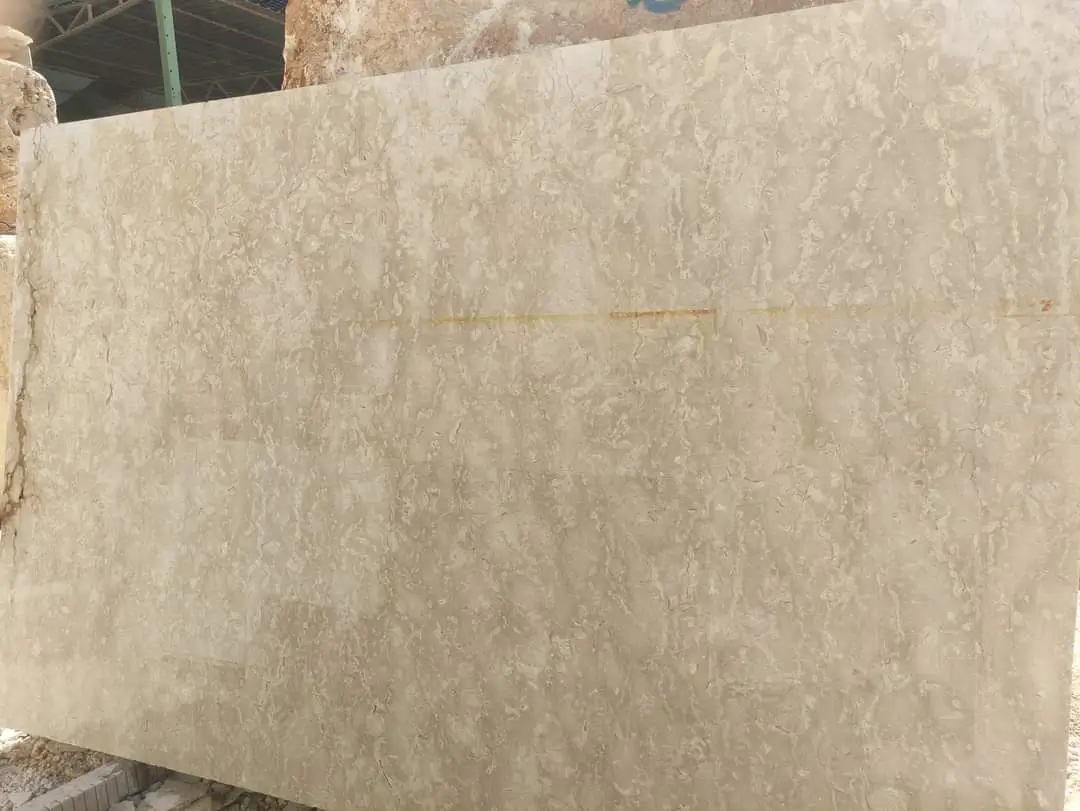
The limestone irregular edges that define a Buckeye organic patio style work best when the layout respects the stone’s natural geometry rather than forcing it into a predetermined grid. The practical challenge is achieving visual coherence while maintaining the structural integrity your terrain and drainage work demands.
Natural stone appearance in a high-quality organic layout comes from consistent joint width variation — not random gap sizes, but a controlled range of 0.5 to 1.5 inches that reads as organic without creating joints wide enough to collect debris or undermine bedding stability. Wider joints compromise your base over time in Buckeye’s conditions because wind-blown sand fills them and retains moisture differently than properly packed joint material.
- Sort your stone delivery into size categories before starting layout — large anchor pieces (over 24 inches in any dimension), medium fill pieces, and small accent pieces
- Place large anchor stones first along the primary viewing axis, then build medium fill pieces around them, reserving small pieces for perimeter and transition zones
- Maintain 0.5–1.5 inch joint width consistency — this reads as organic while providing structural coherence
- Orient natural edge breaks to face outward at the patio perimeter, which emphasizes the irregular edge silhouette and avoids fractured-looking interior joints
- Step back 10 feet periodically during dry-laying to assess the overall composition before setting any stone permanently
Elevation Considerations Across Arizona Limestone Projects
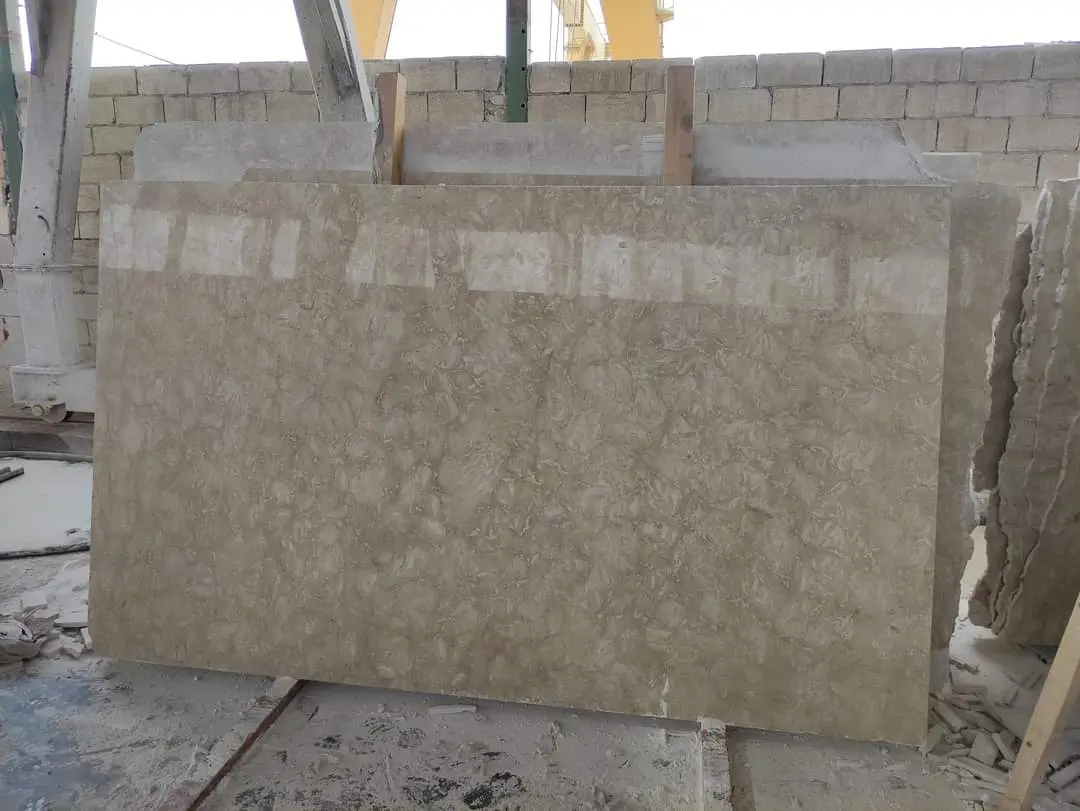
The techniques that work in Buckeye’s low-elevation desert environment shift considerably as you move to higher-elevation Arizona sites. In Flagstaff, working above 6,900 feet introduces freeze-thaw cycling that demands closed-cell pore limestone with absorption rates below 3% — a specification that becomes much less critical at Buckeye’s elevation, where thermal cycling without freezing is the dominant stress mechanism. Understanding where your project sits in Arizona’s elevation range determines which material performance properties to prioritize in your spec.
High-altitude projects in Sedona’s canyon terrain introduce a different challenge — highly variable micro-grades, bedrock proximity, and dramatic slope conditions that require custom base engineering on nearly every installation. A natural-edge limestone layout in that environment must account for potential base depths of 4–6 inches in some zones and bedrock at 3 inches in adjacent areas. That variability requires sectioning your base preparation rather than applying a single specification across the entire footprint. At lower elevations like Buckeye, you’re working with more predictable subgrade conditions, which gives you more layout freedom but less forgiveness for drainage oversights. The Arizona rustic charm of natural limestone reads equally well at both elevations — what changes is the engineering underneath it.
Joint Filling and Sealing Natural-Edge Limestone
Joint filling for limestone patio stone natural edges in Arizona requires a different approach than cut-stone applications because the irregular perimeter creates variable joint geometries that polymeric sand handles differently depending on depth and width. For joints in the 0.75–1.25 inch range that are typical in an organic layout, standard polymeric sand performs well. For joints wider than 1.5 inches, use a DG-polymeric sand blend at a 3:1 ratio to prevent shrinkage cracking as the joint material settles.
- Apply joint fill in two passes separated by 24 hours — first pass fills 60–70% of depth, second pass brings it to within 0.25 inches of the stone surface
- Avoid filling joints flush to the stone surface — a slight recess of 0.25 inches prevents joint material from smearing onto the stone face during rain events
- Seal limestone patio stones in Arizona with a penetrating impregnator sealer (silane-siloxane chemistry) rather than a topical film sealer — film sealers trap moisture in Arizona’s wet season and cause spalling at natural edge fracture points
- Reseal on a 2–3 year schedule rather than annual application, unless water absorption testing (simple drop test) shows penetration in less than 30 seconds
Citadel Stone’s warehouse team conducts absorption testing on incoming limestone shipments, which gives you baseline porosity data before material arrives on your truck. That information directly informs your sealer selection and application rate — ask for the absorption data when placing your order.
Putting It All Together for Your Buckeye Limestone Patio
The specification decisions that define a successful limestone patio stone natural edges project in Buckeye come back to the terrain work you do before anything else — grade reading, base engineering, and drainage design are what allow the organic aesthetic to perform over time rather than look good for two seasons and then start failing at the edges. Your material selection, thickness spec, and joint treatment all build on that foundation. Without it, even premium stone delivers disappointing results.
The natural stone appearance of irregular limestone edges is genuinely one of the most rewarding aesthetics in Arizona hardscape design, and it’s achievable in Buckeye’s West Valley conditions when the preparation work matches the ambition of the design. The limestone irregular edges that define this style reward precise subgrade attention with long-term visual consistency and structural stability that cut-stone installations rarely match. For projects exploring complementary organic stone layouts across the greater Phoenix area, Limestone Patio Stone Mixed Size Layout for Avondale Visual Interest covers how mixed sizing strategies can extend the organic approach into adjacent project phases. Citadel Stone’s approach to limestone patio in Arizona creation combines artistry with technical expertise unmatched in Arizona.