
Drainage geometry is the variable that determines whether your limestone patio stone mixed sizes Avondale layout performs for two decades or starts rocking and shifting after the first monsoon season. Most specifiers obsess over pattern ratios and visual balance — and those details absolutely matter — but the drainage architecture beneath a mixed-size layout is a fundamentally different engineering challenge than a uniform grid. Varied stone dimensions create irregular joint networks, and those joints either channel water efficiently or trap it, depending on how your base and bedding layers are prepared before the first stone goes down.
Why Drainage Drives Mixed-Size Layout Design in Avondale
Arizona’s monsoon season delivers intense, concentrated rainfall — often 1 to 2 inches in under an hour — and Avondale’s relatively flat topography means that water has nowhere to go unless your patio grade and base system actively move it. A mixed-size limestone layout amplifies this challenge because stone-to-stone joint widths vary significantly across the field. You’ll have tight joints between large format pieces and wider joints where smaller fill stones meet larger anchors, and water behaves differently in each zone. Your drainage design needs to account for the full joint network, not just the perimeter edge.
The compressive strength of quality limestone patio stones in Arizona typically exceeds 8,000 PSI, which means the stone itself won’t fail under monsoon hydrostatic pressure. What fails is the base. Saturated, improperly compacted aggregate bases lose bearing capacity rapidly, and when a 24-inch stone settles 3mm differently than the 8-inch piece next to it, you’ve created a trip hazard and a water-collection point simultaneously. Getting the drainage right from the start is what separates a layout that looks the same in year fifteen as it did at installation from one that needs releveling every few seasons.
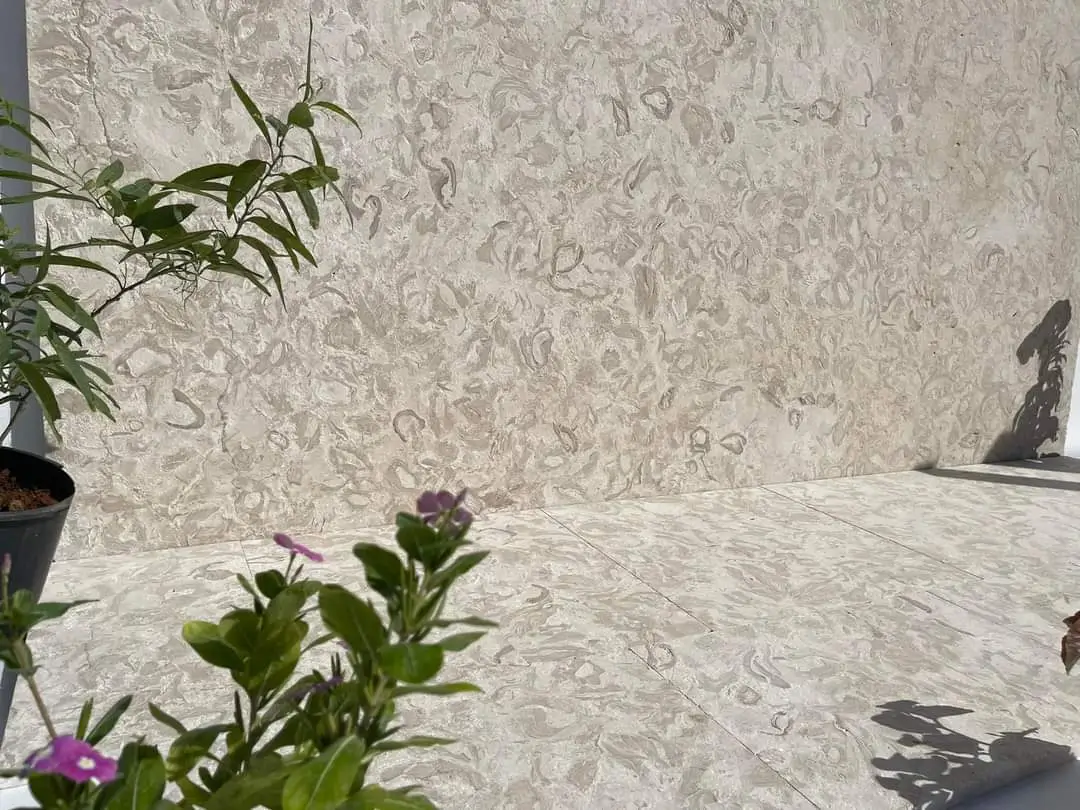
Base Preparation Specifically for Mixed-Size Limestone Layouts
Your aggregate base depth in Avondale should start at a minimum of 6 inches of compacted Class II base material, but here’s what often gets overlooked with mixed-size installations: the bedding sand layer needs tighter tolerance than a standard uniform-format job. Varied stone thicknesses are common even within a single limestone batch — you can see 0.25 to 0.5-inch thickness variation between pieces pulled from the same pallet. With a uniform layout, that gets screeded out across a consistent joint network. With mixed sizes, you need to set each stone individually and verify flatness relative to its neighbors, because the irregular joints don’t self-correct the way a running-bond grid does.
- Compact base aggregate in maximum 3-inch lifts, not all at once — this matters more with mixed-size installations because point loads are less evenly distributed
- Maintain 1% minimum grade toward drainage outlets — flat patios in Avondale’s low desert setting are a maintenance liability
- Use a 1-inch bedding sand layer screeded to a consistent elevation, not a consistent depth — this accommodates stone thickness variations without introducing surface undulation
- Install perforated drain lines at low points if your patio area exceeds 400 square feet — mixed-size layouts collect more localized runoff at joint intersections than uniform grids
- Compact the subgrade to 95% Proctor density before any base material goes down — Avondale’s sandy loam soils can appear stable but compress under saturated conditions
In Mesa, caliche hardpan layers at 18 to 24 inches often serve as an excellent natural drainage boundary, provided you install a sand transition layer above it. Without that transition, capillary moisture wicks upward through the base material and keeps joint sand perpetually moist — which accelerates biological growth and joint erosion in mixed-size layouts where joints aren’t uniform.
Pattern Approaches That Work for Mixed-Size Limestone in Avondale
Your layout pattern choice has a more direct impact on drainage performance than most designers acknowledge. Here’s what actually happens in the field: radial or pinwheel patterns force water toward the center of each stone cluster, creating micro-ponding zones if the grade isn’t perfectly consistent. Ashlar patterns — where large, medium, and small stones interlock in a structured irregular grid — distribute water across the joint network more evenly, which is why they’re the preferred approach for flat or near-flat Arizona patio sites.
The Avondale varied stone design that performs best hydraulically uses three stone sizes in roughly a 50/30/20 ratio by surface area: a large anchor format (typically 18×24 or 24×24 inches), a medium connector piece (12×18 or 12×12), and a small fill stone (6×6 or 6×9). This combination allows you to maintain consistent joint widths of 0.5 to 0.75 inches across most of the field, which is the sweet spot for polymeric sand stability under monsoon conditions. Joints wider than 1 inch in high-rainfall scenarios tend to wash out; joints tighter than 0.375 inches don’t allow adequate sand consolidation.
- Ashlar three-piece layouts offer the best drainage distribution across irregular joint networks
- Pinwheel patterns require tighter grade control — appropriate for elevated or sloped sites with clear runoff paths
- Random flagstone-style arrangements with larger gaps (1 to 1.5 inches) require compacted crushed granite or gravel joint fill, not polymeric sand, to resist washout
- Running bond with mixed sizes creates long linear channels that move water quickly but concentrate it at perimeter edges — design your edge restraint accordingly
Understanding Limestone Mixed Dimensions for Arizona Conditions
Limestone mixed dimensions Arizona sourcing introduces a practical variable that affects your drainage planning before installation even begins: nominal versus actual stone dimensions. Natural limestone cut to a 24-inch nominal dimension typically runs 23.5 to 23.875 inches actual, and that 0.125 to 0.5-inch variance compounds across a mixed-size layout. Your joint spacing plan needs to absorb that variation, which is why a 0.5 to 0.75-inch nominal joint width is specified rather than a tighter tolerance. Attempting 0.25-inch joints with natural limestone mixed sizes is a field nightmare — you’ll spend more time forcing pieces than setting them.
Thickness consistency matters as much as plan dimension. At Citadel Stone, we inspect each limestone batch at the warehouse before it ships because monsoon-zone projects have zero tolerance for thickness variation that creates surface lips between adjacent stones. A 0.25-inch height differential between a large format and its small fill neighbor becomes a trip hazard that also collects debris and standing water at the edge — exactly what you’re trying to avoid with proper drainage design. Our technical team flags any pallet with thickness variance exceeding 3/8 inch from nominal and separates it for different applications.
Joint Sand Selection and Monsoon-Season Performance
Dynamic patio patterns with varied stone sizes demand a more careful approach to joint sand than uniform grid installations. The joint width variation across a mixed-size layout means some joints will be narrow (where large stones meet) and others moderately wide (at three-stone intersections), and polymeric sand behaves differently at different widths. You need a polymeric sand rated for joint widths up to 1.5 inches minimum — narrow-joint formulas marketed for uniform paver applications aren’t designed for the range of widths a dynamic patio pattern with mixed-size limestone produces.
Arizona’s monsoon rainfall intensity — not the annual total — is the performance driver. Phoenix basin monsoon events commonly deliver 0.5 to 1.5 inches per hour, and that intensity creates sheet flow across a patio surface before drainage outlets can clear the volume. Your polymeric sand needs to activate and cure fully before monsoon season arrives. For Avondale projects, that means completing installation by late May at the latest if you want adequate cure time before the July onset. Polymeric sand installed in June and hit by a July 15th monsoon event before full cure is going to wash out of the wider joints, and re-sanding a limestone patio stone mixed sizes Avondale layout mid-season is genuinely tedious work.
- Select polymeric sand rated for 0.125 to 1.5-inch joint widths — verify this on the technical data sheet, not the marketing label
- Apply jointing sand in two passes: initial sweep, compact with a plate compactor (use a rubber pad to protect limestone surface), then final sweep
- Mist cure per manufacturer instructions, but avoid full saturation during the first 24 hours — contrary to concrete practice, over-wetting polymeric sand before activation can cause surface bleed
- Plan for a joint sand top-up inspection after the first monsoon season — some consolidation is normal and does not indicate a failed installation
Sealing Limestone Patio Stones for Water Management
Sealing protocols for limestone patio stones in Arizona serve a drainage function that goes beyond aesthetics. A penetrating silane-siloxane sealer reduces the stone’s water absorption rate from its natural 3 to 7% by weight down to under 1%, which means monsoon water sheets off the surface instead of soaking in. That surface shedding effect matters for drainage performance — sealed limestone moves water to your designed outlets faster and reduces the hydraulic load on your joint system during peak rainfall. For limestone patio stone mixed sizes Avondale installations, apply sealer within 30 days of installation completion and plan for reapplication on a two-year cycle.
The sealer also protects against a specific failure mode common in Avondale: caliche mineral migration. Arizona’s soil releases calcium carbonate under wet conditions, and on unsealed limestone, this creates white efflorescence deposits that are difficult to remove without acid washing — which itself damages the stone surface if applied incorrectly. A quality penetrating sealer blocks the capillary pathway that allows these mineral solutions to wick to the surface. It’s not a cosmetic choice in this climate; it’s a maintenance strategy.
Ordering, Logistics, and Planning for Avondale Projects
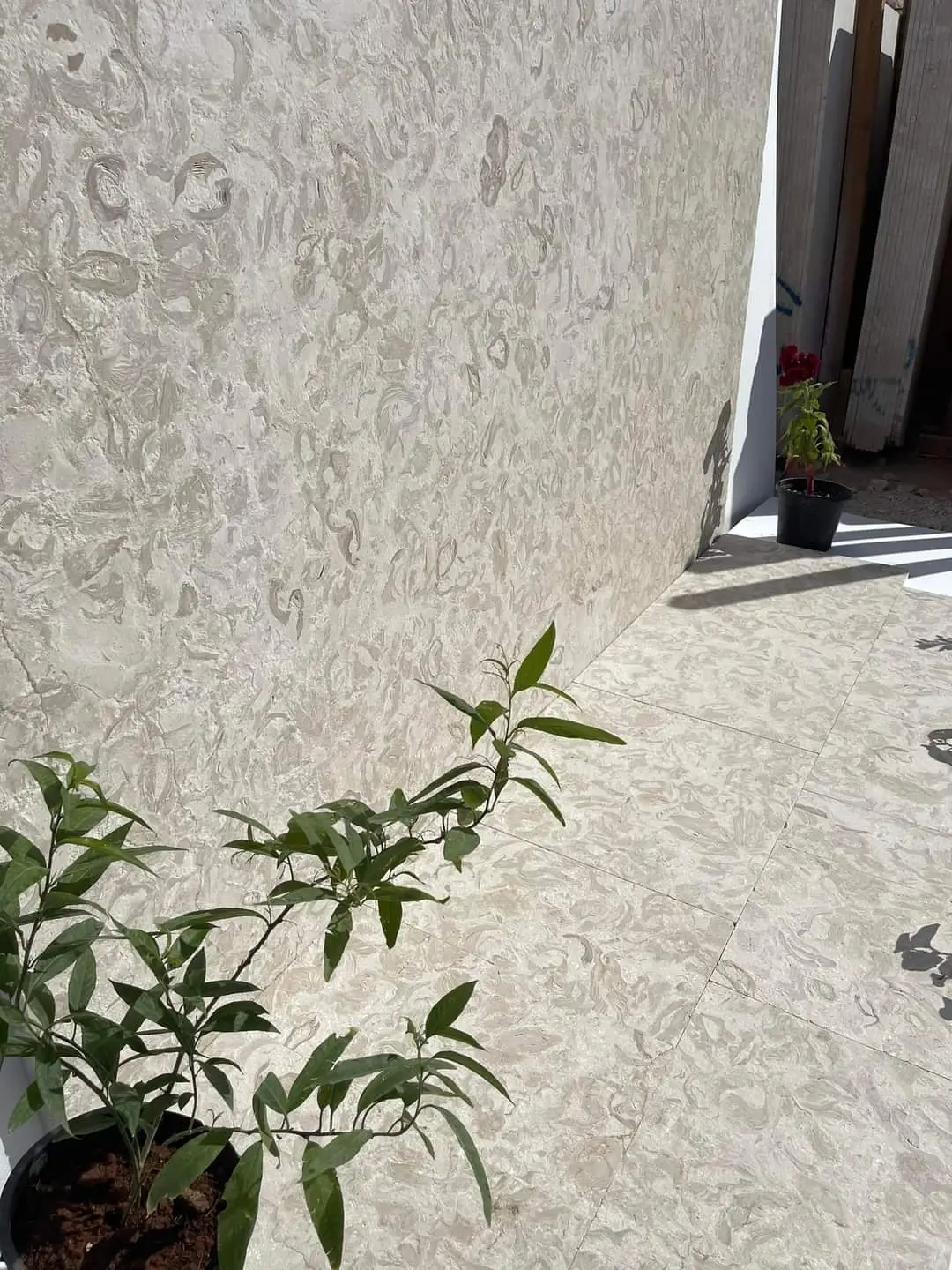
Mixed-size limestone orders require more planning than uniform format purchases, and your material calculation needs to account for cut waste at perimeter edges. For an ashlar three-piece layout, plan on 12 to 15% waste overage rather than the 10% standard for uniform pavers — the combination of irregular perimeter cuts and matching stone sizes at edges consistently runs higher. Order all three sizes simultaneously from the same batch when possible; limestone color and texture vary between production runs, and mixing batches in a mixed-size layout creates visible tonal inconsistencies that are nearly impossible to correct after installation.
For Citadel Stone natural limestone patio operations, warehouse inventory is maintained in Arizona, which allows delivery windows of 1 to 2 weeks for in-stock sizes. Confirm your three-size combination is available from the same production batch before finalizing your timeline — this is worth a direct call rather than an online order to avoid batch mixing. Truck access to Avondale residential sites typically isn’t an issue given the area’s wider street grid, but confirm delivery vehicle length with your driver before scheduling if your site has a constrained driveway approach.
In Yuma, summer heat pushes installation windows to early morning only — work completed before 10 AM avoids the adhesive-bond and mortar-set problems that occur when substrate temperatures exceed 110°F. Avondale’s slightly more temperate summer profile gives you a wider daily installation window, but the same principle applies: start early, protect the material from direct sun before setting, and plan your crew schedule accordingly.
Arizona Eclectic Layouts: Balancing Visual Interest and Technical Performance
The Arizona eclectic layouts that hold up best over time are the ones where visual interest and drainage performance reinforce each other rather than conflict. A well-designed ashlar mixed-size pattern creates natural visual movement that guides the eye across the surface — and that same visual movement often reflects the underlying drainage slope direction. Your pattern axis should ideally align with your primary grade direction, so the visual rhythm of the stone arrangement leads the eye (and the water) toward your drainage outlet.
Color variation within a limestone batch enhances the visual appeal of mixed-size layouts without requiring you to introduce different stone types. Natural limestone ranges from warm buff to cool gray within a single quarry production run, and that tonal variation reads as intentional character in a mixed-size layout rather than inconsistency. Projects in Gilbert frequently lean toward warmer buff limestone tones that complement the area’s desert landscape palette — the larger anchor stones in a warm cream tone with cooler gray fill pieces create a subtle natural depth that works well in both traditional and contemporary Arizona eclectic layouts for outdoor spaces.
- Distribute your largest format stones evenly across the field before filling in — avoid clustering large pieces, which creates visual weight imbalance and drainage concentration
- Vary the orientation of rectangular stones (some horizontal, some vertical) within the ashlar layout to prevent a grid-like rigidity that reads as uniform rather than eclectic
- Use your smallest fill stones to resolve complex intersections where three or more larger pieces converge — this is both visually satisfying and practically efficient
- Dry-lay a 4×4-foot test section before committing to the full layout — what looks balanced on paper sometimes reads differently at scale on the actual site
Final Recommendations for Limestone Patio Stone Mixed Sizes Avondale
Getting limestone patio stone mixed sizes Avondale right comes down to treating drainage as your primary design constraint, not an afterthought. Your base preparation, grade design, joint system, and sealing protocol all need to be calibrated for Avondale’s monsoon rainfall patterns before you make a single decision about pattern ratios or stone dimension combinations. The visual results — the dynamic patio patterns and eclectic character that make mixed-size limestone genuinely compelling — come naturally once the technical foundation is solid.
Specify your polymeric sand for the full range of joint widths your mixed-size layout will produce, plan your installation timeline to allow full cure before monsoon season, and confirm your stone batch consistency before the truck leaves the warehouse. These aren’t glamorous decisions, but they’re the ones that determine whether your installation looks great at the ten-year mark. As you explore related stone applications for your Arizona property, Limestone Patio Stone Texture Selection for Fountain Hills Tactile Appeal offers a complementary perspective on how limestone surface character performs across different Arizona microclimates — worth reviewing if surface finish and tactile performance are also part of your specification scope. At Citadel Stone, we supply mixed-size limestone patio stone to Avondale projects with the batch consistency and technical support that demanding installations require.