
Gilbert Terrain Sets the Rules Before Material Does
Designing a limestone patio pergola Gilbert installation demands that you resolve the site’s grade challenges before you ever commit to a stone spec — because the structural performance of your patio foundation is mostly determined by what happens three feet below the surface, not at it. The East Valley’s subtle but real terrain variation means drainage geometry that works flawlessly on a flat lot in one neighborhood can fail spectacularly two streets over where the grade drops toward a natural wash corridor. You need to read the land first, then build your specification around what it’s telling you.
Gilbert sits at roughly 1,200 feet elevation — modest by Arizona standards, but enough to create meaningful surface water behavior during monsoon events that Tucson or Flagstaff homeowners would recognize immediately. The challenge isn’t dramatic hillside erosion; it’s the accumulation of small grade decisions that compound into big drainage failures under your pergola structure. Your foundation spec needs to account for how water moves across your specific parcel, not how it moves across a generic flat-desert site.
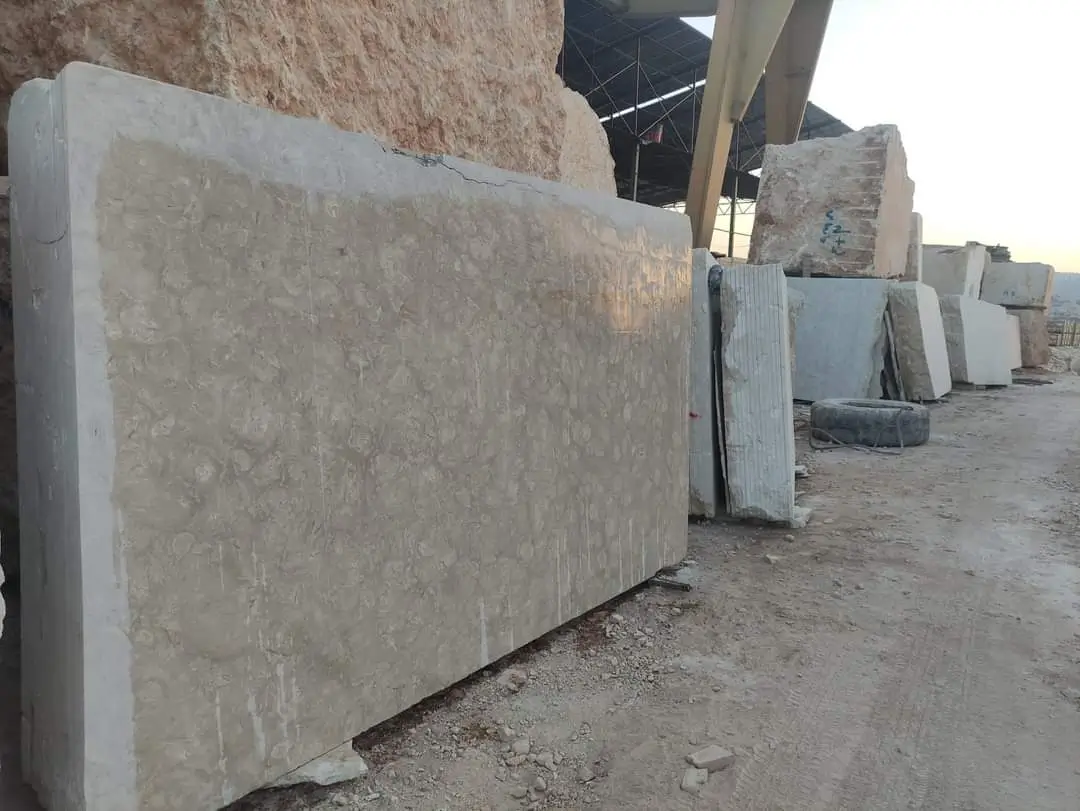
Grade Management and Why It Defines Your Pergola Foundation
The standard recommendation for patio drainage — a 2% slope away from the structure — becomes more nuanced when you’re anchoring a pergola. Your post footings create fixed points in the grade, and if those footings are set before you’ve resolved the drainage plane, you’ve locked yourself into a configuration that may work against the natural water flow path. In Gilbert, where caliche hardpan appears at variable depths across the same block, you can hit dense resistance at 14 inches on one post location and soft, silty fill at 28 inches on another footing just eight feet away.
Managing this terrain reality requires you to approach the site with a builder’s level or laser transit before anything else. Establish your reference elevation at the house connection point, then map your actual grade across the full pergola footprint. In areas closer to the San Tan Mountains, San Tan Valley properties frequently exhibit 3–5% natural grade that can be engineered to your advantage — directing runoff away from the limestone field and toward planting zones requires only minor subgrade reshaping before base installation begins. For Gilbert covered outdoor spaces, understanding this grade behavior early is what separates a resilient shade structure foundation from one that fights the terrain for its entire service life.
- Establish a fixed benchmark elevation before any excavation begins
- Map grade at a 24-inch grid across the full pergola footprint
- Identify the natural drainage outlet point before deciding post footing locations
- Flag any areas where grade reversal would direct water toward the structure
- Confirm caliche depth at each post footing location — inconsistent hardpan requires different footing strategies per post
Base Preparation Depth for Arizona Shade Structure Foundations
Your shade structure foundation is only as stable as the compacted aggregate beneath it, and in Gilbert’s mixed soil profile — a blend of desert sandy loam, silt, and intermittent caliche — the base depth spec matters more than in uniform soil zones. A minimum 6-inch compacted aggregate base is appropriate for pedestrian-only limestone patio installations, but a limestone pergola base Arizona spec needs to go deeper because of the concentrated point loads at each post footing perimeter. Spec 8–10 inches of 3/4-inch crushed aggregate, compacted in two lifts, for any zone within 24 inches of a structural post.
The reason for the two-lift compaction requirement isn’t just settling — it’s about achieving consistent density across a layer that may be bridging variable subgrade conditions. If you dump the full 8 inches and compact once, you get surface density without knowing what’s happening at the subgrade interface. Compact 4 inches, verify density with a plate compactor pass count appropriate to your aggregate type, then add the second 4 inches and repeat. Projects in Avondale have shown this two-lift approach reduces differential settlement by a measurable margin compared to single-lift installations on similar soil profiles — a finding that translates directly to Gilbert covered outdoor spaces built on comparable desert soil conditions.
- 6-inch base minimum for standard patio areas, 8–10 inches within 24 inches of post footings
- Crushed 3/4-inch aggregate preferred over round river rock — angular edges interlock under compaction
- Two-lift compaction protocol mandatory for post-adjacent zones
- Verify subgrade bearing capacity before aggregate placement — soft spots require over-excavation and recompaction with engineered fill
- Maintain moisture content during compaction — dry desert conditions can cause aggregate to rebind poorly without light wetting
Selecting Limestone Thickness for Pergola Point Loads
The shade structure above your patio introduces point load conditions that pure pedestrian-use limestone patio specs don’t address. Post bases, beam connections, and anchor hardware all concentrate stress into localized areas of the limestone field — areas that, on a standard patio, would only ever see distributed foot traffic. Your limestone patio pergola Gilbert selection for this application should prioritize thickness and density over purely aesthetic criteria, particularly when Arizona shade structures carry meaningful roof loads during high-wind monsoon events.
For Gilbert covered outdoor spaces, a 2-inch nominal limestone thickness is the practical minimum for a pergola-integrated patio. At post base locations, you should consider stepping up to 2.5-inch or 3-inch pavers in the immediate surrounding field — roughly a 36-inch radius around each post anchor — to distribute the transferred loads across a greater stone mass. Limestone with a compressive strength above 8,000 PSI handles these conditions reliably; lower-density varieties may perform fine visually but will develop hairline fractures at post base perimeters within 5–7 years of thermal cycling and load variation.
- 2-inch nominal limestone minimum for general pergola patio field
- 2.5–3-inch thickness recommended within 36 inches of each post base
- Compressive strength above 8,000 PSI — verify with material data sheet before ordering
- Low-absorption limestone (under 7% absorption by weight) performs better in monsoon-season saturation events
- Honed or bush-hammered finishes provide better slip resistance than polished surfaces near shade structure posts where water pools during rain
Joint Spacing and Thermal Expansion Under a Pergola Roof
Here’s what the standard installation guides don’t fully address for Arizona shade structures: a pergola roof — even an open lattice design — changes the thermal behavior of the limestone below it. Direct sun exposure drives limestone surface temperatures to 140–160°F in a Gilbert July, but shaded limestone under even a partial cover structure runs 25–40°F cooler. That temperature differential creates an expansion gradient at the transition zone between covered and uncovered limestone, and if your joint spacing doesn’t account for it, you’ll see cracking at that interface within two to three seasons.
The practical fix is straightforward once you understand the mechanism. At Citadel Stone, we recommend increasing joint width by approximately 1/8 inch at the shaded-to-exposed transition zone — essentially running a slightly wider sand joint in a 12-inch band at the pergola edge perimeter. This accommodates the differential movement without requiring an expansion joint that would interrupt the visual continuity of the limestone field. For the shaded interior zone, standard 3/16-inch joints with polymer-stabilized sand perform reliably across the 10–30°F temperature range those pavers will actually experience in a limestone patio pergola Gilbert installation.
Drainage Design at the Pergola Perimeter
Pergola structures concentrate rainfall runoff at their drip lines. An open-lattice pergola in a Gilbert monsoon event can deliver roof-scale water volumes to a 12-inch perimeter band as rainfall sheds off beam surfaces and collects at connection points. Your drainage design needs to treat that perimeter zone as a high-flow area, not a standard patio surface. The limestone patio pergola Gilbert project isn’t just a decorative undertaking — it’s a water management challenge that your base and surface design need to solve together.
You can visit our limestone landscape facility to review material options and discuss drainage specifications with the team before your project reaches the excavation phase. Getting the drainage geometry right at the design stage costs nothing; correcting it after a limestone field is installed costs the entire installation. The critical detail is that your drip line perimeter should have a localized grade increase of 0.5–1% beyond the standard field slope, directing drip-zone runoff to a clearly defined outlet rather than letting it sheet across the limestone and collect at low points.
- Identify pergola drip lines on your site plan before finalizing grade design
- Increase local slope by 0.5–1% at drip line perimeter zones
- Consider a channel drain or French drain running parallel to the pergola long axis if your site grade limits natural sheet drainage
- Check gutter and downspout routing from any attached pergola roof panels — route these to defined drainage points, not onto the limestone field
- Verify that your drainage outlet doesn’t direct flow toward adjacent property or toward the house foundation
Post Footing and Limestone Interface Details
The detail most specifiers handle incorrectly on Gilbert covered outdoor spaces installations is the relationship between the concrete post footing and the limestone field around it. A standard approach pours the footing flush with finished grade, then cuts the limestone to fit around the post base anchor hardware. The problem: concrete and limestone expand at different rates. Concrete’s thermal expansion coefficient runs roughly 5.5 × 10⁻⁶ per °F; limestone typically runs 4.0–5.0 × 10⁻⁶ per °F. Over a Gilbert summer, that difference generates real compressive stress at the footing-limestone interface.
The correct approach creates a deliberate 1/4-inch gap between the concrete footing perimeter and the adjacent limestone pavers, filled with a backer rod and a UV-stable, paintable polyurethane sealant. This allows independent movement of each material while maintaining a weathertight interface. You should also ensure that the post base hardware itself is set to manufacturer-specified height above finished limestone surface — typically 1 inch — so that moisture doesn’t wick between the hardware and the stone surface through capillary action. In high-humidity monsoon conditions, that capillary pathway accelerates both metal corrosion and limestone surface staining. Applying this interface detail consistently across every post location is one of the most consequential decisions you’ll make on a limestone pergola base Arizona project.
Sealing Limestone Under Arizona Shade Structures
The sealing schedule for limestone under a pergola roof differs from fully exposed patio applications in one counterintuitive way: shaded limestone stays damp longer after rain events, which means organic growth — algae, moss, and lichen — has a much better chance of establishing itself than on sun-baked exposed surfaces. Your sealant selection needs to balance water repellency with breathability, and your reapplication schedule should shift from a biennial cycle to an annual inspection with targeted reapplication in shaded zones.
A penetrating impregnator sealer with a water-based carrier outperforms solvent-based options in shaded zones because it allows vapor transmission that prevents subsurface moisture from becoming trapped. Apply the first coat within 30 days of installation — before biological growth has any opportunity to establish — and follow with a second coat 72 hours after the first has cured. Projects in Yuma, where extreme low humidity can cause rapid sealer evaporation during application, require early-morning application windows to achieve proper penetration depth before the carrier flashes off. In Gilbert’s more moderate humidity, you have a slightly wider application window but the same requirement for temperature-appropriate timing — a standard that applies to any Arizona shade structures installation regardless of locale.
- Use penetrating impregnator sealers — not topical film-forming products — for shaded limestone zones
- First application within 30 days of installation
- Two-coat application, 72-hour cure between coats
- Annual visual inspection; reapply in shaded zones showing water absorption rather than beading
- Avoid applying sealers when surface temperature exceeds 85°F — carrier evaporation outpaces penetration at higher temperatures
Ordering, Warehouse Logistics, and Project Scheduling
Your project timeline for a limestone patio pergola Gilbert installation should account for the sequencing dependency between pergola structure and limestone patio work. The pergola posts need to be set and the concrete footings fully cured — typically 28 days for full strength — before limestone installation begins in the post-adjacent zones. That sequencing means your material delivery schedule can’t simply align with your project start date; it needs to align with the post-cure milestone.
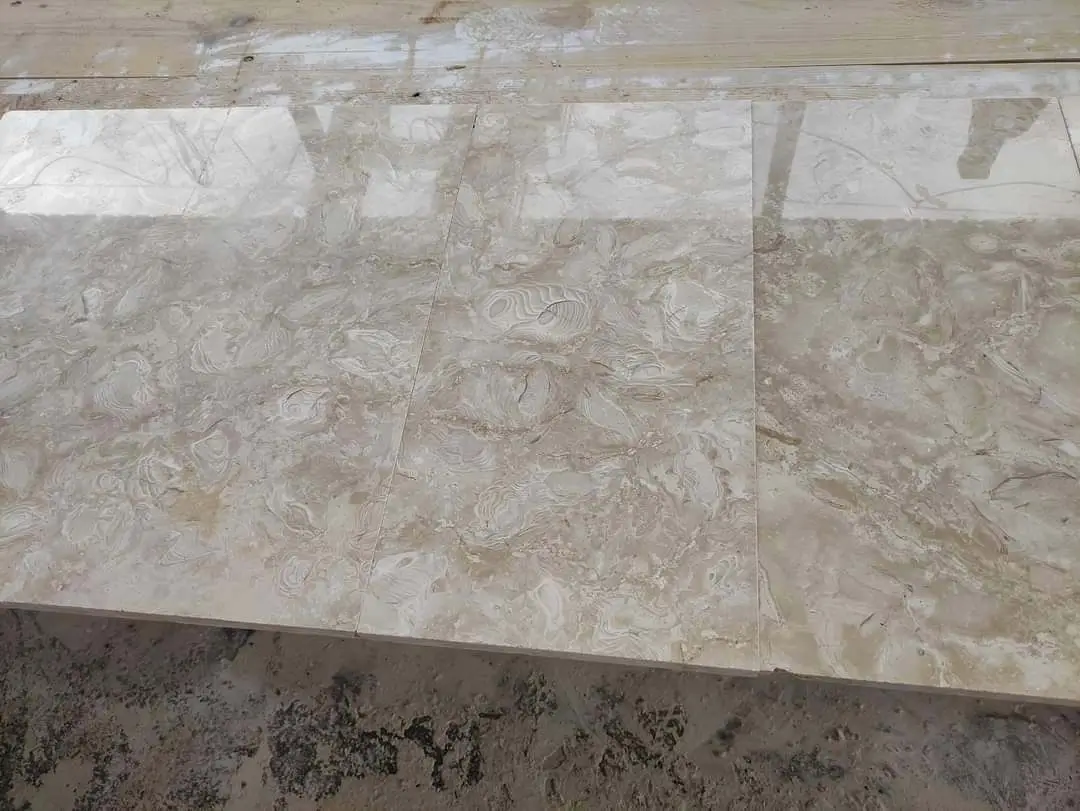
Citadel Stone maintains warehouse inventory of Arizona-appropriate limestone in standard thicknesses, which typically allows for 1–2 week lead times on standard orders rather than the extended import cycles that some material categories require. You should verify warehouse stock levels for your specified thickness and finish before finalizing your installation contract, because stock availability directly affects whether your installer can meet the post-cure window or faces a project-delay gap. Truck access to the site should also be confirmed early — Gilbert residential streets generally accommodate standard flatbed deliveries, but projects with narrow side-yard access or overhead obstructions from pergola framing in progress may require coordinated staging. Your delivery coordination with the warehouse team should include confirming truck approach routes and any height or weight restrictions specific to your address.
What Determines Long-Term Performance on a Limestone Patio Pergola Gilbert Project
What separates a limestone patio pergola Gilbert installation that performs for 25 years from one that requires intervention within a decade is almost never the limestone itself — it’s the accumulated quality of decisions made before the first paver touches the base. Grade management, post footing detailing, drip line drainage design, and differential expansion accommodation at the shade structure perimeter are the variables that determine long-term performance. The limestone, when specified correctly for Arizona’s conditions, is genuinely one of the most durable materials available for this application. Your job is to create the conditions where it can perform as designed.
If your project scope extends beyond the pergola patio into other stone features, complementary hardscape elements are worth planning in coordination with your foundation work. When both a pergola patio and a seating wall share a site, coordinating their material specifications under one design pass prevents mismatched expansion details and simplifies sourcing. Limestone Patio Seating Wall Construction for Chandler Built-In Furniture covers how limestone performs in a different structural application — seating wall construction — and the specification details there can inform your broader material selection when both elements share a common aesthetic. Coordinating material sourcing for multiple features in a single warehouse order also simplifies logistics and can reduce per-project delivery costs. Citadel Stone’s limestone pergola foundation materials are engineered for Arizona terrain conditions and backed by hands-on technical support from specification through installation.
Discerning homeowners choose Citadel Stone’s natural limestone patio in Arizona for outdoor spaces that rival European estates.