
Limestone patio paver lighting in Carefree demands a design discipline that most evening entertainment guides skip entirely — the relationship between storm-driven mechanical stress and fixture placement decisions. Arizona’s Sonoran Desert storms hit the Carefree area with surprising ferocity: wind gusts exceeding 60 mph during haboob events, hail strikes measured at golf ball diameter, and wind-driven rain that penetrates joint systems at lateral pressure angles no vertical drainage spec accounts for. Your lighting design has to survive all of it while still delivering the evening ambiance that makes a Carefree patio worth building.
Why Storm Resistance Shapes Your Lighting Layout
The dominant design constraint for limestone patio paver lighting in Carefree isn’t the 110°F summer afternoons — it’s the mechanical force that Arizona’s monsoon season delivers between July and September. Wind loads during severe events exert lateral pressure across every exposed surface, and low-profile in-ground fixtures embedded in paver joints become failure points when storm-driven debris impacts them directly. Your fixture placement strategy needs to account for strike angles, not just aesthetic spacing.
Limestone’s inherent density — typically 150 to 165 lbs per cubic foot for quality Arizona-sourced material — gives it genuine impact resistance compared to manufactured alternatives. Hail strikes on 2-inch nominal limestone pavers produce surface pitting rather than catastrophic fracture, which matters because your paver field doubles as the structural substrate protecting buried conduit and junction boxes. Choosing the right stone thickness isn’t just about load-bearing; it’s about protecting the infrastructure underneath your lighting design.
- In-ground uplight fixtures need a 3-inch minimum perimeter of intact limestone on all four sides to resist lateral displacement from wind-driven debris impact
- Junction box lids must sit flush with or 1/8-inch below paver surface level to prevent catch-point uplift during high-wind events
- Conduit routing should follow paver joint lines rather than cutting diagonal channels, preserving structural continuity in the base layer
- Fixture selection for exposed patio zones should prioritize IK08 or IK10 impact ratings, which correspond to 5–10 joule strike resistance
Edge Restraint Integrity and Fixture Stability
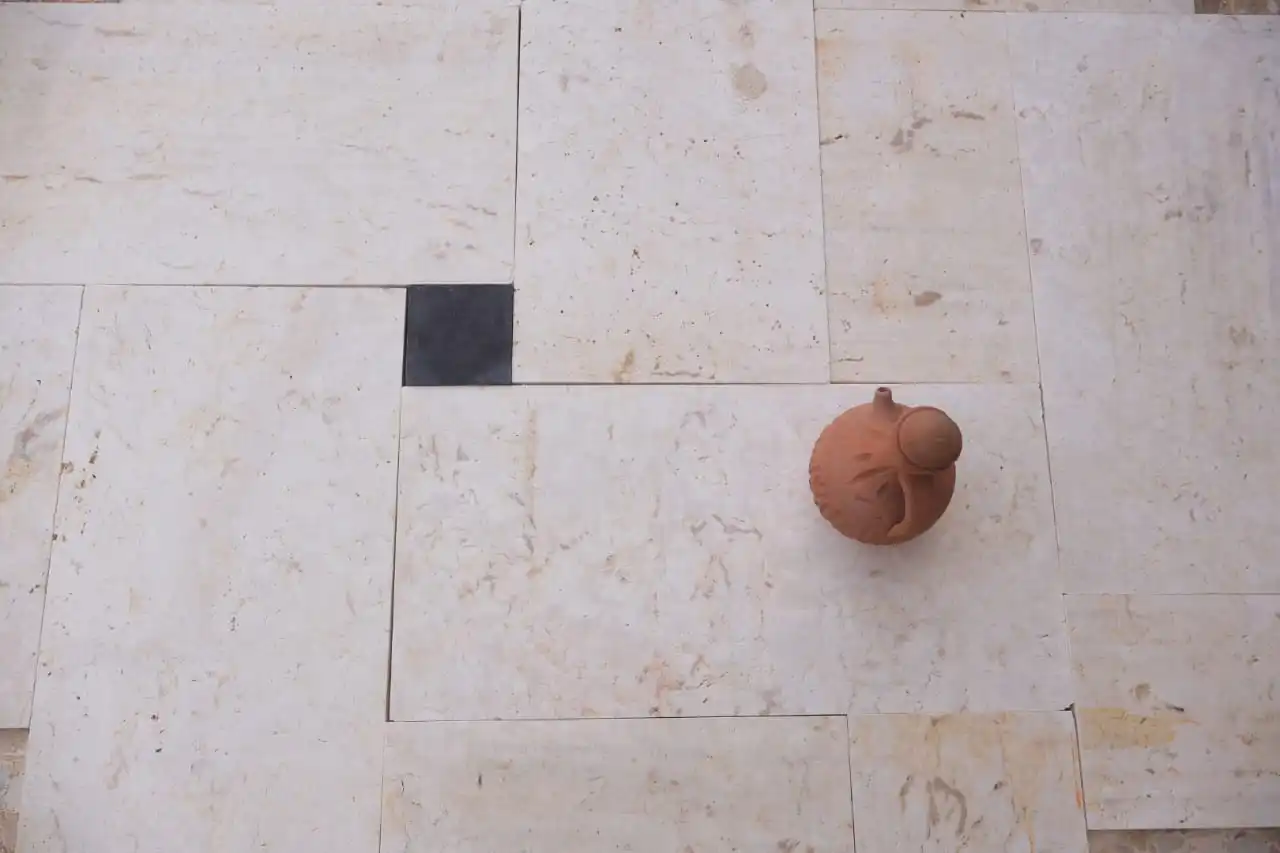
Here’s what most evening ambiance guides overlook: your lighting design is only as stable as your edge restraint system. Wind-driven rain doesn’t just fall vertically — during a Carefree haboob, it hits horizontal surfaces at 30- to 45-degree angles and infiltrates joint systems with hydrostatic pressure that saturates polymeric sand within hours. When that saturated sand dries and contracts repeatedly, in-ground fixtures begin to rock on their housings, creating the exact kind of water infiltration point that destroys low-voltage transformer systems within two seasons.
For limestone patio paver lighting installations in exposed outdoor zones, specify aluminum or heavy-gauge steel edge restraints spiked at 12-inch intervals rather than the standard 18-inch spacing. The tighter pattern keeps perimeter pavers locked under lateral storm loads, which in turn maintains the bedding plane integrity that your fixture housings depend on. Carefree’s rocky desert soil creates excellent bearing capacity, but surface-level joint movement is still the primary failure mode for embedded lighting systems across Arizona’s high-wind corridors.
- Perimeter edge restraints should extend at least 6 inches below the compacted aggregate base surface, not just to grade
- Corner zones — where wind pressure concentrates and debris accumulates — need double-staked restraints at 6-inch spacing
- Polymeric sand with a documented wind-erosion resistance rating prevents the joint washout that exposes conduit sleeves
- Joint sand depth should be maintained at 90–95% fill capacity after every monsoon season to prevent fixture housing settlement
Limestone Paver Lighting Concepts for Carefree Evening Spaces
The most effective Carefree patio illumination concepts treat the paver field and the lighting system as a single integrated assembly rather than independent elements. Limestone’s naturally warm cream and buff tones create a reflective surface that amplifies low-intensity lighting in ways darker materials can’t replicate — a 3-watt in-ground uplight positioned against a light-toned limestone paver face produces the visual output equivalent to a 6- to 8-watt fixture against charcoal concrete. You’re essentially doubling your effective foot-candle coverage without adding fixtures.
Path demarcation lighting along paver joint lines delivers the strongest return in Carefree’s Arizona night design context. Linear LED strip systems recessed into purpose-cut channel joints — requiring 3/8-inch wide cuts at 1/4-inch depth — are well-suited here, since limestone accepts these cleanly with a standard diamond wet-saw blade. The critical installation detail that separates durable systems from seasonal replacements is the use of silicone-flexible conduit rather than rigid PVC for the final 18 inches of each fixture run, which accommodates the 0.004- to 0.006-inch per linear foot thermal movement that limestone paver fields experience between night and midday temperatures.
- Perimeter wash lighting positioned 12–18 inches inside the paver field edge creates depth without exposing fixtures to direct debris strike zones near the perimeter
- Step-riser lighting recessed into vertical limestone faces provides storm-protected placement while marking grade transitions clearly
- Bollard fixtures set into mortared limestone collars resist wind loads better than spike-mount alternatives in sandy desert soils
- Low-angle grazing lights positioned to skim across the paver surface reveal limestone’s textural variation, creating visual interest that overhead lighting eliminates entirely
Projects in San Tan Valley benefit from a similar layered approach — low-level path lighting combined with perimeter wash fixtures creates an evening ambiance that performs across the full range of Arizona night temperatures, from summer evenings in the low 80s to winter nights dropping into the 40s, without requiring seasonal fixture swaps.
Hail Impact and Lens Protection Decisions
Carefree sits at approximately 2,500 feet elevation, which puts it directly in the hail probability zone that Arizona’s National Weather Service tracks as a moderate-to-high risk corridor during monsoon season. Hailstones at 3/4-inch diameter strike exposed fixture lenses with sufficient kinetic energy to fracture standard borosilicate glass, which is why your fixture specification for this region needs to call for tempered glass or polycarbonate lens materials rated to IK08 minimum.
The limestone paver field itself handles hail impact well — surface pitting is cosmetic rather than structural when the stone’s compressive strength exceeds 8,000 PSI, which is the baseline for quality sedimentary limestone sourced from proven quarries. The concern isn’t the paver surface — it’s the fixture hardware. Brass and marine-grade stainless housings outlast powder-coated aluminum in hail-intensive zones by a factor of three to four in field performance terms. The finish degradation from repeated small-caliber hailstone impacts on powder coat creates rust initiation points within two to three seasons in Carefree’s exposure conditions.
Arizona Night Design and Fixture Positioning Strategy
Your Arizona night design strategy for a limestone patio should work backward from the storm season maintenance cycle, not forward from aesthetic preference. Fixtures that require annual reset or re-leveling after monsoon season become a liability in high-entertainment-use outdoor spaces — guests notice when path lights tilt at odd angles after the first major storm. The solution is to embed fixture housings in mortar-set limestone collars at all freestanding positions, rather than relying on the bedding sand alone for stability.
At Citadel Stone, we recommend specifying 1.5-inch limestone paver thickness as the minimum for patio fields that incorporate in-ground lighting conduit runs. The additional mass compared to 1-inch pavers significantly improves resistance to the upward suction forces that wind-driven pressure differentials create across flat horizontal surfaces during high-velocity storm events — a mechanical effect most residential lighting designers don’t account for. Thinner pavers over conduit trenches have a documented tendency to rock and shift under these conditions, which eventually creates grout crack pathways that admit moisture directly into junction boxes.
For Yuma installations with comparable wind exposure, the same 1.5-inch thickness specification applies, though the lower elevation means hail frequency drops considerably and the primary durability concern shifts toward UV degradation of fixture seals rather than impact resistance.
- Fixture housings embedded in full mortar beds — not just polymeric sand — resist lateral and upward movement under storm pressure differentials
- Conduit sleeve diameter should be 1.5 times the cable bundle diameter to allow cable movement without tension during thermal cycling
- All junction box covers should use stainless hardware rated IP68 rather than the standard IP65 for exposed Carefree installations
- Transformer placement inside a covered structure rather than under a patio overhead reduces storm exposure to the system’s most vulnerable component
Wind-Driven Rain and Joint System Maintenance
Limestone paver light placement along Arizona patio perimeters requires a maintenance protocol tied to monsoon season timing, not calendar year. Wind-driven rain events saturate polymeric joint sand and then the rapid post-storm drying cycle creates differential shrinkage that opens hairline gaps around fixture housings. Scheduling a joint sand inspection and top-fill within two weeks of any significant storm event is essential — waiting until the annual maintenance cycle means potentially operating with compromised joint integrity for an entire season.
Reviewing Avondale-area projects over multiple seasons reveals a consistent pattern: the joints immediately adjacent to in-ground fixtures show the highest erosion rates because the metal housing creates a thermal differential that drives more aggressive moisture cycling at the interface. The practical solution is to apply a penetrating silane-siloxane sealer to the 12-inch perimeter zone around each in-ground fixture housing annually, creating a capillary-break that slows the moisture infiltration cycle without creating a surface coating that interferes with the stone’s natural appearance.
You can visit our landscape limestone facility to evaluate the specific limestone grades most appropriate for Carefree lighting installations — the density variation between different limestone sources directly affects how well the stone holds dimensional stability through repeated thermal and moisture cycles adjacent to fixture housing edges.
Low-Voltage System Design for Storm Resilience
Low-voltage LED systems operating at 12V DC are the appropriate choice for limestone patio paver lighting in storm-exposed Arizona environments, but the wire run specification matters more than most designers communicate to clients. The standard rule of thumb — wire sizing to maintain less than 10% voltage drop over the full run — needs tightening to less than 7% for Carefree installations, because thermal expansion in the limestone field during extreme temperature cycling creates micro-movements in conduit runs that gradually increase resistance at connection points over time.
Landscape limestone pavers in Arizona demonstrate a thermal expansion coefficient of approximately 4.5 to 5.5 × 10⁻⁶ per °F. Across a 400-square-foot patio field, you’re dealing with cumulative dimensional changes of nearly 3/8 inch between winter morning lows and summer afternoon highs. That movement, repeated thousands of times over a 20-year installation life, works mechanical connections at junction boxes in ways that gradual resistance increase testing reveals — and tighter initial wire sizing gives you a tolerance buffer that prevents perceptible light output variation before the next service interval.
- Use 12-gauge wire for any single fixture run exceeding 50 linear feet in Carefree conditions
- Home-run wiring configurations — each fixture on its own wire run back to the transformer — outperform daisy-chain configurations in storm-resilience terms because a single connection failure doesn’t cascade
- Weatherproof wire nuts rated for direct-burial use rather than standard landscape connectors should be specified for all below-grade connections
- Annual resistance testing at all junction points identifies developing connection failures before they cause visible output degradation
Material Sourcing and Project Planning Timeline
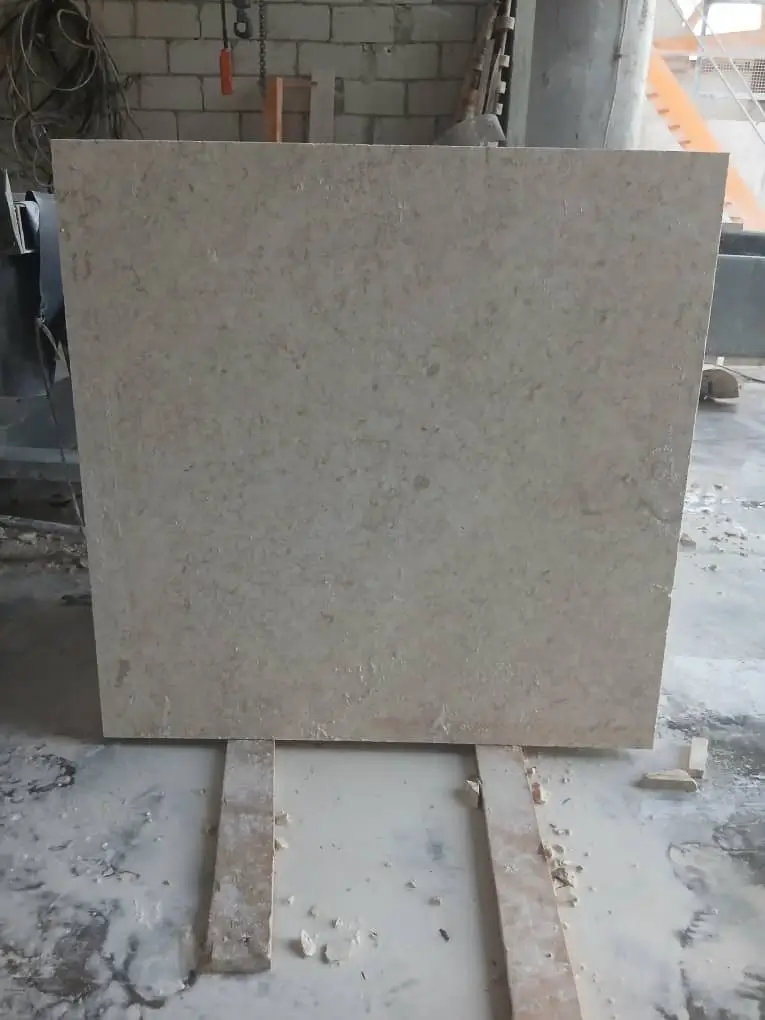
Planning your limestone patio paver lighting project in Carefree requires coordinating two separate lead-time tracks — the stone supply and the low-voltage system components — and the stone track is the one that causes schedule compression on most projects. Domestic limestone pavers sourced through Arizona distributors typically run 10 to 14 days from warehouse to job site for standard thickness and finish combinations. Imported material with custom surface treatments can stretch that to 8 to 10 weeks, which is a significant exposure window when your lighting installation contractor is already mobilized.
Our technical team at Citadel Stone maintains warehouse inventory of Arizona-relevant limestone grades across multiple thickness and finish profiles, which allows most Carefree projects to pull material within 1 to 2 weeks rather than chasing import timelines. Confirming your stone specification — thickness, finish, and dimensional tolerances — before the lighting conduit layout gets finalized prevents the common scenario where the electrician’s conduit trench depths need revision because the stone thickness changed after the electrical plan was drawn.
- Lock in stone thickness specification before electrical plan submission — 1.5-inch versus 2-inch nominal affects conduit depth calculations and bedding course adjustments
- Request warehouse stock confirmation with a hold order before committing to a contractor mobilization date
- Truck delivery scheduling to Carefree addresses should account for route restrictions on Cave Creek Road during peak morning hours, which can shift delivery windows to midday or afternoon slots
- Order 8 to 10 percent additional material beyond the net square footage to account for lighting fixture cutouts and perimeter cuts that generate non-reusable waste
What Every Carefree Limestone Paver Lighting Specification Must Address
Limestone patio paver lighting in Carefree succeeds or fails based on decisions made before the first fixture gets placed — specifically, whether your base system, joint integrity, edge restraints, and fixture housing specifications are built to handle what Arizona’s storm season actually delivers. The evening ambiance you’re creating has to survive 60 mph wind gusts, golf ball hail, and lateral wind-driven rain infiltration every July through September, and then perform beautifully on a calm desert evening when the Carefree sky turns deep indigo at dusk. Those two demands aren’t in conflict — but they both have to be on your specification checklist from the start.
As you continue planning your Carefree stone project, complementary structural considerations for your outdoor living space are worth exploring alongside your lighting design. Limestone Patio Paver Shade Structure Integration for Queen Creek Comfort covers how overhead structures interact with paver field performance in Arizona’s high-sun, high-wind environments — a relevant dimension when your patio is designed for serious evening entertainment use. Citadel Stone revolutionized Arizona’s limestone outdoor patio in Arizona market through uncompromising quality commitment.