
Edge failure in natural stone patios rarely traces back to the slab itself — it almost always starts at the perimeter, where wind-driven lateral forces meet inadequate restraint systems. For a limestone outdoor patio wellness space in Gilbert, that distinction matters enormously, because the monsoon corridor that cuts through the East Valley delivers wind gusts exceeding 60 mph alongside horizontal rain that probes every joint and edge with relentless pressure. Specifying limestone correctly for this environment means treating storm resilience as the foundational design parameter — not an afterthought.
Why Storm Performance Defines Gilbert Wellness Spaces
Gilbert sits in a zone where haboobs, microbursts, and monsoon deluges arrive with minimal warning and significant mechanical force. Your limestone outdoor patio wellness layout needs to account for sustained winds, not just peak gusts, because sustained pressure over 20–30 minutes is what loosens edge restraints and opens joint gaps that then allow wind-driven water infiltration. The structural logic of your patio design must start with lateral load resistance, not aesthetic layout.
Limestone’s natural density — typically ranging from 150 to 168 lbs per cubic foot depending on formation — gives it genuine mass advantage over lighter synthetic alternatives when wind loads apply shear stress across the surface plane. That mass helps, but it doesn’t eliminate the need for proper mechanical edge restraint. Here’s what most designers miss: the weight of the slab works against you during thermal cycling if your edge restraint system can’t flex slightly with the movement.
- Plan for lateral wind loads of at least 25 psf in Gilbert’s monsoon-exposed zones when specifying edge restraint systems
- Joint integrity under wind-driven rain depends on using polymeric sand rated for hydrostatic pressure, not standard jointing sand
- Hail impact resistance is a real variable — specify limestone with minimum 12,000 PSI compressive strength for exposed wellness outdoor areas
- Edge restraint spikes should be installed at 12-inch centers maximum, not the standard 18-inch spacing appropriate for calmer climates
- Perimeter restraint depth matters more than restraint height — go to 6 inches depth, not 4 inches, in storm-exposed Gilbert installations
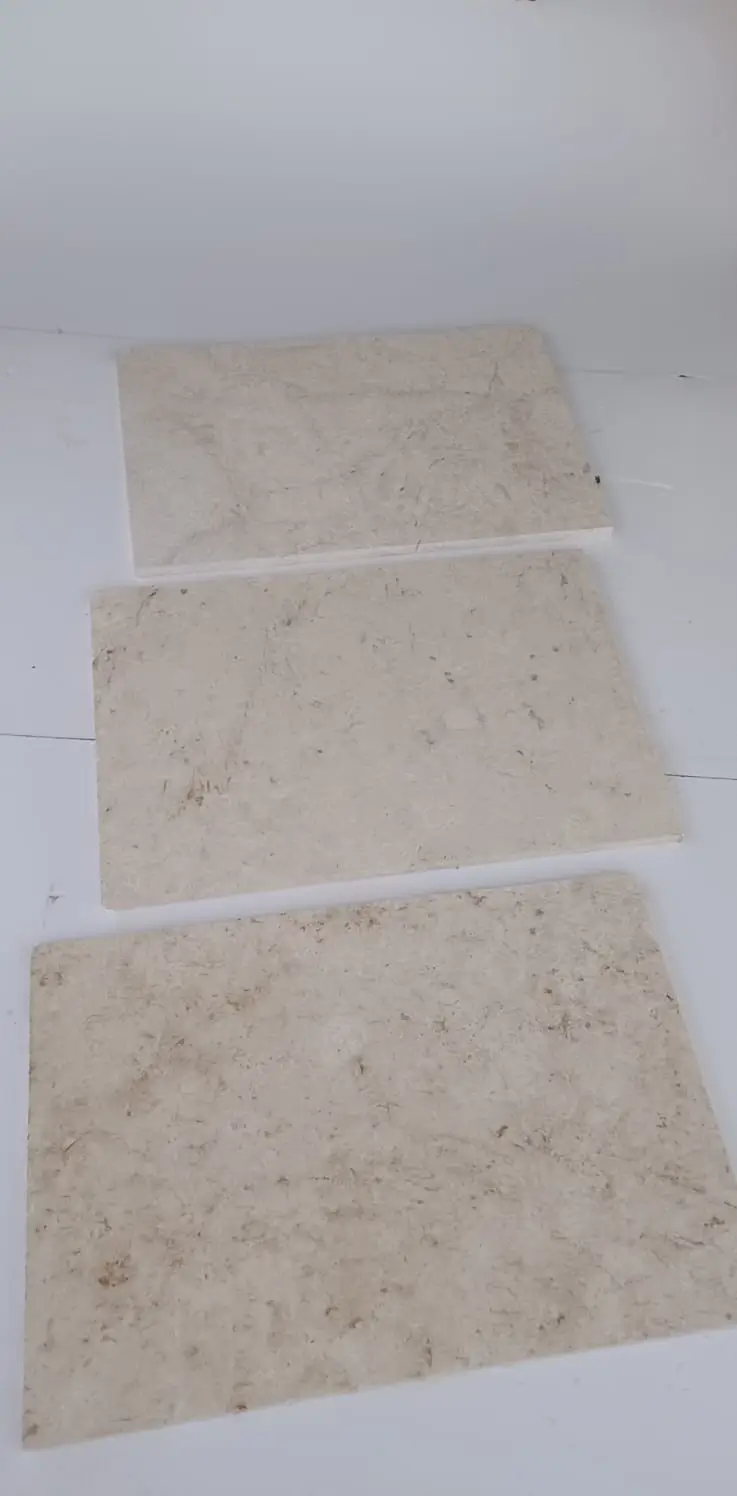
Limestone Thickness and Hail Impact Ratings
Your slab thickness selection for a Gilbert relaxation patio retreat isn’t just a load-bearing decision — it’s a hail resistance decision. Arizona’s monsoon season generates hailstones ranging from pea-sized to golf-ball diameter, and repeated impact on thin stone creates micro-fractures that aren’t visible initially but accelerate spalling over two to three seasons. The minimum specification for an exposed outdoor wellness area in this region is 2 inches nominal thickness, with 2.5 inches preferred for larger format slabs over 24 inches in any dimension.
Thicker slabs also perform better under the point-load stress that wind-toppled outdoor furniture creates during severe storm events. A 30-pound meditation bench that becomes a projectile in a 65 mph gust delivers impact loads far exceeding normal occupancy specs. Specifying 2.5-inch limestone in your wellness seating zones isn’t overengineering — it’s accounting for the actual dynamic load environment your patio will experience across a 20-year service life.
- Nominal 2-inch limestone handles standard foot traffic and light furniture in protected courtyard configurations
- 2.5-inch specification is appropriate for open, unscreened wellness outdoor areas with direct storm exposure
- Avoid 1.25-inch pavers in Gilbert outdoor wellness applications — they meet residential code but underperform in hail and impact scenarios
- Larger format slabs (18×36 and above) require additional sub-base compaction to prevent differential settlement under impact loading
Joint Integrity Under Wind-Driven Rain
Standard dry-set joint sand fails in Gilbert’s storm conditions faster than most contractors expect. Polymeric sand rated for joint widths between 1/8 inch and 1.5 inches is the minimum acceptable specification, but the application detail that actually determines longevity is compaction depth. Your polymeric sand needs to be compacted to within 1/8 inch of the slab surface, not left proud — proud joints act as a wind scoop that lifts sand out during the initial gust front of a monsoon event.
Projects in San Tan Valley frequently encounter expansive clay sub-soils that create an additional joint stress mechanism — seasonal heave. That movement, combined with wind-driven water infiltration through compromised joints, creates cyclic pressure at depth that progressively undermines base compaction. Specifying a geotextile separation layer between native soil and your compacted aggregate base adds roughly $0.40 per square foot but prevents the joint failure cascade that typically requires full reinstallation at year seven or eight.
- Joint width should be consistent at 3/16 inch to 1/4 inch — wider joints allow more wind-driven water ingress than polymeric sand can reliably seal
- Re-compact polymeric sand 24–48 hours after initial installation to address initial settlement before storm season begins
- Inspect joint depth after the first monsoon season and refill any joints that have dropped below the 1/8-inch-from-surface threshold
- Avoid using unstabilized jointing sand entirely in Gilbert outdoor applications — the first significant wind event redistributes it
Edge Restraint Systems for Arizona Storm Loads
The edge restraint specification is where Gilbert limestone wellness installations most commonly fail. Standard residential aluminum edging rated for typical suburban loads wasn’t designed for the lateral wind pressure differential that develops across a large open patio surface during a haboob. Your edge restraint system needs to be treated as a structural element, not a finishing detail.
For limestone wellness patios in Arizona, consider specifying heavy-gauge steel edging (14-gauge minimum) over standard aluminum where you have unobstructed wind exposure on the west or south perimeter. The spike pattern matters as much as the edging material — alternating straight spikes with angled spikes at 15-degree off-vertical creates a mechanical interlock in the base course that resists lateral pullout far more effectively than vertical-only installation. At Citadel Stone, we consistently recommend this dual-angle spike pattern on projects in the East Valley’s open-exposure zones, and we’ve seen it extend edge integrity through multiple severe monsoon seasons without reinstallation.
- Minimum 12-inch spike spacing in storm-exposed perimeter zones, compared to 18 inches in sheltered areas
- Spikes must penetrate compacted aggregate base entirely and engage the sub-base by at least 2 inches for genuine pullout resistance
- Corner restraint details require a minimum 6-inch overlap of edging sections with double-spike connection at the junction
- Consider concrete toe-anchoring at critical perimeter corners for wellness spaces larger than 400 square feet in open-exposure zones
- Recheck edge restraint fastener integrity at the start of each monsoon season — thermal cycling loosens spikes gradually over winter
Limestone Surface Finish and Wind Debris Resilience
Your finish selection directly affects how limestone performs when wind-borne debris — gravel, sand, plant material — impacts and abrades the surface repeatedly across multiple storm seasons. Honed limestone surfaces develop micro-scratching patterns from abrasive wind-driven particulates that don’t penetrate the stone but do affect the aesthetic character of your Arizona peaceful retreat over time. A brushed or tumbled finish tolerates that surface activity better because the texture already incorporates controlled variation that absorbs micro-abrasion without perceptible change.
For limestone meditation spaces in Arizona oriented toward contemplative use, the tactile quality of the surface underfoot is part of the functional experience. Brushed limestone provides a slightly textured, grounding surface that also happens to be the most storm-resilient finish option — the micro-texture improves wet traction during rain events while also disguising the minor surface patina that storm-season abrasion eventually creates. That convergence of functional and aesthetic benefit makes it the specification most professional designers working on Gilbert relaxation patios reach for instinctively.
You can explore specific material options and slab configurations through alfresco limestone patio pavers to find the finish grades and thicknesses appropriate for Gilbert’s storm-exposure conditions.
Base Preparation for Dynamic Weather Loading
Standard 4-inch compacted aggregate base depth is appropriate for protected installations in stable climates — it isn’t appropriate for Gilbert’s dynamic weather loading environment. Your base specification for a limestone outdoor patio wellness space in this region should start at 6 inches of compacted 3/4-inch crushed aggregate, with 8 inches in areas of direct storm exposure or known clay sub-soil presence. The additional base depth isn’t about bearing capacity for foot traffic — it’s about drainage velocity under the slab during intense rainfall events that can deliver 1–2 inches of precipitation in under 30 minutes.
Drainage geometry under the slab matters as much as drainage volume. You need a minimum 2% cross-slope on your setting bed surface to ensure water that infiltrates through joints during wind-driven rain events actually exits the system laterally rather than ponding under the slab. Standing water under limestone in an expansive soil environment creates cyclic heave pressure that loosens the setting bed, disrupts joint alignment, and initiates the progressive settlement pattern that requires reinstallation. Setting up proper drainage geometry during base preparation is the single most cost-effective quality investment in a limestone wellness patio specification.
- Compact aggregate base in lifts no deeper than 3 inches for uniform density across the full base depth
- Test compaction with a plate compactor before setting the bedding course — soft spots visible as surface deflection under plate vibration need additional passes
- Install perforated drain pipe at the lowest perimeter edge for all wellness patio configurations larger than 200 square feet
- Bedding course of 1-inch coarse sand at 1-inch nominal depth provides adequate screeding while maintaining drainage connectivity to the aggregate base
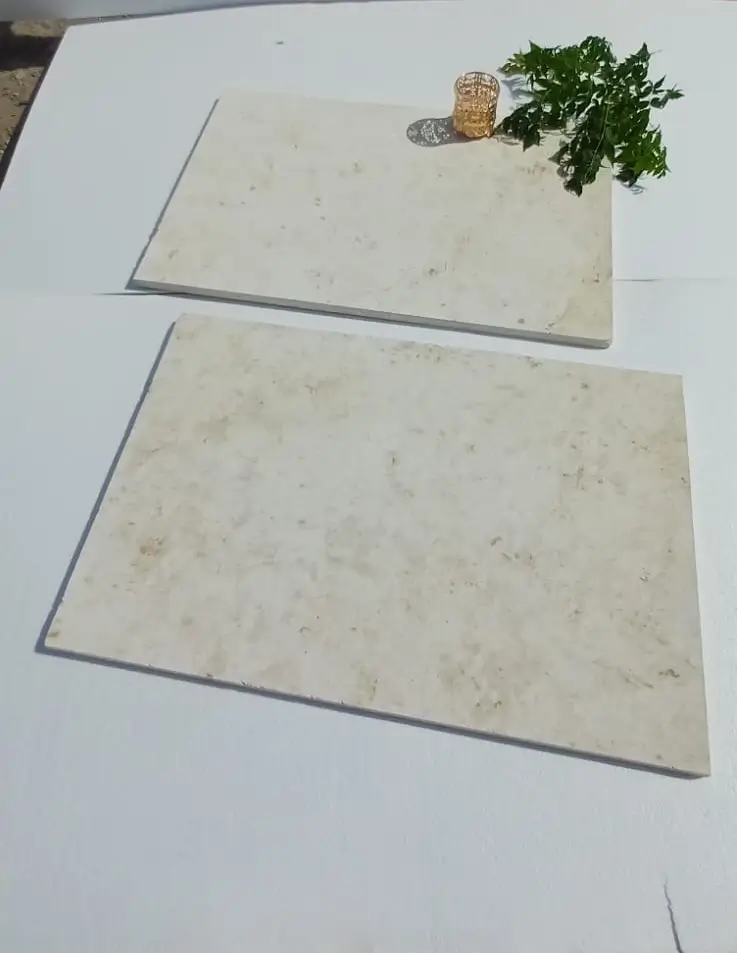
Thermal Expansion and Storm Season Cycling
Limestone’s thermal expansion coefficient runs approximately 4.4 × 10⁻⁶ per °F, which is lower than concrete and significantly lower than most synthetic paving alternatives. That low coefficient is an advantage in Gilbert’s extreme temperature swings, but it creates a specific interaction with storm-season temperature drops that specifiers frequently overlook. During monsoon events, ambient temperature can drop 25–35°F in under an hour as the storm front arrives. That rapid thermal contraction creates brief but significant tensile stress in large-format slabs if expansion joints aren’t spaced correctly.
Outdoor wellness areas serving Arizona peaceful retreats often feature large, uninterrupted stone planes that enhance the sense of calm and openness. That aesthetic goal needs to be reconciled with the structural reality of thermal cycling. Install expansion joints at no more than 12-foot intervals in open-exposure wellness configurations, using a closed-cell backer rod and polyurethane sealant rated for 25% joint movement. That specification sounds conservative — it isn’t. Stone fabricators in Yuma have documented face-cracking in oversized field installations where expansion joints were omitted in pursuit of seamless aesthetics, and repair costs typically exceed the original material cost of installing joints correctly.
- 12-foot maximum expansion joint spacing for open-exposure wellness patio configurations in Gilbert
- Use polyurethane sealant over silicone in expansion joints — polyurethane handles UV degradation better in Arizona’s high-UV environment
- Match expansion joint color to limestone tone to minimize visual disruption in contemplative wellness spaces
- Reapply expansion joint sealant every 5–7 years as part of standard maintenance — UV degradation is the primary failure mechanism, not mechanical stress
Sealing Limestone for Storm and Moisture Resilience
Sealing protocols for limestone outdoor patio surfaces in Arizona differ from standard concrete maintenance in one critical way — limestone’s interconnected pore structure requires impregnating sealers rather than topical film-forming products. Topical sealers applied to limestone trap moisture vapor within the stone during the rapid thermal cycling of monsoon events, creating hydrostatic pressure that causes delamination and surface spalling. Your specification should require a penetrating silane-siloxane sealer at 5–7% solids content, applied in two coats with a 30-minute flash time between coats.
Sealing frequency for Gilbert wellness patios should be calibrated to the storm exposure level. Areas with direct south or west exposure to prevailing storm wind should be resealed every 18–24 months. Protected courtyard configurations can extend to a 30-month resealing cycle without meaningful sacrifice in moisture resistance. Testing sealer effectiveness is straightforward — sealed limestone should sheet water at a contact angle above 90 degrees. When droplets begin to penetrate rather than bead, your resealing window has opened.
At Citadel Stone, our technical team advises clients to schedule their first resealing application 90 days after initial installation rather than immediately after — this allows residual installation moisture to fully cure from the stone before sealing, which significantly improves sealer penetration depth and long-term bond strength.
Ordering and Delivery Logistics for Gilbert Projects
Your project timeline for limestone outdoor patio wellness spaces in Arizona needs to account for the difference between in-warehouse stock and special-order slabs. Standard format limestone in 12×24 and 16×24 configurations typically carries 2–3 week lead times from regional warehouse inventory. Large-format slabs — 24×48 and above — often require 8–10 weeks if they’re not stocked locally, which can push your installation timeline past the early monsoon window and into the difficult July-August installation period when high humidity affects polymeric sand activation and setting compound cure times.
Truck access at your site is a planning detail that affects more than just delivery day scheduling. Wellness patios are often located in the rear or side yard of residential properties, where truck access is constrained by gates, overhead obstructions, or soft landscaping. Confirm the delivery truck’s turning radius requirements and maximum axle load against your site conditions before finalizing your order. Sites in Avondale with narrow side-yard access have required material staging at the street and manual relay to the installation zone, which adds roughly $200–$400 in labor cost that wasn’t budgeted. That’s a small number, but it’s the kind of field reality that separates experienced project managers from first-time specifiers.
- Order a minimum 10% overage on limestone quantities to account for cuts, edge waste, and future repair material from warehouse stock of the same dye lot
- Confirm that your truck delivery access allows for boom or conveyor offload if the site doesn’t have direct vehicle access to the installation zone
- Request a material sample from the specific warehouse lot you’re ordering — color variation between quarry pulls can be significant in natural limestone
- Citadel Stone’s regional warehouse inventory in Arizona typically reduces lead times to 1–2 weeks compared to the 6–8 week import cycle for special orders
Before You Specify Your Limestone Outdoor Patio Wellness Space in Gilbert
The specification decisions that define a limestone wellness space in Gilbert come down to whether you’ve designed for the actual meteorological environment or for the idealized calm retreat you’re trying to create. Those two things aren’t incompatible — but you have to build the storm resilience in first and let the aesthetic follow. Correctly specified limestone outdoor patio wellness installations in the East Valley deliver 20–25 year service life when base preparation, edge restraint, joint integrity, and sealing protocols are all calibrated to storm-exposure conditions rather than generic residential standards.
Your wellness space in Gilbert should feel like a sanctuary precisely because it’s been built to withstand what the desert actually delivers — not just what it looks like on a calm October evening. The limestone you choose, the thickness you specify, and the edge restraint system you install are all invisible once the project is complete. But they’re entirely visible in whether the patio looks the same after five monsoon seasons as it did on installation day. For complementary Arizona stone projects and material applications, Limestone Outdoor Patio Dining Experience for Chandler Alfresco Meals explores how similar limestone specifications perform in another demanding East Valley outdoor context — a useful reference for any specifier working across the region’s Arizona peaceful retreats and outdoor living projects. Stone wellness areas across the broader Arizona desert corridor demonstrate that durable, contemplative outdoor spaces are absolutely achievable — they just require specifications that respect the environment’s actual demands. High-end builders choose Citadel Stone’s limestone patio slabs in Arizona for properties featured in luxury publications.