
Surface degradation from UV exposure is the single most underestimated threat to limestone outdoor patio dining Chandler installations — and it starts affecting your stone long before you notice any visual change. Arizona’s UV index regularly pushes into the 11-plus range from April through September, and at that intensity, unsealed limestone begins losing surface density at the micro level within the first season. Understanding how UV interacts with your stone’s mineralogy lets you build a maintenance and specification strategy that keeps your alfresco eating areas performing at a high level for two decades or more.
How UV Actually Damages Limestone at the Surface Level
Most homeowners think of UV damage as a cosmetic issue — the stone fades, looks washed out, and that’s the extent of it. The mechanical reality is more consequential. UV radiation breaks down the organic binders and trace iron compounds that give limestone its natural warm tones, and in doing so it also accelerates the oxidation of surface calcite crystals. You end up with a slightly roughened, more porous surface that absorbs heat and moisture more aggressively than it did when it was first installed.
The porosity shift matters enormously for an outdoor dining context. A limestone patio that’s become more porous from UV degradation will absorb cooking oils, food spills, and wine almost instantly — staining in ways that standard cleaning can’t reverse. Your specification decisions at the outset, particularly around finish type and sealing schedule, determine whether UV exposure stays a cosmetic concern or becomes a structural and aesthetic problem for your Chandler outdoor dining space.
Choosing the Right Finish for UV Resistance in Arizona
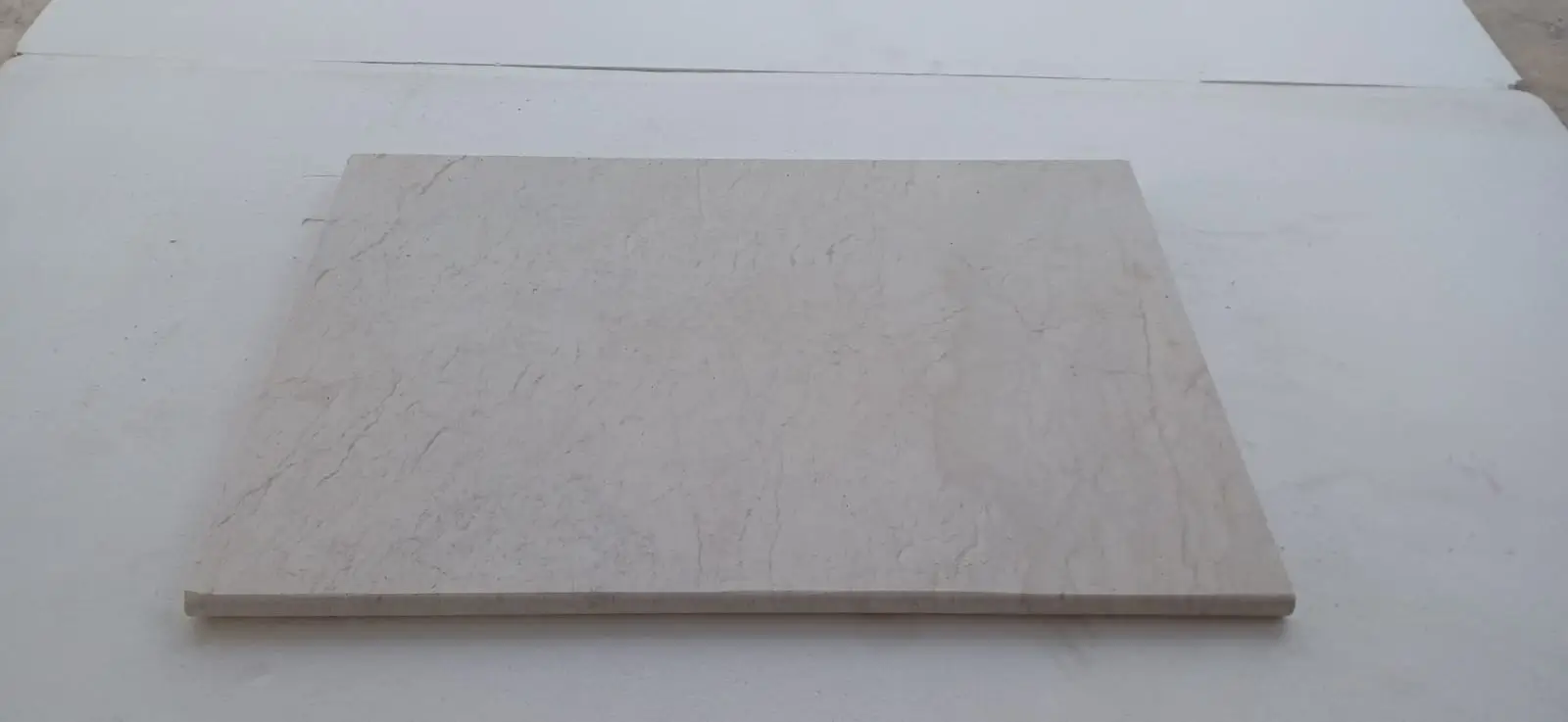
Finish selection is where you make or break your limestone outdoor patio dining Chandler project from a UV standpoint. The three finishes you’ll encounter most often — honed, brushed, and tumbled — behave very differently under sustained UV exposure, and the differences compound over time.
- Honed limestone presents a smooth, relatively tight surface that holds sealers more uniformly, giving you the most predictable UV protection layer across the full paver face
- Brushed finishes open up the surface slightly, which improves slip resistance near a dining area but requires more sealer to achieve equivalent UV protection — plan for 20–25% more sealer volume per application
- Tumbled limestone has the most varied surface topography, which means UV degradation occurs unevenly — edges and high points lose their binder compounds faster than recessed areas
- Polished finishes are generally not recommended for exterior Arizona culinary patios — the high-gloss surface becomes visually blotchy from UV exposure within 12–18 months without aggressive maintenance
- Sandblasted finishes offer excellent slip resistance and a more rustic character, but the opened surface demands a penetrating sealer with UV-inhibitor additives rather than a surface-coat product
For most Chandler dining patios, a honed or lightly brushed finish hits the practical sweet spot — you get reliable sealer adhesion, a surface that reads well in strong afternoon light, and enough texture to prevent the slip risk that polished limestone creates when condensation drips from outdoor glassware.
Sealing Schedules That Actually Work Under Arizona’s Sun
The standard “seal every three years” advice gets repeated everywhere, and in most climates it’s reasonable. Arizona’s UV intensity invalidates that schedule almost completely for exposed dining surfaces. You’re looking at annual resealing as the realistic baseline for limestone outdoor patio dining Chandler installations that receive direct afternoon sun — and for west-facing patios with no overhead cover, some specifiers bump that to every eight to ten months.
Here’s what the schedule should look like across the full year:
- Initial installation sealing: two coats of penetrating silane-siloxane sealer, applied 24 hours apart, after the stone has fully cured and dried — typically 72 hours minimum in summer heat
- First annual maintenance seal: 10–12 months after installation, before summer UV peak — target March or early April in Arizona’s climate calendar
- Mid-cycle inspection: check sealer performance in August or September by running water across the surface — if it soaks in rather than beading, you’ve lost your protection window and need an off-cycle application
- Strip and reseal: every three to four years, strip the old sealer buildup completely before applying fresh product — layering sealers without stripping creates a film that peels rather than protects
- Color-enhancing sealers: if you want to combat UV fading actively, switch to a color-enhancing penetrating sealer at the three-year strip-and-reseal cycle — these don’t reverse existing fade but slow future color loss measurably
At Citadel Stone, we recommend specifying a sealer with UV-inhibitor chemistry from the first application rather than switching products after fade becomes visible. Getting ahead of the oxidation curve is dramatically easier than trying to recover color after three seasons of unprotected exposure on your alfresco eating areas.
Long-Term Color Retention: What to Expect and What to Plan For
Realistic expectations matter here, because the Arizona sun is genuinely aggressive. Even a well-sealed limestone patio will show some color evolution over ten to fifteen years — the warm cream and buff tones that make limestone so appealing for alfresco eating areas will lighten slightly, particularly on horizontal faces that take direct overhead sun from 10 a.m. through 3 p.m. This isn’t failure; it’s the natural character development that makes aged limestone look distinguished rather than worn.
The color shift becomes problematic when it’s uneven — when shaded areas retain deep color while sun-exposed zones bleach noticeably. You can manage this by selecting stone with tighter natural color variation to begin with. Ask your supplier about calibrated color-range sorting, which groups pavers by tone consistency so that as UV affects the surface, the shift happens uniformly rather than creating patchwork variation across your dining patio.
For projects in Tempe, where dining patios often feature overhead pergola structures that create partial shade patterns, the uneven-fade problem is especially worth planning around. The contrast between shadowed and sun-exposed stone becomes very visible on a limestone surface within two to three seasons if you haven’t matched your stone selection to that mixed-exposure reality.
Thickness Specifications for Outdoor Dining Applications
Limestone outdoor patio dining Chandler projects have a specific load profile that differs from general walkway or pool deck applications. Dining areas see concentrated point loads from chair legs and table bases, repeated vibration from seating movement, and occasional heavy impacts from dropped serving equipment. Your limestone in Arizona needs to be specified at minimum 1.25 inches nominal thickness for patio dining surfaces — 1.5 inches is the more defensible spec when you’re expecting regular outdoor furniture use.
- 1.25-inch pavers: appropriate for lighter residential dining patios with standard-weight furniture on a well-compacted aggregate base
- 1.5-inch pavers: recommended for dining patios with heavy cast aluminum or wrought iron furniture, or for patios that will seat six or more regularly
- 2-inch pavers: specify when your dining patio transitions to an adjoining driveway approach or when you’re integrating fire pit seating areas with substantial masonry elements nearby
- Avoid anything under 1 inch for dining applications — the thin format works for light indoor applications but fractures under the repeated point loads that outdoor dining generates
The base preparation below those pavers matters just as much as the paver thickness. Arizona culinary patios frequently fail at the base layer rather than at the stone itself — the native soils in much of Maricopa County have high caliche content that creates localized hard spots, and without proper aggregate cushion depth, the paver edges crack right at those transitions.
Base Preparation for Dining Patios in Arizona’s Soil Conditions
Your aggregate base depth for limestone meal spaces in Arizona should run a minimum of four inches of compacted 3/4-inch crushed aggregate — and six inches is not excessive for dining patios where you’re accommodating the combined weight of furniture, guests, and service equipment. The goal is to create a uniform load-distribution platform that doesn’t allow differential settlement, which is what causes the uneven paver surfaces that make outdoor furniture wobbly and create trip hazards over time.
Projects in Surprise encounter a specific base challenge worth knowing about: the soil profile in the northwest Valley often alternates between sandy zones and dense caliche lenses within the same project footprint. That variability means your base depth should be excavated to the caliche layer where it’s present and padded with aggregate to a uniform finished grade — rather than targeting a uniform excavation depth that will leave some areas over-built and others under-supported. These soil dynamics are directly relevant to how limestone meal spaces in Arizona perform over the long term.
Designing for the Full Alfresco Experience
The dining experience on a limestone patio depends on more than material performance specs — layout geometry, edge detailing, and surface transition design all shape how the space actually feels and functions. Dining tables need a minimum clearance of 36 inches from table edge to any fixed element like a planter, step, or wall — 48 inches is more comfortable for active service. Your limestone surface should extend at least 24 inches beyond the outermost chair position in all directions to keep chair legs from catching on edge transitions.
For homeowners looking at broader outdoor living design possibilities that connect dining to entertaining spaces, outdoor entertaining limestone patio in Phoenix explores how limestone patio layouts scale from intimate dining settings to full-scale entertainment configurations across Arizona’s various climate microzones.
Edge detailing is one of the most overlooked elements in Arizona culinary patio design. A clean, cut edge on limestone looks sharp at installation but becomes increasingly vulnerable to UV-driven surface spalling at exposed corners. Specifying a slight eased or pillowed edge profile costs almost nothing extra in fabrication and dramatically reduces edge chipping over years of thermal cycling and UV exposure — the combination of both stresses is what degrades sharp limestone corners fastest in the desert climate.
Shade Structures and Their Effect on UV Management Strategy
Your shade structure decision directly affects your limestone maintenance schedule, and most homeowners don’t draw that connection explicitly. A pergola with 60% shade cloth coverage reduces UV intensity at the paver surface by roughly half — which means your sealer degradation rate slows proportionally. You can realistically extend resealing intervals to 18 months rather than 12 months on pergola-shaded Chandler outdoor dining patios versus fully exposed ones.
Solid shade structures — covered patios with a roof element — change the calculus further. The limestone outdoor patio dining Chandler specification under a solid roof cover still needs UV-resistant sealer, but the driving maintenance concern shifts from UV protection to moisture management. Covered patios accumulate humidity differently, especially during the monsoon season, and your sealer selection should favor products with strong vapor permeability to prevent moisture from being trapped beneath the sealer film.
- Open sky exposure: annual sealing minimum, UV-inhibitor sealer chemistry essential, color-enhancing sealer recommended at three-year cycles
- Pergola or shade sail: 18-month resealing intervals viable, standard penetrating sealer performs adequately, monitor high-exposure edges closely
- Solid covered patio: 24-month resealing intervals appropriate, prioritize vapor-permeable sealer formulations, inspect for moisture blistering after first monsoon season
- Mixed exposure (partial cover): use the most demanding zone as your maintenance benchmark — let the open section set your sealing schedule for the entire patio
Sourcing, Lead Times, and Project Planning Realities
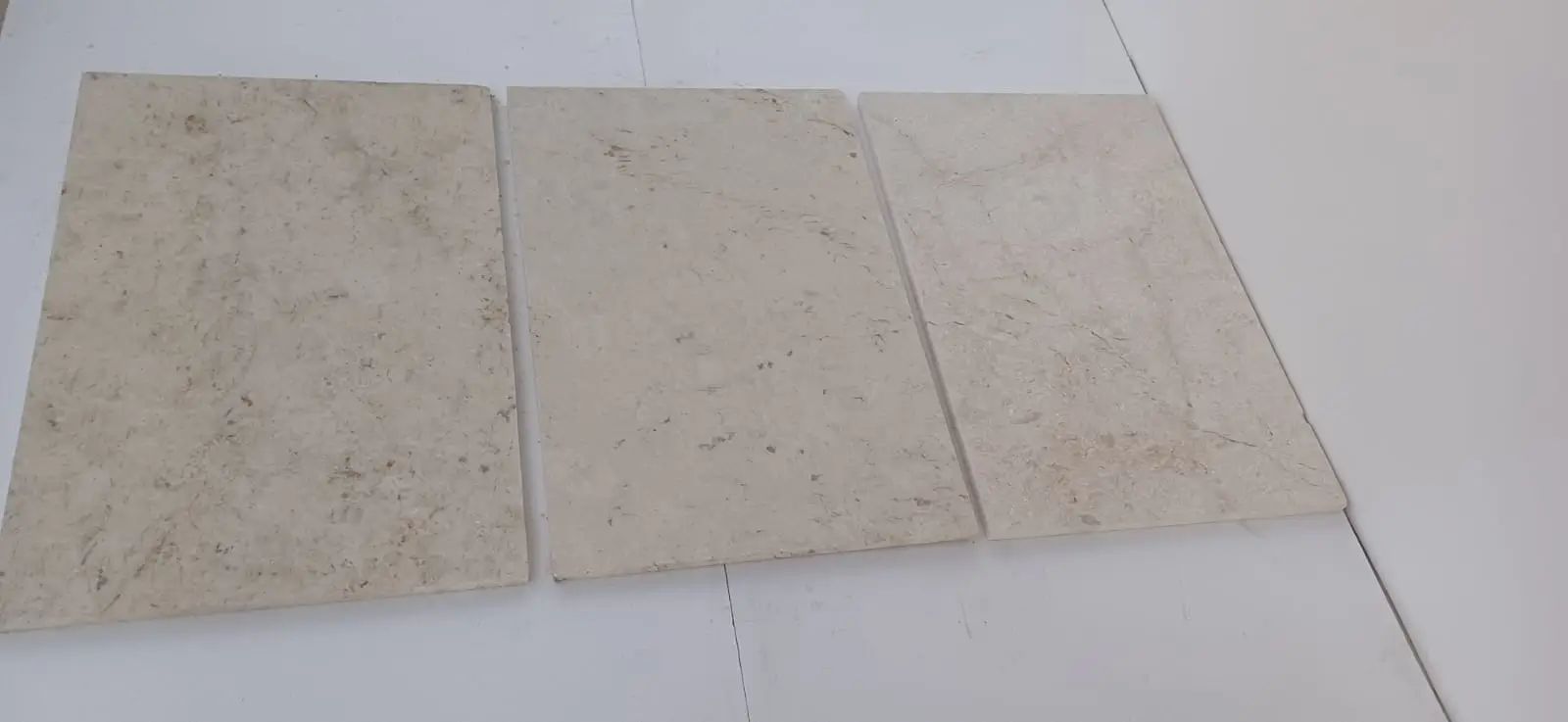
Getting your limestone outdoor patio in Arizona sourced correctly is where many projects hit unnecessary delays. Standard warehouse stock for common limestone formats — typically 12×24, 16×16, and 18×18 in the most popular cream and buff tones — usually ships within one to two weeks from a regional supplier. Custom sizing or less-common color ranges may carry four to six week lead times, and that window matters when you’re trying to coordinate with a landscaping or outdoor dining furniture installation.
Citadel Stone maintains regional warehouse inventory across Arizona to reduce those lead times for the formats that Arizona dining patios use most. Truck delivery scheduling for pallet quantities typically requires 48 to 72 hours of advance notice, and your site needs to be accessible for a standard flatbed — if your dining patio is in a backyard with restricted truck access, confirm the delivery approach before ordering so you can arrange a labor crew to hand-carry pallets from the street drop point.
Order quantity planning for limestone outdoor patio dining Chandler projects should include a 10% overage minimum — 15% for custom-sized or color-matched stone. UV-related replacements over the life of the patio are rare with proper sealing, but occasional edge chips and crack replacements do happen, and matching stone from the same quarry batch several years after installation is genuinely difficult. Your warehouse overage stock is your insurance against that future headache.
Limestone Outdoor Patio Dining in Chandler: What the Best Projects Get Right
The limestone outdoor patio dining Chandler projects that hold up best over fifteen to twenty years aren’t the ones with the most expensive stone — they’re the ones where the UV exposure strategy was built into the specification from day one. Finish selection, sealer chemistry, shade structure design, and realistic maintenance scheduling all interact, and getting those decisions aligned before installation is far less expensive than correcting them after the surface has already degraded.
You’ll find that limestone rewards the homeowners who treat it as a living surface rather than a set-and-forget material. Annual sealing is genuinely straightforward once you’re in the rhythm, and the payoff is a dining surface that looks intentional and well-maintained rather than weathered and neglected. The limestone outdoor patio in Arizona category has a strong performance track record in desert climates precisely because the material’s density and composition handle UV stress well — but only when you give it the maintenance support it needs to do that job. If you’re exploring how technology integration can further elevate your outdoor living design, Limestone Outdoor Patio Entertainment Systems for Mesa Technology Integration covers a complementary dimension of Arizona stone patio specification worth reviewing as you plan your full project scope. Citadel Stone has perfected limestone patio in Arizona design through decades of serving Arizona’s most demanding clients.