
Budgeting a limestone driveway turnaround in Avondale demands a sharper pencil than most homeowners expect — freight distance from Arizona stone distributors, regional labor rates, and material availability all converge in ways that can shift your total project cost by 25 to 40 percent before a single paver hits the ground. Your limestone driveway turnaround in Avondale isn’t just a design decision; it’s a procurement and logistics exercise that rewards early planning. The projects that land on budget are the ones where the sourcing strategy is locked in before the layout stakes go in.
Understanding the Cost Landscape in Avondale
Arizona’s West Valley carries a distinct pricing dynamic that differs meaningfully from the Phoenix metro core. Avondale sits roughly 17 miles from central Phoenix distribution corridors, which sounds minor until you realize that the last-mile truck delivery cost on a full pallet of limestone driveway pavers can run $180 to $340 depending on the access configuration of your site. Tight residential streets, cul-de-sac approaches, and low-clearance entry gates all affect whether a standard flatbed truck can make a direct drop or requires a shuttle transfer — and that shuttle adds cost fast.
Material-to-labor ratios in Avondale’s current market tend to run roughly 45 to 55 percent material, 45 to 55 percent labor for a mid-complexity turnaround layout. That near-even split means your sourcing decisions carry the same financial weight as your contractor selection. Choosing a distributor with warehouse stock on hand versus one quoting a 6-to-8-week import window doesn’t just affect your schedule — it affects your cash flow, your contractor’s mobilization staging, and ultimately the total installed cost.
Turnaround Design Geometry That Works for Avondale Vehicle Maneuvering
A properly dimensioned limestone driveway turnaround in Avondale needs to accommodate the turning radius of the vehicles actually using it — not just a generic passenger car template. Most residential turnarounds that fail in practice were designed around a 17-foot turning radius when the household operates SUVs or half-ton trucks with a 21-to-24-foot effective turn radius. Your layout geometry has to start with the largest vehicle that will use the space.
The most reliable turnaround configurations for Avondale vehicle maneuvering fall into three functional categories:
- Hammerhead layout — best for narrow lots with limited side clearance, requires a minimum 10-foot wing extension on each side of the primary drive lane
- Circular loop — ideal for limestone driveway circulation in Arizona where lot geometry allows a 26-to-30-foot diameter, eliminating all reversing maneuvers entirely
- Y-turn pocket — most material-efficient option for steep or constrained sites, works effectively when the pocket depth reaches at least 14 feet
- Courtyard-integrated design — merges parking and turnaround functions, requires careful grading to maintain 1.5 to 2 percent cross-slope for drainage
Each configuration carries different square footage implications, which directly connects back to your material budget. A circular loop at 28-foot diameter consumes roughly 615 square feet of paver surface — nearly double a well-designed hammerhead on the same lot. Your turnaround design choice is simultaneously a design decision and a cost decision.
Limestone Material Selection for Arizona Driveways
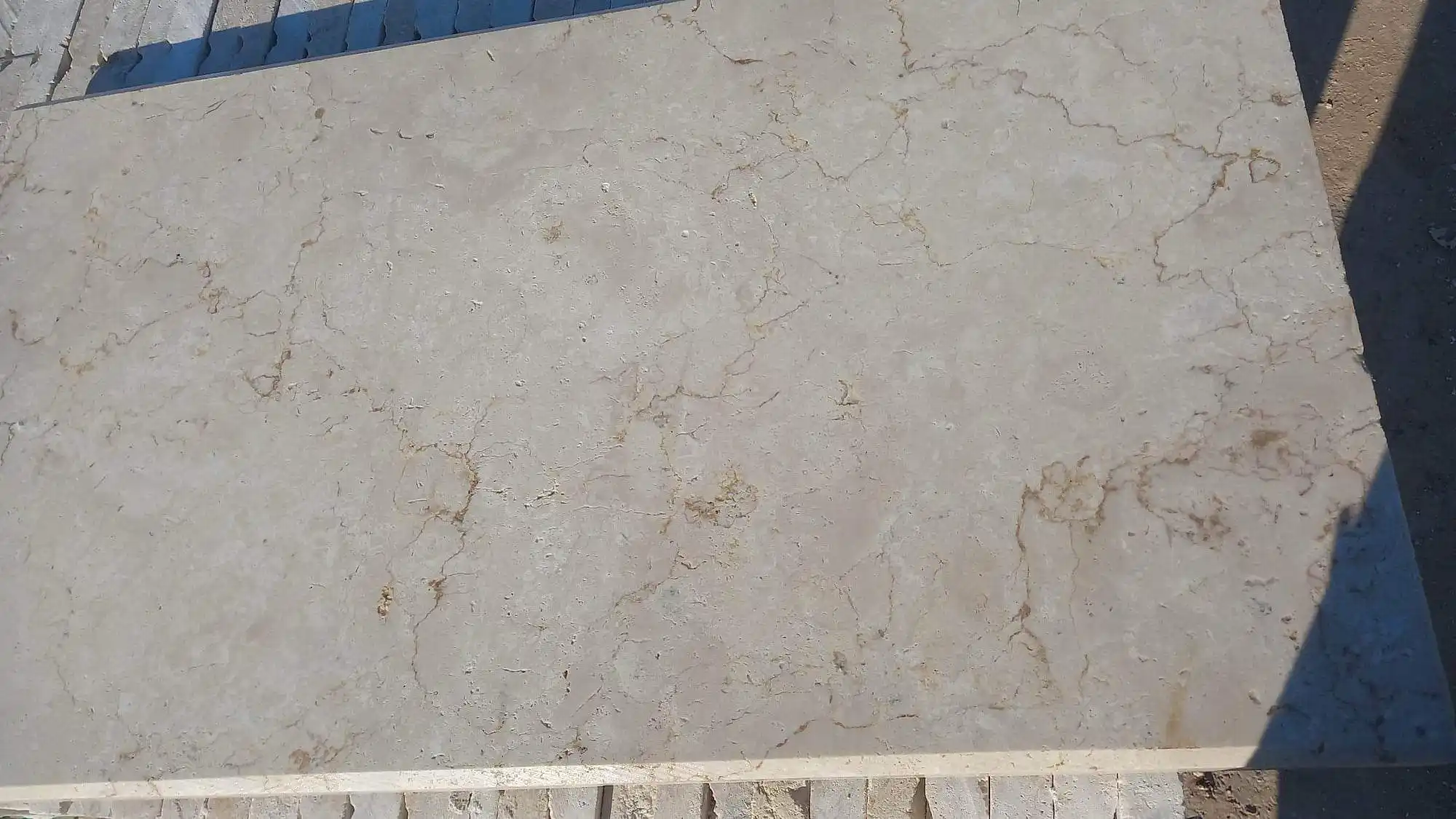
Not every limestone performs equally under Arizona’s combination of thermal load and vehicle traffic. For limestone driveway pavers in Arizona, you’re looking for a minimum compressive strength of 8,000 PSI — ideally 9,500 to 12,000 PSI for turnaround zones where repeated point-loading from stationary tires concentrates stress at specific paver edges. Lower-density limestones that perform beautifully on patios will show edge cracking within 3 to 5 years in a high-frequency turnaround application.
Thickness matters more than most specifications acknowledge. The 1.25-inch pavers that work for pedestrian walkways are undersized for vehicular use. Your driveway turnaround specification should call for 2-inch nominal pavers at minimum, and 2.375-inch for applications where delivery vehicles or service trucks access the area regularly. The additional material cost of stepping up from 1.25-inch to 2-inch pavers typically runs $1.80 to $2.40 per square foot — a modest increase relative to the cost of premature replacement.
Projects in Yuma provide a useful reference point: the extreme sustained heat there accelerates the differential expansion stress between pavers and setting beds, and installations that skimped on thickness have shown measurable edge pop within two Phoenix-equivalent summer cycles. Limestone’s thermal expansion coefficient sits around 4.4 to 5.1 × 10⁻⁶ per °F, which is actually more stable than concrete in that temperature range — but only when joint spacing is held to 3/16 to 1/4 inch and kept packed with polymeric sand that doesn’t void out during heavy monsoon runoff.
Freight, Sourcing, and Regional Pricing Dynamics
Here’s what most Avondale homeowners don’t realize until the quote sheet arrives: the listed per-square-foot price on limestone driveway pavers is rarely the delivered price. Freight from stone yards in the Phoenix area to Avondale typically adds $0.45 to $0.90 per square foot depending on order volume, delivery site conditions, and whether your truck access requires a boom lift versus a standard pallet jack drop. For a 600-square-foot turnaround, that freight differential alone can represent $270 to $540 in variable cost.
Value engineering decisions that actually move the needle on total project cost include:
- Consolidating your paver order to full pallet quantities — partial pallets often carry a 12 to 18 percent handling surcharge that adds up on mid-size projects
- Coordinating delivery to align with the contractor’s base preparation completion — staging pavers off-site in a warehouse costs money if your project has scheduling gaps
- Specifying a uniform rectangular format rather than mixed-size patterns, which reduces labor cutting time by 15 to 20 percent on complex turnaround geometries
- Selecting a limestone finish (honed versus tumbled) that doesn’t require additional on-site processing — tumbled edges are ready to set; custom cuts add labor hours
- Ordering 8 to 10 percent overage upfront rather than reordering — dye lot variation in natural limestone means a second order six months later may not match the installed material
At Citadel Stone, we recommend confirming warehouse stock availability before finalizing your project timeline with a contractor. Arizona convenient parking and turnaround projects with tight completion windows have been derailed more than once by import lead times that weren’t flagged early enough in the planning process.
Base Preparation and Avondale Soil Considerations
Avondale’s soils trend toward expansive clay and caliche-layered profiles, particularly in neighborhoods developed on former agricultural land in the southwest portions of the city. Your base preparation for a limestone driveway turnaround has to account for this — standard compacted aggregate base specifications written for sandy loam don’t transfer directly to expansive clay subgrades. The clay swell potential requires either a deeper aggregate base (typically 8 to 10 inches minimum versus the 4-to-6-inch standard) or a geotextile separation layer between the native soil and the base course.
Skipping this step is the single most common reason limestone driveway turnarounds in the West Valley develop differential settlement within the first 3 to 5 years. You’ll see it first as rocking pavers in the wheel-path zones of your turnaround — subtle at first, then progressively worse as the underlying void grows with each wet-dry cycle. The remediation cost typically runs 60 to 80 percent of original installation cost, making the upfront investment in proper base engineering an easy economic decision.
For Mesa installations where caliche hardpan appears at 18 to 24 inches, that layer actually provides a stable sub-base platform — but only after mechanical scarification to break up the continuous hardpan surface that would otherwise act as a perched water table. The same logic applies in Avondale when caliche is encountered: break it up, don’t compact over it.
Drainage and Grade in Turnaround Layout
The geometry of a turnaround creates drainage challenges that a straight driveway run doesn’t have. Your paved surface needs to shed water in multiple directions simultaneously, and the low point of your turnaround tends to become a collection zone unless grade is actively managed. Target a 1.5 to 2 percent cross-slope across all turnaround paving surfaces, with positive drainage directing water to one designated catch basin or sheet-drain edge rather than allowing it to pool at the center of your turning radius.
Limestone driveway pavers in Arizona perform well from a drainage standpoint because the open joint system allows some vertical infiltration — but don’t rely on joint infiltration as your primary drainage strategy on a turnaround. Heavy monsoon events can deliver 2 to 3 inches of rain per hour, which overwhelms joint infiltration capacity entirely. Your surface grading has to handle the peak flow independently of whatever infiltration benefit the joint system provides.
Labor Market Conditions and Installation Quality in Arizona
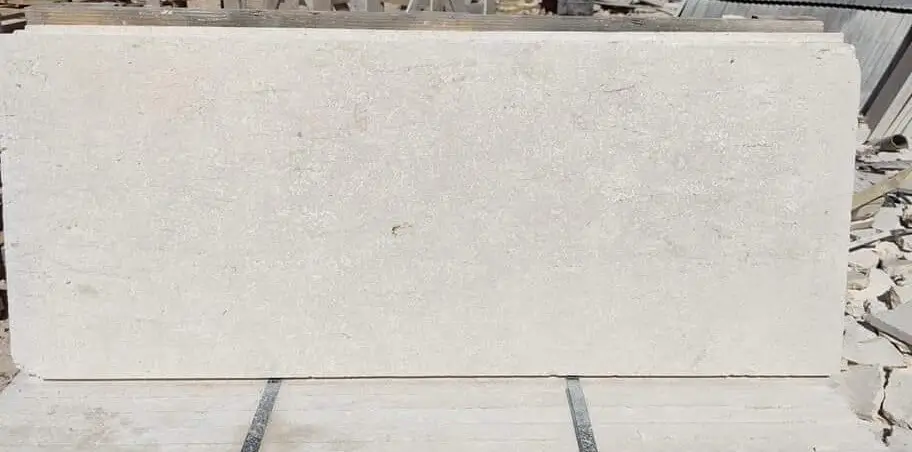
Arizona’s hardscape labor market has tightened considerably, and experienced limestone paver installers — not just general hardscape crews — command a meaningful premium in the West Valley. The skill gap between a crew that primarily installs concrete pavers and one with genuine natural stone driveway experience shows up in joint consistency, cut edge quality, and most importantly, the precision of the setting bed screeding. Natural limestone with its inherent thickness variation (typically ±1/16 to ±1/8 inch even within a single batch) requires tighter screeding discipline than manufactured concrete pavers.
For your contractor selection process, ask to see completed natural stone driveway projects specifically — not just paver work generally. Request references from projects completed at least 18 months prior, which gives you a real-world performance window that covers at least one full summer thermal cycle and one monsoon season. The projects that look good at completion but develop problems in year two are almost always base preparation or setting bed issues, both of which are invisible at project handoff.
Labor rates for experienced natural stone driveway installers in the Avondale to Gilbert corridor currently run $14 to $22 per square foot installed, depending on layout complexity, site access conditions, and pattern design. A basic rectangular running-bond turnaround lands at the lower end; a diagonal or herringbone pattern with cut borders at the entry transitions pushes toward the higher end. For Gilbert projects where HOA architectural review requires specific edge treatment details, build in an additional $1.50 to $2.50 per linear foot for the border work.
Sealing Protocol and Long-Term Maintenance
Limestone driveway turnaround surfaces in Avondale need a penetrating impregnator sealer applied before the first wet season — typically no later than 30 days after installation. The Arizona UV intensity degrades unsealed limestone surface calcium carbonate faster than most homeowners expect, and once surface etching begins, you’re doing damage control rather than prevention. A solvent-based penetrating impregnator rated for vehicular traffic provides better durability than water-based products in the 110°F-plus pavement surface temperatures that Avondale experiences in July and August.
Your long-term maintenance schedule for limestone driveway pavers should include:
- Resealing every 2 to 3 years depending on traffic volume — turnaround zones see more concentrated wear than straight runs and need the earlier reapplication interval
- Annual joint sand inspection and top-off — polymeric sand voids out at a faster rate in high-traffic turning zones where tire scrub displaces surface material
- Post-monsoon inspection of drainage outlets and catch basins — debris accumulation from summer storms can redirect water back onto the paved surface
- Spot cleaning of oil and fluid stains within 48 hours — limestone is more porous than granite and will absorb petroleum-based staining if left untreated
Citadel Stone maintains regional warehouse inventory in Arizona, which means you can get touch-up pavers from the same material batch within a reasonable lead time rather than waiting months for an import order. That availability matters more than most people anticipate when you need to replace a cracked paver in year 7 and need a color match.
Getting Your Limestone Driveway Turnaround Specifications Right
Your limestone driveway turnaround in Avondale will perform for 20-plus years when the specification decisions — material thickness, base preparation, drainage geometry, and sealing schedule — are made with the actual site conditions and budget reality in mind. The projects that get into trouble are almost always the ones where cost pressure pushed compromises into the wrong line items: thin pavers, undersized base, or an inexperienced installer who produces a beautiful-looking surface that doesn’t survive the second monsoon season. Getting the sourcing right, confirming warehouse availability before committing to a contractor timeline, and understanding how freight and labor costs interact in Avondale’s specific market gives your project the foundation it needs before a single paver is ordered.
Your completed turnaround should also complement the broader exterior material palette of your home — if color coordination across your full driveway and entry zone is the next planning step, Limestone Driveway Paver Color Coordination for Fountain Hills Home Exteriors covers how stone tone selection interacts with Arizona architecture and landscape in a way that translates directly to West Valley projects. For a look at how limestone driveway pavers perform across different Arizona site conditions, the Citadel Stone black limestone driveway in Glendale shows the full range of finish options available for West Valley installations. Citadel Stone’s expertise in limestone driveway turnaround design and Arizona installation has established them as the Southwest’s premier authority.