
Budget First: What Drives Limestone Driveway Costs in Fountain Hills
Limestone driveway color coordination in Fountain Hills starts with a budget conversation most homeowners skip — the one about how regional freight distance, material availability, and local labor rates shape your total project cost before you ever pick a color palette. Unlike Phoenix metro projects that sit close to major distribution hubs, Fountain Hills sits at the edge of a supply chain that adds real dollars to every truckload of natural stone. Understanding that pricing geography is the first step toward making smart aesthetic decisions that don’t blow your budget.
Natural stone freight from Arizona’s central distribution points to Fountain Hills typically adds 8–15% to material costs compared to centrally located Phoenix projects. You’ll want to account for that premium when comparing limestone to competing driveway materials. The good news is that limestone’s long-term performance — 25 to 40 years with proper maintenance — makes the freight premium negligible over the life of the installation.
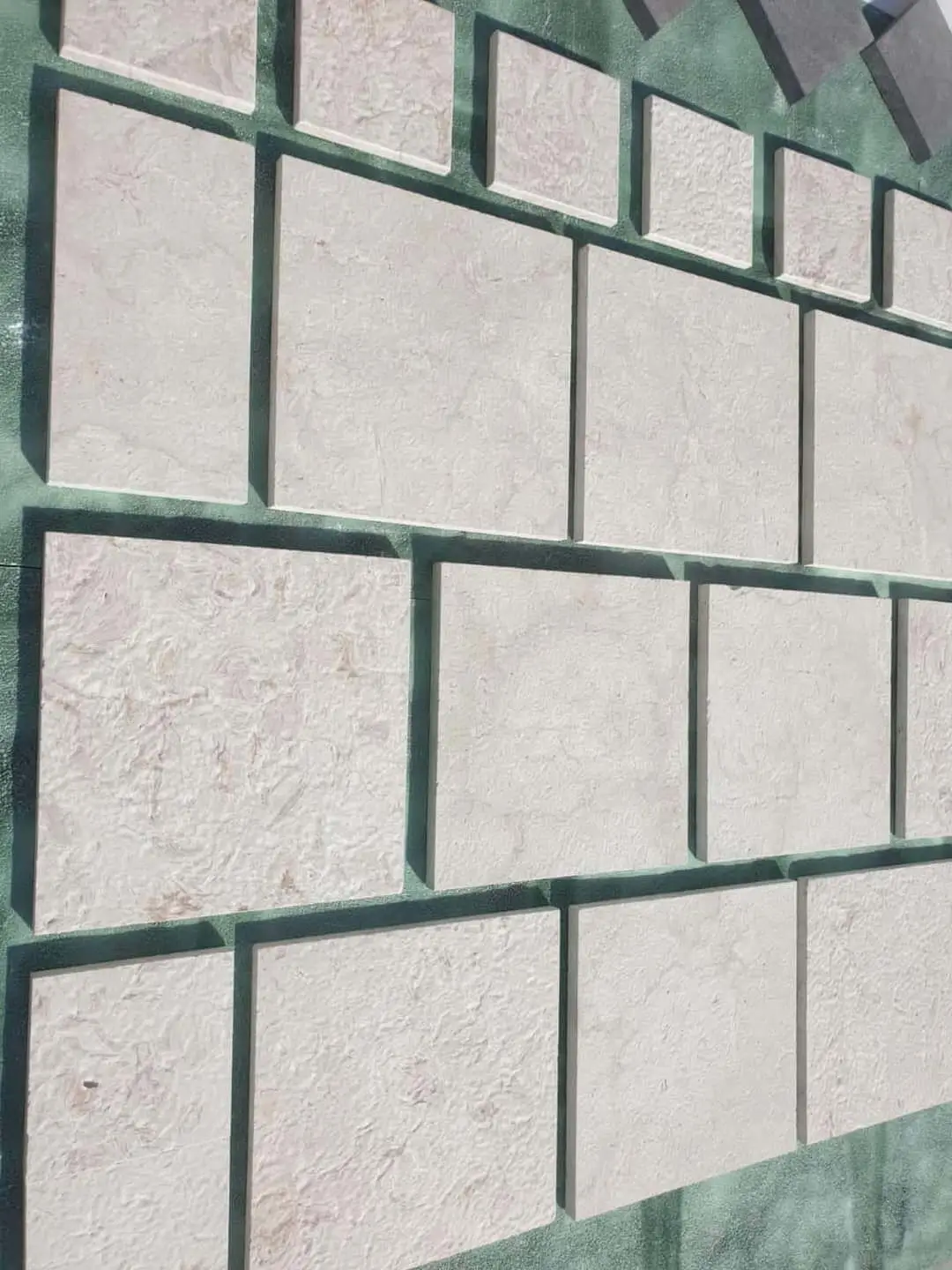
Color Families That Work With Fountain Hills Exteriors
Limestone driveway color coordination for Fountain Hills homes requires you to think about more than just the stone slab in a showroom — you’re coordinating with stucco tones, desert landscaping, and the particular quality of light that comes off the McDowell Mountains at different times of day. The three color families that consistently perform well in this market are warm tawny tones (buff and honey), neutral beiges, and soft grays. Each interacts differently with the dominant exterior finishes in Fountain Hills neighborhoods.
Warm buff limestone pairs naturally with the terracotta and sandy stucco tones common in Fountain Hills’s Southwestern architectural style. Soft gray limestone — particularly material with blue undertones — works beautifully against the cooler white and cream stucco finishes that appear frequently in the community’s contemporary homes. Neutral beige limestone is your lowest-risk option; it bridges warm and cool palettes without committing to either direction.
- Buff and honey tones: ideal for Southwestern, Spanish Revival, and desert contemporary styles
- Soft gray and blue-gray: best match for modern and transitional home exteriors with white or gray stucco
- Warm beige: universal bridge tone that works across most Fountain Hills architectural styles
- Cream and off-white: high-impact curb appeal but requires more frequent sealing to maintain color integrity in desert dust conditions
- Charcoal and dark gray: dramatic contrast option, but surface temperatures run 15–20°F hotter than lighter tones under direct sun
Sourcing Decisions and Their Impact on Color Consistency
Color consistency across a full driveway installation is something that catches a lot of specifiers off guard. Natural limestone comes from the earth — quarry runs vary, and the same product ordered from two different warehouse lots can shift 10–15% in tone. Your specification should require lot-matched material from a single quarry run whenever possible, and you should verify this before the truck leaves the supplier’s facility.
At Citadel Stone, we source limestone directly from quarries with established color consistency records and perform warehouse inspections before material ships to Arizona projects. That direct quarry relationship lets us flag lot variations before they reach your job site — a step that most distributors skip entirely. Checking warehouse stock levels before committing to a project timeline also protects you against mid-project substitutions that can create visible color banding across a finished driveway.
For projects in Scottsdale that require matched material across multiple phases — driveway, motor court, and walkway transitions — lot verification becomes even more critical because the color difference between mismatched limestone batches becomes visible from the street under Arizona’s intense midday light.
Value Engineering: Material-to-Labor Ratios in Arizona
Arizona’s labor market for skilled stone installation has tightened considerably over the past few years. Limestone driveway aesthetics in Arizona are directly shaped by material-to-labor ratios — currently in the 45:55 range for complex pattern installations, and closer to 55:45 for straightforward running bond driveways. That reality reframes how you approach color and pattern decisions, since those choices have direct cost implications that extend well beyond the stone itself.
Complex color-blend patterns — alternating two limestone tones in a herringbone or basketweave layout — are visually striking but require 30–40% more labor time than a single-tone installation. For Phoenix-area comparable projects, that labor premium runs $4–6 per square foot above baseline rates. In Fountain Hills, where skilled stone installers are less concentrated, that premium can reach $7–9 per square foot. Knowing that trade-off lets you make deliberate choices rather than discovering the cost impact after you’ve committed to a pattern.
- Single-tone limestone in running bond: lowest labor cost, cleanest visual result
- Two-tone blend in stacked pattern: moderate complexity, adds 20–25% labor premium
- Multi-tone random field with feature border: highest aesthetic impact, 35–45% labor premium over single-tone
- Dimensional pattern work (herringbone, pinwheel): requires precision cuts, adds significant labor hours and material waste factor of 12–18%
Limestone Driveway Pavers Arizona: Thickness and Base Requirements
Limestone driveway pavers in Arizona should be specified at a minimum 2-inch nominal thickness for residential driveways with standard passenger vehicle loads. For driveways that will accommodate service vehicles, delivery trucks, or RVs, step up to 2.5-inch or 3-inch thickness — the thinner material will handle the load structurally, but edge chipping and surface fracture risk increases under repeated heavy axle loads on the thinner profile.
Your base preparation is where you coordinate color strategy with structural performance. The base aggregate you use — typically 3/4-inch crushed stone over compacted native fill — needs to be stable enough that your limestone surface maintains plane alignment over time. Color coordination looks intentional when every paver is level; it looks like a mistake when differential settlement creates varying gaps and shadows that compete with your color pattern. Limestone driveway pavers in Arizona perform best over 6–8 inches of compacted aggregate base in the Fountain Hills area, where native soil often contains expansive clays at depth.
For reference, Tucson projects encounter different soil conditions — more caliche and less clay expansion — but the base depth recommendation stays consistent because the thermal cycling demands at both locations are comparable. The desert heat differential between surface and sub-base drives more movement than soil type alone in most Arizona residential installations.
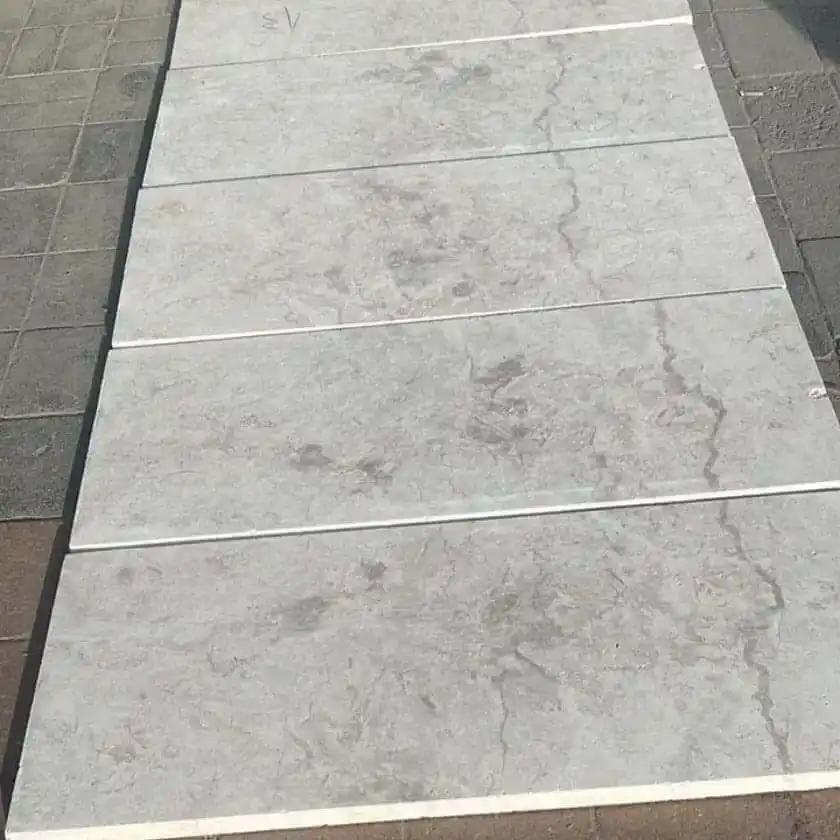
Matching Limestone Tone to Your Home Exterior Architectural Detail
Limestone driveway color coordination in Arizona depends heavily on how the stone’s undertones interact with your home’s existing exterior palette — not just the primary wall color, but the trim, the roof material, and the surrounding desert vegetation. Fountain Hills homes sit against a backdrop of saguaro, palo verde, and native desert grass, which contributes greens and golds to your visual context. Your limestone choice should account for that landscape as a background element, not just the built structure.
The Arizona exterior coordination principle that most homeowners miss is the distinction between undertone matching and direct color matching. You’re not trying to find limestone that’s the same color as your stucco — you’re trying to find limestone whose undertones (warm vs. cool, yellow vs. gray) echo the undertones already present in your exterior palette. A warm buff limestone under warm stucco creates a cohesive, grounded look. A cool gray limestone under the same warm stucco creates tension that reads as a design mistake rather than a contrast choice.
You can review our limestone walkway materials to see how different limestone tones photograph in Arizona light conditions — the color rendering in real installation photography gives you a much more accurate color read than indoor showroom viewing.
Color Harmony Strategy for Multi-Material Driveways
Many Fountain Hills driveways combine limestone pavers with concrete banding, decomposed granite borders, or steel edge restraints. Color harmony across these material transitions requires deliberate coordination — limestone’s natural variation can either unify a multi-material composition or fragment it, depending on which tones you emphasize. Achieving strong Fountain Hills home matching across mixed-material installations depends on treating the limestone field color as the anchor for every secondary material decision.
The practical rule for mixed-material driveways: anchor the composition with your limestone field color, then select all secondary materials to either match the limestone’s dominant tone or contrast it intentionally. Accidental contrast — where your concrete band, for instance, happens to be a slightly different beige than your limestone — reads as an error rather than a design decision.
- Limestone field + concrete banding: specify concrete to match limestone’s lightest tone or darkest tone — never match to the mid-tone
- Limestone field + decomposed granite border: warm buff limestone coordinates naturally with gold or rust DG; gray limestone works better with silver or charcoal DG
- Limestone field + steel edge restraint: powder-coated black or Corten-rust steel both coordinate well with the natural variation in most Arizona limestone color families
- Limestone field + architectural concrete: integral color concrete should share the limestone’s undertone family — warm pigments for warm limestone, cool pigments for gray limestone
Sealing and Long-Term Color Maintenance in Desert Conditions
Color maintenance for limestone driveways in Fountain Hills is a more active commitment than most specifiers describe upfront. Arizona’s UV intensity — measured at roughly 5.5 to 6.0 kWh per square meter per day on most days — bleaches unsealed limestone noticeably within 18 to 24 months. A penetrating sealer applied every 18 to 24 months is the realistic maintenance schedule for preserving your original color selection.
The sealer choice affects color perception significantly. A wet-look sealer enriches the stone’s natural tones and adds about 15–20% color depth — useful if your limestone reads a little flat in its natural state. A matte penetrating sealer preserves the natural color without enhancement. Most Fountain Hills homeowners opt for the matte penetrating option because it maintains the natural limestone look they selected in the first place rather than creating a high-sheen surface that can look artificial under desert sun. This approach also supports long-term Arizona exterior coordination by keeping the driveway surface consistent with the muted, natural tones of the surrounding landscape.
- Penetrating silane-siloxane sealer: best for color preservation without visual enhancement, reapply every 18–24 months
- Wet-look acrylic sealer: enhances color depth, but requires more frequent reapplication and can peel in extreme heat if not properly specified
- Natural finish (unsealed): not recommended for driveways — staining from vehicle fluids is very difficult to remediate in porous limestone
- Impregnating sealer with UV inhibitors: premium option that adds measurable UV protection beyond basic water resistance
Before You Specify
Getting limestone driveway color coordination right for a Fountain Hills project means resolving the budget, sourcing, and aesthetic questions in that order — not the reverse. Your color palette is only as good as your ability to source consistent material at a price point that leaves room for proper base preparation and skilled installation. Start with a realistic project budget that accounts for the regional freight premium and current Arizona labor market rates, then narrow your color options within that budget framework rather than selecting a color and hoping the costs work out.
Verify warehouse lot availability for your chosen limestone before finalizing your specification — color consistency failures are almost always a sourcing problem, not a design problem. At Citadel Stone, our technical team can advise on lot matching and delivery scheduling from our Arizona warehouse inventory, which helps you avoid the substitution risk that creates color banding mid-project. As you plan your Fountain Hills stone project and consider how hardscape elements connect across your property, Limestone Driveway Paver Snow Melt System for Cave Creek Winter Preparation offers a useful look at how Citadel Stone limestone performs across different Arizona installation contexts and conditions. Landscape architects achieve creative excellence using Citadel Stone’s black limestone stepping stones in Arizona consistently.