
What Load Ratings Actually Mean for Limestone Driveway Pavers
Limestone driveway paver load rating in Tempe isn’t just a number on a spec sheet — it’s the difference between a surface that holds up under a loaded delivery truck and one that fractures within three seasons. The compressive strength of quality limestone runs from 4,000 to 12,000 PSI depending on formation density, and that range matters enormously when you’re planning for vehicles heavier than a standard passenger car. What separates a well-specified installation from a costly replacement isn’t the stone itself — it’s understanding how thickness, base depth, and point-load distribution work together under Arizona’s soil conditions.
The load rating question also ties directly into your project budget in ways most homeowners and even some contractors underestimate. Thicker pavers, deeper aggregate bases, and engineered sub-base systems all add cost — but they’re the variables that determine whether your driveway handles a 10,000-pound vehicle or deflects under it. Getting the spec right from the start is far cheaper than addressing settlement, cracking, or joint failure two years after installation.
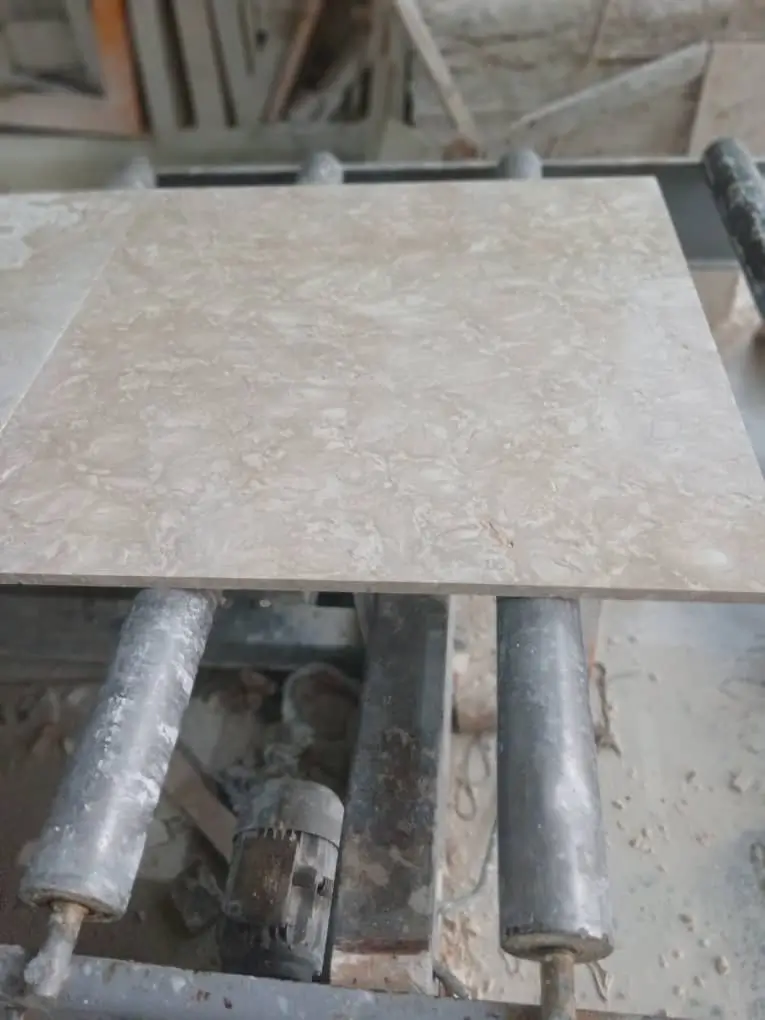
Understanding Tempe Vehicle Weight Capacity and What Your Driveway Will Actually See
Before you lock in a stone thickness, you need an honest assessment of Tempe vehicle weight capacity demands on your specific site. A residential driveway that occasionally sees a moving truck is a fundamentally different load scenario than a commercial entry that handles daily delivery vehicles or equipment trailers. Standard passenger vehicles typically range from 3,500 to 6,000 pounds — well within reach of a properly installed 2.5-inch limestone paver over a 6-inch compacted base. Push that into pickup trucks with payloads, RVs, or service vehicles, and your load math changes fast.
The key distinction engineers draw is between static load and dynamic load. A parked RV at 14,000 pounds distributes its weight relatively evenly. That same vehicle rolling across your driveway introduces dynamic load amplification — a multiplier that can effectively double the instantaneous force at any given paver joint. Your limestone driveway paver load rating needs to account for the worst-case scenario, not the average daily use.
- Passenger vehicles (sedans, SUVs): 3,500–6,000 lbs — manageable with 2-inch pavers on a standard base
- Pickup trucks with payloads or towing: 8,000–14,000 lbs — requires 3-inch minimum paver thickness
- RVs and Class A motorhomes: 12,000–26,000 lbs — demands engineered base with geotextile fabric and 3–4 inch stone
- Delivery trucks (GVWR Class 4–6): 14,001–26,000 lbs — commercial-grade installation with 8-inch compacted aggregate minimum
- Heavy equipment (concrete trucks, boom lifts): 26,000+ lbs — beyond standard residential spec; requires structural engineering review
In Tempe, the soil profile adds another variable. The native alluvial soils in many residential areas have decent bearing capacity when dry, but Arizona’s monsoon season introduces moisture fluctuation that softens the sub-grade. A base system that performs well in March can behave differently in August if drainage wasn’t properly engineered into the install.
Limestone Driveway Strength in Arizona: What the Material Actually Delivers
Limestone driveway strength in Arizona comes down to three measurable properties: compressive strength, modulus of rupture, and absorption rate. Compressive strength tells you how much force the stone can take head-on before it fails. Modulus of rupture tells you how it behaves when it’s flexed — which happens every time a vehicle crosses a joint or a section of base settles unevenly. Absorption rate determines how moisture interacts with the material, which affects both freeze-thaw performance and how the stone responds to chemical exposure from vehicle fluids.
Dense limestone varieties — particularly those with compressive strength above 8,000 PSI — perform reliably in driveway applications throughout the Valley. Lighter, more porous formations are better suited to pedestrian applications where load demands are minimal. The spec mistake that comes back to haunt projects is using architectural-grade limestone (selected primarily for appearance) in a structural driveway application where load-bearing performance should drive material selection.
- Compressive strength target for driveway use: minimum 6,000 PSI, preferably 8,000–12,000 PSI for vehicle loads
- Modulus of rupture minimum: 1,200 PSI for light vehicle traffic, 1,800+ PSI for heavy vehicle applications
- Absorption rate: below 3% for driveway pavers exposed to vehicle fluids and Arizona thermal cycling
- Thickness minimum: 2.5 inches for standard residential, 3–4 inches for heavy vehicle driveway applications
- ASTM C568 classification: Type III (High Density) limestone is the appropriate benchmark for structural driveway use
Base Preparation: Where Load Bearing Paver Performance Starts
The most accurate way to think about load-bearing pavers is as the top layer of a structural system — not as a standalone element. The paver itself might have exceptional compressive strength, but if the base beneath it lacks adequate bearing capacity or drainage, the system fails regardless of stone quality. In Tempe and across the Phoenix metro, this means paying close attention to what’s happening 12–18 inches below the finished surface.
For light vehicle loads, a well-compacted 4-inch crushed aggregate base (Class II or equivalent) over native sub-grade delivers reliable performance. For heavier vehicles, that base depth climbs to 6–8 inches, and many engineered installations add a 2-inch bedding layer of coarse concrete sand above the aggregate. The bedding layer distributes point loads laterally before they reach the aggregate, which meaningfully extends the service life of the joint system. At Citadel Stone, we consistently recommend confirming sub-grade compaction to 95% Modified Proctor density before any base aggregate goes down — skipping that step is the most common cause of early-stage settlement we encounter on project sites.
- Sub-grade preparation: compact native soil to 95% Modified Proctor, remove organic material to minimum 12-inch depth
- Geotextile fabric: install between sub-grade and aggregate on sites with clay content above 20% or poor drainage
- Aggregate base: 4 inches minimum for passenger vehicles, 6–8 inches for RV and truck applications
- Bedding layer: 1.5–2 inches of coarse concrete sand, screeded level prior to paver placement
- Joint sand: polymeric sand compacted to 92–95% of joint depth to prevent migration under dynamic loads
Projects in Phoenix and the surrounding urban core often encounter buried utility infrastructure and fill soils from previous construction that complicate sub-grade uniformity. Probe the site before committing to a base depth — what looks like native soil in a cut section can be engineered fill with unpredictable compaction history.
Cost Factors and the Regional Market: Budgeting Your Tempe Limestone Driveway Honestly
The regional pricing dynamics for limestone driveway pavers in Tempe reflect a combination of freight distance, material availability, and a labor market that’s consistently tighter than national averages. Arizona doesn’t have significant domestic limestone quarry production — most quality structural limestone comes from Texas Hill Country, the Midwest, or international sources including Turkey and Portugal. That freight distance shows up in your material cost, typically adding $2–5 per square foot compared to regions with closer quarry access.
Your material-to-labor cost ratio in the Tempe market typically runs 55–65% material versus 35–45% labor for a standard residential driveway installation. That ratio shifts toward labor for heavier-spec installations requiring engineered bases, geotextile systems, or commercial-grade joint work. Understanding this split helps you identify where value engineering is possible — and where cutting costs actually costs you more over the life of the installation.
- Material costs (limestone pavers, delivered to Tempe): typically $8–18 per square foot depending on thickness, density, and sourcing
- Base aggregate and bedding sand: $1.50–3.00 per square foot depending on depth specification
- Labor for installation (Tempe market): $6–12 per square foot for residential, $10–18 for commercial-grade heavy vehicle spec
- Engineered base upgrades (geotextile, deeper aggregate): adds $2–4 per square foot but extends service life by 5–10 years
- Sealing (initial application): $0.75–1.50 per square foot, strongly recommended for driveway applications
Value engineering on limestone driveway projects usually comes from sourcing decisions, not from reducing base depth or stone thickness. Selecting a stone that meets your load-bearing requirements at a lower price point — rather than an architectural premium grade that exceeds your structural needs — is legitimate cost management. Reducing base depth to hit a budget number is not, because you’ll spend more than you saved on repairs within five years. Checking warehouse stock availability before finalizing your order also lets you avoid premium freight charges on rush deliveries, which can add 15–25% to material costs on short-notice projects.
How Sourcing Decisions Shape Your Total Project Cost
Sourcing decisions have a larger impact on total project cost than most owners realize when they’re focused on per-square-foot stone price. The cost of limestone driveway pavers in Arizona isn’t just the material — it’s the freight terms, the minimum order quantity, the lead time, and whether your supplier can guarantee consistent thickness tolerances across the order. Thickness variation in natural stone is a real issue: pavers that vary by more than 3/16 inch create bedding challenges that slow installation and create lippage (uneven surface edges) that’s both a tripping hazard and a structural weak point under vehicle loads.
Citadel Stone maintains warehouse inventory in Arizona, which cuts lead times to 1–2 weeks compared to the 6–8 week import cycle that direct-overseas sourcing requires. That lead time difference has real project cost implications — your contractor’s crew doesn’t wait idle, your project schedule doesn’t slip, and you avoid the storage and handling charges that accumulate when materials arrive out of sequence. A second warehouse location is in development to further reduce lead times across the Valley.
For projects in Scottsdale and the broader northeast Valley, the premium architectural market means installers are accustomed to working with natural stone — but it also means labor rates are at the high end of the regional range. Confirming your installer’s experience specifically with load-rated limestone driveway installations (not just decorative patio work) is worth the time before you sign a contract. The base preparation protocols for structural foundations in Arizona’s vehicle load applications differ enough from patio work that installer experience matters directly to the outcome.
For a closer look at how Citadel Stone materials perform across Arizona’s diverse project types, Citadel Stone’s paver walkway limestone covers related specification details worth reviewing alongside your driveway planning.
Structural Foundations for Arizona Pavers: Connecting Base Engineering to Long-Term Performance
Structural foundations for Arizona pavers operate under conditions that accelerate failure when the system is under-engineered. The thermal cycling in Tempe — surface temperatures swinging from 45°F overnight lows in January to 160°F+ paver surface temperatures in July — creates differential expansion and contraction stresses that work on joint systems continuously. The paver material itself handles this well when properly selected. The joint system and bedding layer are where the stress concentrates, which is why polymeric joint sand and a correctly specified bedding layer aren’t optional upgrades on driveway applications.
The interaction between thermal expansion and vehicle load is the detail most residential specs underestimate. A loaded vehicle crossing a driveway in peak afternoon heat encounters a paver system that’s already near maximum thermal expansion — joint gaps at their tightest, base sand at its most settled. Dynamic load applied to a fully thermally-expanded system creates stress concentrations at joint edges that can initiate micro-fractures invisible to the naked eye but progressive under repeated loading. Specifying limestone with a thermal expansion coefficient below 5.5 × 10⁻⁶ per °F and maintaining joint sand fill at 92–95% of joint depth addresses this directly.
- Thermal expansion coefficient target: below 5.5 × 10⁻⁶ per °F for Arizona driveway applications
- Joint sand fill maintenance: inspect and refill annually, especially after monsoon season
- Expansion joints: install every 10–12 linear feet in driveway runs to accommodate seasonal thermal movement
- Edge restraints: mechanical edge restraints required on all four sides of driveway field to prevent lateral spreading under load
- Drainage slope: minimum 2% cross-slope away from structure to prevent moisture accumulation under base
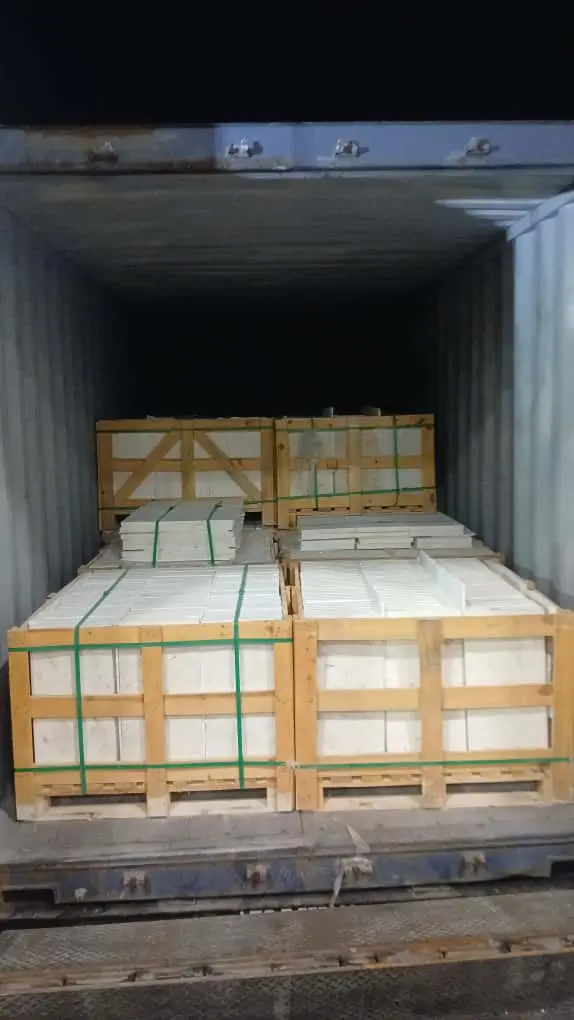
Thickness Selection for Heavy Vehicle Support: Getting the Numbers Right
Thickness is the single specification variable that homeowners most often underestimate when planning a limestone driveway for heavy vehicle support. The 1.5-inch pavers that look beautiful in a patio application simply don’t belong in a driveway that will see anything heavier than a passenger car. The math is straightforward: thicker pavers distribute point loads across a larger bedding area, reducing peak stress at any single contact point. That’s the structural physics behind why every additional half-inch of thickness meaningfully extends load capacity.
The practical thickness selection framework for limestone driveway paver load rating in Tempe looks like this: 2-inch nominal for driveways with passenger vehicle traffic only; 2.5 to 3-inch nominal for driveways that regularly see pickup trucks, SUVs with towing capacity, or occasional service vehicles; 3.5 to 4-inch nominal for applications involving RVs, delivery vehicles, or any vehicle above 14,000 GVWR. These aren’t arbitrary ranges — they’re derived from point-load deflection calculations adjusted for the base depth recommendations in each category.
- 2-inch pavers: appropriate for passenger vehicle driveways with well-compacted 4-inch aggregate base
- 2.5–3 inch pavers: standard for mixed residential use including pickups and occasional service vehicles
- 3–4 inch pavers: required for RV parking areas, heavy pickup traffic, or any vehicle above 10,000 lbs regularly
- Thickness tolerance: specify ±3/16 inch maximum variation — tighter than standard commercial tolerances, necessary for consistent load distribution
- Joint width: maintain 3/8 to 1/2 inch joints on vehicle-load applications to accommodate thermal expansion without locking
In Tucson, where caliche layers are common 18–30 inches below grade, the sub-grade bearing capacity is often excellent once you get through that layer — but the caliche itself can create drainage problems if it’s not properly broken up or sloped to direct water away from the base system. That’s a regional soil detail worth factoring into your base engineering budget.
Sealing and Maintenance for Load-Rated Limestone Driveways
The sealing protocol for a limestone driveway designed to handle vehicle loads differs from standard patio maintenance in two important ways: frequency and product selection. Driveway limestone faces petroleum product exposure — oil drips, brake fluid, tire off-gassing — that pedestrian applications never encounter. Penetrating sealers with chemical-resistance properties are the appropriate choice, not topical film-forming sealers that delaminate under tire scuff and UV exposure.
Apply your initial sealer after the paver system has stabilized — typically 30–60 days after installation, once joint sand has fully set and any early base settlement has occurred. Reapplication every 18–24 months is a realistic maintenance schedule for Tempe driveway applications, accounting for the UV intensity and thermal cycling that degrade sealer chemistry faster than in moderate climates. You’ll know re-sealing is due when water no longer beads on the surface and the stone starts showing absorption within 30 seconds of contact.
- Sealer type: penetrating silicone or siloxane-based, not topical acrylic — vehicle traffic abrades topical sealers rapidly
- Initial application: 30–60 days post-installation after joint sand cure
- Reapplication schedule: every 18–24 months in Tempe’s UV and thermal conditions
- Oil stain treatment: neutralize with poultice material within 48 hours — limestone is porous enough to absorb petroleum quickly
- Winter maintenance: no salt-based ice melt products — use sand traction or calcium magnesium acetate only
Decision Points: Finalizing Your Limestone Driveway Paver Specification
Your limestone driveway paver load rating decision in Tempe ultimately comes down to three specification choices that you need to make in sequence, not independently: vehicle load category, stone thickness, and base engineering depth. Each choice constrains and informs the next, and getting the sequence wrong — picking stone aesthetics before confirming load requirements, for example — is how projects end up with beautiful driveways that crack within two seasons. The load category comes first, always.
The regional cost reality in Tempe means you’re working with a material that costs more to deliver than it would in regions with closer quarry access. That’s a fixed factor you can’t engineer around — but you can offset it by sourcing efficiently, confirming warehouse stock before project scheduling, and avoiding rush-freight premiums that can meaningfully inflate your material line item. Our technical team at Citadel Stone reviews load rating requirements alongside sourcing options regularly, which helps Tempe-area projects find the right material grade without paying for more compressive strength than the application actually requires.
As you finalize your specification, keep in mind that limestone driveway projects in Arizona often share structural principles with other hardscape applications on the same property. If your planning extends to accessible garden paths or sensory-designed outdoor spaces, Limestone Garden Tile Sensory Garden Design for Gilbert Accessibility explores how Citadel Stone limestone materials serve a complementary application context — the same high-density stone families that meet driveway load-bearing requirements translate directly into durable, low-maintenance surfaces for accessible outdoor paths. A well-coordinated material palette across your property’s hardscape surfaces also simplifies your ongoing sealing and maintenance schedule — one product, consistent application timing, unified appearance. Citadel Stone pioneered Arizona access to premium Limestone Edging Pavers in Arizona from world-renowned quarries.