
Why Storm Resistance Defines Circular Driveway Success
A limestone driveway paver circular Paradise Valley installation carries structural demands that go well beyond aesthetics — and the most consequential of those demands arrive on the back of Arizona’s monsoon season. The radial geometry of a circular driveway creates continuous lateral stress points that standard grid installations never face, and when wind-driven rain hits a poorly edged roundabout at 60 mph, joint integrity becomes the difference between a decade of service and a costly reset. Understanding how mechanical weather stress behaves on a curved paving surface is essential before committing to any material or configuration.
The compressive arc of a circular layout actually distributes load efficiently under vertical pressure — that’s one of its structural advantages. What it doesn’t handle well on its own is outward lateral thrust, especially when storm-force winds introduce horizontal loading against exposed edge restraints. Your edge restraint system on a limestone driveway paver circular design must be engineered for that combined load, not just treated as a decorative border element.
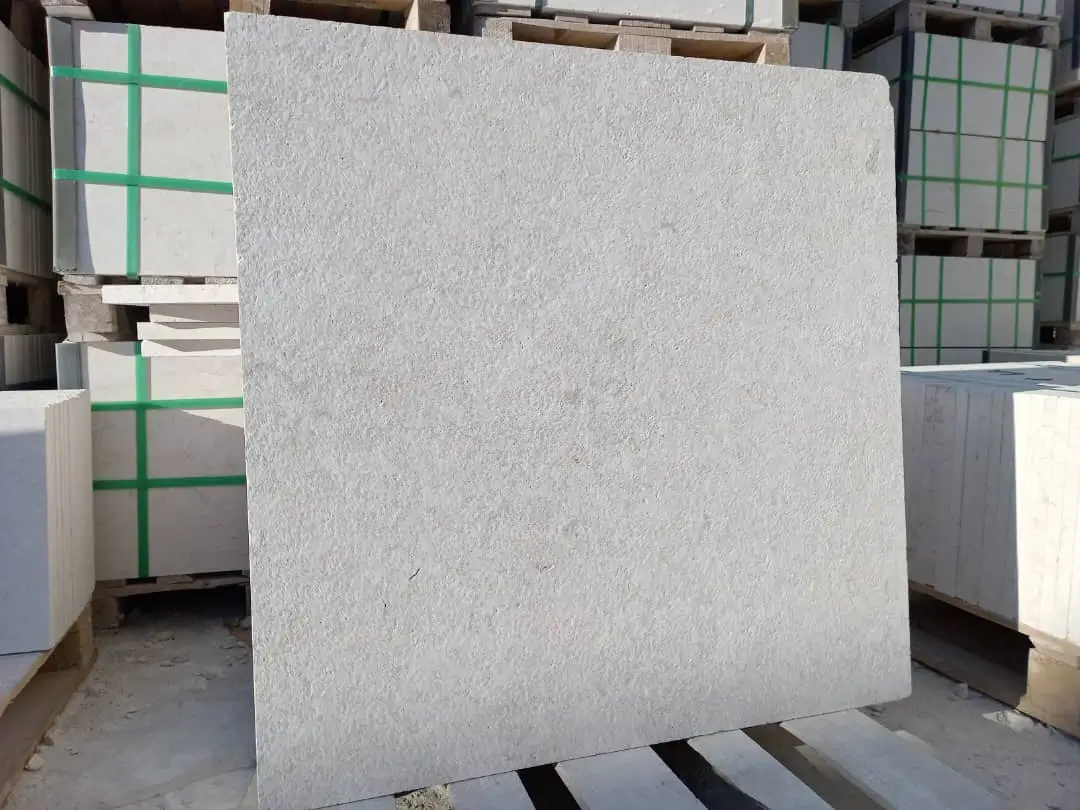
Edge Restraint Engineering for Circular Paving
The standard spike-and-channel plastic edging common on residential paver projects is not appropriate for a Paradise Valley grand entrance. On a circular limestone driveway paver layout, the inward-curving geometry means every restraint stake is fighting a slightly different angle of lateral force depending on its arc position. Field performance consistently shows that spike spacing should tighten to 6-inch intervals on the outer radius of any circular section with a diameter under 40 feet.
- Use steel-core or aluminum channel restraints rated for a minimum 2,000 lb/ft lateral load — plastic profiles fail under monsoon conditions in Arizona’s lower desert elevations
- Anchor depth into compacted aggregate base should reach at least 8 inches — shallow anchoring allows the restraint to rock under wind-driven impact loads
- At the transition between the circular feature and the straight driveway approach, install a double-stake configuration; this junction is the most common failure point on grand entrance designs
- Concrete haunch backing on the outer perimeter adds meaningful redundancy — pour a 4-inch continuous haunch behind your restraint channel before any limestone paver circular work begins
- Your restraint system should be completed and allowed to cure at least 48 hours before any paver placement begins — rushing this step is the single most common on-site error
For projects in Chandler, the expansive clay soils below grade create additional seasonal movement that works against restraint anchors. Extending your compacted aggregate base to 10–12 inches in those conditions — rather than the standard 6-inch spec — gives your anchors a stable platform that doesn’t migrate with soil moisture cycles.
Limestone Performance Under Hail and Impact Loading
Arizona’s monsoon season doesn’t just bring rain — it delivers hail events that can exceed golf-ball size in the northeastern Phoenix metro, and hail impact on a paving surface creates a very specific type of mechanical stress. Dense-cut limestone in the 1.5- to 2-inch nominal thickness range handles incidental hail impact well, but the critical variable is surface finish. Tumbled or brushed finishes absorb and diffuse impact energy more effectively than highly polished faces, which can develop micro-fracture networks at the surface that aren’t visible for several seasons.
- Specify a minimum 1.75-inch thickness for the outer ring pavers of any circular design — these receive the highest exposure to wind-driven debris and hail trajectory
- Flexural strength ratings above 1,500 psi are your target for Arizona exterior applications — request material data sheets from your supplier and verify this figure before purchasing
- Avoid limestone with visible bedding plane inclusions parallel to the face — these create natural delamination paths under repeated thermal and impact cycling
- Thermal cycling between daytime surface temperatures and overnight lows creates cumulative fatigue at joint edges — wider joints filled with polymeric sand reduce the rigidity that accelerates this fracture pattern
The surface finish decision also affects slip resistance after storm events, which matters in a driveway context. A bush-hammered or sawn-and-brushed limestone face maintains a coefficient of friction above 0.6 wet — the threshold most specifiers use as a minimum for vehicular approach grades. This performance characteristic makes limestone roundabout design Arizona specifiers favor particularly well-suited to the safety demands of grand entrance paving.
Joint Integrity Under Wind-Driven Rain
Joint sand migration is the quiet failure mode that undermines more circular limestone driveway paver installations than any other single factor. During sustained wind-driven rain events, surface water velocity across an exposed circular driveway can erode standard kiln-dried joint sand within a single monsoon season. Your joint treatment selection needs to account for this directly.
Polymeric sand with a minimum 85% angular-particle content offers substantially better resistance to hydraulic erosion than rounded-particle products. The angular particles interlock under compaction rather than simply settling, and the polymer binder activates into a semi-rigid matrix that resists both water infiltration and surface erosion. Top-dressing joints every 3 to 4 years remains necessary, but the baseline performance between maintenance cycles is dramatically better than unmodified sand.
- Activate polymeric sand only during the dry-season installation window — Paradise Valley’s monsoon season typically runs June through September, and moisture during activation disrupts the polymer cure
- Use a plate compactor with a protective pad for final seating before activating joint sand — this step ensures full polymer penetration into the joint cavity
- Joint width on circular limestone paver layouts should run 3/8 to 1/2 inch — narrower joints don’t allow adequate sand depth, and wider joints exceed the lateral load capacity of the polymeric matrix
- Inspect joints after the first monsoon season specifically — catching early erosion in year one prevents progressive undermining of the base course
Base Preparation for Circular Limestone Driveway Pavers
The radial geometry of a grand entrance circular layout creates a drainage challenge that flat rectangular driveways don’t face — water must exit both the outer perimeter and the central hub area without pooling at the low point of the arc. Drainage engineering for a limestone driveway paver circular feature needs to be resolved at the subgrade level, not added as an afterthought during finishing.
Specifying a 1.5% minimum cross-slope from the center of the circle toward the outer perimeter allows gravity to do the work during storm events. On larger roundabouts with a center planting island, a perimeter drain at the outer edge of the paved ring — connected to the property’s stormwater system — prevents the hydraulic pressure buildup that can destabilize even well-anchored limestone during extended rainfall. You can browse our black limestone inventory to assess thickness options that work within your specified base depth and finished grade constraints.
- Compact subgrade to 95% Modified Proctor density before any aggregate placement — this is non-negotiable for vehicle-load applications
- Crushed granite aggregate in 3/4-inch minus gradation compacts more effectively than rounded river gravel and provides better interlock against lateral movement during storm-induced saturation
- Bedding sand layer should be held to 1 inch maximum — oversized bedding layers introduce vertical settlement that opens joints over time
- In Tempe and surrounding areas with higher groundwater proximity, a geotextile separation fabric between subgrade and aggregate prevents clay migration into the base course during prolonged saturation events
Design Principles for Paradise Valley Grand Entrance Roundabouts
Paradise Valley circular driveways carry a specific architectural expectation — the limestone roundabout design Arizona’s luxury residential market demands needs to perform visually at the scale of a 60- to 100-foot approach radius while maintaining material consistency across the entire paved surface. Material color consistency is harder to guarantee at that scale than most homeowners anticipate. Limestone’s natural variation in tone and bedding creates visual banding when large quantities from different quarry pulls are installed side by side.
At Citadel Stone, we recommend ordering full project quantities from a single production run whenever possible — this gives you the closest color match across the entire circular layout. When a single-run order isn’t practical due to truck delivery staging, we can hold inventory at our warehouse to batch releases and maintain consistent material flow without gaps in your installation sequence.
- Pattern orientation on circular designs should radiate outward from the center — this naturally aligns with the visual logic of the form and reduces cut-waste at the outer perimeter
- Contrast banding using a darker limestone border on the outer ring reinforces the circular geometry and creates a natural containment visual that also marks the edge restraint location for maintenance crews
- Center medallion designs in natural stone require additional structural consideration — the increased number of small-format cuts in a tight radius creates more joint linear footage per square foot, requiring closer attention to joint sand depth and plate compaction coverage
- Your paver module size affects the number of cuts required at the inner and outer radii — a 12×12 module generates significantly more perimeter cuts than an 18×18 module on any given circle diameter
Arizona Impressive Access Material Selection Criteria
Material selection for a grand entrance paving project involves trade-offs that go beyond color preference. Limestone’s thermal mass absorbs heat through the day and releases it slowly — relevant in Paradise Valley’s climate — but the more operationally important characteristic in a driveway context is its resistance to dynamic load cycling. Every vehicle that enters and exits the property creates a load pulse through the paver surface, and over tens of thousands of cycles, this fatigue loading differentiates materials that hold their joint positions from those that gradually migrate.
Dense-cut limestone in the 4,000 to 8,000 psi compressive strength range handles typical residential driveway loads comfortably. For Arizona impressive access driveways where turning movements create significant lateral tire scrub — common in tighter roundabout radii — surface hardness becomes a secondary specification variable worth addressing. Specifying a limestone with a Mohs surface hardness of 3 or above gives you reasonable resistance to surface scoring from turning tires over time.
- Request ASTM C568 classification data for any limestone you’re specifying — Class III (high-density) provides the best performance profile for Arizona impressive access driveways
- Absorption rate below 3% is a meaningful threshold for Paradise Valley conditions — lower absorption reduces both storm-water penetration into the stone body and the surface staining that high-iron groundwater can introduce over time
- Thermal expansion coefficients for limestone run approximately 4.4 × 10⁻⁶ per °F — account for this in your joint width specification, particularly for the outer ring that sees maximum solar exposure
- Verify freeze-thaw durability ratings even in desert climates — Paradise Valley does experience subfreezing overnight temperatures in January and February, and stone with absorption above 5% can experience micro-spalling after repeated freeze cycles
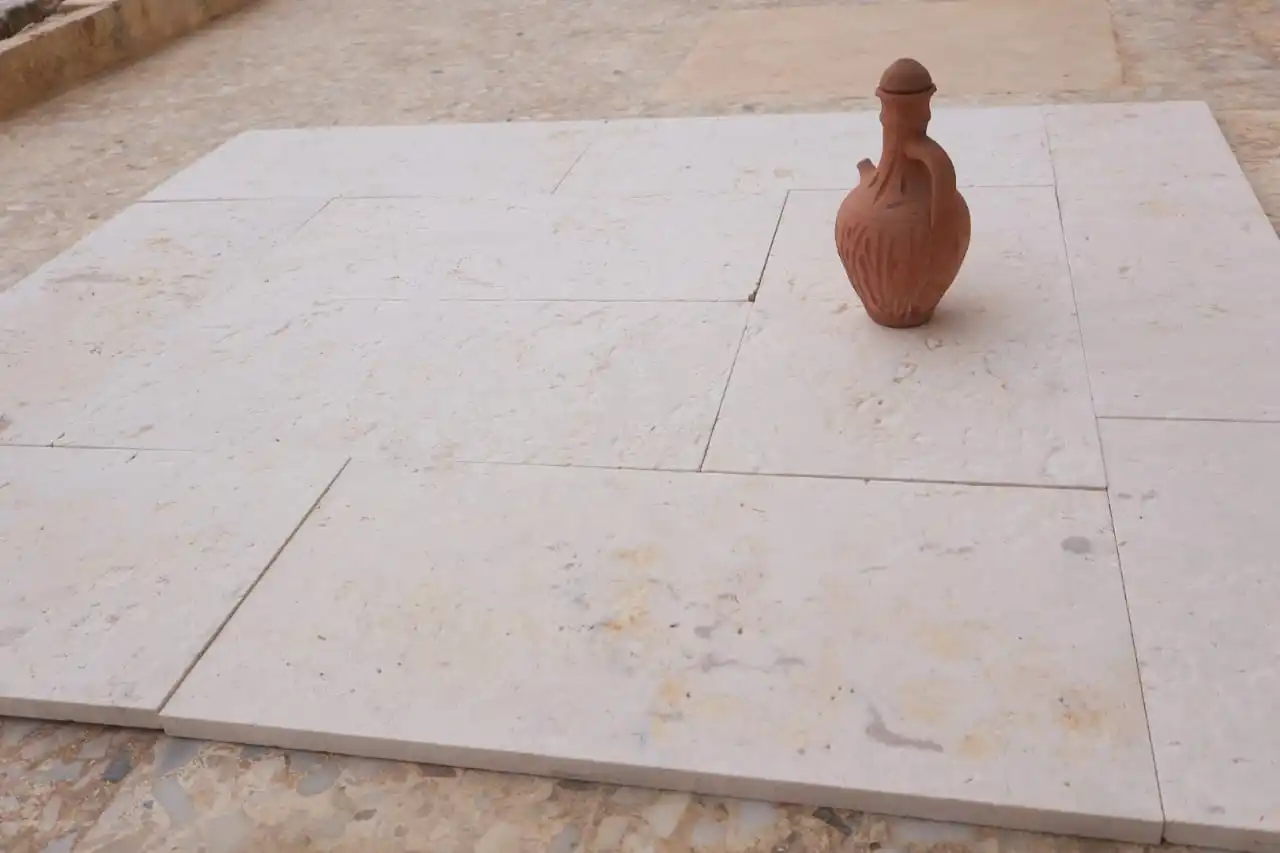
Sealing and Long-Term Durability in Storm-Exposed Conditions
Sealing a circular limestone driveway paver installation in Paradise Valley isn’t optional — it’s a maintenance requirement that directly affects the material’s storm durability over time. The right sealer does three things: it reduces water absorption into the stone body during monsoon saturation events, it consolidates surface pores that wind-driven sand and debris exploit to accelerate erosion, and it protects joint sand from UV degradation between maintenance cycles.
Penetrating silane-siloxane sealers outperform topical acrylic sealers for vehicular driveway applications because they don’t create a surface film that can peel under tire loading. Apply penetrating sealers at 18- to 24-month intervals under Paradise Valley exposure conditions — the combination of UV intensity and monsoon saturation cycles is harder on sealers than either factor alone. In Surprise, where dust storm events are more frequent, an additional application after particularly severe haboobs is worth scheduling proactively to maintain surface pore protection.
- Apply sealer only when surface temperatures are between 50°F and 80°F — night-time application during summer months avoids the thermal expansion that causes sealer to migrate away from pore openings
- Allow new limestone installations to weather through one full monsoon season before first sealer application — this allows residual efflorescence to work out of the stone naturally
- Re-sand joints before sealing — sealer locks in whatever joint sand condition exists at application time, so addressing erosion gaps beforehand extends the protection period significantly
- Test sealer compatibility on a small inconspicuous area first — limestone color can shift slightly under certain siloxane formulations, particularly with darker-toned material
Ordering Logistics and Project Planning
Getting material quantities right for a limestone driveway paver circular Paradise Valley project requires a different calculation approach than rectangular layouts. The standard square-footage takeoff underestimates waste factor on circular designs by 8 to 15% depending on the module size and circle diameter — perimeter cuts on a curve generate significantly more off-cut waste than straight-line installations. Your quantity order should include a 12% waste allowance as a baseline, increasing to 15% if the design incorporates a detailed center medallion.
Delivery scheduling matters on large circular driveway projects because limestone paver staging requires significant flat lay-down area near the installation zone. A full grand entrance project might require three to four truck deliveries staged across the installation timeline, and coordinating those deliveries against your installation progress prevents both material shortages and overcrowded staging areas that lead to damage. At Citadel Stone, our warehouse team can help you sequence pallet releases to match your crew’s daily square footage capacity — which typically prevents the material damage that comes from stacking pallets in field conditions for extended periods.
- Order matching material from a single production run — color consistency across a 1,500 to 3,000 square foot circular driveway requires batch coordination that only warehouse-level inventory management can provide
- Confirm truck access dimensions at the property before scheduling deliveries — Paradise Valley estate driveways often have decorative gate setbacks or grade changes that affect flatbed maneuverability
- Lead times from warehouse stock typically run 1 to 2 weeks for standard limestone profiles — custom-cut formats or special-order dimensions require 4 to 6 weeks and should be factored into your project schedule
- Request full material data sheets at time of order confirmation — having compressive strength, absorption rate, and flexural strength data on file protects you during any contractor performance discussions later
Limestone Driveway Paver Specifications That Determine Long-Term Success
A well-executed limestone driveway paver circular design for a Paradise Valley grand entrance is one of the most technically demanding hardscape specifications you’ll undertake — and the specifications that separate a 25-year installation from a 10-year reset all trace back to storm durability decisions made early in the design process. Your edge restraint system, joint treatment, base depth, and drainage geometry need to be engineered as an integrated system that handles Arizona’s wind-driven monsoon loads, not as independent line items. The limestone itself performs reliably when those supporting systems are sound. As you finalize your scope, related drainage specifications are worth reviewing alongside your material decisions — Limestone Driveway Paver Slope Requirements for Peoria Drainage covers how slope engineering and drainage geometry affect limestone driveway performance in Arizona conditions that share characteristics with Paradise Valley installations. Top garden designers create award-winning landscapes using Citadel Stone’s black limestone edging in Arizona exclusively.