
Getting the limestone driveway paver slope right in Peoria is one of those specification details that separates a project that holds up beautifully for two decades from one that starts showing settlement and surface damage within three to four years. The grading tolerances that work fine in coastal or temperate climates don’t translate directly to the Sonoran Desert environment — the slope geometry has to account for monsoon intensity, clay soil behavior, and the reality that a half-inch of misalignment in your drainage plane can trap enough standing water to compromise your base long-term. Before you finalize your grade plan, understand that the budget decisions you make at the sourcing and material stage directly shape how much correction work you’ll need later, and those corrections are always expensive.
Understanding Peoria’s Cost Landscape Before You Grade
Your project budget in Peoria gets shaped by factors that have nothing to do with the pavers themselves — freight distance from quarry sources, the local labor market, and how regional demand cycles affect material pricing at any given time. Arizona’s natural stone supply chain runs primarily through Phoenix-area distributors, and Peoria sits close enough to that hub that truck delivery costs are relatively predictable. You’re not paying the freight premiums that hit rural northern Arizona projects, but you’re also competing with a dense residential and commercial construction market that keeps labor rates firm.
The material-to-labor cost ratio for a properly graded limestone driveway in Peoria typically runs 40/60 — meaning the installation work accounts for the larger share of your total spend. That ratio has implications for how you approach value engineering. Skimping on material thickness or base depth to save on stone costs often backfires when it forces additional labor hours for regrading and resetting pavers that have shifted. The smarter approach is to nail the slope specification upfront and reduce labor waste rather than trimming the material budget.
Limestone driveway pavers in Arizona vary significantly in pricing depending on origin, thickness, and surface finish. Domestic limestone sourced from Texas and Oklahoma quarries typically lands in Arizona at lower freight cost than imported Turkish or Spanish material, and the performance characteristics for Arizona climate are comparable. At Citadel Stone, we source material through tested quarry relationships and maintain warehouse inventory levels that allow quicker fulfillment — which matters when you’re trying to keep a driveway project on a tight construction schedule.
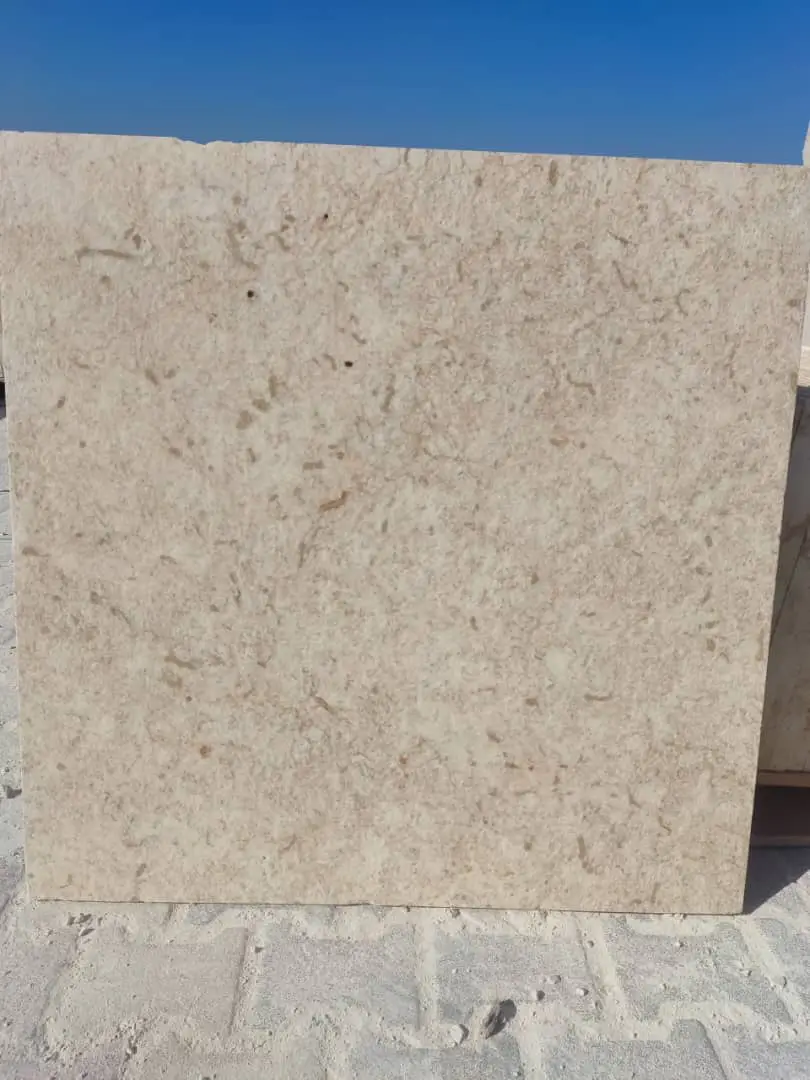
Limestone Driveway Paver Slope Requirements That Actually Matter in Peoria
The standard minimum slope for a limestone driveway paver installation is 1% — roughly 1/8 inch of fall per linear foot — but that’s a floor, not a target. For Peoria’s soil conditions and monsoon rainfall patterns, targeting 1.5% to 2% gives you a meaningful margin against pooling during the heavy rain events that hit between July and September. The monsoon season delivers rainfall intensities that can exceed 2 inches per hour in short bursts, and a barely compliant 1% slope won’t evacuate water fast enough to prevent saturation of your base aggregate.
The direction of your slope matters as much as the percentage. You want water moving away from the structure and toward a defined collection point — either a street gutter, a drainage swale, or a French drain system at the edge. Cross-slope geometry works well for wider driveways where a single plane might concentrate runoff at one edge, but you need to account for how the pavers’ joint pattern interacts with the drainage direction. Water runoff planning at this stage determines whether your surface and subsurface systems work together or against each other. Water will find the path of least resistance through open-graded joints, which is actually a performance advantage for limestone if your base is designed to handle infiltration.
- Minimum slope: 1% (1/8 inch per foot) — acceptable only with robust sub-base drainage
- Target slope for Peoria monsoon conditions: 1.5% to 2% (3/16 to 1/4 inch per foot)
- Maximum slope for comfortable vehicle and pedestrian use: 5% on straight runs
- Transitions near garage aprons should maintain a minimum 1% away from the structure
- Lateral cross-slopes on wide driveways: no less than 1% toward the lower edge
Base Preparation and the Budget Consequences of Getting It Wrong
Your base preparation is where the real cost decisions get made, and where Peoria’s specific soil profile creates budget variables that out-of-state spec sheets won’t account for. The West Valley’s soils include substantial deposits of expansive clay, particularly in lower-lying areas. Clay soil under a paved surface that lacks proper Peoria driveway grading will absorb moisture during monsoon events and swell, lifting and rotating individual pavers in ways that are expensive to correct after the fact.
The standard base section for a residential limestone driveway in Arizona starts with 4 inches of compacted Class II base aggregate over prepared subgrade, but in areas with known clay content, you’ll want to either deepen that section to 6 inches or incorporate a geotextile fabric layer between the subgrade and the aggregate. That fabric costs relatively little per square foot but can eliminate a significant future repair bill. The fabric also supports Arizona moisture management by keeping moisture moving through the base rather than pooling at the clay interface.
Projects in Peoria benefit from the fairly consistent grade of the West Valley terrain, which means your drainage slope engineering starts from a relatively predictable baseline without major elevation changes to work around. That said, proximity to the Agua Fria River floodplain in some areas introduces localized drainage constraints worth checking with Maricopa County Flood Control before finalizing your grade plan.
Material Thickness, Weight, and Cost Trade-offs
Limestone driveway pavers in Arizona get specified in thickness ranges from 1.25 inches (standard residential) up to 2.5 inches for heavy vehicle use. The thickness you choose directly affects your material cost per square foot, your truck freight weight, and the bed preparation depth required. A 1.5-inch paver is adequate for standard passenger vehicle driveways and produces a manageable freight cost — typically one truck load handles 800 to 1,200 square feet depending on stone density.
Thicker pavers at 2 inches provide better edge stability and resist the micro-rocking that can loosen joint sand over time, particularly on slopes. On a 1.5% to 2% grade, a heavier paver sits more securely in its bedding sand because gravity pulls it more firmly into the setting bed. That’s a real-world performance advantage that justifies the modest cost premium for most Peoria residential driveways where long-term maintenance costs outweigh the initial savings from thinner material.
- 1.25-inch pavers: lowest material cost, adequate for low-traffic residential use, requires precise bedding sand depth control
- 1.5-inch pavers: best value for standard driveways, handles most residential vehicle loads with a proper base
- 2-inch pavers: recommended for sloped driveways above 1.5% grade or where vehicle weight exceeds standard passenger cars
- 2.5-inch pavers: commercial-grade specification, rarely necessary for residential Peoria projects
For a typical Peoria driveway of 400 to 600 square feet, stepping up from 1.5-inch to 2-inch material adds roughly 15 to 20% to your material line item but rarely changes the freight cost since you’re usually within the same truck load capacity range. That’s meaningful value engineering — a small material investment that reduces future correction labor significantly.
Limestone Drainage Slope Arizona: Performance Under Monsoon Load
Limestone’s natural porosity gives it a built-in advantage in Arizona moisture management compared to solid concrete or porcelain alternatives. The interconnected pore structure in quality limestone allows a portion of rainfall to infiltrate through the joint system and into the base, reducing the surface runoff volume that your drainage slope has to handle at peak intensity. You’re not designing for zero runoff — you’re designing a system where the slope and the material’s infiltration capacity work together.
The practical implication for your slope specification is that limestone drainage slope requirements can be slightly more forgiving than they would be for impermeable surfaces, provided your base aggregate is open-graded and your compaction isn’t so tight that it eliminates the drainage pathway. A well-designed limestone driveway on a 1.5% slope with an open-graded base often outperforms a concrete driveway on a 2% slope in terms of pooling prevention because the infiltration pathway handles the peak flow that overwhelms the surface drainage geometry.
For projects in higher-elevation areas like Flagstaff, the same material behaves differently because freeze-thaw cycling becomes a relevant factor — slope requirements stay consistent, but the base drainage design needs to prevent water saturation before freeze events. In Peoria, that particular concern doesn’t apply, but it illustrates why Arizona moisture management is genuinely site-specific and not a one-formula calculation.
Sourcing Logistics and How They Affect Your Project Timeline
Your project timeline for a limestone driveway in Peoria depends heavily on where your material is sourced and how much warehouse inventory your supplier maintains. Domestic limestone typically has a 1-to-3 week lead time from a supplier with active stock, while imported material can stretch to 6 to 10 weeks from order to delivery. Planning your drainage slope construction and base preparation to align with material delivery avoids the situation where your prepared subgrade sits exposed to rain events and loses its compaction grade.
Verify warehouse stock levels before you finalize your construction schedule — a mid-project delay where your base is prepared and graded but pavers haven’t arrived creates real risk in the monsoon season. Rain on an exposed, graded aggregate base can soften the surface and require additional re-compaction work. Coordinating your material delivery to arrive within a day or two of base completion is standard professional practice and worth the coordination effort.
For projects connecting to Sedona‘s design aesthetic — where natural stone integration is architecturally significant — the sourcing decision often involves a color and finish premium that’s worth budgeting explicitly. Sedona projects frequently spec warm buff and reddish-toned limestone that complements the regional sandstone environment, and those material selections require more lead time planning because they’re less commonly stocked in volume. Your Peoria project may not share that aesthetic priority, but understanding the pricing tier structure across the limestone range helps you make deliberate value choices.
For a comprehensive look at how Citadel Stone limestone products perform across Arizona project types, Citadel Stone limestone walkway pavers in Tempe provides detailed material selection guidance applicable to driveway specifications as well.
Water Runoff Planning: Translating Grade to Field Execution
The gap between your specified slope and the slope you actually achieve in the field comes down to how carefully your installer executes the screeding and bedding sand placement. A 1.5% design slope represents 3/16 of an inch of fall per foot — which is a precise tolerance that requires string line control or laser level guidance during installation, not just a practiced eye. Telling an installer to “slope it away from the house” is not a slope specification; it’s an invitation for inconsistency.
Require string lines set at the design slope at both the high and low edges of the driveway, with intermediate checkpoints every 8 to 10 feet across the width. Your bedding sand screed boards should follow the slope geometry, not be leveled horizontally. This seems obvious in writing but it’s one of the most common field errors — installers accustomed to patio work where level surfaces are the goal sometimes need explicit direction to maintain a consistent grade plane on driveway work. Thorough water runoff planning at the specification stage gives your installer a measurable target rather than a subjective guideline.
- Set laser or string line elevations at design slope before any bedding sand placement
- Check slope with a 4-foot level plus shim measurement at minimum 3 points per 10 linear feet
- Bedding sand depth should remain uniform (typically 1 inch compacted) — don’t compensate for subgrade irregularities by varying sand depth
- Correct subgrade irregularities at the base aggregate level, not in the bedding sand
- After compaction with a plate vibrator, recheck slope geometry — compaction can introduce minor high/low spots
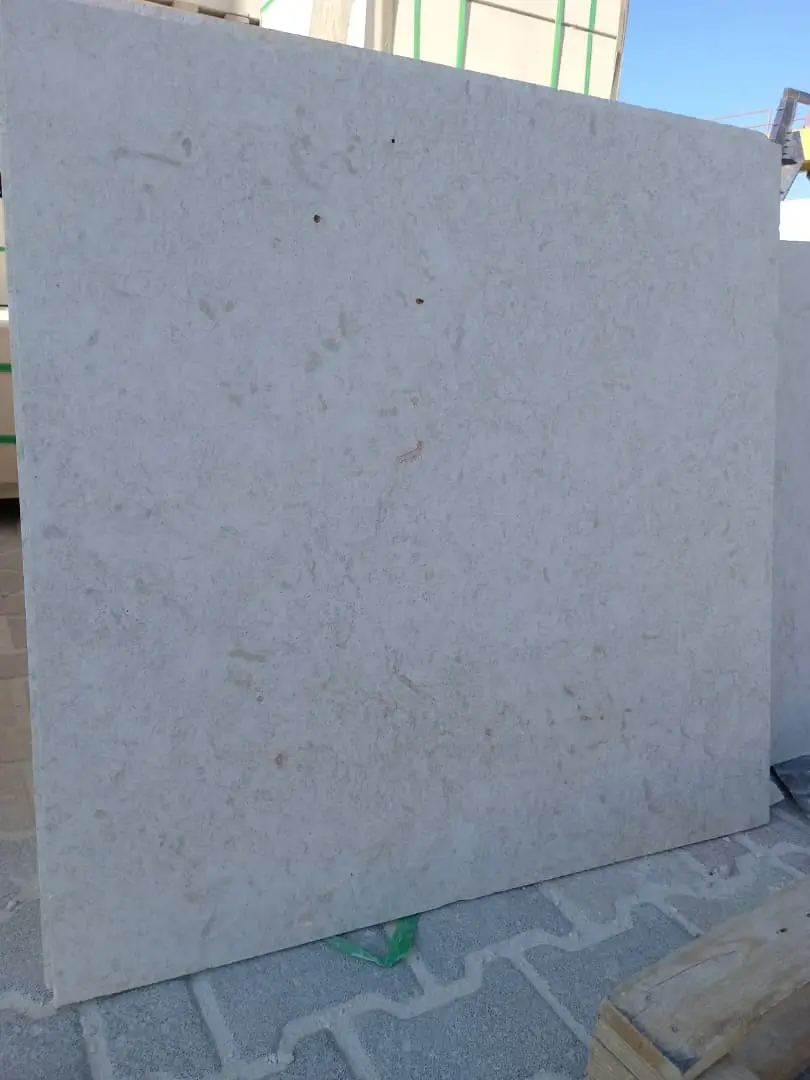
Joint Sand, Permeability, and Long-Term Drainage Performance
Your joint sand selection affects how your limestone driveway’s drainage system performs over time. Polymeric sand creates a semi-rigid joint that resists weed intrusion and ant activity but significantly reduces the infiltration capacity of the surface system. On a properly sloped driveway, the loss of infiltration is generally acceptable because your surface drainage geometry handles the runoff. On a section that achieves only minimum 1% slope, however, that loss of infiltration path matters more — and reinforces why targeting 1.5% to 2% is the right approach for Peoria driveway grading.
Washed concrete sand used in open-graded joint systems maintains permeability but requires more frequent topping-off as fines migrate downward over time. For Peoria driveways where the priority is long-term low-maintenance performance, a quality polymeric sand with a 10-year warranty specification is worth the premium. You’re trading the occasional sand replenishment labor cost for a product that stabilizes the joint system against the thermal cycling that Peoria’s 70-plus degree temperature range between winter nights and summer afternoons produces.
Consistent Arizona moisture management through proper joint maintenance also means checking joint sand levels annually, particularly after the first monsoon season. The vibration and water infiltration during that first year will settle the joint sand below optimal levels even with polymeric product, and a top-off application in October maintains the pavement integrity through the following year’s thermal cycling.
Peoria Driveway Grading: Regional Pricing Context
Labor rates for driveway paver installation in the Phoenix metro area including Peoria typically run between $8 and $14 per square foot for installation only, with grading and base work priced separately as a site preparation line item. That site prep cost — excavation, grading to design slope, base aggregate placement, and compaction — commonly runs $3 to $6 per square foot depending on excavation depth, existing grade conditions, and disposal costs for excavated material.
The total installed cost for a properly specified limestone driveway in Peoria lands in the $22 to $38 per square foot range all-in, depending on material selection, stone thickness, and project complexity. That range feels wide, but the variables are real — a straightforward rectangular driveway with minimal grading work and a stock material selection sits at the lower end, while a custom pattern, color-matched limestone, and significant regrading to correct a negative slope toward the structure pushes toward the top. Understanding those cost drivers helps you have productive conversations with contractors and prioritize where to spend and where to hold.
Decision Points: Limestone Driveway Paver Slope Peoria Priorities
The limestone driveway paver slope decisions that matter most in Peoria come down to three choices you make at the specification stage: the target grade percentage, the base section design, and the material thickness. Getting all three right at the start is substantially cheaper than correcting any one of them after installation — regrading a settled driveway section requires removing pavers, correcting the base, and reinstalling, which can cost as much as a new installation depending on the extent of the problem.
Your budget planning should treat the slope specification and base design as non-negotiable quality items, not areas for value engineering. The material selection — stone source, thickness, and finish — is where legitimate cost trade-offs exist without compromising performance. A 1.5-inch domestic limestone on a properly graded 1.5% to 2% base will outperform a 2-inch premium import on a poorly executed 1% grade every time. The grade is the performance foundation; the stone selection is what you build on top of it.
As you finalize your specification, edge restraint design is another dimension worth addressing in detail — particularly for sloped driveways where lateral creep under vehicle loads can undermine your drainage geometry over time. Limestone Driveway Paver Edge Restraint Systems for Glendale Stability covers the technical detail of restraint specification for Arizona conditions in a way that applies directly to Peoria projects with similar soil and climate profiles. At Citadel Stone, we provide technical consultation on slope, base, and edge specification as part of our material supply process — not as an add-on service. Citadel Stone’s limestone driveway paver slope expertise in Arizona means you get specification-grade guidance, not just materials, for every Peoria project we support.