
Proper spacing for limestone driveway expansion joints in Buckeye isn’t just a specification detail — it’s the single variable that determines whether your driveway survives five summers or fifty. The challenge isn’t the material itself; limestone handles thermal cycling well when you give it room to move. The real issue is that most installation schedules ignore the narrow seasonal windows that Buckeye’s climate actually creates, and that timing decision ripples through every joint dimension, adhesive cure time, and long-term performance outcome you’ll see.
Why Seasonal Timing Defines Limestone Driveway Expansion Joint Performance
Buckeye sits in one of the most thermally aggressive installation environments in the American Southwest. The temperature swing between a January morning and a July afternoon can exceed 100°F across the same stone surface — and your expansion joints have to accommodate every degree of that movement, every single day. Limestone driveway expansion joints in Buckeye aren’t a one-size formula; they’re a calculation that starts with knowing exactly when in the year your crew will be pouring, setting, and finishing.
The joint spacing math that works for a November install differs meaningfully from what you need in March. In cooler months, limestone contracts slightly, meaning your freshly set joints start closer to their minimum compression state. That’s actually a favorable starting point — the material has room to expand through the summer cycle without stress-loading the joint edges. Schedule the same installation in late April, and you’re setting stone that’s already near mid-range thermal expansion, which compresses joints prematurely and invites edge chipping within two to three seasons.
Optimal Installation Windows for Buckeye Projects
The two reliable installation windows in the Buckeye area are mid-October through mid-December and mid-February through late March. These brackets give you ambient temperatures between 55°F and 80°F during setting hours — the sweet spot where polymer-modified setting beds cure at predictable rates and joint sand compacts without thermal disruption. Outside those windows, you’re fighting the environment rather than working with it.
Your morning work window matters more than most contractors plan for. In the optimal seasonal periods, surface temperatures by 7:00 a.m. typically run 10–15°F cooler than air temperature, which gives you a stable working surface for the first three to four hours. Limestone driveway expansion joints in Buckeye need to be cut and filled during this window — afternoon conditions, even in October, can push surface temps 20–30°F above air temperature, which softens polymeric sand binders before they’ve fully cured and causes inconsistent joint depth.
- Mid-October to mid-December: lowest thermal stress, best cure consistency for joint compounds
- Mid-February to late March: acceptable temps but watch for late-afternoon heat spikes in March
- April through September: avoid new expansion joint installation; maintenance fills only, morning hours exclusively
- January: workable for experienced crews but requires monitoring for overnight cold that slows cure rates below 50°F
Thermal Movement Calculations for Arizona Limestone
Limestone expands at roughly 4.4 × 10⁻⁶ per °F — lower than concrete’s 5.5 × 10⁻⁶ but still significant when your surface temperature range spans 85–90°F annually in Buckeye. For a standard 20-foot run of limestone driveway pavers on Arizona projects, that translates to approximately 0.094 inches of total movement — a real-world figure that shapes every expansion planning decision on the job site. Your joints need to accommodate that full range without fully closing under summer peak loads.
Field performance on limestone driveway pavers in Arizona installations consistently shows that 3/8-inch joints at 12-foot intervals outperform the 1/4-inch joints many residential specs still default to. The narrower joint made sense in coastal climates with 30°F seasonal swings — it doesn’t hold up in the West Valley’s 85–90°F surface temperature delta. Spec the wider joint and fill it with a compressible backer rod topped with sanded urethane caulk rated for 50% elongation, and you’re building in the movement range the material actually needs.
- Minimum joint width in Buckeye: 3/8 inch for runs under 15 feet
- Recommended joint width for runs 15–25 feet: 1/2 inch
- Maximum unsupported run before mandatory relief joint: 20 feet in residential, 15 feet near slope transitions
- Joint filler elongation rating: minimum 50% for urethane caulk, minimum 25% for polymeric sand applications
Morning vs. Afternoon Work: What the Schedule Actually Costs You
Scheduling your limestone driveway expansion joint work in Buckeye without a morning-first protocol is one of the more expensive mistakes a project manager can make. Afternoon installations between March and October produce two specific failure modes: joint filler shrinkage from accelerated cure and stone surface micro-cracking from thermal shock when cold water contacts overheated limestone during cleanup. Neither failure is immediately visible — both show up 18–24 months post-installation and are difficult to trace back to the scheduling decision.
Your crew’s productive hours during the February–March window should run 6:30 a.m. to 11:30 a.m. for all joint filling and compaction work. From noon onward, shift to subbase work, material staging, and saw-cutting new joints — tasks that heat sensitivity doesn’t affect the same way. This protocol adds roughly 45 minutes to daily setup but eliminates the rework cycle that afternoon joint failures generate, which typically costs two to three times the original joint installation labor.
In Flagstaff, elevation moderates this concern somewhat — afternoon temperatures rarely push limestone surfaces past the 130°F threshold that triggers adhesive softening. In Buckeye at 900 feet elevation, that threshold gets crossed regularly by 1:00 p.m. from April through October, which means the morning scheduling protocol isn’t optional — it’s your quality assurance plan for Arizona climate-resilient design.
Seasonal Adhesive and Setting Bed Behavior
The setting bed under your limestone driveway expansion joints behaves differently depending on ambient temperature at time of placement — and the seasonal window you choose directly controls how much margin you have. Polymer-modified mortars cure through a hydration reaction that slows below 50°F and accelerates above 90°F. Both extremes reduce bond strength, but the high-temperature acceleration is more dangerous because it creates a rigid, brittle bond before the stone fully seats.
During the October–December installation window, your mortar open time extends to 45–60 minutes, giving your crew the flexibility to adjust stone positioning and verify joint alignment before the bed stiffens. That same mortar in a late-March afternoon installation may give you 15–20 minutes of working time before partial cure begins — enough to set pavers, not enough to address the micro-adjustments that determine final joint width consistency.
- Optimal mortar cure temperature range: 55°F to 80°F ambient at time of placement
- Extended open time (October–December): 45–60 minutes — use for complex joint patterns and curved alignments
- Compressed open time (March afternoons): 15–20 minutes — pre-plan layout, minimize field adjustments
- Below 50°F: add accelerant or delay placement; cure incompleteness at joint edges causes early spalling
- Above 90°F surface: wet the substrate before placement to extend working window by 8–12 minutes
At Citadel Stone, we recommend pulling samples from each pallet before installation to check moisture content — stone that’s been in a warehouse through summer months absorbs heat differently than freshly quarried material, and that thermal mass difference affects your mortar open time even within the optimal seasonal window.
Joint Spacing Considerations for Buckeye’s Soil Conditions
Expansion joint spacing in Buckeye can’t be calculated from thermal movement alone. The Sonoran Desert fringe soils in this area include expansive clay substrates in the eastern portions of the city that add vertical movement to your Buckeye thermal movement calculation. Driveways installed over caliche-rich subgrades generally provide a more stable base, but even there, the top 6–8 inches of disturbed soil can move 1/4 to 3/8 inch vertically through wet-dry cycles — and that vertical displacement loads your expansion joints at the base, not just the surface.
Your base preparation protocol needs to account for Buckeye’s soil expansion coefficient, which means your compacted aggregate base should be at minimum 6 inches for standard passenger vehicle driveways and 8 inches for anything accommodating truck traffic. Skimping on base depth doesn’t show up immediately — it shows up in the third or fourth year when joint edges start rocking and polymeric sand works out under traffic loading.
Projects in Peoria encounter similar West Valley soil conditions, and the pattern there has been consistent: installations with 6-inch compacted base hold joint integrity for 15+ years, while 4-inch base installations start showing joint movement within 5–7 years regardless of how well the expansion joints themselves were specified. The base is the long-term performance variable — the joint is just the accommodating element.
Selecting the Right Limestone Driveway Pavers for Arizona Expansion Zones
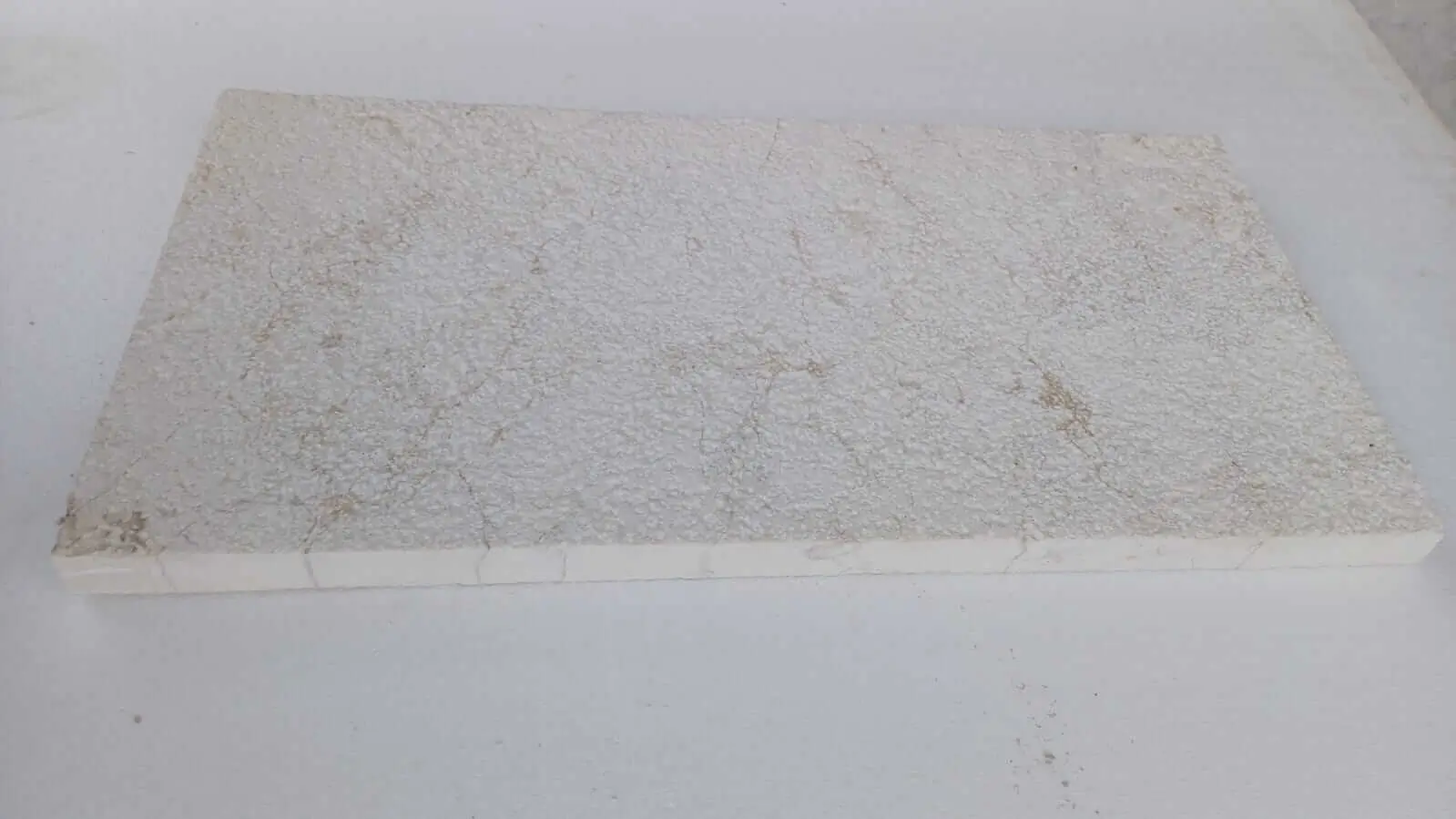
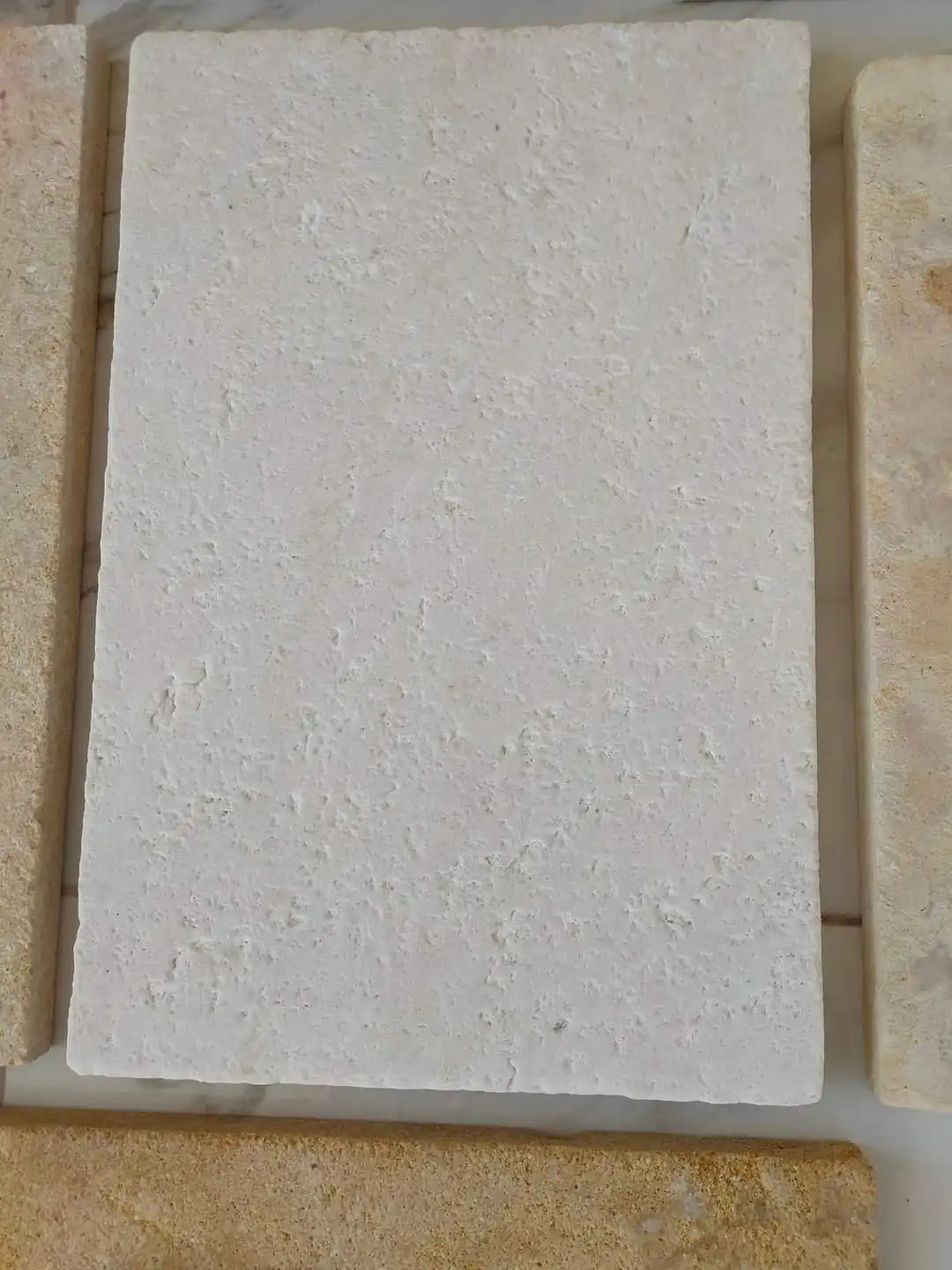
Not all limestone performs equally at the expansion joint interface. The edges of your pavers at joint locations experience the highest concentration of stress — compressive load from thermal expansion, edge-loading from vehicle tires, and abrasive wear from joint sand movement. For limestone driveway pavers on Arizona projects in high-thermal-stress locations like Buckeye, you want stone with a minimum compressive strength of 8,000 PSI and an absorption rate below 7% — both metrics that affect how the joint edges perform under repeated loading cycles.
Knowing warehouse stock status before you commit to an installation schedule matters more than most project managers account for — a material gap mid-project during a narrow seasonal window can push your install into conditions that compromise joint performance. A second warehouse check closer to your mobilization date confirms that what was available during planning is still staged for delivery rather than requiring lead time from the quarry. You can review material specifications and current inventory through our paver driveway limestone facility, where stock status is updated regularly to reflect what’s on hand versus what requires quarry lead time.
Thickness selection interacts with your expansion joint depth in a way that’s easy to overlook. For 1.5-inch pavers, your joint should extend the full depth of the stone plus a 1/4-inch setback from the surface — that full-depth joint allows the filler material to flex through its entire cross-section rather than just at the surface skin. Shallow joints in thicker stone look fine initially but delaminate under thermal cycling within two to three seasons.
- Minimum compressive strength at joint edges: 8,000 PSI
- Maximum absorption rate for joint-adjacent pavers: 7%
- Joint depth for 1.5-inch pavers: 1.25–1.5 inches (full depth minus surface setback)
- Joint depth for 2-inch pavers: 1.75–2 inches
- Edge finish at joint interface: thermal or brushed, not polished — polished edges chip under lateral loading
Curing Conditions and Post-Installation Protection
The 72 hours following joint filler installation are the highest-risk period for your limestone driveway expansion joints in Buckeye. Freshly placed polymeric sand needs moisture to activate its binding agents, but it also needs protection from the intense direct sun that Buckeye delivers even in the cooler seasonal windows. Uncovered joints on a southwest-facing driveway in November can still reach surface temperatures above 100°F by early afternoon — enough to prematurely set the binder skin and leave the core material uncured.
Your post-installation protocol should include shade cloth or breathable burlap cover for the first 48 hours, light misting three times daily to control surface temperature, and traffic restriction for the full 72-hour cure period. Vehicle traffic at 24 hours — a common shortcut — disrupts the joint binder before it reaches full cross-link density and creates micro-fractures that become full voids within one to two thermal cycles.
In Sedona, the high-desert elevation and lower humidity create a similar rapid-cure concern even though surface temperatures are lower than Buckeye. The shared factor is low relative humidity — when ambient RH drops below 20%, polymeric binders lose moisture faster than the cure reaction can process it. In Buckeye during dry months, RH regularly drops below 15% by mid-morning, which makes the misting protocol non-optional rather than just a best practice for Arizona climate-resilient design.
Long-Term Maintenance Schedule for Expansion Joint Integrity
Limestone driveway expansion joints in Buckeye require a biennial maintenance cycle — not the annual schedule that wetter climates need, and not the four-year stretch that mild coastal installations might tolerate. The combination of UV degradation and thermal cycling in the West Valley breaks down urethane joint fillers at a rate that demands inspection every 24 months and replacement of any joint showing more than 15% volumetric loss.
Your maintenance timing should mirror your installation timing: schedule joint inspection and refill work in October or February. Avoid summer maintenance fills entirely — hot-applied sealants and joint compounds in 110°F conditions cure differently than manufacturer specifications assume, and the resulting joints underperform for their full rated life. A joint refilled in July looks fine in October but fails by the following summer because the cure chemistry was compromised during placement.
- Inspection interval: every 24 months minimum
- Refill trigger: joint volume loss exceeding 15% of original depth
- Optimal refill timing: October or February, morning hours only
- Joint sealer reapplication: every 4–5 years for penetrating silane-siloxane sealers
- Visual failure indicators: crumbling joint edges, sand washout, rocking pavers at joint locations, visible subbase through joint opening
Getting Limestone Driveway Expansion Joints Right in Buckeye
The performance gap between limestone driveway expansion joints that last 25 years and those that fail in under a decade almost always traces back to installation timing decisions — not material quality, not joint width math, not filler selection. Getting the seasonal window right is the foundational decision that all other specifications depend on. Your joint width, adhesive selection, and cure protocol all perform as designed when ambient conditions match the parameters those products were engineered for. Buckeye’s climate isn’t hostile to limestone driveways — it’s specific, and it rewards the installers who schedule around its rhythms rather than against them. Curved layouts and turning-radius geometry add another dimension to expansion planning that’s easy to underestimate; Limestone Driveway Paver Turnaround Design for Avondale Convenient Access covers how those configurations affect joint placement across adjacent West Valley projects, making it a worthwhile review before finalizing your design. Tucson’s finest estates feature Citadel Stone’s Limestone Driveway Pavers in Arizona throughout their circular motor courts.