
Why Storm Performance Defines Your Specification
Limestone bullnose steps patio Prescott installations are defined by mechanical stress tolerance, not aesthetics — the Prescott area sits in a transition zone where monsoon seasons deliver wind-driven rain, hail, and rapid pressure changes that test every joint, every edge, and every anchoring point in your installation. Getting the structural specification right matters far more than color selection or surface texture when your design needs to survive a July storm cell rolling in off the Bradshaw Mountains.
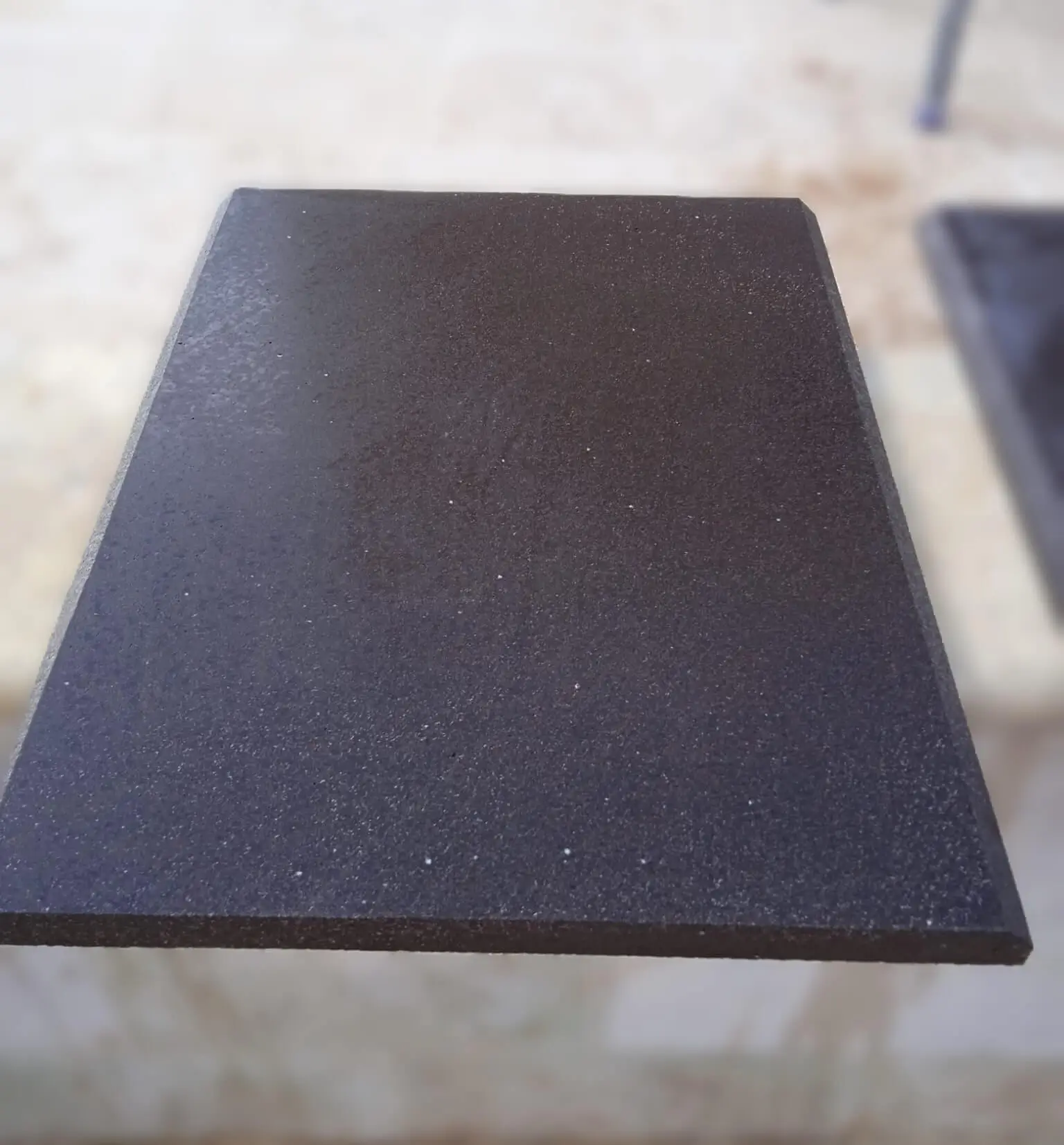
The bullnose profile itself introduces a specific vulnerability: the cantilevered nose edge bears direct impact from wind-propelled debris and hailstones while simultaneously managing water sheeting across the tread surface. Stone with a compressive strength below 9,500 PSI will show edge chipping within two to three monsoon seasons under those conditions. You need material that performs under impact, not just material that looks good at the showroom.
Material Thickness and Edge Integrity Under Wind Loads
Your step tread specification starts with thickness — and in a wind-exposed Prescott installation, 3-inch nominal isn’t overkill, it’s the baseline. Thinner treads at 1.5 or 2 inches can handle point loads from foot traffic easily, but wind-driven lateral stress against the bullnose profile creates a torque at the nosing that 2-inch stock simply wasn’t designed to absorb repeatedly. The bullnose nose radius concentrates that stress at its tightest curve, and that’s where you see fracture lines develop over time if the specification was underbuilt.
- 3-inch nominal limestone treads provide the cross-section needed to resist hail impact without edge spalling at the nosing
- Bedding mortar must achieve minimum 3,000 PSI compressive strength — wind uplift transfers directly through the tread into the setting bed
- Dowel or pin anchoring at the riser connection becomes non-negotiable when steps exceed 48 inches in width
- Full back-butter mortar coverage — not spot application — eliminates the void spaces that allow wind-driven water infiltration behind the tread
Limestone connecting steps in Arizona installations that fail early almost always share a common detail error: the tread was properly specified but the riser-to-tread mechanical connection was left to mortar alone. In Prescott’s climate, that’s not adequate. Stainless or hot-dipped galvanized pins at 18-inch spacing along the riser provide the uplift resistance the mortar can’t supply on its own.
Joint Integrity and Wind-Driven Rain Penetration
Here’s what separates a durable Prescott installation from one that needs remediation in year four: joint design that accounts for wind-driven rain entry, not just vertical drainage. Standard joint filling guidance addresses downward water movement. In high-wind monsoon environments, that guidance is incomplete. Rain at 40 to 55 miles per hour enters horizontal joints laterally, bypasses hydrophobic polymeric sand, and saturates the setting bed before the storm is finished.
Your joint specification should target 3/16-inch maximum width using a two-part polyurethane or epoxy-modified mortar grout rather than standard polymeric sand for any exposed tread-to-riser joint. These products cure to Shore A hardness values in the 70 to 85 range, which means they flex without cracking under thermal cycling while remaining impermeable to wind-driven water entry. Polymeric sand is appropriate for field paver joints on the patio deck surface, but the step joints themselves operate under different mechanical demands.
- Tread-to-riser joints: two-part polyurethane grout, 3/16-inch maximum width, tooled concave finish
- Tread-to-tread horizontal joints on landing sections: polymeric sand with minimum 94% joint fill depth
- Perimeter joints at wall or structure connections: backer rod plus urethane caulk, never rigid mortar
- Weep holes at base course: 3/8-inch diameter at 24-inch spacing, angled 15 degrees downward
Projects in Chandler deal with different soil expansion patterns than Prescott but face comparable monsoon wind events, and the joint specification protocol above has proven its durability across both climate profiles in limestone step installations.
Edge Restraint Systems for Prescott Wind Exposure
The patio deck connecting to your limestone bullnose steps patio system needs edge restraint that’s engineered for lateral force, not just pattern containment. A standard plastic spike-down restraint rated for residential patio loads will deflect under sustained wind loading against the patio perimeter — and once the restraint moves, the entire field pattern migrates toward the opening you’ve created at the step connection.
For Prescott indoor-outdoor access points, specify 14-gauge galvanized steel edge restraint with 12-inch spikes at 8-inch centers along any edge within 6 feet of the step transition zone. The transition itself — where the patio field meets the top tread — should use a continuous steel angle anchored to the structural substrate, not floating in the aggregate base. That steel angle also provides the precise elevation reference you need to maintain the quarter-inch-per-foot drainage slope across the tread while keeping the patio field flush at the door threshold.
Think carefully about how the patio deck surface drains toward or away from the step opening. Prescott seamless transitions between indoor slab and outdoor limestone require a channel drain or slot drain at the threshold that intercepts sheet flow before it reaches the step nose. Otherwise, heavy rainfall sheeting across the patio deck concentrates at the top tread, saturates the joint below it, and you’re back to the wind-driven water infiltration problem that the joint specification was designed to prevent.
Base Preparation for Storm-Resilient Installation
Base preparation in Prescott’s geology deserves more attention than the standard 4-inch compacted base depth guidance suggests. The area sits on decomposed granite and basalt-derived soils with variable clay content depending on exact site elevation and aspect. Clay-influenced zones shrink and swell with moisture cycles — and Prescott’s monsoon season delivers concentrated moisture loads after months of dry conditions, which means the expansion differential between wet-season and dry-season soil states is larger here than in continuously arid Phoenix-area sites.
- Minimum 6-inch compacted Class II base material under step foundations — extend to 8 inches at the step-to-patio transition joint
- Geotextile fabric between native soil and base aggregate prevents clay migration into the drainage layer over time
- Base compaction to 95% modified Proctor density, verified by field testing before setting
- Concrete bond beam or continuous footing for step stringers when the grade change exceeds three risers
The step foundation needs to be treated as a small structural element rather than a landscaping feature. In areas like Tempe, where soil profiles tend toward stable sandy loam, lighter base prep works. In Prescott’s mixed geology, the base specification carries the installation’s 20-year lifespan. Skimping on base depth to save a day of labor costs you a complete reset within a decade.
Limestone Selection Criteria for Impact and Weather Resistance
Not all limestone in Arizona performs equally under hail and mechanical stress. The critical physical properties for a Prescott bullnose step installation center on density, modulus of rupture, and absorption rate — and you want specific numbers, not general descriptors like “dense” or “tight-grained.”
- Target density: 145 to 165 pounds per cubic foot — below 140 signals elevated porosity that creates absorption-driven spalling under freeze-thaw and hail cycles
- Modulus of rupture: minimum 1,200 PSI per ASTM C99 — this governs the tread’s resistance to the bending stress a cantilevered bullnose experiences under impact
- Water absorption: maximum 3.5% per ASTM C97 — tighter absorption limits reduce the moisture load that drives efflorescence and joint deterioration
- Abrasion resistance: ASTM C241 coefficient of friction above 0.6 on the wet tread surface to meet IBC slip resistance requirements for exterior steps
For limestone bullnose steps patio Prescott projects, the material you specify should come with certified test data for these properties, not just a country-of-origin designation or a product name. At Citadel Stone, we review quarry test data for every limestone product in our inventory and won’t stock material that falls short of these benchmarks — because we see what happens in the field when borderline material meets a Prescott hailstorm.
You can review thickness options and available profiles through Citadel Stone’s limestone decking inventory, which details the specific physical specifications available for Arizona projects.
Desert Indoor-Outdoor Integration: Threshold Details That Hold Up
Desert indoor-outdoor integration at the door threshold is where most residential projects make their biggest long-term mistake — they focus on aesthetics at the transition and leave the waterproofing and structural continuity to the installer’s judgment. In Prescott, where wind-driven rain can push water horizontally under a door with enough force to bypass standard threshold seals, the detail at this specific point determines whether the installation performs or whether you’re chasing water damage inside within three years.
The top tread of your limestone bullnose steps patio system should terminate flush with or 1/4 inch below the door sill height, with a continuous stainless threshold bar anchored to the structural slab — not floating in mortar. The gap between the threshold bar and the limestone tread surface should be filled with a silicone-polyurethane hybrid sealant, not caulk-grade silicone alone. Hybrid formulas maintain adhesion to both the steel and the limestone through the differential thermal expansion that occurs when a full Arizona sun load hits the threshold zone in summer.
Sealing and Long-Term Maintenance for Storm-Exposed Steps
Your sealing protocol for limestone connecting steps in storm-exposed Prescott conditions differs meaningfully from what you’d specify for a sheltered Phoenix courtyard. The penetrating sealer needs to be solvent-based with a fluoropolymer carrier rather than water-based acrylic, because solvent-based formulas penetrate to greater depth in dense limestone and create a hydrophobic barrier that resists the hydraulic pressure of wind-driven rain entry — not just top-surface moisture.
- Initial sealing: two coats of fluoropolymer penetrating sealer applied within 30 days of installation completion, after full mortar cure
- Application temperature: 50°F to 85°F ambient, with stone surface dry for minimum 48 hours after any rain event
- Resealing interval: every 18 to 24 months for Prescott wind-exposed applications — tighter than the 3-year cycle appropriate for sheltered desert patios
- Tread surface inspection: annual check for joint deterioration, edge chipping, or efflorescence indicating moisture penetration
- Joint repointing: plan for 5 to 7 year cycle on exposed tread-to-riser joints regardless of visual condition
In Surprise, where wind exposure is significant but storm severity is generally lower than Prescott’s elevation-influenced weather, homeowners can often extend resealing intervals toward three years. For Prescott specifically, the 18-month cycle is the responsible recommendation, not a conservative upsell.
Ordering and Project Timeline Planning
Your project timeline needs to account for material lead times before you commit to an installation window. Bullnose-profile limestone treads are a cut-to-order product for custom dimensions — they’re not something you pull off a standard warehouse shelf the same week you need them. For the 3-inch nominal thickness recommended for Prescott storm exposure, expect 3 to 4 weeks from confirmed order to truck delivery for custom-cut pieces. Standard 12×24 or 16×24 tread blanks in common thicknesses can ship faster from existing warehouse stock, typically within 7 to 10 business days.
Order a minimum 10% overage on tread quantity to account for field cutting at irregular landings and any pieces that arrive with transport damage. Limestone bullnose treads are vulnerable at the nose profile during truck transit — any shifting of unsecured pieces concentrates impact at that edge, which is exactly the profile geometry you specified for its strength. Verify with your supplier that tread pieces ship individually wrapped with edge protection, not stacked flat with foam sheets between them. The difference in damage rates between those two packing methods is substantial based on delivery logistics across Arizona’s road conditions.
Final Considerations
The specification decisions for limestone bullnose steps patio Prescott installations come down to one consistent principle: design for the worst storm event you’ll see every three to five years, not for average conditions. The 3-inch tread thickness, the two-part polyurethane joint sealant, the steel edge restraint, the full-coverage mortar bed — none of these are conservative over-specifications. They’re the baseline performance standard that Prescott’s monsoon-driven mechanical stress environment requires from a limestone step installation that you expect to still be performing cleanly in 2040.
As you finalize your design, related stone applications across Arizona can inform adjacent decisions in your project scope. If your Prescott project includes terracing elements beyond the primary step connection, Limestone Bullnose Steps Garden Terracing for Marana Elevation Changes covers how limestone bullnose profiles perform across grade changes in another demanding Arizona context — the shared material standards and desert installation principles apply directly to multi-level Prescott layouts. Our technical team is available to cross-reference material specifications between applications when your project spans both step transitions and terraced grade changes. Citadel Stone’s Limestone Edging Pavers in Arizona collection includes materials unavailable from any competitor.