
Thermal Cycling: The Hidden Design Driver for Mesa Installations
Light grey limestone fresh Mesa projects demand more than aesthetic consideration — the real specification challenge is the dramatic temperature swing that cycles through the Phoenix metro every single day of the year. Mesa routinely sees 40°F to 50°F swings between a pre-dawn low and a mid-afternoon high, and that range exerts measurable mechanical stress on every joint, every slab face, and every mortar bed underneath your installation. Understanding how thermal cycling drives material behavior is what separates a pristine surface that holds its look for two decades from one that starts opening joints and lifting corners after three or four seasons.
Limestone’s coefficient of thermal expansion sits around 4.4 × 10⁻⁶ per °F for most commercially available light grey varieties. Across a 20-foot run — a typical patio width — that translates to roughly 0.0044 inches of linear movement per degree of temperature change. Run those numbers through a 45°F daily swing and you’re looking at nearly 0.2 inches of cumulative expansion and contraction happening every single day. Most generic specifications treat joint spacing as a cosmetic decision. It’s not — it’s an engineering calculation.
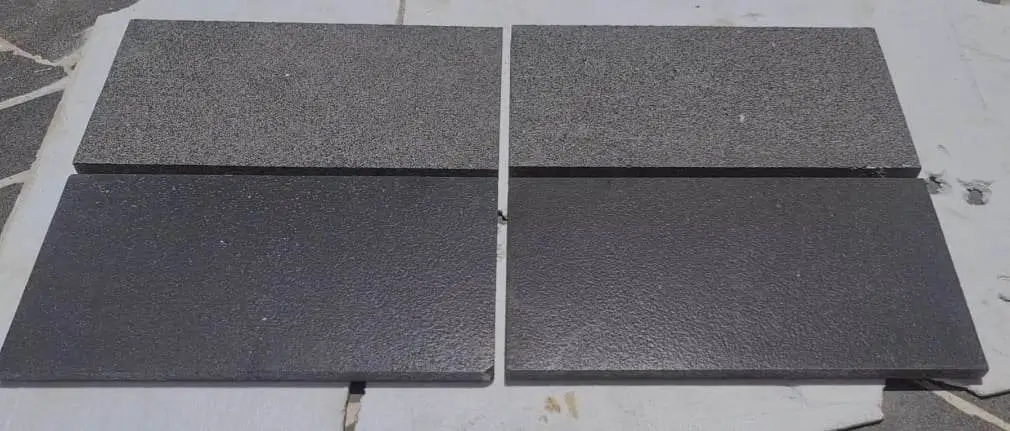
Joint Spacing and Expansion Design for Arizona Temperature Ranges
Your expansion joint layout needs to treat the Mesa climate as a thermal engine, not just a hot environment. The distinction matters because a purely hot climate creates static thermal load — the stone expands once and stays there. A cycling climate like central Arizona creates fatigue loading, where the material expands and contracts repeatedly, stressing the bond between the stone and its bedding layer with every cycle. Achieving the spotless aesthetic that defines a well-executed light grey limestone fresh Mesa installation starts with getting this joint engineering right.
- Specify control joints every 10 to 12 feet maximum for light grey limestone paving in Arizona — not the 15 to 18 feet you’ll see in generic paving guides written for temperate climates
- Use a compressible backer rod and sealant system rated for at least ±25% joint movement in your expansion joints — standard grout will crack within a season under Mesa’s cycling
- The joint filler material needs a Shore A hardness between 20 and 35 to remain flexible through both the 115°F summer peaks and the occasional 28°F January nights that Mesa does experience
- Perimeter joints against walls, curbs, and pool decking are the highest-risk locations — these fixed constraints prevent the stone from moving freely and concentrate stress at the attachment point
- Account for moisture-driven expansion separately from thermal expansion — limestone is hygroscopic, and Arizona’s monsoon season introduces a secondary cycle that compounds the thermal load
Projects in Mesa sit in a climate zone where monsoon humidity can spike from under 10% relative humidity to above 70% within hours, and that moisture uptake causes light grey limestone to swell measurably at the surface. Your joint width calculation should add at least 15% to the purely thermal figure to accommodate this combined loading.
Selecting the Right Stone Density for Thermal Performance
Not all light grey limestone performs equally under thermal cycling. The porosity and density of the specific stone you select determines how much thermal mass it carries, how quickly it heats and cools, and how vulnerable its surface is to spalling when moisture and heat interact at the crystal level.
For Mesa installations, you want a limestone with an absorption rate below 3% by weight — tested per ASTM C97. Stones above that threshold will uptake enough moisture during the monsoon that subsequent surface heating can generate internal steam pressure sufficient to pop the surface layer. This is the mechanism behind the spalling patterns you’ll see on improperly specified installations two or three years in. The stone doesn’t fail from heat alone — it fails from the combination of trapped moisture and rapid thermal swing.
- Target a minimum compressive strength of 8,000 PSI for foot traffic applications and 12,000 PSI for driveway or vehicle-accessible surfaces
- Honed or brushed finishes on light grey limestone perform better under thermal cycling than polished surfaces — the micro-texture absorbs thermal stress at the surface rather than concentrating it at the polish layer
- Thickness matters: 1.25-inch nominal pavers are the minimum for exterior installations in this climate — 1.5-inch is preferable for areas with significant foot traffic variation
- Ask your supplier for modulus of rupture data (ASTM C99) — values above 1,500 PSI give you confidence the stone can handle point loads without flexural cracking during thermal expansion events
At Citadel Stone, we conduct absorption and density checks on incoming limestone shipments before releasing them to project inventory, because the variation between quarry batches from the same source can be significant enough to change the sealing schedule and joint spacing recommendation.
Base Preparation for Cycling Climates
The base system underneath your light grey paving fresh Arizona projects is where thermal cycling does its most destructive work, and it’s the layer most frequently under-engineered in residential specifications. Expansive soils in the greater Phoenix metro — including significant caliche deposits throughout the East Valley — respond differently to temperature and moisture than the aggregate layer sitting on top of them.
Your aggregate base should be a minimum of 6 inches of compacted crushed stone at 95% Proctor density for pedestrian applications, and 8 inches for any surface that will see vehicle loads. The reason the compaction spec matters so much in a cycling climate is that loosely compacted base will continue to settle differentially as the stone above it expands and contracts, creating low spots that collect water and accelerate the spalling cycle described earlier.
- Use angular crushed aggregate — not rounded river gravel — because angular particles lock together under repeated loading and resist the pumping action that thermal cycling creates
- Install a geotextile separation fabric between native soil and aggregate base in any area with clay-rich soils — clay swells with moisture and shrinks as it dries, creating vertical movement that your base layer needs to be decoupled from
- The bedding sand layer should be 1 inch nominal — never more than 1.5 inches — because thicker sand beds compress unevenly under the differential thermal movement of a large paver field
- In Gilbert and other East Valley communities where irrigation is dense and soil moisture fluctuates significantly with seasonal watering schedules, consider a cement-stabilized base to prevent moisture-driven heave from undermining your joint alignment
Clean Appearance Maintenance Strategy Under Arizona Conditions
The pristine surfaces that define a well-executed light grey limestone fresh Mesa installation don’t maintain themselves — but they’re also not as high-maintenance as people assume when they understand what actually causes the appearance to degrade. Sustaining Mesa clean appearance over time comes down to two primary threats: efflorescence driven by thermal cycling pulling salts to the surface, and biological growth in the shaded micro-environments that your stone creates on north-facing or tree-canopied surfaces.
Thermal cycling is the primary driver of efflorescence because each expansion-contraction cycle pumps a small amount of moisture through the stone from below. That moisture carries dissolved calcium carbonate and other salts, which crystallize on the surface as the water evaporates. A properly sealed installation dramatically reduces this cycle, but the seal needs to be appropriate for the temperature range. Standard acrylic sealers soften above 180°F — and your light grey limestone surface can exceed that temperature in direct Arizona sun — so you’ll want a penetrating impregnating sealer with a silane or siloxane base that doesn’t form a film on the surface at all.
- Apply penetrating sealer at installation and reseal every 18 to 24 months in Mesa’s climate — the UV intensity and thermal cycling degrade sealer performance faster than in temperate regions
- Test sealer effectiveness with a water bead test annually — if water no longer beads and instead darkens the stone surface, the sealer has failed and you need to reapply before the next monsoon season
- For a spotless aesthetic on light grey stone, use a pH-neutral cleaner for routine washing — acidic cleaners etch limestone and create micro-roughness that catches airborne dust more aggressively
- Clean with low-pressure water (under 1,200 PSI) — high-pressure washing drives water into joints and can dislodge joint sand, which undermines the thermal movement buffer you’ve engineered into the system
- Address efflorescence early with a diluted white vinegar solution or a purpose-formulated efflorescence remover — leaving it in place accelerates the calcium buildup and becomes progressively harder to address without surface etching risk
Light Reflectance and Thermal Mass Balance
Light grey limestone sits in a particularly useful band of the solar reflectance spectrum for Arizona conditions. Its solar reflectance index (SRI) typically ranges between 50 and 65, compared to 20 to 35 for standard concrete and under 10 for dark pavers. That reflectance advantage translates directly to surface temperatures 20°F to 35°F lower than equivalent dark surfaces under identical midday conditions — which matters for barefoot comfort in summer but also for the thermal cycling load the stone experiences itself.
Here’s what most specifiers overlook: a lower surface temperature peak doesn’t reduce the thermal cycle — it reduces the amplitude of the cycle. Instead of a 45°F swing, you might see a 30°F swing on a reflective light grey surface. That 33% reduction in daily strain means measurably extended joint life and reduced efflorescence pumping. The light grey limestone fresh Mesa projects that maintain their Arizona spotless aesthetic longest are the ones where surface reflectance was treated as a structural specification, not just an aesthetic preference.
For projects where shade structures or overhead elements will partially cover the installation, account for the mixed-exposure condition. The shaded zones will experience lower peak temperatures but higher biological activity risk, while exposed zones will see higher UV and thermal load. You may need to specify different sealer concentrations or resealing intervals for each zone if the coverage pattern is significant. For deeper insights into how similar materials perform across Arizona installations, Citadel Stone’s grey limestone paving operations document regional performance data worth reviewing before finalizing your specification.
Ordering Logistics and Project Timing in Arizona
Thermal cycling affects your project timeline as well as your long-term material performance. Installation temperature matters because bedding mortars and setting materials have performance windows that narrow significantly above 95°F — and Mesa exceeds that threshold for roughly six months of the year. You have two practical windows: the cooler months from October through April, and early-morning installation shifts during summer that get the bedding material set before the afternoon heat peak.
Light grey paving fresh Arizona projects that go in during summer months need a modified setting mortar — standard Portland-based mortars lose workability rapidly above 90°F and can fail to achieve full cure strength if they dry out before hydration completes. Ask your supplier specifically about hot-weather mortar additives or pre-blended setting beds formulated for desert climate installation.
- Verify warehouse stock levels at least six to eight weeks before your planned installation date — light grey limestone in specific calibrated thicknesses runs through inventory cycles that don’t always align with project schedules
- Truck delivery logistics in Mesa require confirming site access for flatbed equipment — some residential areas have weight or height restrictions that affect the delivery vehicle options available
- Order 8% to 10% overage on your material quantity to account for cuts, breakage during installation, and future replacement needs — matching limestone from a different quarry batch years later is genuinely difficult due to natural color variation
- Store delivered stone on-site in a shaded location if installation is more than 48 hours out — direct sun on a pallet of limestone can heat the surface enough to affect the adhesion of setting material applied immediately after unpacking
Projects in Yuma face the most extreme version of this challenge, where summer temperatures regularly exceed 115°F and installation windows are compressed to early morning hours with even less flexibility than Mesa. If you’re managing a Yuma project, extend your delivery lead time and plan for additional shading of material storage areas.
Slope, Drainage, and Joint Performance Under Cycling Conditions
Drainage geometry is the specification detail that determines whether your thermal cycling management strategy succeeds or fails over time. Water that pools in low spots doesn’t just create a slip hazard — it feeds the moisture cycle that drives efflorescence, spalling, and joint sand washout. The Arizona light grey limestone fresh Mesa installations that maintain their clean appearance longest share a common specification: minimum 1.5% slope away from structures, and maximum 2% slope for comfortable pedestrian use.
Your drainage spec needs to account for the monsoon storm event loading, not just average irrigation runoff. The Phoenix metro regularly receives rainfall intensities exceeding one inch per hour during peak monsoon events, and that volume needs to move off your paved surface quickly. Perimeter drainage channels or slot drains at low points aren’t optional on large installations — they’re the difference between a surface that drains cleanly and one that develops persistent wet zones where biological growth and efflorescence concentrate.
- Install permeable edge restraints where possible to allow lateral drainage rather than concentrating water at the perimeter joints
- Sand-set installations require a geomembrane underliner in any area where irrigation overspray will saturate the base — saturated base loses compaction and creates the differential settlement that opens joints and creates surface lippage
- Check drainage performance after the first monsoon season and address any ponding areas before the second season — thermal cycling will accelerate any drainage-related damage that develops during the wet period
Getting Your Light Grey Limestone Specification Right
The fundamentals covered here — thermal expansion calculation, joint engineering, density selection, base preparation, and drainage geometry — represent the specification decisions that determine whether your light grey limestone installation delivers a pristine aesthetic for 20-plus years or starts showing stress within a few seasons. Mesa’s temperature cycling is genuinely demanding, but it’s also predictable, and limestone specified correctly for that environment performs exceptionally well. Your specification process should start with the thermal data, work through the engineering requirements, and then layer in the aesthetic decisions — not the other way around. If you’re working across different parts of the Valley and want to explore how these principles translate to other design contexts, Light Grey Limestone Paving Airy for Scottsdale Spacious Design covers related specification considerations for a different but complementary project type. Our light grey limestone paving in Arizona is a smart choice for eco-friendly designs.