
Drainage geometry determines whether your landscape limestone slab native plants Prescott installation thrives for decades or begins failing within the first monsoon season. Prescott sits at roughly 5,400 feet elevation and receives an average of 18–20 inches of annual precipitation — a surprising figure for Arizona — with the bulk arriving in intense summer monsoon bursts that can dump an inch or more in under an hour. That rainfall pattern doesn’t just affect plant selection; it fundamentally governs how you position limestone slabs, grade your garden beds, and create the drainage corridors that protect both stone and root systems simultaneously.
Why Drainage Defines This Design Approach
The Prescott Basin isn’t a single drainage profile — it varies significantly from the valley floor to the granite outcroppings above town. Your elevation within that range shapes everything about how water moves through your yard after a monsoon cell passes. On flatter lots, you’re dealing with sheet flow that can undercut poorly bedded slabs; on sloped properties, you’re managing concentrated channel flow that erodes the fine materials between native plant root zones and exposed stone edges.
Limestone responds differently to moisture than most specifiers expect. Its natural porosity — typically ranging from 3% to 15% depending on formation density — allows some water absorption, which can be an asset in slow-drain situations but becomes a liability if the slab sits in standing water for extended periods. In Prescott’s environment, where summer rains arrive fast and hard and then the ground quickly returns to near-drought conditions, that wet-dry cycling puts genuine stress on stone that wasn’t properly bedded or graded. Selecting the right landscape limestone slab native plants Prescott combination starts with understanding this moisture dynamic before any material is specified.
Limestone Slab Selection for Prescott Conditions
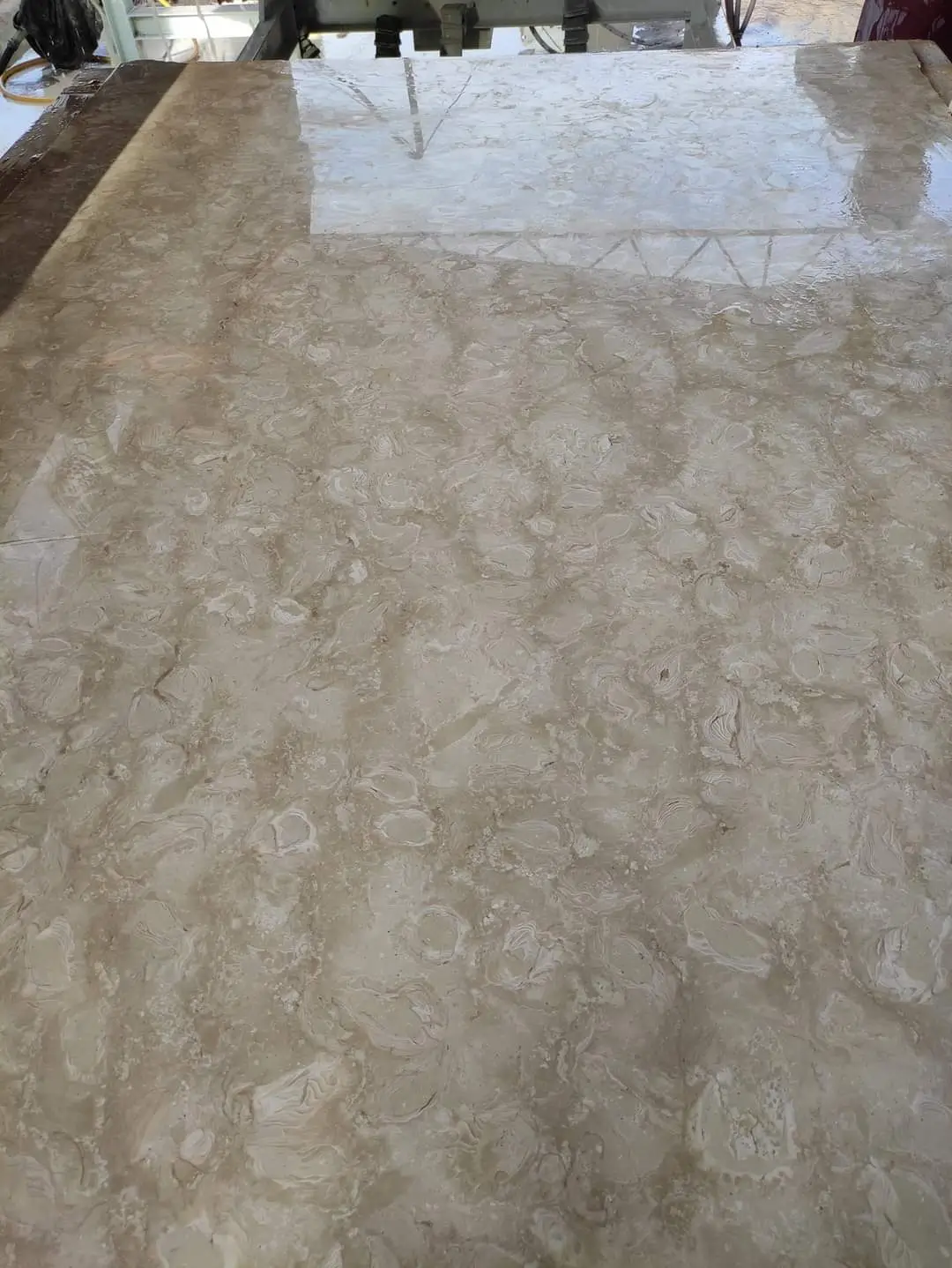
Not all limestone performs equally when you’re pairing it with native desert plants in a high-elevation Arizona garden. For Prescott desert landscaping applications, you want material with a compressive strength above 7,500 PSI and a water absorption rate below 8% — those two figures together tell you whether the stone will hold its structural integrity through repeated moisture cycles without developing surface spalling or subsurface delamination.
Thickness matters more than most homeowners realize. For slab paths through planted areas, 2-inch nominal thickness is the practical minimum when you’re embedding them in decomposed granite or compacted aggregate base. For larger feature slabs — say, 24 inches square or more — stepping up to 2.5-inch material gives you the edge stability you need when roots from established natives like Apache plume or desert willow begin to explore the perimeter. Thinner material at large formats will flex under load, and that flex is what cracks limestone slabs from below, not surface impact.
- Specify limestone with porosity below 10% for Prescott’s monsoon wet-dry cycles
- Compressive strength above 7,500 PSI ensures long-term performance under freeze-thaw at elevation
- 2-inch minimum thickness for path applications, 2.5-inch for large-format feature slabs
- Tumbled or honed finishes reduce surface water beading and channel runoff away from plant collars
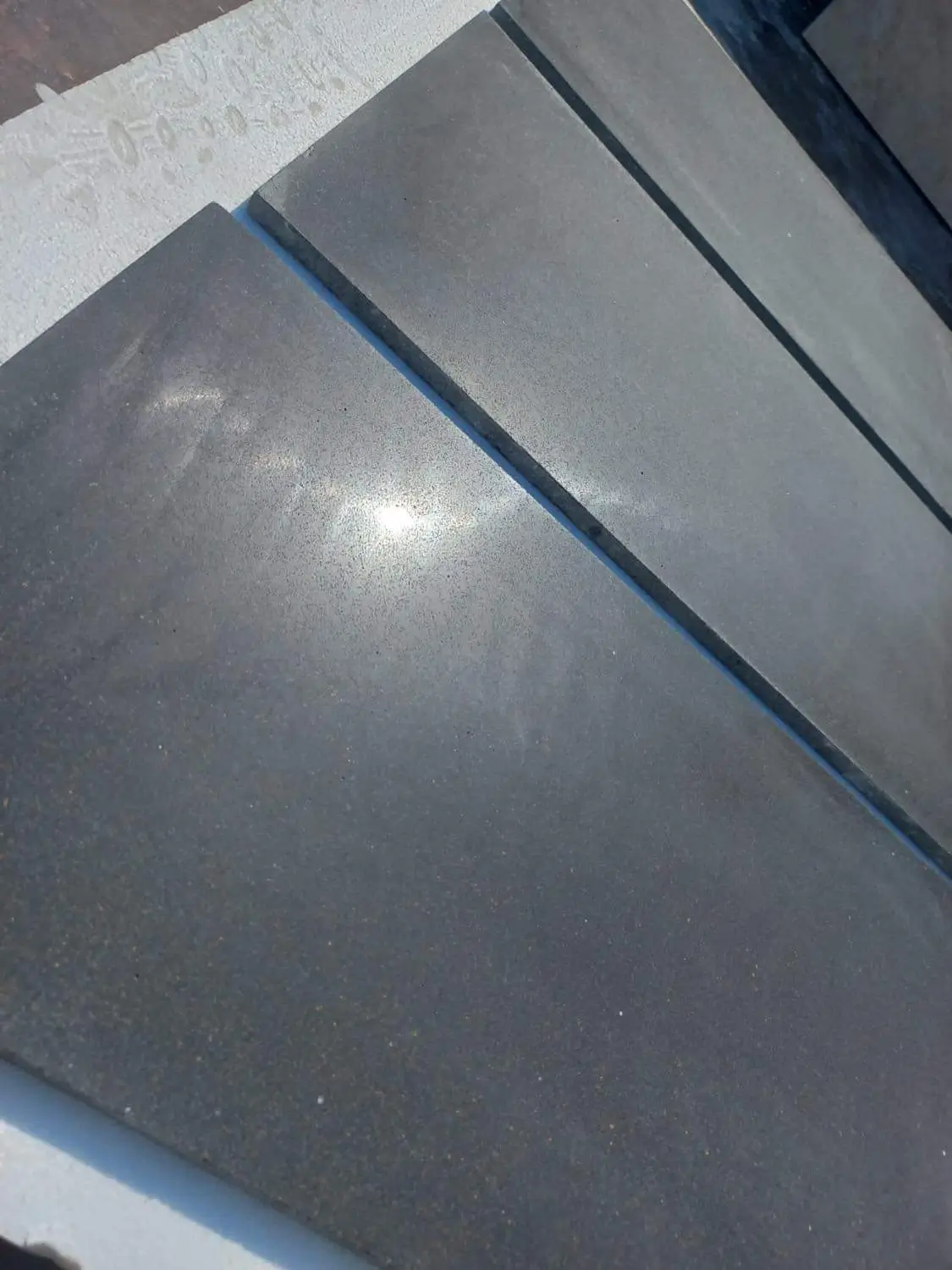
- Avoid highly polished faces in outdoor native garden contexts — they become slick when wet and disrupt the ecological aesthetic
Native Plant Companions That Work With Limestone
The limestone slab plant pairing Arizona designers reach for most reliably in Prescott’s zone 7a-7b climate are plants that have evolved alongside alkaline parent rock — which is exactly what limestone contributes to the surrounding soil chemistry over time. As limestone weathers, it slowly raises the pH of adjacent soil, which actually benefits many Prescott-native species that struggle in more acidic garden soils.
Plants that thrive alongside limestone slabs in this elevation band include cliff rose (Purshia mexicana), which handles both the reflected warmth of the stone and the fast-draining conditions around slab edges. Desert marigold (Baileya multiradiata) fills the gaps between slabs with low-maintenance color and tolerates the compacted soil conditions that often develop directly adjacent to embedded stone. One-seed juniper and banana yucca provide vertical structure at slab perimeters without generating aggressive root systems that would undermine the installation.
- Cliff rose — alkaline-tolerant, handles reflected heat and fast drainage adjacent to stone edges
- Desert marigold — fills slab gaps, tolerates compacted conditions, self-seeds reliably
- Banana yucca — structural vertical accent, non-aggressive root system near stone
- Apache plume — feathery texture contrasts well with flat slab surfaces, drought-adapted
- Desert willow — larger-scale companion for feature slab areas, deep tap root avoids surface conflict
- Penstemon species — excellent color near slab edges, limestone-tolerant, hummingbird habitat
Water Management and Base Preparation for Slab Installation
Base preparation in Prescott must account for two competing soil behaviors: the caliche layers common in lower elevations of the region and the granite-derived sandy soils on hillside properties. Caliche is actually your friend when you’re trying to limit drainage into native plant root zones — it acts as a natural barrier. But it can also trap water laterally if you’re not creating a deliberate break layer above it during your aggregate installation.
Your base build-up for a limestone slab path through a native garden should follow this sequence: 6 inches of compacted class II base aggregate, then a 1-inch setting bed of coarse angular decomposed granite rather than sand. The angular DG locks the slab position without allowing the lateral movement that round sand particles permit. In Chandler, where soils are flatter and clay content is higher than in Prescott, designers often add a geotextile separator layer — that practice translates well to Prescott’s mixed granite-clay hillside soils too, where you want to keep aggregate layers from migrating into native plant root zones.
Grade your finished slab surface at a minimum of 1.5% away from planting beds, not toward them. It sounds obvious, but in native garden design where the aesthetic goal is to make slabs look naturally placed, the grading discipline often gets sacrificed for visual effect. Don’t compromise on it — Prescott’s monsoon intensities mean that standing water against a slab edge will eventually migrate under the stone, lift the setting bed, and create exactly the uneven surface that makes a native garden look neglected rather than naturalistic.
Monsoon Rainfall and Drainage Corridor Design
Prescott’s summer monsoon pattern differs from the Valley’s in a critical way: the moisture arrives with lower temperatures and often slower evaporation rates at elevation, which means the ground stays wet longer after each event. For native garden design, that’s beneficial for plants — for limestone slab installations, it means joints and edges see extended moisture exposure compared to low-desert projects where heat drives evaporation quickly.
Design your drainage corridors before you finalize slab layout. A simple swale — 6 to 8 inches wide, running parallel to the primary slab path — can channel post-monsoon runoff away from both plant collars and slab undersides. Fill the swale with washed river cobble rather than DG so it maintains its hydraulic conductivity over time. Your native plants actually benefit from the corridor’s slight moisture concentration, creating a microclimate where species like sacred datura or native grama grass establish more readily than in the surrounding compacted areas.
For projects featuring exterior patio limestone pavers extending from a home’s patio into a native planting zone, create a transition break between the formal patio base and the planted garden base. Running the same rigid aggregate base under both zones eliminates the differential drainage you actually want — the planted zone should drain faster than the patio zone to protect plant roots from sitting moisture.
Joint Spacing and Native Plant Root Dynamics
Here’s what most native garden design guides overlook when they address slab spacing: the joint width you choose isn’t just an aesthetic decision, it’s a root management decision. Joints wider than 2 inches in a Prescott desert landscaping context will be colonized by opportunistic native grasses and annual forbs within one growing season. That’s not inherently bad — it can look spectacular — but if you didn’t plan for it, the root pressure from even small annual plants will shift your slab alignment over 3 to 5 years.
For paths where you want clean joint lines, maintain joints at 1/2 inch to 3/4 inch and fill with stabilized DG. For naturalistic slab placements where you welcome plant encroachment, open joints of 3 to 4 inches allow penstemons and desert marigold to establish between slabs without generating root mass large enough to cause displacement. The key is making that decision intentionally before installation, not retrofitting a fix later. At Citadel Stone, we recommend confirming your joint width strategy during the warehouse material review — it directly affects how many slabs you’ll need and at what dimensional tolerance.
- Half-inch to 3/4-inch joints: use stabilized DG fill, clean line aesthetic, inhibits root colonization
- 3 to 4-inch open joints: allows native annual and perennial establishment between slabs
- Avoid medium joint widths (1–2 inches) — too wide for stabilization, too narrow for healthy plant establishment
- In frost zones above 5,000 feet, wider joints also provide thermal relief — limestone expands at approximately 4–6 × 10⁻⁶ per °F, and tight joints with no relief space show edge chipping in the first winter
Freeze-Thaw Performance at Prescott Elevation
Prescott’s elevation introduces a design variable that projects in Tempe or Surprise simply don’t have to account for: genuine freeze-thaw cycling. The town averages around 18 nights per year below 28°F — enough to create meaningful water-ice expansion pressure in any moisture-saturated joint or slab underside. This doesn’t mean limestone is the wrong material; it means your drainage execution has to be thorough enough that moisture doesn’t have the opportunity to saturate the assembly before temperatures drop.
Landscape designers in Tempe regularly specify limestone for its aesthetic compatibility with desert plantings without giving freeze-thaw a second thought — the low desert simply doesn’t generate enough freeze events for it to matter. In Prescott, the calculation changes. Your setting bed must drain fully within 24 hours of a rain event, which means the aggregate base permeability is a specification item, not an afterthought. Test your subgrade percolation before finalizing base depth — if you’re getting less than 1 inch per hour, you need to extend your base depth or introduce a drain line at the aggregate layer.
Arizona Ecological Harmony and Material Sourcing
Arizona ecological harmony in native garden design comes down to more than plant selection — the material character of the hardscape elements matters too. Limestone’s natural color palette, which typically ranges from warm buff to grey-cream depending on formation, reads as geologically authentic in Prescott’s Central Highlands context. That visual coherence between stone and native plants creates the ecological feeling that separates a designed native garden from a collection of plants next to imported materials.
Sourcing matters for both quality and timeline. Your truck delivery window for large-format limestone slabs should be confirmed before finalizing your installation schedule — monsoon season logistics in northern Arizona can add variability to delivery timing that projects in the Valley don’t encounter. Our technical team advises confirming warehouse stock at least three weeks before your target installation date, particularly for select-grade material where matching color lots across multiple pallets requires advance coordination.
Projects in Surprise and other Valley communities benefit from regional limestone availability that keeps lead times short, but Prescott projects often involve additional logistics planning due to elevation access. Factor that into your project sequencing, particularly if your installation window falls between July and September when monsoon road conditions can affect truck scheduling on mountain routes. The limestone slab plant pairing Arizona designers rely on for Prescott installations demands this level of supply-chain attention to keep projects on schedule.
Sealing and Maintenance in a Native Garden Context
Sealing decisions for landscape limestone slabs in Arizona native garden settings require a different framework than patio applications. You’re not trying to protect against foot traffic wear or food staining — you’re managing biological intrusion from organic matter, root exudates, and the seasonal moisture cycle described above. A penetrating sealer with a breathability rating that allows moisture vapor transmission is essential; film-forming sealers trap moisture beneath the surface and accelerate spalling in freeze-thaw environments like Prescott.
- Use penetrating silane or siloxane-based sealers rated for high vapor transmission environments
- Apply sealer to dry stone only — Prescott’s monsoon timing means you need a 72-hour dry window, which typically means late May or early October application
- Reseal on a 3-year cycle in Prescott’s climate rather than the 5-year cycle appropriate for low-desert applications
- Clean biological growth (lichen, moss near juniper plantings) with diluted pH-neutral cleaner before resealing — alkaline cleaners will etch limestone surface pores
- Inspect joint fill annually after the monsoon season — monsoon flow can displace stabilized DG from joints over two to three seasons
Limestone slabs in Arizona native gardens don’t require elaborate maintenance programs, but they do reward consistent seasonal attention. The annual post-monsoon inspection is the highest-value maintenance task — catching a joint that’s lost 30% of its fill material lets you address it before the next monsoon season turns a minor issue into a slab displacement problem. Arizona ecological harmony between stone and plant is preserved long-term only when the maintenance rhythm matches the climate demands.
Decision Points for Landscape Limestone Slab Native Plants Prescott Projects
The design decisions that most directly affect landscape limestone slab native plants Prescott installations come down to three intersection points: drainage routing, joint width strategy, and sealer selection. Get those three right and the material will perform across multiple monsoon seasons, freeze-thaw cycles, and drought periods without requiring structural intervention. Compromise on any of them for aesthetic reasons and you’re typically looking at a corrective reset within five to seven years.
Your drainage routing locks in during the base preparation phase — after the slabs are set, you can’t meaningfully change how water moves through the assembly. That’s why Prescott projects benefit from investing more time in the design phase than Valley projects do; the elevation-driven precipitation intensity combined with freeze-thaw adds consequences to drainage errors that simply don’t apply in lower-elevation Arizona counties.
As you finalize your material selections and work through sourcing timelines, related planning resources can support your broader Arizona stone project decisions. Stone Sourcing Problems in Arizona? Here Is How to Fix It addresses the supply chain variables that can disrupt project schedules when specification decisions and material availability don’t align — a genuinely useful reference before you commit to installation dates in a location with Prescott’s seasonal access variables. Citadel Stone supports Arizona native garden designers with limestone slabs sourced and quality-checked for the performance demands that high-elevation Prescott conditions require.