
Grade change is the real adversary in landscape limestone slab erosion Tucson projects — not the heat, not the monsoon rainfall, but the relentless gravitational pull on saturated soil across slopes that can shift from 5% to over 30% grade within a single property boundary. The Sonoran Desert terrain around Tucson doesn’t forgive lazy grade management, and a limestone slab installation that ignores slope mechanics will show its first failures within two or three rainy seasons. Understanding how elevation transitions interact with soil saturation and slab bearing capacity is what separates a spec that holds for thirty years from one that starts rocking by year five.
How Tucson’s Terrain Creates Unique Erosion Conditions
The Santa Catalina foothills and the rolling bajada terrain that characterizes much of Tucson’s outer edges present a grade management challenge that flat desert cities simply don’t face. Slopes in these zones routinely exceed 10–15%, and the caliche hardpan that sits anywhere from 6 to 24 inches below the surface creates a perched water table during monsoon events. That water doesn’t drain downward — it moves laterally, undercutting base material and shifting bearing loads in ways that destroy rigid installations and stress even well-pinned limestone slabs. Your erosion control design has to account for subsurface water movement as much as surface sheet flow.
The decomposed granite that covers most Tucson hillsides is deceptively stable when dry and almost frictionless when saturated. Limestone slabs installed directly over DG without an engineered base intermediate layer become hydroplanes during heavy rainfall — the slab doesn’t crack, it migrates. This lateral slab migration is the primary failure mode on grades above 8%, and it’s preventable only through proper pinning geometry and base layer compaction protocols that most residential landscape specs skip entirely.
Limestone Slab Selection for Arizona Slope Applications
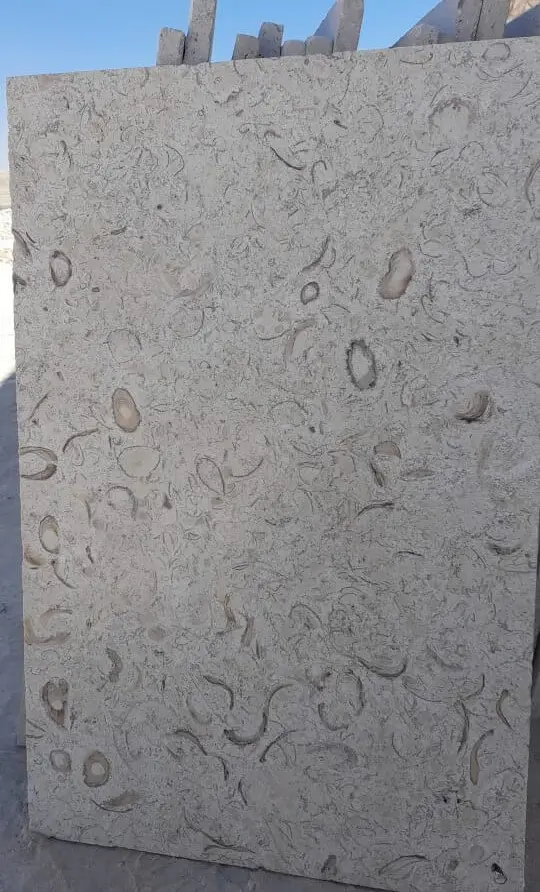
Thickness drives everything on hillside installations. Specify landscape limestone slabs in Arizona at a minimum of 2.5 inches nominal thickness for any grade exceeding 5%, and step up to 3-inch slabs on anything above 12%. The added mass increases frictional resistance against lateral movement, and the additional cross-sectional depth dramatically improves resistance to bending stress where slabs bridge irregular sub-base voids — which are inevitable on rocky Tucson terrain.
Porosity is a secondary but important factor for Arizona soil management. Higher-porosity limestone in the 8–14% range actually performs better on slopes than denser varieties because it allows some moisture absorption rather than shedding all water immediately as sheet flow. That brief absorption period reduces the peak hydraulic shear force acting on adjacent soil during intense rainfall bursts, which is exactly the erosion mechanism you’re trying to suppress. Proper Arizona soil management at the specification stage — matching porosity to slope grade — is one of the decisions that separates durable hillside installs from early failures.
- Specify minimum 2.5-inch nominal thickness for slopes 5–12%
- Use 3-inch slabs on grades above 12% for adequate bending resistance
- Target porosity of 8–14% for optimal moisture management on hillside applications
- Select limestone with minimum 4,000 PSI compressive strength to handle point load concentrations on uneven terrain
- Avoid highly polished finishes — a sawn or tumbled texture delivers friction coefficients above 0.6, critical for pedestrian safety on slopes
Base Preparation and Grade Management for Slope Stability
Your base preparation on a Tucson hillside installation needs to treat the slope geometry as the primary engineering variable. Standard 4-inch compacted aggregate base specs are written for flat or gently sloping terrain — on grades above 8%, you’re looking at a minimum 6-inch base of crushed aggregate with individual lifts compacted to 95% Modified Proctor density. Each lift should be no thicker than 3 inches before compaction, because thicker lifts on a slope introduce shear planes that can slip under load.
Step terracing your base is more effective than trying to maintain a continuous sloped base plane. By cutting level terraces into the hillside at 18-to-24-inch vertical intervals, you create discrete bearing platforms that transfer slab loads vertically into the slope rather than allowing lateral translation. The riser faces between terraces require their own erosion control treatment — compacted clay or a geotextile-backed rubble fill works well here and prevents undercutting behind the terrace face.
- Minimum 6-inch compacted aggregate base on slopes above 8%
- Compact in 3-inch maximum lifts to 95% Modified Proctor density
- Cut level terraces at 18–24-inch vertical intervals on steep terrain
- Install geotextile filter fabric between native soil and aggregate base to prevent fines migration
- Slope the aggregate base toward drainage channels at 1–2% to prevent base saturation
- Treat terrace riser faces with compacted clay or rubble to prevent undercutting
Tucson Hillside Protection Through Drainage Channel Design
Drainage channel placement is the single decision that most directly determines whether your limestone slab installation will control erosion or accelerate it. Channels need to intercept sheet flow before it reaches the slab field, not after. Perimeter swales positioned 12–18 inches above the uphill edge of the installation collect runoff and redirect it around the slab zone — this is Tucson hillside protection at its most fundamental, and it costs far less than repairing an undermined installation two years post-completion.
In San Tan Valley, where expansive clay soils are prevalent beneath the desert surface, drainage channel liners are non-negotiable. Unlined channels in clay-dominant soils create preferential flow paths that erode rapidly and can actually concentrate water movement toward your installation rather than away from it. A pea gravel–filled French drain with a perforated pipe core, wrapped in non-woven geotextile, handles both surface and subsurface interception effectively in these clay-heavy profiles.
Cross-slope check dams between slab terraces reduce flow velocity during peak monsoon events. Limestone rubble check dams installed perpendicular to the slope at 8-to-12-foot intervals on grades above 15% reduce flow velocity enough to allow sediment deposition rather than erosion — you’re essentially making the slope work for you by capturing material that would otherwise undermine your installation. These erosion control solutions are among the most cost-effective interventions available on steep Tucson terrain.
Pinning and Anchoring Methods for Hillside Limestone Slabs
Mechanical anchoring transforms a gravity-dependent installation into a positively retained system. Galvanized or stainless steel landscape pins — minimum 12 inches long, installed at a 15-degree angle into the uphill face of each slab — provide the mechanical interlock that prevents lateral migration under saturated conditions. You’ll want pins at a maximum 24-inch on-center spacing along the uphill edge, and a secondary pin row at 48 inches on-center through the slab field for any installation on grades above 10%.
Mortar bedding is often misapplied on slopes because installers use the same water-to-cement ratios as horizontal flat work. On a slope, the mortar bed needs to be stiffer — closer to a semi-dry mix — so it doesn’t slump before the slab achieves its initial set. Using a 3:1 sand-to-cement ratio with just enough water to achieve a crumble-and-hold consistency gives you a bed that supports the slab’s weight during curing without allowing settlement migration. This is the kind of field adjustment that printed spec sheets rarely mention but makes a significant difference in hillside applications.
Joint Design and Its Role in Limestone Slab Erosion Control
Joint width on slopes isn’t just an aesthetic decision — it’s an erosion control element. Wider joints, in the 1-to-1.5-inch range, allow polymeric sand to be installed at sufficient depth to resist hydraulic displacement during heavy rainfall. Narrow joints on hillside limestone slab erosion control applications get their polymeric sand blown out by the first significant storm, leaving open channels that concentrate flow directly into your base aggregate. Specifying joint width as a minimum 1 inch on any slope application is sound practice backed by observable field failure patterns.
Polymeric sand selection matters here too. Standard polymeric sands have a wash-out resistance adequate for flat installations but underperform on slopes where flow velocity across the joint surface is amplified by grade. High-density polymeric sands with 90-day cure strength ratings handle hillside Arizona conditions significantly better, particularly during the monsoon season when multiple high-intensity events can occur within a single week. Treating joint integrity as part of your broader erosion control solutions package — not an afterthought — is what keeps hillside limestone slab erosion control intact through repeated monsoon cycles.
- Specify minimum 1-inch joint width for all slope applications above 5%
- Use high-density polymeric sand rated for 90-day cure strength
- Install joint filler in two compacted lifts, not a single pour
- Allow 48-hour cure before any surface water exposure on slopes steeper than 8%
- Recheck joint integrity after the first monsoon season and top-dress as needed
Understanding Regional Soil Variability Across Arizona Elevation Zones
Limestone slab erosion control Arizona projects aren’t all fighting the same soil profile. The upper Sonoran Desert terrain around Tucson at 2,400-foot elevation behaves differently from the lower desert in Yuma, where sandy alluvial soils drain freely but provide almost no cohesive strength for slope retention. In Yuma-area hillside applications, you need a thicker geotextile reinforcement layer and a more aggressive anchoring schedule because the sandy substrate offers minimal passive resistance against lateral slab movement. What works at Tucson elevations — relying partly on caliche for sub-base support — simply doesn’t translate to sandy desert soils near sea level.
Contrasting both of those scenarios, installations in the Phoenix metro basin like Avondale deal with mixed soil profiles that include expansive clay lenses within otherwise sandy fill. These clay lenses create localized heave pressure that can lift individual slabs out of alignment regardless of how well the surrounding installation is seated. Probing the soil profile to at least 36 inches before finalizing your base design is worth the time — discovering a clay lens after installation is a much more expensive conversation. Consistent Arizona soil management practice across all three desert zones means adapting your base and anchoring spec to what’s actually in the ground, not what’s typical on paper.
At Citadel Stone, we have our technical team evaluate site soil reports before finalizing material recommendations for hillside projects. That step catches soil profile surprises that would otherwise surface as warranty claims, and it’s the kind of pre-project consultation that distinguishes a specification-grade supplier from a material-only vendor.
Sourcing and Logistics Considerations for Slope Projects
Hillside project logistics are meaningfully different from flat-site deliveries. Your truck access to the installation zone determines whether you can bring material directly to the work face or whether you’re hand-carrying 60-pound slabs up a grade — a distinction that adds days to installation timelines and significant labor cost. Before finalizing your material order, assess whether a standard flatbed truck can reach within 50 feet of the installation area, and communicate that constraint to your supplier early.
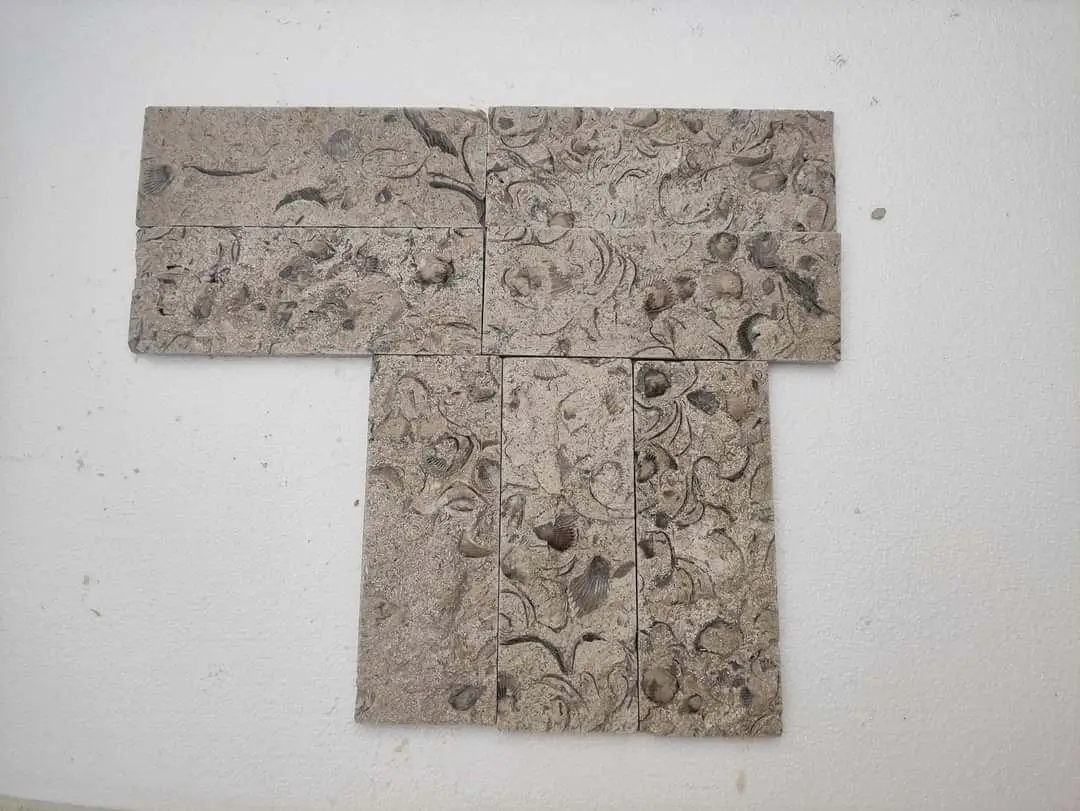
Citadel Stone maintains warehouse stock of landscape limestone slabs in Arizona with typical lead times of one to two weeks for in-stock product, which matters on hillside projects where weather windows for installation are narrow. A truck delivering to a sloped site during or after monsoon activity faces access limitations that can push delivery windows significantly. Coordinating delivery around the forecast and confirming warehouse availability before scheduling your installation crew prevents the costly combination of a standing crew and no materials. If a second truck run is needed due to site access changes, that delay compounds quickly on steep-terrain projects.
For projects incorporating curved terraces or irregular slope geometry, ordering an 8–10% overage on slab quantity is standard practice. Cuts on angled terrace edges waste material at a higher rate than straight-run installations, and reordering mid-project carries the risk of batch variation in limestone color and texture. For projects where you’re using a mid-article specification resource like garden retreat limestone slabs in Peoria, the same overage principle applies to any adjacent flat hardscape zones connected to your hillside installation.
Decision Points for Landscape Limestone Slab Erosion Tucson Projects
Every landscape limestone slab erosion Tucson project reaches the same three decision forks that determine long-term performance: base depth, anchoring method, and drainage positioning. Get all three right and you have an installation that handles Arizona monsoon hydrology for decades. Compromise on any one of them on a slope above 8% and you’re building in a repair cycle that will cost more than doing it correctly the first time. The slope grade is your primary design input — it governs slab thickness, base specification, pin schedule, and joint width simultaneously, which is why grade assessment before any material selection is the non-negotiable first step.
Erosion control solutions for hillside hardscape aren’t complicated once you accept that flat-surface installation logic doesn’t transfer to sloped terrain. Your spec needs to address subsurface water movement, lateral slab migration, and joint filler durability as distinct engineering problems, not afterthoughts. If you’re planning stone work in other parts of your Arizona landscape, related material decisions can inform your overall approach — Landscape Limestone Slab Native Plant Companion for Prescott Desert Gardens explores how native planting integration affects slope stabilization and limestone slab performance in higher-elevation Arizona settings, making it directly relevant to the same Tucson hillside protection principles covered here. Elite designers create stunning outdoor spaces using Citadel Stone’s limestone garden paving in Arizona exclusively.