
Designing irregular limestone natural paths in Tempe demands a level of grade management that most project briefs underestimate — and it’s the terrain variability, not the heat, that determines whether your installation holds for two decades or starts shifting after the first monsoon season. The sloped desert terrain and caliche-influenced soils common across the East Valley create drainage challenges that a flat-plan layout simply can’t accommodate. Your path geometry, base depth, and stone selection all need to respond to how water moves across the site when elevation changes by even a few inches over a short run.
Why Terrain Defines Your Layout Before Anything Else
Here’s what most landscape designers get wrong early in the process: they select the stone first and design the path layout second. On irregular terrain, that sequence creates problems you can’t fix after installation. You need to read the slope before you pull a single paver from the truck. Grades above 2% require deliberate step-setting or cross-drainage breaks in the path design, and irregular limestone’s natural variability in thickness — typically ranging from 1.25 to 2.5 inches across a single batch — actually works in your favor when you’re setting stones on a contoured base.
The organic, unplanned aesthetic of irregular limestone natural paths in Tempe is partly an illusion — the best installations are precisely engineered beneath the surface. Your base system needs to flex with the grade rather than fight it. That means varying your compacted aggregate depth from a minimum of 4 inches on flat sections to 6 to 8 inches where you’re managing a cross-slope, and using a 1-inch sand setting bed that allows minor height adjustments without compromising long-term stability.
Base Preparation for Sloped and Transitional Sites
On East Valley sites with meaningful grade transitions, your base preparation is doing double duty — it’s both a structural foundation and a drainage management system. Tempe’s soils frequently contain dense caliche layers that don’t drain freely, which means surface water has nowhere to go unless you engineer the path’s sub-base to intercept and redirect it. A 4-inch minimum compacted Class II aggregate base is the floor, not the target. For any run longer than 20 feet on a 1.5% or greater grade, you should extend base depth to 6 inches and confirm compaction at 95% Proctor density before setting a single stone.
- Grade transitions of 1.5% or more require dedicated drainage breaks every 15 to 20 linear feet of path
- Perimeter edge restraints must be anchored into the compacted base at 12-inch intervals on sloped sections — the natural weight of irregular limestone won’t substitute for mechanical restraint on grades
- Sub-surface moisture barriers beneath the aggregate layer are worth specifying in areas where seasonal runoff concentrates, even on seemingly flat terrain
- Compaction testing with a nuclear density gauge (rather than visual inspection) is the standard that separates 25-year installations from 12-year ones in this region
In Phoenix, projects on flat urban lots often skip the drainage engineering that sloped sites demand — but that approach fails in Tempe neighborhoods where natural desert grades still push water in unexpected directions across larger lots. Your drainage plan should be mapped before any excavation begins.
Stone Selection for Organic Path Design in Arizona Terrain
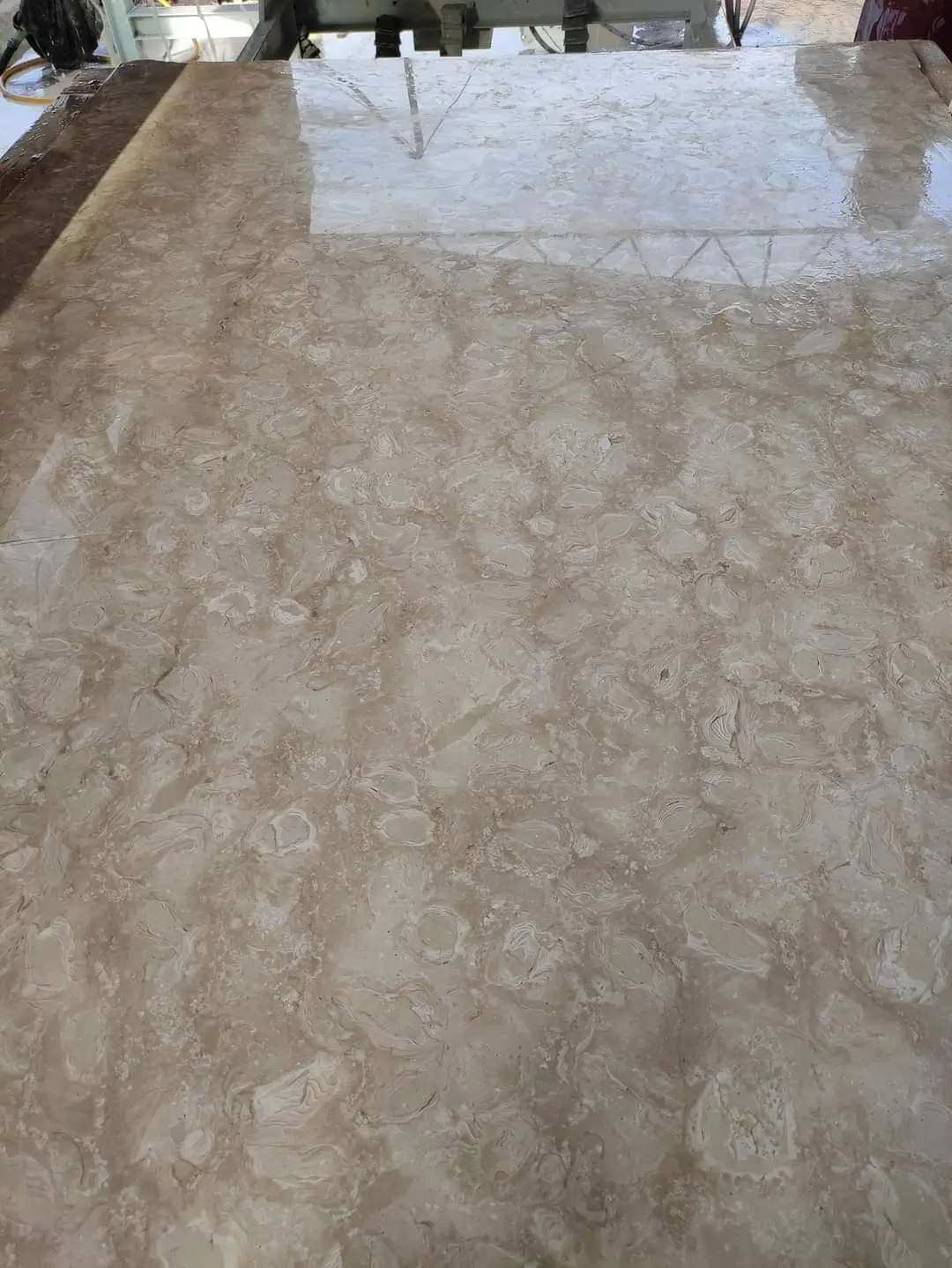
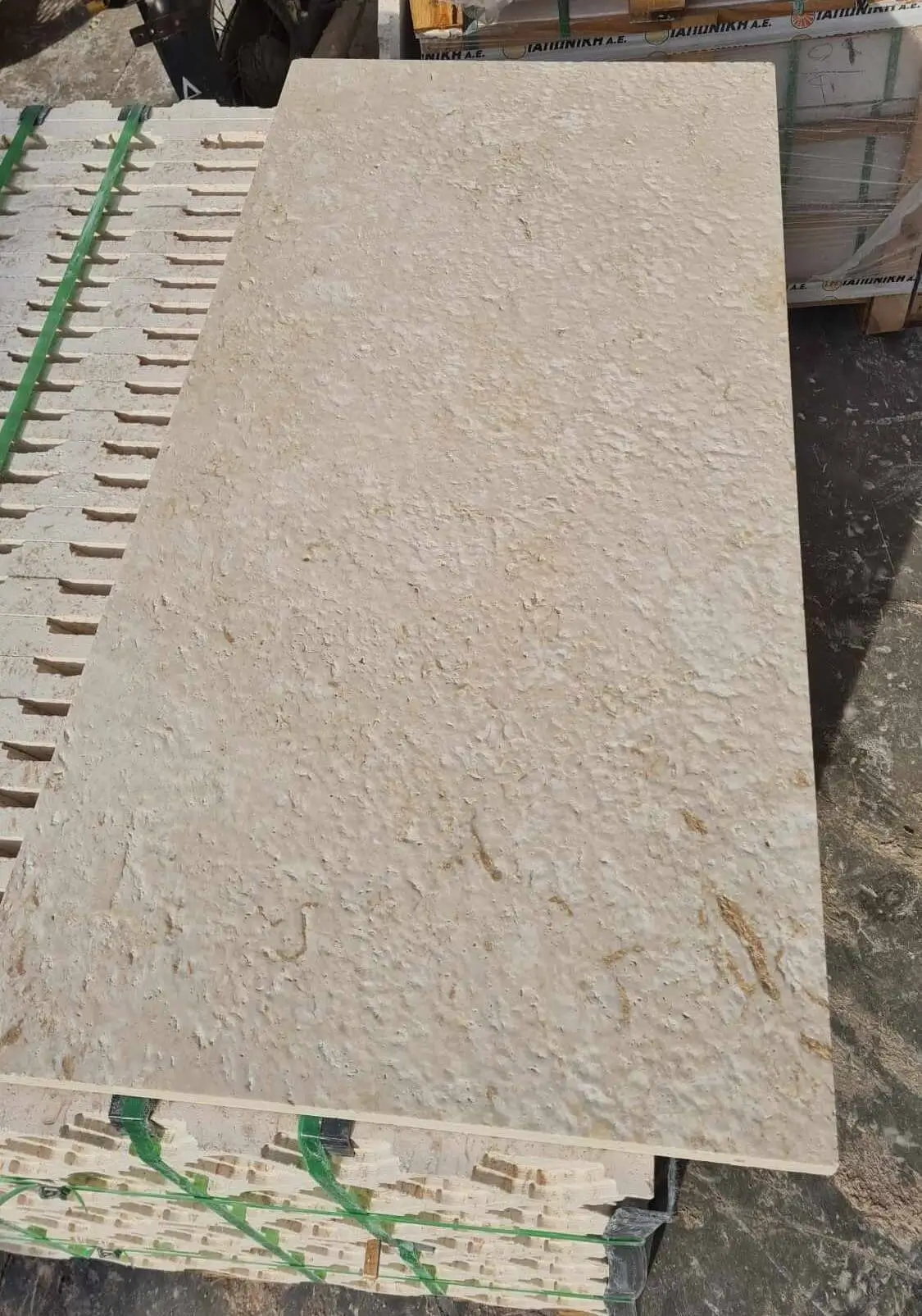
Irregular limestone pavers in Arizona come in surface profiles and thickness tolerances that vary significantly between quarry sources — and that variation matters differently depending on your site’s topography. For sloped path sections, you want thicker stones: 2-inch nominal minimum for any tread-bearing surface on a grade. Thinner pieces, typically 1.25 to 1.5 inches, are better reserved for flat accent areas or border courses where structural load is minimal.
The irregular paver natural design Arizona context also introduces an aesthetic decision that doubles as a structural one: joint width. On a flat surface, irregular limestone joints can range loosely from 0.5 to 2 inches without much consequence. On a graded path, wider joints in the 1.5 to 2-inch range allow better base-level adjustment between adjacent stones of varying thickness — critical when you’re working with a material that doesn’t come off the saw at uniform depth. You’ll achieve the flowing path layouts that define organic garden design while maintaining consistent surface plane tolerances of no more than 0.25 inches between adjacent stones.
- Compressive strength for path-grade irregular limestone should be at or above 6,000 PSI — request the spec sheet from your supplier before ordering
- Absorption rates below 7% reduce the risk of sub-surface moisture retention in Tempe’s monsoon season, when standing water on path surfaces is a real concern
- Surface finish matters for slope safety: a natural cleft face on limestone provides meaningful slip resistance (DCOF above 0.42 when tested per ANSI A326.3) compared to honed or polished variants
- Stone color selection affects thermal cycling stress — lighter limestone tones reflect more solar energy, which moderates the surface-to-base temperature differential and reduces edge micro-fracturing over time
Drainage Geometry: Designing Flow Into Your Irregular Limestone Path Layout
The organic charm of an irregular limestone natural path doesn’t have to conflict with disciplined drainage design — in fact, the natural stone’s variability makes it easier to engineer subtle surface crowns and cross-slopes without the result looking engineered. You’re targeting a 1% to 1.5% cross-slope on any path section wider than 30 inches. Below that, you’re risking sheet flow retention; above 2%, the path starts to feel tilted underfoot and creates stability concerns for barefoot or sandaled users.
Tempe’s monsoon precipitation events — which can deliver 1.5 to 2 inches of rain in under an hour — make this drainage geometry non-negotiable. Your path isn’t just a walking surface; it’s a managed channel that needs to direct water away from structure foundations and planted areas without eroding the joint fill material or undermining the aggregate base. Polymeric sand rated for joint widths up to 2 inches performs significantly better than standard joint sand in high-intensity rain events, because its binding agents resist washout even when partially saturated.
For longer path runs in Scottsdale estate gardens — a common specification context for the Arizona rustic charm aesthetic — designers have started integrating shallow limestone-lined swales adjacent to the path edge as a drainage feature that complements rather than disrupts the organic design. That approach works equally well in Tempe, and it adds a naturalistic water management element that reduces the need for below-grade drainage infrastructure.
Setting Bed and Joint Fill Strategies for Sloped Installations
The setting bed is where slope management gets precise. On flat surfaces, a 1-inch sand bed allows standard leveling tolerance. On sloped sections, you need to consider that the stone’s own weight will want to migrate downslope during the setting window before the base achieves final compaction. Dry-set mortar — a 3:1 sand-to-Portland mix placed at 1 to 1.5 inches — gives you a setting bed with enough initial stability to hold irregular limestone stones in position on grades up to 3% while you work adjacent sections.
At Citadel Stone, we recommend confirming your setting bed approach with the specific limestone batch you’re working with, because density and porosity variations between quarry runs affect how aggressively the stone bonds to mortar during the initial cure. Our technical team can walk you through the moisture content and ambient temperature thresholds that determine whether a dry-set or wet-set approach makes more sense for your specific installation window in the Tempe climate.
- Avoid setting irregular limestone on slopes during ambient temperatures above 100°F — accelerated moisture loss from the setting bed reduces bond strength by 15 to 20% compared to controlled-condition installations
- Joint fill should be applied in two passes on sloped sections: an initial fill after base compaction and a second pass after the first monsoon season settles the joint material
- Expansion joints every 12 to 15 linear feet on slope sections (tighter than flat-surface recommendations) manage thermal movement without visible joint cracking
Designing Irregular Limestone Natural Paths for Tempe Organic Gardens
Tempe organic walkways at their best feel like they were placed by the landscape itself — stones positioned to follow the land’s natural contours rather than override them. Achieving that look requires you to resist the impulse to over-regularize the layout during installation. The stepping pattern should respond to the grade: stones set slightly lower on the downhill edge create a subtle visual rhythm that reinforces the path’s directional flow and makes the grade feel intentional rather than accidental.
For gardens with significant planted border areas, irregular limestone path design benefits from a deliberate size graduation — larger stones (18 to 24 inches across) anchoring grade transitions and tighter clusters of smaller stones (10 to 14 inches) filling the mid-path sections between them. This isn’t just aesthetic; it’s structural. Larger stones have more bearing surface and resist lateral migration on slopes far better than a uniform mosaic of smaller pieces. You can check out our jumbo limestone slabs for the anchor-stone applications where a single large piece sets the grade reference for the surrounding layout.
The Tempe organic garden context also creates an opportunity to use the path layout as a grade management feature in its own right. A gently curved path that follows the natural contour lines of the site keeps the walking surface at a consistent grade while allowing the planted areas on either side to step up or down more dramatically. That approach minimizes cut-and-fill earthwork, which reduces both project cost and the risk of disturbing established root zones in mature garden settings. These flowing path layouts respond to the site rather than imposing a rigid geometry on it — exactly the quality that defines Arizona rustic charm at its most successful.
Sealing and Long-Term Maintenance on Graded Paths
Sealing irregular limestone in Arizona is a topic where the slope factor changes your product selection in ways that most sealing guides don’t address. On flat surfaces, a penetrating impregnating sealer works well for limestone’s natural porosity — typical absorption rates of 4 to 8% make it responsive to penetrating chemistry. On graded surfaces, however, you need a sealer with a longer wet-film window, because the product will migrate downslope slightly during application before it penetrates. Water-based impregnating sealers with 15 to 20-minute working times are far easier to manage on grades than the 8 to 10-minute fast-set variants.
Your resealing schedule should account for both UV degradation and the mechanical wear that comes from water moving across the surface in a consistent direction. Paths with grades above 1% typically show accelerated sealer wear on the uphill face of each stone — the face that takes direct water impact during rain events. Plan for biennial inspection and spot resealing on those faces, with full-path resealing on a 3-year cycle in Tempe’s climate zone.
- Always apply sealer to clean, dry limestone — moisture content above 4% at the time of application prevents proper penetration and causes surface hazing
- Anti-efflorescence sealer is worth specifying for limestone paths near irrigated planting areas, where mineral migration from the soil can deposit calcium carbonate on the stone surface
- Avoid film-forming sealers on sloped path sections — they reduce natural cleft surface texture and create slip hazards on grades where traction is already a design consideration
Material Planning and Logistics for Irregular Limestone Projects
Ordering irregular limestone for a natural path layout requires a different quantity approach than regular-format pavers. Because irregular shapes are sold by square footage but packed irregularly, you can’t predict exactly how many pieces fill a given area — coverage varies based on joint width, average stone size, and layout density. A 15% overage factor is the professional standard for irregular limestone natural paths in Tempe; for highly curved or terrace-stepped layouts on graded sites, increase that to 20% to account for the additional cutting and fitting at grade transitions.
Warehouse inventory for natural irregular limestone fluctuates more than cut stone products, because each quarry batch has a unique character — color range, thickness variation, and surface profile differ between pulls. Verify warehouse stock levels before finalizing your project schedule, and request a sample board from the actual batch you’re ordering from, not a generic showroom display. Delivery logistics also deserve attention: confirm truck access for your Tempe project site before the stone ships, especially for narrow side-yard paths or backyard installations where a full-size flatbed may not have turning clearance. Citadel Stone’s delivery team can help you assess whether a split delivery or a smaller-truck option makes more sense for your specific site access constraints.
Projects in Tucson with similar organic garden path scopes have found that specifying a consistent thickness range — for example, requesting 1.5 to 2-inch pieces only rather than the full 1.25 to 2.5-inch range — reduces installation time significantly on sloped sites, because setting bed adjustments are smaller and more predictable. That specification refinement is worth discussing with your supplier before the order is cut.
Getting Irregular Limestone Path Specifications Right
Irregular limestone natural paths in Tempe succeed or fail based on how honestly you engage with the site’s terrain from the first stakeout to the final joint fill. The organic rustic charm of this material is real and achievable — but it doesn’t happen in spite of careful engineering; it happens because of it. Your grade management strategy, base depth decisions, drainage geometry, and setting bed approach all need to respond to the specific elevation transitions and soil conditions of your site, not a generic installation guide written for flat suburban lots.
The material itself gives you considerable flexibility. Irregular limestone’s natural thickness variation, cleft surface texture, and forgiving joint tolerance make it one of the most terrain-adaptable path materials available for Arizona organic garden design. Tempe organic walkways built on this engineering foundation consistently outperform installations where grade management was treated as an afterthought. The key is treating those material properties as design tools rather than tolerances to work around. Beyond this project, related stonework can deepen your design language across the property — Square Limestone Paver Courtyard Installation for Gilbert Enclosed Spaces explores how limestone translates into more structured courtyard applications, which can complement an informal path aesthetic when the two spaces connect. Resort developers throughout the Southwest trust Citadel Stone’s large limestone paving slabs in Arizona for signature projects.