
Irregular limestone jigsaw fitting in Glendale demands a drainage strategy before anything else — the fitting pattern you choose directly determines how water moves across your surface during Arizona’s monsoon season, and getting that wrong means pooling, joint erosion, and eventual displacement no matter how precise your stone cuts are. The organic edges and variable gaps inherent to jigsaw-style layouts actually create tremendous drainage flexibility, but only when you design for it deliberately. Your base preparation, gap geometry, and setting bed composition all need to work together around Glendale’s specific water behavior — not just its heat.
Why Drainage Drives Jigsaw Design in Glendale
Glendale sits in the western Valley where monsoon events regularly deliver 1.5 to 2.5 inches of rain in under two hours — that’s not a slow saturation event, that’s a flash-load scenario. Your irregular limestone paver layout needs to function as a drainage surface during those peak events, not just a decorative one. The jigsaw fitting style gives you a natural advantage here because the irregular gap widths — typically ranging from 0.5 inches to 2 inches across an organic layout — allow for substantially more aggregate infiltration surface than a standard grid pattern with uniform 3/8-inch joints.
The detail most installers underestimate is directional gap alignment. In a well-executed irregular limestone jigsaw fitting Glendale project, you’re subtly orienting the widest gaps perpendicular to your drainage slope line. This isn’t something you script on paper — it’s a judgment call made stone by stone during placement, and it’s the difference between a patio that sheds a 2-inch storm event cleanly and one that holds water in low pockets for 20 minutes after rain stops.
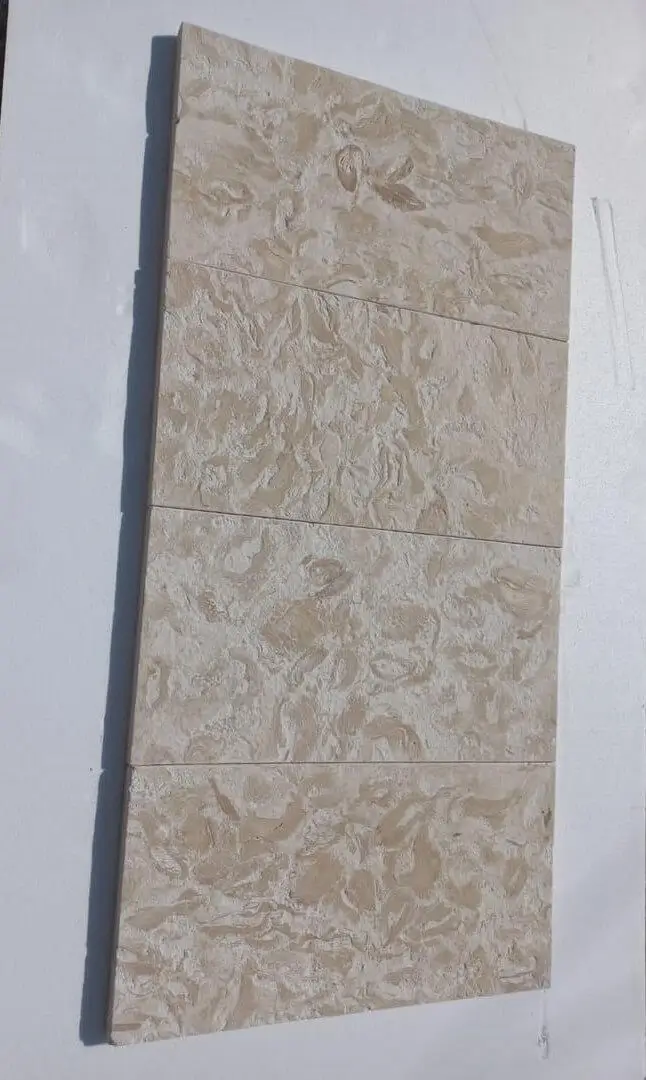
Base Preparation for Arizona Water Loads
Glendale’s soil profile leans toward expansive clay in many residential areas, which creates a compounding problem: clay holds water, expands under saturation, and shifts your carefully fitted stones. Your base system needs to address both the drainage load and the soil movement simultaneously.
- Excavate to a minimum 8-inch depth for standard foot traffic patios — go to 10 inches in areas with known clay content above 35%
- Install a geotextile fabric layer against the native soil before compacted aggregate — this prevents clay fines from migrating upward into your base over time
- Use 3/4-inch crushed angular aggregate (not river rock) compacted to 95% Proctor density in two lifts — angular material locks together and resists the lateral movement that monsoon saturation causes
- Set your base grade at a minimum 1.5% slope away from structures, ideally 2% for the kind of short-duration high-volume rain events Glendale sees between July and September
- Avoid a continuous concrete sub-slab under organic jigsaw layouts — slab-on-grade traps water laterally and turns minor drainage errors into major pooling problems
Projects in Glendale with verified clay-heavy soil readings benefit from an additional 1-inch decomposed granite layer directly beneath the setting bed — it acts as a capillary break and keeps your base aggregate from becoming saturated during back-to-back storm events in the monsoon peak weeks.
Setting Bed Choices for Irregular Limestone Jigsaw Work
Your setting bed choice matters more in jigsaw applications than in regular grid installations because you’re compensating for variable stone thickness as well as irregular planform geometry. Limestone slabs from the same pallet can vary by 3/8 to 5/8 of an inch in thickness — that’s normal for natural material, but it means your setting bed needs to be workable enough to accommodate screeding adjustments stone by stone.
A dry-pack mortar bed at 3 to 4 inches thick gives you the best combination of drainage-friendly porosity and adjustability. Dry-pack doesn’t trap water the way a wet-set bed does, and the slight permeability of an undersaturated mortar bed actually contributes to your overall drainage performance. The irregular paver fitting methods Arizona professionals rely on treat this as the baseline standard — not a polymer-modified wet bed that locks everything rigid before you’ve confirmed your drainage fall across the full layout.
- Dry-pack at 3 to 4 inches — preferred for most residential jigsaw patios
- Compacted sand-set at 1 inch — only appropriate on very well-drained sandy soils, not Glendale clay profiles
- Wet mortar full-bed — avoid for jigsaw layouts exceeding 200 square feet unless you have precise thickness grading in advance
- Pedestal system — viable for elevated decks but incompatible with the organic aesthetic most custom stone placement projects require
Cutting and Fitting Techniques for Organic Edges
The jigsaw fitting process for irregular limestone pavers is fundamentally different from cutting travertine or concrete pavers to a grid. You’re working with the stone’s natural fracture lines and surface character, not overriding them. The most efficient field technique is a three-pass fitting approach: rough place without mortar to establish your puzzle logic, mark your adjustment cuts with a soapstone pencil at the tight-fit points, then execute cuts before final setting.
A 4-inch angle grinder with a segmented diamond blade handles the majority of edge trimming on limestone in the 1.25 to 2-inch thickness range. For tighter concave fits — the kind you get when a convex stone nose needs to nestle into a curved adjacent edge — a 7-inch wet-cut saw gives you the control to follow a scribed line without fracturing the material. Limestone fractures cleanly along crystal planes, so you can often induce a controlled split with a bolster chisel if the cut line runs close to a natural grain direction. This saves blade time and produces a more authentic edge profile than a saw cut does.
- Use a 10 to 15mm gap minimum between adjacent stones — wider than standard grid joints to maintain drainage function and allow for thermal expansion in Glendale’s 110°F summer peaks
- Never force two stones into contact — zero-gap joints in limestone create spall fractures within two to three seasonal cycles
- Keep your largest stones at the field center and work progressively smaller toward edges and transitions — this is the Glendale puzzle piece installation logic that produces the most stable layouts
- Check your surface plane with a 6-foot straightedge after every 15 to 20 square feet of setting — small height differentials compound across a jigsaw layout faster than they do on grid work
Joint Filling and Long-Term Drainage Performance
Joint fill selection in a jigsaw limestone installation is where a lot of projects lose their drainage advantage. The instinct is to fill joints completely and tightly — but that approach converts your permeable gap system into an impermeable surface that sheds water the same way concrete does, just with more joints to fail over time.
Polymeric sand with a high permeability rating (look for products specifying 15 to 20 gallons per hour per square foot flow rate) works well for joints in the 0.5 to 1-inch range. For the wider gaps in your layout — 1.5 to 2 inches — decomposed granite or crushed limestone fines at 1/8-inch minus gradation allow water to move through while still locking under foot traffic. At Citadel Stone, we recommend a hybrid approach: polymeric sand in the tighter joints, granite fines in the wider organic gaps. This protects base integrity while preserving the drainage geometry that makes irregular layouts valuable in monsoon climates.
In Mesa and across the eastern Valley, installers dealing with similar clay-base conditions have found that topping wide joints with granite fines reduces post-storm joint washout compared to pure polymeric sand in gaps above 1.25 inches. The granular material simply has more surface area to absorb kinetic energy from falling rain before it reaches the base.
Thermal Performance and Stone Selection for Glendale Custom Patios
Limestone’s thermal mass characteristics matter in Glendale, though they’re a secondary concern after drainage. The material absorbs heat slowly and releases it gradually — useful for evening patio comfort, but it means surface temperatures can reach 140 to 155°F on west-facing exposures in July and August. For custom stone placement in high-sun orientation, specify a honed or brushed finish rather than a smooth sawn face. The microscopic texture reduces radiant heat retention and improves slip resistance when surfaces are wet — both practical wins for a post-monsoon patio.
Thickness selection for irregular limestone pavers in Arizona residential patios should land at 1.5 inches minimum for pedestrian-only applications, 2 inches for areas with light furniture rolling loads, and 2.5 inches anywhere you anticipate vehicle overhang or edge parking. These aren’t conservative numbers — they’re the result of watching thinner installations develop corner fractures at the irregular edge points where stone geometry concentrates stress under load. The jigsaw fitting style creates more unsupported cantilever geometry than grid work, and thin material doesn’t forgive that.
For Arizona unique layouts that require larger format anchor stones — the 24-by-36-inch and 30-by-42-inch pieces that anchor a jigsaw composition visually — check the Citadel Stone large format inventory before committing to a layout design. Availability of oversized pieces affects your design feasibility more than most specifiers anticipate, and knowing what’s in warehouse stock before you draft your placement plan saves significant revision time.
Arizona Unique Layouts and Design Planning
The design planning phase for custom stone placement in Glendale jigsaw projects deserves more time than most homeowners budget. A productive pre-installation approach involves laying out 60 to 70% of your stone on a flat warehouse floor or driveway surface before a single piece gets set in mortar. This dry-run lets you identify where you need transitional fill pieces, where gap widths are drifting too wide or too narrow, and whether your overall drainage slope reads correctly across the assembled composition.
- Photograph your dry-run layout from above — this becomes your installation reference during mortar setting when you can’t step back for perspective
- Number your stones with chalk if the layout is complex — larger projects with 80-plus pieces need a placement sequence to prevent the natural tendency to work yourself into a corner
- Plan your stone delivery logistics so larger pieces arrive on the truck first — setting the anchor stones establishes your puzzle grid before the smaller infill pieces fill the gaps
- Account for 8 to 12% material waste in your quantity estimate for irregular limestone — the off-cuts from edge fitting accumulate fast, and running short mid-project with a lead time of 2 to 3 weeks from supplier stock is a project management problem you don’t need
Glendale’s residential scale — the city’s typical 6,000 to 8,000 square foot lot with 600 to 1,200 square feet of hardscape area — tends to produce patios where irregular limestone jigsaw fitting spans 200 to 400 square feet. That range is manageable for a two-person installation team working 2.5 to 3.5 days, but only if your material arrives staged correctly. Confirm with your supplier whether the truck delivery can stage pallets by stone size — larger anchor pieces separated from smaller infill material saves sorting time on site and reduces the handling damage that irregular-edge limestone is vulnerable to.
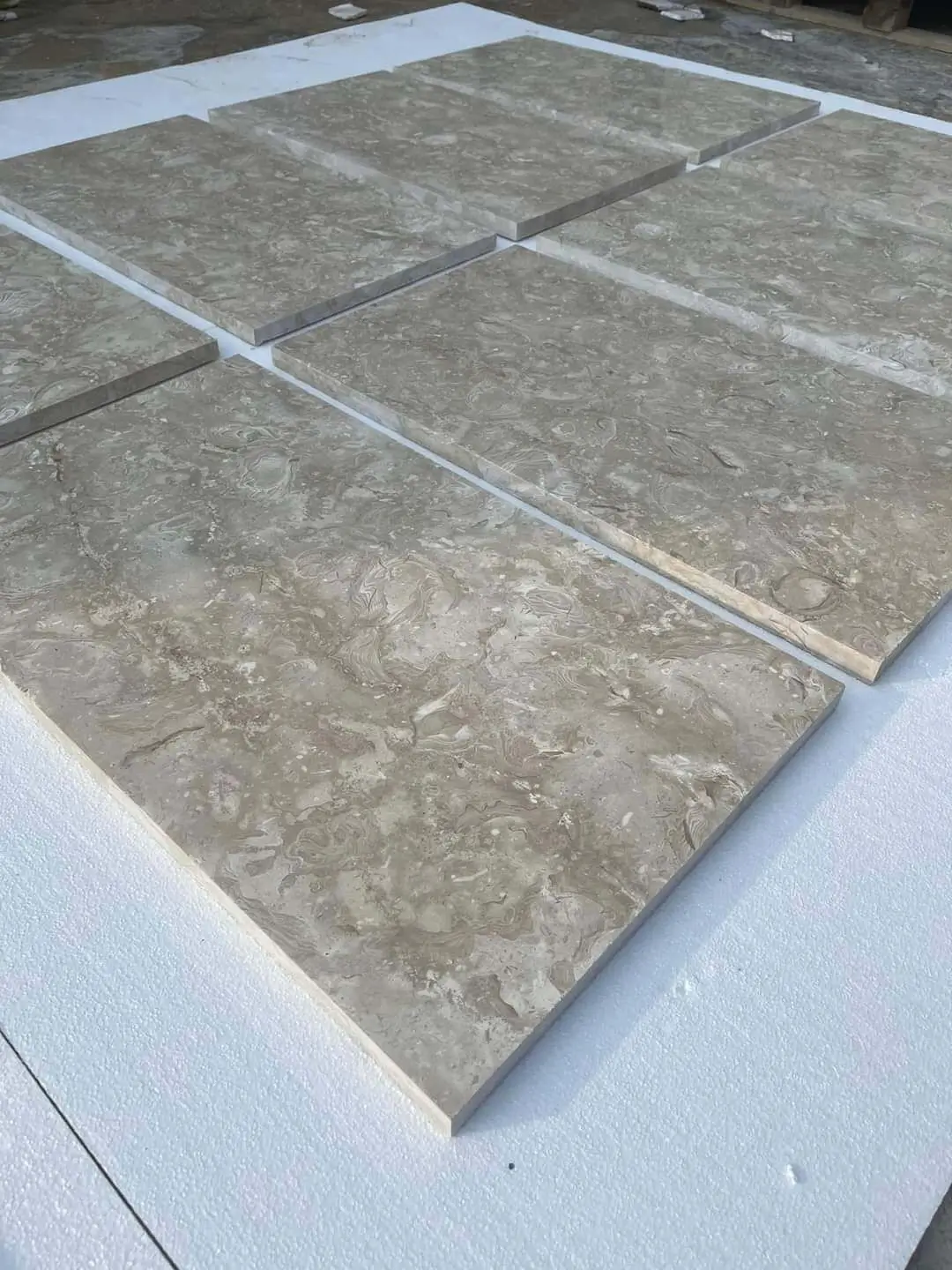
Sealing and Maintenance for Monsoon Climates
Limestone is naturally porous — absorption rates for common Arizona-region limestone typically fall between 3% and 7% by weight, which means unsealed material in a Glendale monsoon environment will accumulate moisture in its pore structure during storm events. That’s not immediately destructive in a freeze-free climate, but it accelerates biological growth in joint gaps and causes iron-bearing minerals in certain limestone varieties to bleed surface staining over time.
Seal irregular limestone pavers in Arizona with a penetrating silane-siloxane sealer at the time of installation — not a topical coating, which traps moisture vapor and creates delamination blisters in the heat cycles Glendale delivers. Penetrating sealers don’t alter the stone’s visual character the way film-forming products do, and they don’t require stripping before reapplication. Reapply every 24 to 30 months in Glendale’s exposure conditions — UV intensity here degrades sealer chemistry faster than the 36 to 48-month intervals appropriate for lower-altitude, lower-UV environments.
Projects in Yuma deal with even more aggressive UV degradation and alkaline dust accumulation — if you’re specifying for that environment, shorten your resealing cycle to 18 to 24 months and choose a sealer with UV-stabilized carriers. The extra maintenance frequency is worth it; surface degradation from Yuma’s combination of UV intensity and alkaline soil dust is measurably faster than what the same material experiences in Glendale.
Common Installation Errors to Avoid in Jigsaw Limestone Projects
Field experience with irregular limestone jigsaw fitting across Arizona custom patios reveals a consistent set of errors — most of them traceable to treating the process like a standard paver installation rather than a stone composition exercise.
- Setting stones without confirming cross-slope drainage before mortar cures — once set, corrections require full removal and re-bed, not shimming
- Allowing joint widths to drift below 0.5 inches in an attempt to minimize gaps — tight joints in limestone create freeze-spall risk during the occasional near-freeze nights Glendale sees in January, and they eliminate the drainage function the jigsaw layout is designed to provide
- Using a rubber mallet to force stone seating on wet mortar — this embeds the stone at an angle that looks level to the eye but reads as a trip hazard once the mortar cures and surrounding stones are placed
- Skipping the geotextile fabric layer to save material cost — in clay-dominant soils, this is the single error most likely to produce differential settlement within 5 years
- Ordering all material from a single quarry batch without verifying thickness consistency — natural limestone from the same quarry can still vary between runs, and mixing batches in a jigsaw layout compounds your setting bed adjustment burden significantly
The Arizona unique layouts that perform best over 15-plus year timeframes share one characteristic: the installer treated drainage geometry as a design input, not a site cleanup problem. Your best Glendale puzzle piece installation outcomes happen when you’ve thought through every square foot of water’s travel path before the first stone goes down.
What Determines Long-Term Success in Glendale Jigsaw Limestone Projects
Irregular limestone jigsaw fitting Glendale projects that last are built on drainage logic first, aesthetic composition second — and the good news is that those two priorities align naturally when you understand how organic gap geometry serves both functions simultaneously. Your stone selection, base depth, setting bed porosity, joint fill strategy, and sealing schedule all need to be tuned to Glendale’s specific hydrological load: brief, intense monsoon events on clay-bearing soils with rapid drying cycles in between. The fitting technique itself — the puzzle-piece precision of custom stone placement — is what most people focus on, but it’s the substrate and drainage design beneath those beautiful irregular stones that actually determines whether your patio looks the same in year fifteen as it did at completion. As you explore related stone applications for Arizona outdoor spaces, Irregular Limestone Paver Natural Stone Path Design for Tempe Organic Gardens covers complementary irregular limestone techniques in a pathway context that shares many of the same drainage and fitting principles relevant to Glendale patios. Citadel Stone’s large limestone slabs in Arizona represent the Southwest’s finest available natural stone materials.