
Timing your stone driveway block installation around Arizona’s seasonal patterns isn’t just a scheduling preference — it’s a structural decision that directly affects bond strength, joint stability, and long-term performance. Contractors experienced with installing stone driveway blocks in Arizona know that a project started in the wrong month, or even the wrong hour of the day, can compromise the entire installation before a single block is seated. The desert climate creates a narrow window of truly optimal conditions that most installation guides simply don’t account for.
Understanding Arizona’s Installation Calendar
Arizona doesn’t operate on a standard four-season schedule — and your project timeline shouldn’t either. The practical installation calendar breaks into three distinct periods: the optimal window (November through March), the manageable window (October and April), and the high-risk window (May through September). Each of these periods demands a fundamentally different approach, not just a minor adjustment to your mortar mix.
During the optimal window, ambient temperatures typically hold between 50°F and 80°F through the bulk of the workday. That range is significant because most setting beds and joint compounds cure most predictably in that zone — you get consistent open times, even moisture evaporation, and enough working time to seat blocks precisely. Natural stone driveway block installation in Arizona completed during these months shows dramatically lower rates of early-age joint cracking when inspected 90 days post-installation.
- November through March offers the widest daily work window — often 6 to 8 hours of suitable conditions without heat management intervention
- October and April require morning-focused scheduling, with most setting work completed before noon
- May through September requires extreme caution, frequent temperature monitoring, and modified material specifications
- Monsoon season (July through September) introduces humidity spikes that can disrupt drying times even when temperatures are managed
Morning vs. Afternoon Scheduling: Why It Changes Everything
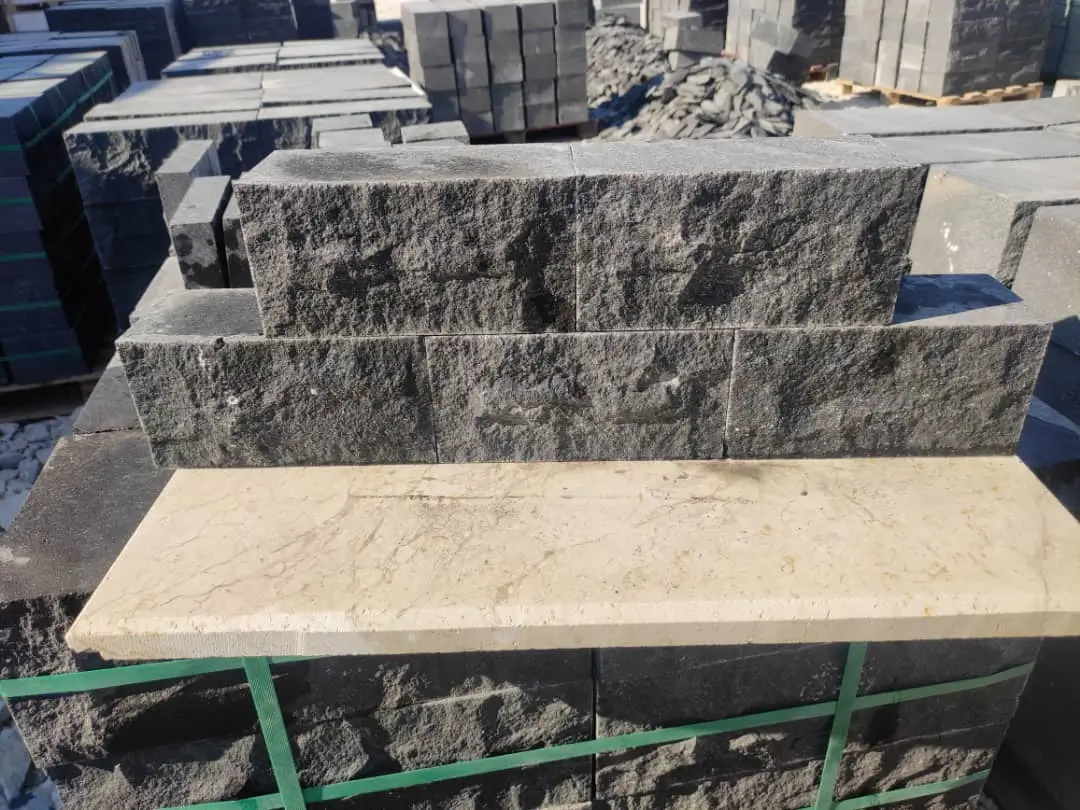
The single most underestimated variable in Arizona driveway block installation isn’t material selection — it’s the direction of the sun relative to your work surface. A driveway slab that’s been absorbing solar radiation since 7 a.m. can reach surface temperatures exceeding 140°F by early afternoon, even when air temperature is only 95°F. Setting blocks onto a substrate that hot pulls moisture out of your bedding layer before it can cure properly, creating a weak bond that looks fine until the first heavy vehicle crosses it.
Your scheduling logic should work backward from the problem. Plan to complete all mortar or sand-set bedding work before 11 a.m. during spring and fall, and before 10 a.m. during summer months if you’re committed to working through that season. The blocks themselves can be seated in the afternoon, but any joint filling or compaction should happen during morning hours when surface temperatures are still in a manageable range. This isn’t about worker comfort — it’s about material chemistry.
- Substrate temperature above 100°F accelerates moisture loss in thin-set mortars, reducing effective bond strength by 30–40%
- Polymeric joint sand sets too quickly in extreme afternoon heat, leaving gaps that open during the first thermal cycle
- Natural stone driveway blocks absorb and re-radiate heat — pre-wetting blocks before laying in summer conditions helps equalize temperature differentials
- In Chandler, where urban heat island effects amplify ambient temperatures, afternoon surface readings regularly exceed what you’d encounter in outlying areas at the same air temperature
Base Preparation for Arizona Conditions
Proper base preparation for stone block driveway prep for Arizona conditions starts with understanding how the region’s expansive soils behave across seasons. Many Arizona soils — particularly in the lower Salt River Valley — contain clay fractions that expand when wet and contract when dry. That cycle creates vertical movement that defeats even the most carefully executed driveway block laying steps across Arizona if the base isn’t engineered to handle it.
Excavate to a minimum depth of 8 inches below finished grade for residential driveways, and 12 inches for anything that will see commercial vehicle loads. Compact the native soil to 95% Proctor density before introducing your aggregate base, and specify Class II aggregate base material at 4 to 6 inches of compacted depth. The bedding layer above that — typically a 1-inch screeded sand or quarry dust layer — needs to be protected from drying out before you start laying blocks, which brings the seasonal timing consideration back into play immediately.
- Use Class II aggregate base at minimum 4 inches compacted depth for residential applications
- Increase base depth to 6–8 inches in areas with known clay-heavy or expansive soils
- Do not pre-spread bedding sand across large areas in summer — it dries and loses workability in under 20 minutes
- Work in small bays (8 to 10 feet maximum) during warm months to maintain consistent bedding moisture
- Plate compact native subgrade before base aggregate placement regardless of season
Choosing the Right Stone Thickness and Format
Thickness selection for installing stone driveway blocks in Arizona follows load requirements first and thermal performance second — but the two factors intersect more than most specifications acknowledge. A 2-inch nominal block handles standard passenger vehicle loads reliably, but the additional thermal mass in a 2.5-inch or 3-inch block provides meaningful benefits in high-radiation environments. Thicker blocks stabilize surface temperatures more effectively by acting as a heat sink during peak afternoon radiation, then releasing that stored energy gradually after sunset.
Format and dimension choices also affect your installation window logic. Larger format blocks — 24×24 inches and above — require more precise bedding preparation and leave less room for mid-course correction if conditions shift. Smaller modular units (12×12 or 16×16) give you more flexibility to work in tighter time windows because each piece takes less time to seat and adjust. During the driveway block laying steps across Arizona’s transitional months, that flexibility can be the difference between a clean installation and one that shows inconsistent joint spacing because you ran out of workable time mid-bay.
Adhesive and Mortar Behavior Across Arizona’s Seasons
Seasonal adhesive behavior is one of the most technically nuanced aspects of the AZ stone driveway paving how-to guide approach, and it’s the area where experienced installers make the most specification adjustments. Standard polymer-modified mortars are engineered around a cure temperature range of roughly 50°F to 90°F. In Arizona, you’re operating above that ceiling for six months of the year — and that requires deliberate product selection, not just application technique changes.
During summer installations, specify a hot-weather mortar additive or switch to a pre-blended mortar rated for high-temperature applications. Retarder admixtures can extend open time by 45 to 90 minutes, which is significant when you’re working against a substrate that’s already at 120°F. Conversely, winter months in Arizona’s higher elevations — including communities north of the Valley — can drop below freezing overnight, which means you need to protect freshly set installations from early morning frost for the first 48 to 72 hours after placement.
- Standard thin-set mortar open time drops from 20 minutes to under 8 minutes when substrate temperature exceeds 100°F
- Hot-weather retarder admixtures restore open time and should be specified for any installation with ambient temperatures above 85°F at start of work
- Do not use retarders during cooler months — extended open times in cool weather can delay cure and reduce early bond strength
- Keep mortar mixing water chilled in summer by storing water containers in shade or using ice to reduce mix temperature
- In winter, use warm mixing water (not hot) to maintain workability when air temperatures are below 50°F at dawn
For your material sourcing timeline, confirming warehouse stock availability 3 to 4 weeks before your planned installation start gives you flexibility to shift your schedule if seasonal conditions change. Projects in Peoria and the northwest Valley typically receive truck deliveries without access constraints, but you should confirm with your supplier whether the stone will be staged on site or delivered in multiple truck loads across the installation period.
When planning your order, our Arizona stone driveway block supply includes multiple thickness options and surface finishes suited to residential and commercial driveway applications across the state.
Joint Spacing and Thermal Expansion Allowances
Natural stone moves — and in Arizona’s thermal environment, it moves more than most generic installation guides account for. A limestone or travertine driveway block will expand and contract across an annual temperature range that can span 100°F or more from winter morning lows to summer afternoon highs. That range translates to meaningful dimensional change, and if your joints aren’t sized to absorb that movement, you’ll see cracking or lifting at the block edges within two to three years.
Specify minimum 3/16-inch joints for stone formats up to 18×18 inches, and increase to 1/4-inch joints for 24×24 and larger. These aren’t arbitrary numbers — they reflect the actual expansion coefficient of natural stone in a high-thermal-amplitude environment. Simply following manufacturer minimum joint recommendations is adequate in moderate climates but undersized for Arizona. Add 20% to the manufacturer’s minimum joint width for any installation in the Phoenix metro area or other low-desert locations.
- Limestone and sandstone: thermal expansion coefficient approximately 4.5–5.0 × 10⁻⁶ per °F
- Travertine and marble: slightly lower at 3.8–4.5 × 10⁻⁶ per °F, still requiring generous joint spacing in desert climates
- Basalt: one of the most dimensionally stable natural stones, with expansion coefficients near 3.5 × 10⁻⁶ per °F
- Control joints should be placed every 10 to 12 feet in both directions for large-format driveway applications
- Perimeter isolation joints between the driveway and any adjacent structure are non-negotiable — movement patterns differ enough to cause cracking without them
Sealing Schedule and Surface Protection
Sealing natural stone driveway blocks in Arizona is more time-sensitive than in most other climates, and the seasonal timing of your first seal coat matters as much as product selection. Apply your initial sealer after the installation has cured for a minimum of 28 days — but time that cure window to end during a cooler period if at all possible. Sealer applied to stone at surface temperatures above 85°F flashes off too quickly, leaving uneven penetration and a surface that looks sealed but provides minimal protection below the top millimeter.
Your best sealing conditions are a calm morning in October, November, or March — surface temperature between 55°F and 75°F, no rain forecast for 24 hours, and low humidity. Penetrating silane-siloxane sealers outperform film-forming products in high-UV environments because they don’t degrade from surface exposure. Expect to reseal on a 2 to 3-year cycle in Arizona, compared to the 4 to 5-year cycle that’s typical in cooler climates. UV radiation in the desert is unforgiving on sealer chemistry, and a worn seal coat means water and vehicle fluids are reaching the stone’s pore structure.
In Tempe, where commercial and high-traffic residential applications are common near university and downtown areas, a traffic-rated penetrating sealer with enhanced oil resistance is the right specification — standard residential sealers won’t hold up under that load profile.
Drainage Planning for Monsoon Season
Arizona’s monsoon season (roughly July through mid-September) delivers intense, short-duration rainfall events that can overwhelm poorly designed driveway drainage in minutes. Your drainage design needs to handle these events even though the dry season might tempt you to minimize drainage provisions. A driveway that drains beautifully during normal rainfall can back up against the house foundation during a 2-inch-per-hour monsoon event if the cross-slope or channel capacity isn’t sized correctly.
Specify a minimum 1.5% cross-slope across the driveway surface — 2% is more reliable in practice. That slope ensures sheet drainage moves to the designated channel or swale rather than pooling at joints or against structures. Natural stone driveway block installation in Arizona benefits from permeable joint options in some applications, but permeable joints require more careful base design to handle the concentrated infiltration without base saturation. Confirm your soil’s percolation rate before specifying permeable joints as your primary drainage strategy.
- Minimum 1.5% cross-slope, 2% preferred for reliable sheet drainage in high-intensity rainfall events
- Channel drains or slot drains at the low end of the driveway are highly recommended for installations adjacent to structures
- Permeable joint installations require a free-draining base aggregate (3/4-inch open-graded crushed stone) rather than standard dense-graded base
- Avoid specifying tight-jointed installations without alternative drainage provisions — ponding at block faces accelerates efflorescence and can undermine the bedding layer
Expert Summary: Installing Stone Driveway Blocks in Arizona
Installing stone driveway blocks in Arizona rewards installers who think in seasonal terms rather than treating the project as a static technical checklist. Your material specifications, adhesive selections, joint sizing, and sealing schedule all need to account for the thermal amplitude and solar radiation intensity that define Arizona’s climate — and those decisions need to be made before your first truck delivers stone to the site, not after problems emerge in year two.
The practical framework for durable natural stone driveway block installation in Arizona is sequential: schedule your installation into the optimal seasonal window, engineer your base for expansive soil behavior, specify mortar and joint products for actual substrate temperatures rather than air temperatures, and seal with a UV-stable penetrating product on a consistent 2 to 3-year cycle. Projects that follow that sequence consistently outperform those that treat the desert as simply a hot version of a standard climate. If you’re planning related hardscape work alongside your driveway, the Arizona Wholesale Stone Paver Order Guide: Data covers material quantity calculations and ordering logistics that apply across Citadel Stone’s full Arizona product range.
At Citadel Stone, we inspect natural stone driveway block inventory at the warehouse level before it ships — checking for consistent thickness, surface finish uniformity, and dimensional accuracy that affects your on-site laying efficiency. Our technical team regularly consults with contractors across Arizona on product selection timed to their installation windows and project-specific soil conditions. Citadel Stone supplies natural stone driveway blocks sourced from premium quarries in Turkey and the broader Middle East region, available to homeowners and contractors across Phoenix, Tucson, and Peoria.