
Base preparation failures account for more than 60% of premature granite paver failures across Arizona desert installations — and the root cause almost always traces back to decisions made before a single slab hits the ground. Installing granite paving slabs in Arizona demands a fundamentally different technical approach than what works in temperate climates, because the combination of extreme thermal cycling, expansive caliche subsoils, and monsoon saturation creates conditions that punish shortcuts with remarkable speed. Your subbase specification, joint geometry, and sealing timeline each carry more consequence here than anywhere else in the country. Understanding the precise sequence of decisions — and the reasoning behind each one — is what separates a 25-year installation from one that’s rocking and cracking within five years.
Why Granite Outperforms Other Stone in Arizona’s Extreme Heat
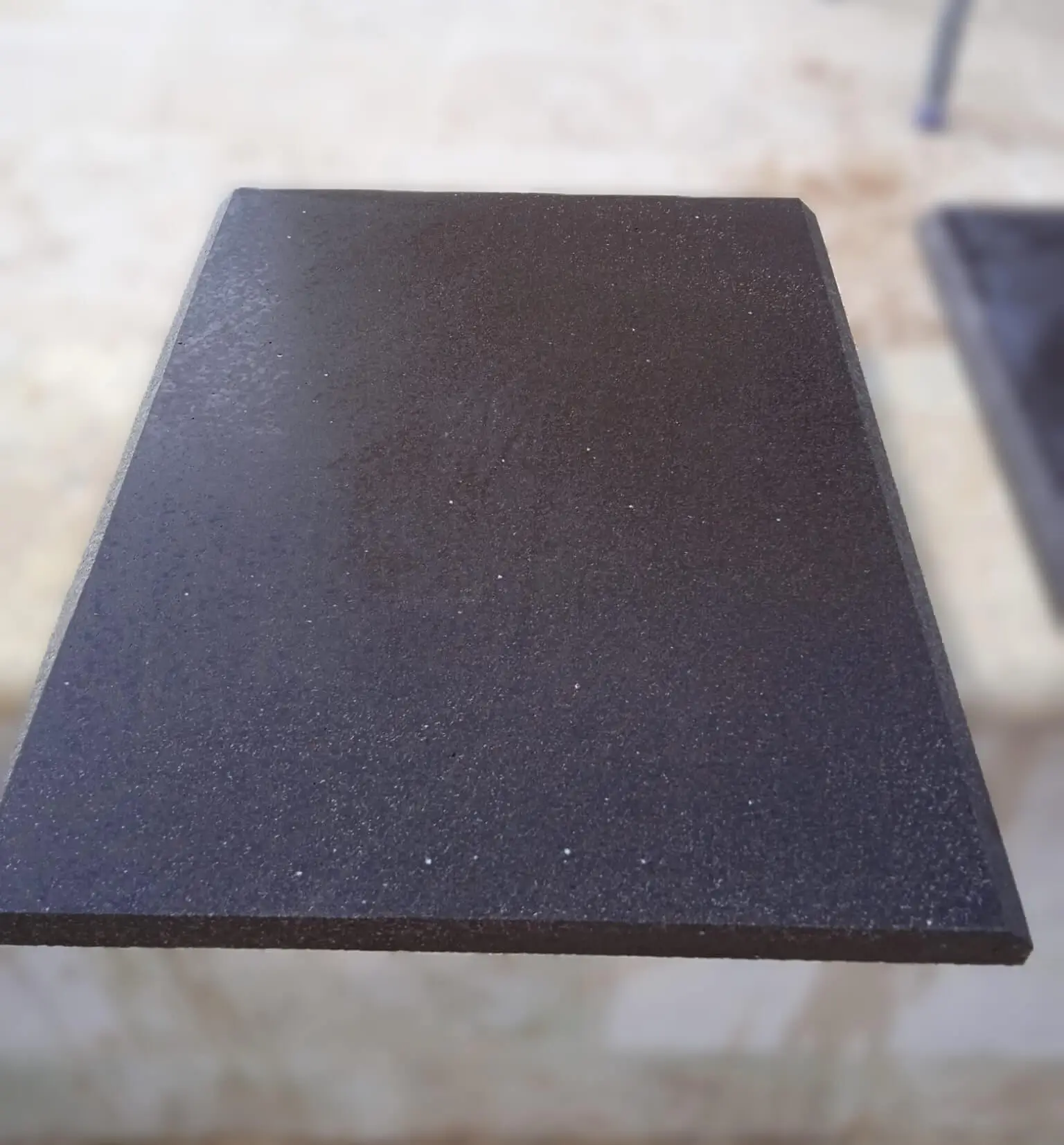
Granite’s thermal expansion coefficient sits at approximately 4.4 to 5.5 × 10⁻⁶ per °F, which is notably low for a natural stone. In a state where surface temperatures on exposed hardscape routinely reach 150°F by mid-afternoon, that low expansion rate translates directly to fewer stress fractures over a 20-year service life. You’ll also benefit from granite’s compressive strength — typically 19,000 to 30,000 PSI depending on mineralogy — which handles the point-load pressures that destroy softer materials like tumbled limestone or standard concrete pavers.
The material’s interlocked crystalline structure resists the micro-fracturing that freeze-thaw cycling produces. While low-desert Arizona doesn’t experience hard freezes often, the monsoon season’s combination of moisture infiltration followed by rapid overnight temperature drops at elevation creates a meaningful freeze-thaw pattern in installations above 2,500 feet. Granite handles this cycle considerably better than sandstone or flagstone alternatives, which is why outdoor granite paver prep for AZ homeowners tends to focus more on base geometry than the stone itself — the stone can handle the conditions when the system underneath it is right.
Site Assessment: What You Need to Know Before Ordering
Your installation starts weeks before the first slab arrives. A proper site assessment for granite paving in Arizona requires you to evaluate three independent variables: soil type, drainage geometry, and truck delivery access. None of these can be corrected cheaply after the project begins, and all three directly affect your specification decisions.
- Probe for caliche hardpan at 6-inch increments down to 36 inches — its depth determines whether you need mechanical breaking or can rely on compaction alone
- Map your drainage slopes at a minimum 1.5% grade (2% preferred) away from all structures, accounting for monsoon rainfall intensity of 1–3 inches per hour in valley locations
- Verify truck delivery clearance including overhead obstructions, gate widths, and load-bearing capacity of existing surfaces the delivery vehicle must cross
- Test soil plasticity index — Arizona Valley clay soils can reach PI values above 30, which demands stabilization before any base course goes in
- Photograph existing utilities and check with Arizona 811 before any excavation — granite slabs are heavy enough that any substrate disturbance during installation can compromise buried lines
In Gilbert, expansive clay soils are common in subdivisions built on former agricultural land, and hydrostatic pressure during monsoon season can lift even properly installed granite pavers if your drainage geometry doesn’t direct water away aggressively enough. Budget an extra 15–20% excavation depth in these zones to accommodate a stabilization layer beneath your base aggregate.
Subbase and Base Course Specifications for Arizona Conditions
The base course specification for laying granite slabs across Arizona patios and driveways differs from national guidelines because Arizona’s thermal swing demands more aggregate depth than the standard 4-inch recommendation. Field performance across desert installations consistently shows that a 6-inch compacted aggregate base — using 3/4-inch crushed granite or caliche-free decomposed granite — provides the structural stability that prevents lateral shifting during thermal expansion cycles.
Your compaction target should reach 95% Modified Proctor density, verified with a nuclear density gauge rather than estimated by visual inspection. The difference between 90% and 95% compaction in a clay-rich Arizona subgrade is the difference between a stable installation and one that develops 1/4-inch differential settlement within 24 months. That kind of settlement is visible, it creates trip hazards, and it voids most professional installation warranties.
- Excavate to a minimum depth of 10 inches below finished surface grade (6-inch aggregate base + 1-inch bedding sand + 2.375-inch nominal granite slab + 0.625-inch for joint sand and settling tolerance)
- Compact subgrade soil to 90% Modified Proctor before placing any aggregate — adding base material over uncompacted native soil wastes material and effort
- Install Class II permeable base aggregate in 3-inch lifts, compacting each lift separately before adding the next
- Use a 1-inch bedding layer of coarse concrete sand (ASTM C33) — avoid fine-graded play sand, which migrates under dynamic load
- Check base surface tolerance at ±3/8 inch over a 10-foot straightedge before laying any granite
For granite slab installation steps in Arizona, the bedding layer is where most field mistakes happen. Over-wetting the sand to make screeding easier is the most common error — it causes consolidation settlement within the first season and is entirely avoidable by using dry screed technique with a regulated moisture sand mix.
Granite Slab Thickness and Sizing for Arizona Patios
Thickness selection for installing granite paving slabs in Arizona depends on the application load category, not personal preference. Residential pedestrian patios perform well with 1.25-inch (30mm) calibrated granite. Driveways, areas with vehicle overhang, or installations where outdoor furniture with small-diameter feet will concentrate point loads should move to 1.57-inch (40mm) or 2-inch (50mm) nominal thickness.
Slab sizing affects joint geometry, and joint geometry affects drainage — all three variables interact. Larger format slabs (24×24 inches and above) produce fewer joints per square foot, which can look cleaner aesthetically but requires more precision in base flatness tolerance. A 1/4-inch base irregularity under a 12×12-inch slab produces a minor rocking effect; the same irregularity under a 24×24-inch slab can produce a 1/2-inch corner lift that’s a genuine trip hazard and a freeze-thaw fracture point.
- 1.25-inch (30mm): Residential pedestrian patios, pool surrounds with controlled foot traffic
- 1.57-inch (40mm): Entry approaches, outdoor kitchen floors, areas with rolling loads under 2,000 lbs
- 2-inch (50mm): Driveway aprons, vehicle drop-off areas, commercial pedestrian applications
- Calibrated vs. natural cleft: calibrated slabs allow consistent 3/16-inch joints; natural cleft varies and requires 3/8-inch minimum joint width for consistent sand fill
Citadel Stone warehouse inventory covers calibrated granite in all three thickness categories with Arizona-standard sizing, which means your lead time from order confirmation to truck delivery typically runs 1–2 weeks rather than the 6–8 week import cycle common with non-stocked materials.
Joint Spacing and Thermal Expansion Requirements
Here’s what most Arizona installation specs get wrong: they copy joint spacing from temperate-climate guidelines without adjusting for the 80–100°F daily temperature swing that desert surfaces experience in summer. Standard 3/16-inch joints work in moderate climates. In Arizona’s low desert, you should spec 1/4-inch joints for slabs up to 18 inches and 3/8-inch for anything larger — and you need a true expansion joint at every 12–15 linear feet, not the 20 feet recommended in generic guides.
Expansion joints should be filled with a polyurethane or hybrid silicone sealant rated for continuous service up to 200°F surface temperature, not standard caulk. The sealant spec matters more than most homeowners realize — a failed expansion joint allows sand migration and water infiltration that undermines the bedding layer across an entire panel. You’ll see that failure manifest as a 4–6-foot zone of settlement centered on the failed joint.
- Field joint width: 1/4 inch minimum for slabs up to 18 inches across the longest dimension
- Expansion joint spacing: every 12–15 linear feet and at all transitions to fixed structures (walls, steps, curbs)
- Expansion joint filler: closed-cell backer rod + polyurethane sealant rated for ≥200°F surface exposure
- Kiln-dried joint sand: sweep in two applications — initial fill, wait 48 hours for settling, then second fill to 90% of joint depth
- Polymeric sand: viable alternative in pedestrian-only areas, but confirm the brand’s temperature rating for Arizona desert conditions before specifying
Laying Sequence and Installation Technique
The laying sequence for granite slab installation steps in Arizona should always start from a fixed reference edge — typically a structure wall, a permanent curb, or a screeded edge guide — and work outward. Never start from the center and work toward edges; this approach compounds cutting errors and makes it impossible to maintain consistent joint alignment across large areas.
Granite slabs require a full-contact bedding set. Place each slab and use a rubber mallet to achieve full contact with the sand bed — you should hear a solid thud, not a hollow tap, when you knock the center of a properly set slab. Hollow-sounding slabs have air voids beneath them that will develop micro-fractures within two thermal cycles. Check each slab with a 4-foot level in both directions before moving to the next one.
- Start from a fixed reference — snap a chalk line perpendicular to the primary viewing angle to maintain visual alignment
- Lay in a pyramid pattern (staggered course by course) rather than one complete row at a time, which allows you to correct cumulative alignment drift before it becomes irreversible
- Use plastic spacers to maintain consistent joint width — eyeballing joint spacing over a large area produces visible inconsistency
- Do not walk on newly laid slabs for 24 hours — bedding sand requires settlement time before accepting foot traffic
- Cut slabs with a 7-inch diamond blade wet saw — dry cutting creates micro-fractures along cut edges that propagate under thermal stress
Following an Arizona desert-rated granite paving installation guide approach that produces consistent long-term results means planning your work to avoid midday heat. Concrete sand and slab surface temperatures above 120°F can accelerate moisture evaporation from the bedding layer, causing shrinkage inconsistencies before the sand fully consolidates. Starting at dawn and stopping by 10:30 AM in June through September is genuinely better practice, not just comfort management.
You can review our Arizona granite paving slabs to confirm calibrated thickness options and current warehouse availability before finalizing your project quantities.
Sealing Granite Pavers in Arizona: Timing and Product Selection
Sealing granite paving slabs in Arizona deserves more attention than it typically gets in residential specifications. Granite is denser than travertine or limestone, which means it absorbs sealers more slowly and requires a different application protocol. The first sealing should happen no earlier than 30 days after installation — the joint sand and bedding layer need to fully consolidate before you lock moisture into the system.
The sealer product category matters significantly in desert conditions. Solvent-based penetrating sealers outperform water-based products in granite applications because they penetrate the low-porosity surface more effectively. In Chandler and surrounding East Valley communities where granite installations face 300+ days of direct UV annually, a fluoropolymer-enhanced penetrating sealer provides notably better UV stability than standard silane/siloxane formulas — the color stability difference is visible within 18 months of the first application.
- First sealing: 30 days post-installation, after joint sand has fully stabilized
- Product selection: solvent-based penetrating sealer with fluoropolymer enhancement for UV-exposed surfaces
- Application method: apply in two thin coats with a 30-minute window between coats — avoid puddling, which creates surface haze on polished granite finishes
- Resealing schedule: every 24–36 months for pedestrian areas; every 18–24 months for driveways and high-traffic zones
- Test water absorption annually — water should bead on a properly sealed surface; if it absorbs within 60 seconds, resealing is overdue
Common Installation Mistakes That Arizona Projects Get Wrong
The most expensive mistake in granite paving installations isn’t a material failure — it’s a base failure that was entirely predictable. Skipping the compaction verification step because the base “looks flat” is responsible for more warranty disputes and reinstallation costs than any other single decision. A nuclear density gauge rental costs $80–120 per day; a reinstallation due to base settlement costs 60–80% of the original project price.
Outdoor granite paver prep that AZ homeowners trust begins with understanding how expansive clay subgrade behaves under load. Granite paving slabs installed over improperly stabilized soil will develop settlement patterns that follow the underlying soil movement, not the surface drainage design. This produces a scenario where water pools in locations your original slope was designed to drain — and once pooling water sits on a granite surface during Arizona monsoon season, you’re running through the sealer’s service life in 12 months instead of 36.
- Skipping compaction verification — always test, never estimate base density
- Using fine sand for bedding — coarse concrete sand (ASTM C33) is the specification; fine sand consolidates unevenly and migrates
- Installing during midday heat in summer — morning installation windows prevent moisture loss from bedding sand during the critical first 24 hours
- Under-filling joints — joint sand at less than 85% depth allows vertical slab movement under thermal cycling
- Applying sealer too early — waiting less than 30 days traps residual installation moisture and causes efflorescence under the sealer film
- Ignoring expansion joints at structural transitions — every wall, step, and curb connection needs a sealant-filled joint, not rigid mortar
In Peoria, where many newer residential developments sit on engineered fill from subdivision grading, you need to confirm the fill material’s compaction history before treating it as a stable subgrade. Fill that was placed and not compacted to geotechnical specification can continue settling for 3–5 years after placement, and any paving system installed over it will reflect that movement regardless of how well the base course itself is built.
Getting Arizona Granite Paving Specifications Right
Installing granite paving slabs in Arizona is a technically demanding process that rewards precision at every stage — but the technical demands are all manageable when you understand the specific failure modes that Arizona’s climate creates. Your base preparation, joint geometry, and sealing timeline collectively determine whether this installation looks the same in 2035 as it does the day it’s completed. The granite itself is capable of that longevity; the question is whether the system supporting it was built to the same standard. For projects that extend to driveway or vehicle-access areas, the specification decisions shift further toward structural performance — How to Choose Granite Driveway Pavers in Arizona covers those additional load and thickness considerations in practical detail. At Citadel Stone, we work directly with Arizona contractors and homeowners on technical specification questions, drawing on our material sourcing and quality verification process to ensure what arrives on your truck matches what was specified on paper. Homeowners in Scottsdale, Tempe, and Peoria rely on Citadel Stone granite paving slabs, each available in calibrated thicknesses suited to Arizona’s desert subbase conditions.