
Arizona’s building code environment sets requirements that catch many installers off guard — and installing black pavers in Arizona starts not with a material selection conversation but with a permit review and a structural engineering check. Maricopa County’s residential grading and drainage ordinances, for example, specify minimum base compaction standards and edge restraint anchoring details that directly affect how your paver system performs over time. Before you price material or schedule delivery, pull the applicable local code for your jurisdiction and confirm what base depth, edge restraint specification, and surface drainage gradient your project must meet.
Code Compliance Before You Start Installation
Arizona municipalities don’t have a unified statewide paver installation code — what governs your project depends heavily on whether it’s a driveway, a pedestrian path, or a pool surround, and which city or county has jurisdiction. Driveway installations in Chandler, for instance, fall under specific load-bearing and compaction standards that the city publishes in its Engineering Standards Manual. Your local building department will tell you whether a permit is required, but the structural engineering logic behind those requirements is worth understanding regardless of permit status.
Base depth for paver driveways in Arizona typically runs 6 to 8 inches of compacted Class II aggregate base for standard passenger vehicle loads — but commercial vehicle or RV access can push that requirement to 10 to 12 inches. The load distribution math changes significantly with black natural stone paver installation Arizona because darker, denser stone materials like basalt and black granite carry higher unit weights than concrete alternatives, which affects both the load transferred to the sub-base and the thermal mass the base system absorbs daily.
- Confirm permit requirements with your local building department before mobilizing any equipment
- Request the jurisdiction’s engineering standards for base compaction (typically 95% Modified Proctor Density for driveways)
- Verify minimum paver thickness requirements — most Arizona jurisdictions require 2-3/8 inch for vehicular applications
- Check edge restraint anchoring requirements, particularly for sloped installations near drainage swales
- Confirm surface drainage slope minimums — most codes require 1% to 2% cross-slope for water shedding
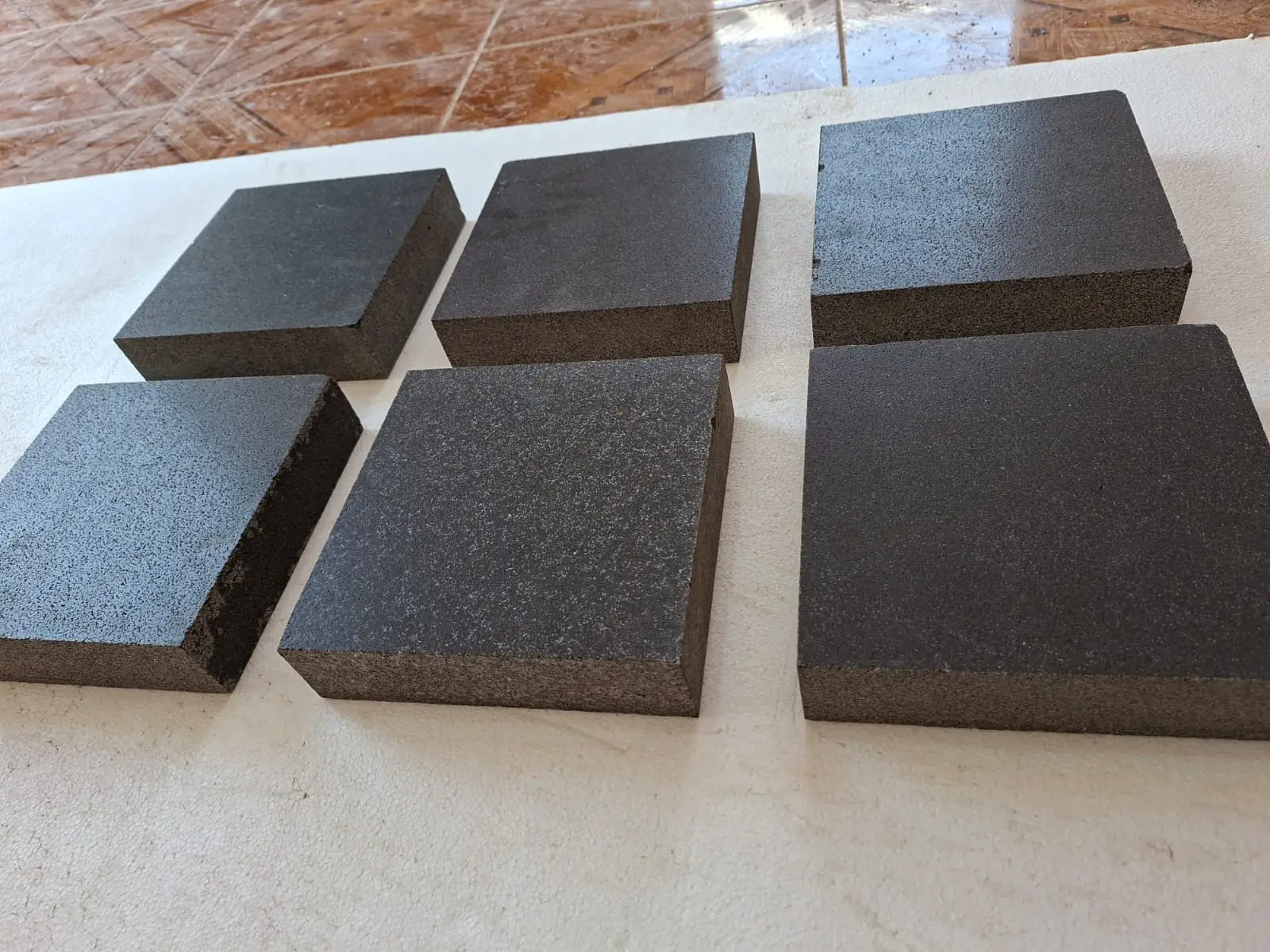
Seismic and Structural Base Requirements in Arizona
Arizona sits within USGS Seismic Hazard Zone 2A across much of the Phoenix metro, with isolated pockets near Flagstaff and along the Colorado Plateau reaching Zone 2B designations. For hardscape installations, seismic zone classification matters most for attached or mechanically constrained systems — but even flexible paver installations benefit from base designs that accommodate minor ground movement without propagating cracking through the field.
The structural case for a well-engineered compacted aggregate base becomes clearest when you consider how expansive soils interact with thermal cycling at Arizona’s temperature extremes. Caliche layers, common throughout the Phoenix basin including neighborhoods in Peoria, can create a rigid sub-base that transmits differential movement directly into your paver joints if you don’t properly account for the transition between the rigid caliche and the compacted aggregate above it. Proper sub-base preparation in these conditions includes scarifying and re-compacting any caliche surface rather than treating it as a stable bearing layer without verification.
- Evaluate sub-base soil classification before specifying base depth — expansive clays require geotextile separation fabric
- Caliche hardpan should be verified for bearing capacity before relying on it as a sub-base layer
- Seismic zone 2A requires flexible joint sand systems that allow micro-movement without cracking
- Include a 4-inch perforated drain pipe at the base perimeter for driveway and patio systems on expansive soils
Material Selection Aligned with Code and Performance
Desert-climate paver laying guide AZ specifications consistently point toward materials with compressive strength above 8,000 PSI for vehicular areas — black basalt and dark granite pavers routinely test between 12,000 and 18,000 PSI, making them structurally over-qualified for most residential applications. That strength advantage translates into thinner effective section designs, but don’t let it tempt you into underspecifying the base. Arizona’s code requirements key on base performance, not surface material strength, and a 12,000 PSI paver on a 4-inch uncompacted base will fail well before its material life is exhausted.
Heat-resistant paving materials across Arizona need to handle sustained surface temperatures that can exceed 165°F in direct afternoon sun — and black outdoor pavers suited to Arizona summers absorb significantly more solar radiation than lighter alternatives. That’s not a disqualification, but it is a design variable that affects your edge restraint selection, your joint sand specification, and the thermal expansion allowances built into your installation. Polymeric joint sand rated for high-temperature applications is mandatory for black paver installations in Arizona’s low desert zones, particularly for south- and west-facing exposures.
Base Preparation: The Steps That Determine Long-Term Performance
Excavation depth drives everything downstream. For a standard residential patio in the Phoenix metro, you’re typically looking at 9 to 10 inches of total excavation below finished grade — 6 to 8 inches of compacted aggregate base, a 1-inch compacted bedding sand layer, and the paver thickness itself. Driveways require deeper excavation to accommodate thicker base sections, and any installation area that receives truck delivery traffic — even occasionally — should be treated as a light commercial application with base depths adjusted accordingly.
Compaction is where most residential installations fall short of code requirements without anyone noticing until year three or four. Your aggregate base must reach 95% Modified Proctor Density, which requires a plate compactor with sufficient centrifugal force rating — typically 4,000 to 5,000 pounds for granular base material. Compact in lifts no deeper than 4 inches, and don’t skip the verification step for load-bearing areas. Renting a nuclear density gauge or hiring a geotechnical firm for compaction testing adds cost, but it’s the only way to confirm compliance with jurisdiction engineering standards on permitted work.
- Excavate to a flat, uniform depth — use a laser level, not a string line, for areas larger than 200 square feet
- Install geotextile fabric over natural soil before placing aggregate base in expansive soil areas
- Compact aggregate base in 4-inch maximum lifts, achieving 95% Modified Proctor Density
- Apply bedding sand at 1-inch depth after base compaction is complete and verified
- Screed bedding sand to a consistent plane — do not compact bedding sand before paver placement
- Check finished grade slope continuously with a 4-foot level during screeding
Edge Restraint Specification and Anchoring
Edge restraint is a code-required element in most Arizona jurisdictions for any driveway paver installation, and it’s also the single most common failure point in field installations. The restraint system must be anchored into stable material — native soil or aggregate base — not into bedding sand. Plastic flexible edging spiked into loosely placed sand provides essentially zero lateral restraint, which is why you’ll see paver field spreading at driveway aprons within two to three seasons in installations where this detail was skipped.
For black paver installations in Arizona, edge restraint selection also needs to account for thermal expansion of the paver field itself. A 20-foot run of black basalt pavers can expand 3/8 to 1/2 inch over a full daily temperature cycle during summer months. Rigid aluminum or steel edge restraint with proper spike spacing — no more than 12 inches on center — handles that movement without allowing joint migration. Avoid PVC restraint systems in direct sun exposure at low desert elevations; the material softens at sustained temperatures above 140°F and loses its holding capacity precisely when thermal expansion loads are highest.
Pattern Layout and Joint Alignment for Installing Black Pavers in Arizona
Your layout starting point determines whether the field looks intentional or improvised. Snap chalk lines from a fixed reference point — typically the house face or a perpendicular structure — and establish your running bond or herringbone grid before placing a single paver. For Gilbert projects where HOA aesthetic standards often specify joint alignment tolerances, document your layout lines with photos before paver placement begins. That documentation protects you if a final inspection questions the installation geometry.
Joint width for black natural stone paver installation Arizona should be held to 1/8 to 3/16 inch for cut dimensional stone and 3/16 to 1/4 inch for tumbled or rough-split profiles. The wider joint tolerance for tumbled stone accounts for dimensional variation at the paver edges — you’re averaging the variation across the joint rather than fighting it. Consistent joint width is more important than achieving a specific target measurement, because inconsistent joints read visually as installation error even when individual measurements are within tolerance. Use plastic spacers for cut stone work; experienced installers use the corner of a trowel blade as a gauge for tumbled stone.
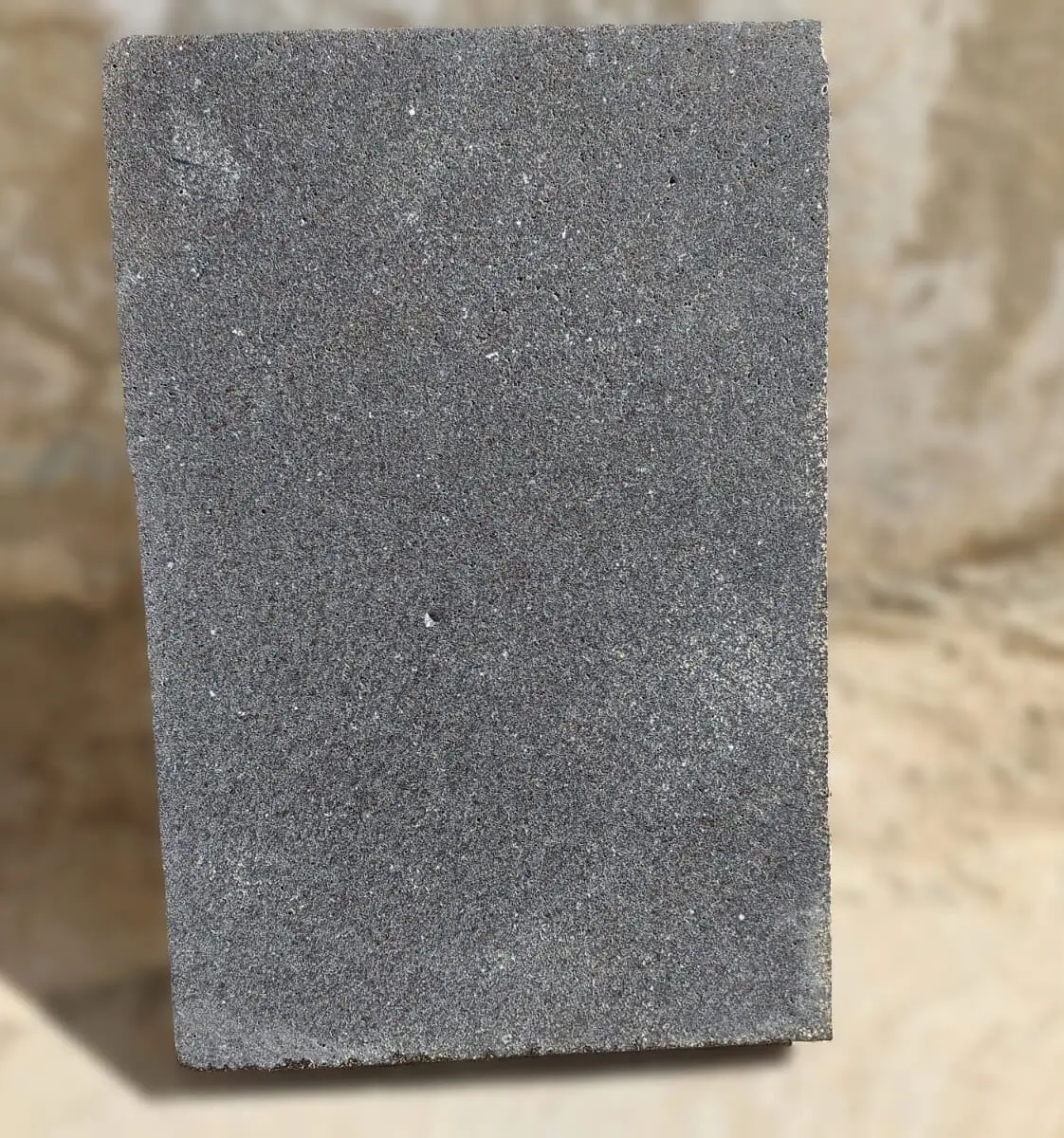
Joint Sand and Sealing for Arizona Desert Conditions
Standard polymeric sand rated to 130°F is undersized for black paver installations in Arizona’s low desert. Surface temperatures on dark stone exceed that threshold routinely from May through September, which causes standard polymeric binders to partially liquefy and migrate out of the joint during the first summer. Specify a high-temperature polymeric sand with a heat rating of at least 160°F — these products exist specifically for desert southwest applications, and the price premium over standard polymeric sand is recovered in the avoided cost of joint reapplication within two seasons.
Sealing protocol for heat-resistant paving materials across Arizona starts with a minimum 28-day cure period after installation before the first sealer application. That waiting period allows residual installation moisture to evacuate the joint sand and paver pores fully — applying sealer over moisture-laden stone traps it and creates the cloudy haze that’s nearly impossible to reverse without grinding. Use a penetrating impregnating sealer rather than a topical coating for black stone; topical sealers create a reflective sheen that reads as artificial on dark stone and tends to peel at the paver edges under thermal cycling stress.
For project planning purposes, check warehouse stock on your specified sealer product before scheduling the installation completion date. Some specialty high-temperature products for black outdoor pavers suited to Arizona summers move quickly in spring, and a two-week warehouse lead time can push your sealing window into the hottest part of summer, which complicates application timing and cure conditions. At Citadel Stone, we recommend confirming product availability at least three weeks before your target sealing date to avoid timeline compression.
Specific Considerations for the Southeast Valley
Projects in Chandler frequently encounter a combination of sandy loam topsoil over caliche at moderate depths — typically 18 to 30 inches below grade — which means your excavation may hit a layer that significantly resists dig equipment. Schedule accordingly and have your excavation contractor confirm equipment suitability before mobilization day. The sandy loam zone above the caliche is well-draining but low-bearing-capacity soil, which reinforces the importance of geotextile separation fabric and properly compacted aggregate base in this region. Skipping the fabric in sandy loam soils allows fines migration upward into your aggregate base over time, gradually reducing drainage capacity and base stability.
For logistics planning, truck access to rear yards in established neighborhoods across the southeast valley often requires narrow gate clearance checks before material delivery. Most standard aggregate delivery trucks need at least 10 feet of gate clearance and a stable surface that can support an 80,000-pound gross vehicle weight. Confirm site access dimensions when you place your material order — repositioning a loaded truck that can’t reach the work area adds cost and time that isn’t always recoverable in a fixed-price project budget. At Citadel Stone, our delivery team reviews site access with every order to help you avoid day-of complications. You can review our black paver installation Arizona resource page for specific product guidance and logistical details relevant to your project area.
Quality Control During and After Installation
The straightedge test is your primary quality control tool during black paver installation. Run a 10-foot aluminum straightedge across the finished surface in multiple directions — the maximum allowable deviation under the straightedge for most Arizona jurisdiction standards is 3/8 inch. High spots indicate bedding sand that wasn’t properly screeded or a paver with a thicker-than-specified profile that should have been sorted before placement. Low spots indicate either insufficient bedding sand depth or a sub-base settlement point that needs investigation before you continue laying field stone.
Document the installation with photos at each major phase — excavated sub-base, compacted aggregate base, completed bedding sand screed, and finished paver field before joint sand application. That photo record supports warranty claims, provides reference for future maintenance, and demonstrates code compliance for permitted work. Final inspection by the building department, where required, should not be scheduled until joint sand is fully set and surface cleaned, because loose joint sand tracked across the paver field during inspection creates a misleading appearance of incomplete work.
- Run a 10-foot straightedge across finished surfaces in both directions — maximum 3/8-inch deviation is the standard tolerance
- Inspect joint width consistency before polymeric sand application — inconsistent joints are much harder to correct after sand is locked
- Verify surface drainage slope with a level and tape measure — minimum 1% slope away from structures
- Check edge restraint anchoring by applying lateral hand pressure — properly anchored restraint should show zero movement
- Confirm polymeric sand has fully cured (typically 24 hours minimum) before allowing foot or vehicle traffic
Getting Your Black Paver Installation in Arizona Right
Installing black pavers in Arizona at a code-compliant, structurally sound level requires you to treat the project as an engineered system rather than a surface application. The visual result — which is genuinely striking with dark stone against Arizona’s landscape palette — follows from getting the structural foundation right. Every decision from sub-base compaction to edge restraint anchoring to joint sand specification connects back to the code framework that your jurisdiction has established for good reason. The installations that fail prematurely almost always trace back to one or two structural shortcuts, not material deficiencies.
The broader stone hardscape context for your Arizona property is worth thinking through as you complete your black paver project. Different materials respond differently to the same desert environment, and understanding those contrasts helps you make smarter decisions about adjoining surfaces. The desert-climate paver laying guide AZ approach applies equally to lighter stone in high-heat conditions, and pairing materials across zones rewards careful planning. How to Maintain White Pavers in Arizona’s Climate covers the maintenance protocols for lighter stone in the same high-heat environment — a useful reference if you’re specifying a multi-zone outdoor space with varied materials.
Homeowners in Tucson, Chandler, and Flagstaff rely on Citadel Stone black pavers, each stone selected for dimensional consistency that simplifies joint spacing during desert-climate installation.