
Budget First: What Arizona Pricing Really Looks Like
Installing 12×12 stone pavers in Arizona carries a cost structure that experienced contractors read differently than homeowners expect — base material is only one layer, and the freight component is where projects quietly go over budget. The distance between quarry origin, regional warehouse stock, and your job site creates a cost spread that can range from negligible to genuinely significant depending on where in the state you’re building. Understanding that spread before you finalize your spec is the single most useful thing you can do at the planning stage.
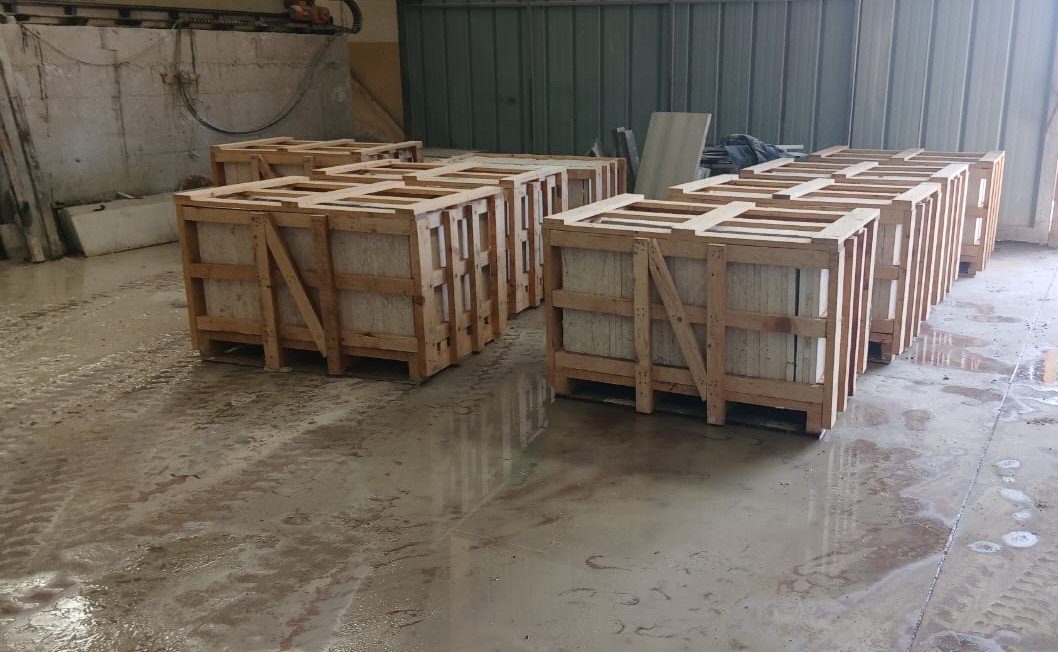
Material-to-labor cost ratios in Arizona tend to skew differently than in coastal markets. Labor here runs competitive — roughly $8 to $14 per square foot for professional stone paver installation depending on the metro area — but material sourcing decisions can swing total project cost by 15 to 25 percent. Natural stone pavers sourced from domestic quarries with in-state warehouse distribution cut freight cycles dramatically compared to imported materials arriving by container. You’ll want to factor in whether your supplier stocks the material locally or is drop-shipping from a distant distribution hub.
Value engineering starts at the sourcing conversation, not at the design table. Choosing a 12×12 format is already an economically sound decision — the standardized size reduces cut waste, speeds installation, and lowers labor hours compared to irregular flagstone or custom-cut formats. Your total cost per installed square foot benefits from that efficiency, particularly on large patio or courtyard projects where format consistency adds up fast.
Freight Distance and Local Availability in Arizona
Arizona’s geography creates a genuinely uneven distribution landscape for natural stone. The Phoenix metro and its surrounding cities have the deepest material availability — you’re within practical truck range of multiple distribution points, and lead times from warehouse to job site typically run one to two weeks for stocked material. Move north toward higher elevation or east toward more remote areas, and that equation changes meaningfully.
Projects in Flagstaff introduce a freight variable that lower-elevation jobs don’t face — the elevation gain affects logistics routing, and some carriers apply surcharges for mountain delivery zones. That’s not a dealbreaker, but it’s a budget line you need to account for explicitly. Ordering through a supplier who already has a truck route serving northern Arizona is far more efficient than sourcing from a supplier whose delivery network ends in the Phoenix metro.
- Confirm warehouse stock location before committing to a delivery schedule — not all “Arizona suppliers” hold material in-state
- Ask specifically whether your order ships from local inventory or arrives from an out-of-state distribution center
- Verify truck access at the job site — large paver orders on pallets require adequate clearance and ideally a forklift or boom delivery
- Get firm freight costs in writing before finalizing your material budget — verbal estimates on stone delivery have a way of expanding
At Citadel Stone, we maintain warehouse inventory specifically to reduce the lead time gap that plagues imported stone orders. A domestic stock position means your 12×12 stone pavers ship on a predictable schedule rather than waiting on container availability, which has real value when your installation crew is already scheduled.
Natural Stone Paver Installation Steps in Arizona
The natural stone paver installation steps in Arizona follow a logical progression, but desert conditions add specific variables at each stage that generic guides gloss over. Starting with proper excavation depth is non-negotiable — plan for a minimum of 6 inches of compacted aggregate base in the low desert, and increase that to 8 inches for any project in zones that experience freeze-thaw cycles.
Excavation must account for your finished surface elevation relative to drainage flow. This matters more in Arizona’s monsoon season than most installers initially realize — a flat or slightly backward-sloping patio that drains fine in a mild rain event becomes a flooding problem during a 2-inch-per-hour monsoon cell. Your finished surface should slope away from structures at a minimum 1/8 inch per foot, and 1/4 inch per foot is a more defensible spec for high-rainfall exposure zones.
- Excavate to depth plus the thickness of your paver (typically 1.25 to 1.5 inches for 12×12 natural stone in standard residential applications)
- Install landscape fabric before aggregate — it slows weed migration without impeding drainage
- Compact aggregate base in two lifts, not one — compacting the full depth in a single pass leaves the mid-layer under-consolidated
- Set a 1-inch bedding layer of coarse sand above the compacted base before laying pavers
- Use a 3/16-inch spacer for joint consistency — hand-spacing 12×12 pavers produces visible variance over a large area
Completing the natural stone paver installation steps in Arizona requires one adjustment most out-of-state guides skip: your sand bedding layer will lose moisture faster than in humid climates, so mist the surface lightly before setting pavers in peak summer heat to maintain consistent setting conditions. Without that step, the first pavers you set are sitting on different bedding conditions than the pavers you place two hours later.
Desert-Rated Base Preparation for Arizona Projects
Base preparation is where the 20-year installation separates from the 12-year one. Arizona’s native soils range from expansive clays in parts of the Phoenix basin to decomposed granite in upland areas, and each requires a different approach before you ever touch aggregate. In Scottsdale, sandy alluvial soils compact well and provide reasonable native bearing capacity, but they drain so efficiently that capillary moisture delivery to your bedding layer essentially disappears within hours of installation — which is actually an asset, not a liability, for long-term paver stability.
Caliche presents a different challenge. When you encounter a caliche layer during excavation, the standard response is to break it up and remove it — but a well-consolidated caliche hardpan at 18 to 24 inches can actually function as a stable sub-base if it’s level and unbroken. The problem is partial caliche: broken chunks of it in a mixed layer create differential settlement points that will telegraph through your pavers within two to three seasons. Remove it fully or leave it intact — there’s no middle ground that performs well.
- Proof-roll your native soil before placing aggregate — a loaded wheelbarrow run across the surface reveals soft spots that need additional excavation
- Use 3/4-inch crushed angular aggregate, not round river rock — angular aggregate locks under compaction, round aggregate shifts
- Compact to 95 percent Modified Proctor density — this is a testable standard, not a visual judgment call
- Check for areas where irrigation lines or buried utilities may have disturbed native soil — these are premium locations for future settlement problems
The desert-rated stone paving base prep for Arizona projects should also account for thermal mass behavior at the surface boundary. Arizona’s daily temperature swings — often exceeding 35°F between morning and afternoon — create cyclical expansion and contraction at the base-paver interface. Keeping your bedding sand at a consistent grading (ASTM C33 fine aggregate specification works well here) helps the paver seat stay stable through those cycles rather than ratcheting loose over time. Proper desert-rated stone paving base prep for Arizona projects distinguishes installations that hold grade from those that begin settling within the first two seasons.
Selecting Your 12×12 Stone Pavers for Arizona Conditions
The 12×12 format is one of the most practical choices for Arizona outdoor installations, and not just because it’s a standard size. The format strikes a useful balance between thermal mass and manageable thermal expansion — larger pavers accumulate more heat and expand more per unit, requiring wider expansion joints, while smaller pavers create more joint lines that can trap debris and require more frequent maintenance. The 12×12 sits in a workable middle range that handles Arizona’s temperature load without demanding complex joint engineering.
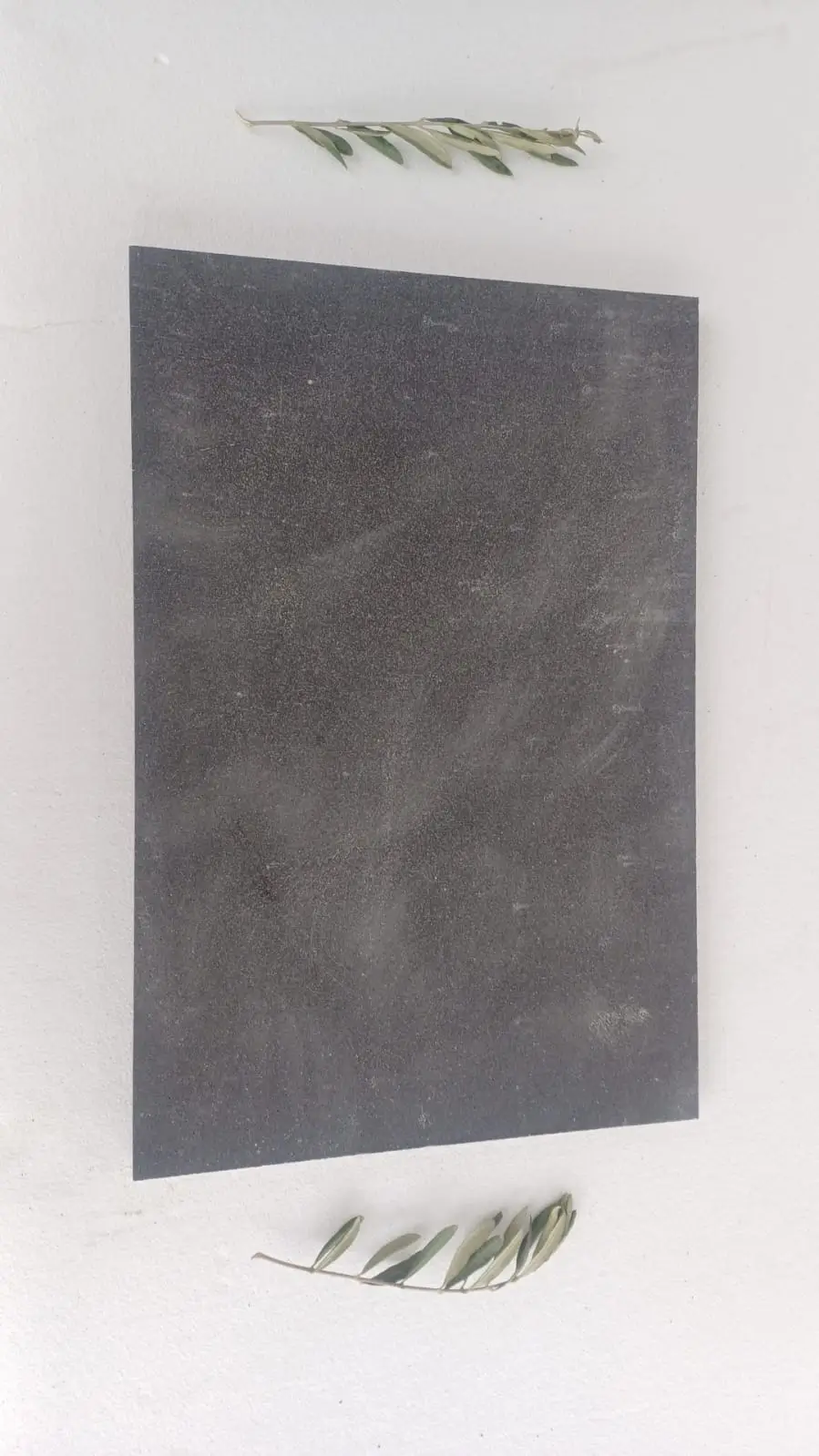
Material selection within the 12×12 format matters significantly for performance. Travertine pavers are a perennial Arizona choice because of their lower surface temperatures relative to concrete and their natural porosity, which helps with slip resistance when wet. Limestone in a honed or tumbled finish performs similarly. Basalt is increasingly specified for contemporary projects and carries excellent compressive strength — typically above 14,000 PSI — which is well above what residential foot traffic demands, giving you headroom for occasional vehicle loads on driveways or turnarounds.
- Verify paver thickness consistency before accepting delivery — variation beyond plus or minus 1/8 inch creates leveling challenges during installation
- Request material from the same production batch when your order spans multiple pallets — color variation between batches is real and visible at scale
- Confirm the material’s water absorption rate — anything above 7 percent absorption by weight requires more frequent sealing in Arizona’s dust-heavy environment
- For pool deck applications, specify a thermal-finish or tumbled surface — natural cleft and polished finishes can fall short of ANSI A137.1 slip resistance thresholds when wet
The 12×12 stone paver setting guide across Arizona generally recommends a 90-degree running bond or a simple offset pattern for large open areas — both patterns distribute load well and don’t require difficult cuts. Herringbone and diagonal patterns look striking but add 15 to 20 percent to labor cost due to cut complexity. That’s a legitimate design trade-off, but worth pricing explicitly before committing. Revisiting the 12×12 stone paver setting guide across Arizona when you transition from flat to sloped terrain is equally important, since pattern choice interacts with drainage direction in ways that affect long-term joint stability.
Ordering Logistics and Project Timeline Planning
Your installation timeline needs to build backward from material delivery, not forward from project start. This is especially true when ordering from suppliers who don’t carry in-state inventory — a 6 to 8 week import lead time can push your installation window into peak summer heat, which creates real complications for both your installation crew and the curing conditions for setting materials.
Calculate your material quantity carefully before placing the order. For 12×12 pavers, the formula is straightforward: divide your square footage by 0.9 (accounting for a 10 percent waste factor) and convert to square feet on order. Arizona projects often benefit from ordering a small overage beyond that — an extra 5 percent held in reserve covers breakage, future repairs, and the occasional pattern adjustment that happens in the field. Stone that comes from a later production run may not match your original material exactly.
For your complete product reference, our 12×12 stone pavers Arizona page provides current inventory availability, thickness specifications, and material options relevant to Arizona projects. Reviewing that before you finalize your order quantity saves multiple back-and-forth exchanges during the ordering process.
- Order truck delivery with a delivery window confirmation — stone pallets arriving at an unstaffed job site create liability and logistics problems
- Stage pallets as close to the installation area as access allows — moving 12×12 stone pavers by hand across a large yard adds hours to your labor budget
- Plan for a one-day buffer between delivery and installation start — this gives you time to inspect material for any transit damage before your crew is on site
- Confirm your supplier’s return policy for intact, uninstalled material before ordering — overage that can’t be returned represents a real sunk cost
Sealing and Long-Term Maintenance in Arizona Conditions
Sealing natural stone pavers in Arizona follows a different schedule than national product guidelines suggest, and this is a detail that catches a lot of homeowners off guard after their first desert summer. The combination of intense UV radiation, airborne mineral dust, and the alkaline profile of Arizona water all accelerate the degradation of penetrating sealers. A product rated for a 5-year reapplication cycle in a moderate climate often needs refreshing at the 2 to 3 year mark here.
Applying sealer in Arizona heat requires attention to surface temperature, not just air temperature. Stone surface temperatures in direct summer sun regularly exceed 140°F — applying penetrating sealer to a surface that hot causes it to flash-cure before it penetrates adequately. A morning application on a day below 95°F, with the surface in shade if possible, produces measurably better results. This isn’t manufacturer caution language — it’s the difference between sealer that lasts 30 months and sealer that starts failing at 14 months.
- Use an impregnating, penetrating sealer rated for exterior natural stone — topical film-forming sealers trap moisture vapor and peel under freeze-thaw or thermal cycling
- Clean the surface thoroughly before sealing — mineral deposits from Arizona hard water require a pH-neutral stone cleaner, not acidic tile cleaners that can etch certain stone types
- Allow freshly installed pavers to cure for at least 28 days before applying sealer — residual moisture from the installation process needs to escape first
- Reapply sealer when water no longer beads on the surface — the water bead test is the most reliable field indicator, more useful than a calendar schedule
Projects in Sedona face a specific maintenance consideration: the region’s iconic red rock mineral dust is highly alkaline and, if left to accumulate in paver joints and on sealed surfaces, can slowly etch certain limestone and travertine finishes. A twice-yearly rinse with clean water and light brushing is enough to prevent that buildup from becoming a surface damage issue.
Arizona Outdoor Stone Paver Installation Methods for Slopes and Grades
Grade management is a more pressing issue in Arizona than many installers from other regions expect. The desert terrain varies dramatically — low-desert valley floors are largely flat, but hillside custom homes in areas with varied topography require installation approaches that account for both drainage velocity and lateral base migration on slopes. The Arizona outdoor stone paver installation methods that work on a flat Scottsdale courtyard don’t translate directly to a sloped Sedona terrace.
For slopes exceeding 2 percent grade, restraint systems at the paver field perimeter become structurally necessary, not optional. Soldier course borders set in concrete or mortar-set edge restraints prevent the entire paver field from slowly migrating downhill under gravity and foot traffic. The bedding sand layer on a slope is particularly vulnerable — without proper perimeter containment, sand works its way out from under pavers at the low edge over multiple seasons, producing a gradual but irreversible settlement pattern. Applying consistent Arizona outdoor stone paver installation methods at both the perimeter and field interior is what separates slope installations that hold from those that require remediation within a few years.
- On grades above 3 percent, consider a mechanically interlocated pattern that uses the pavers’ geometry to resist lateral movement
- Install perimeter restraints before placing bedding sand — doing it after the field is laid creates disturbance that undoes your compaction work
- Allow for a slightly thicker bedding layer (up to 1.5 inches) on slopes to accommodate the screeding approach needed to maintain grade transitions
- Check drainage discharge points — on slopes, water velocity increases, and you need to direct outflow to a gravel dissipation zone or drain inlet, not directly onto adjacent landscape
Decision Points
The decisions that determine whether your 12×12 stone paver installation in Arizona performs for two decades or two come down to choices made before any stone touches the ground. Your material sourcing strategy — whether you’re pulling from local warehouse inventory or waiting on an import cycle — sets your project timeline and a meaningful portion of your total cost. Your base preparation depth and compaction standard determine structural longevity. Your sealing protocol and maintenance schedule determine surface appearance over time. These aren’t parallel considerations; they compound each other.
Arizona’s cost environment for natural stone installation is actually more favorable than most homeowners initially expect, particularly when you source efficiently and choose a format like 12×12 that minimizes cut waste and labor complexity. The material-to-labor ratio in this market rewards smart material selection more than it does cost-cutting on installation quality. Spending more on verified base aggregate and professional compaction consistently outperforms spending more on premium material set over a marginal base. Beyond your immediate project, your Arizona property may benefit from complementary hardscape elements — How to Choose 16×16 Patio Stones for Arizona covers a related format decision that many homeowners face when expanding patio or terrace areas adjacent to existing stone work.
The specification decisions you make now — base depth, material selection, joint width, sealing schedule — are the variables that will either justify or complicate every dollar you spend on this project. Get the base right, source from confirmed in-state warehouse inventory to control your timeline, and treat sealer maintenance as a recurring line item rather than a one-time cost. That combination is what produces the installations that still look right 20 years from the completion date. Homeowners in Tucson, Mesa, and Chandler rely on Citadel Stone for 12×12 stone pavers that arrive cut to consistent thickness tolerances suited to Arizona’s demanding desert base conditions.