
Why Installation Timing Defines Success in Arizona
The single variable that separates a 25-year install 600×600 paving slabs Arizona project from one that’s rocking and cracking within five years isn’t the slab itself — it’s when you laid it. Arizona’s seasonal calendar creates narrow windows where adhesive cure rates, substrate temperatures, and mortar behavior all align in your favor, and missing those windows by even a few weeks can compromise the bond line before you’ve sealed a single joint. Planning to install 600×600 paving slabs in Arizona means building your project schedule around the thermometer and the clock, not just around material availability.
The format itself demands precision. At 600x600mm, each slab covers roughly 3.9 square feet of surface, which means any unevenness in the bedding layer gets magnified across a large, rigid plane. Your leveling tolerance tightens, your working time shortens under heat, and every degree of substrate temperature above 85°F accelerates the open time of polymer-modified adhesive mortars in ways that catch even experienced contractors off guard.
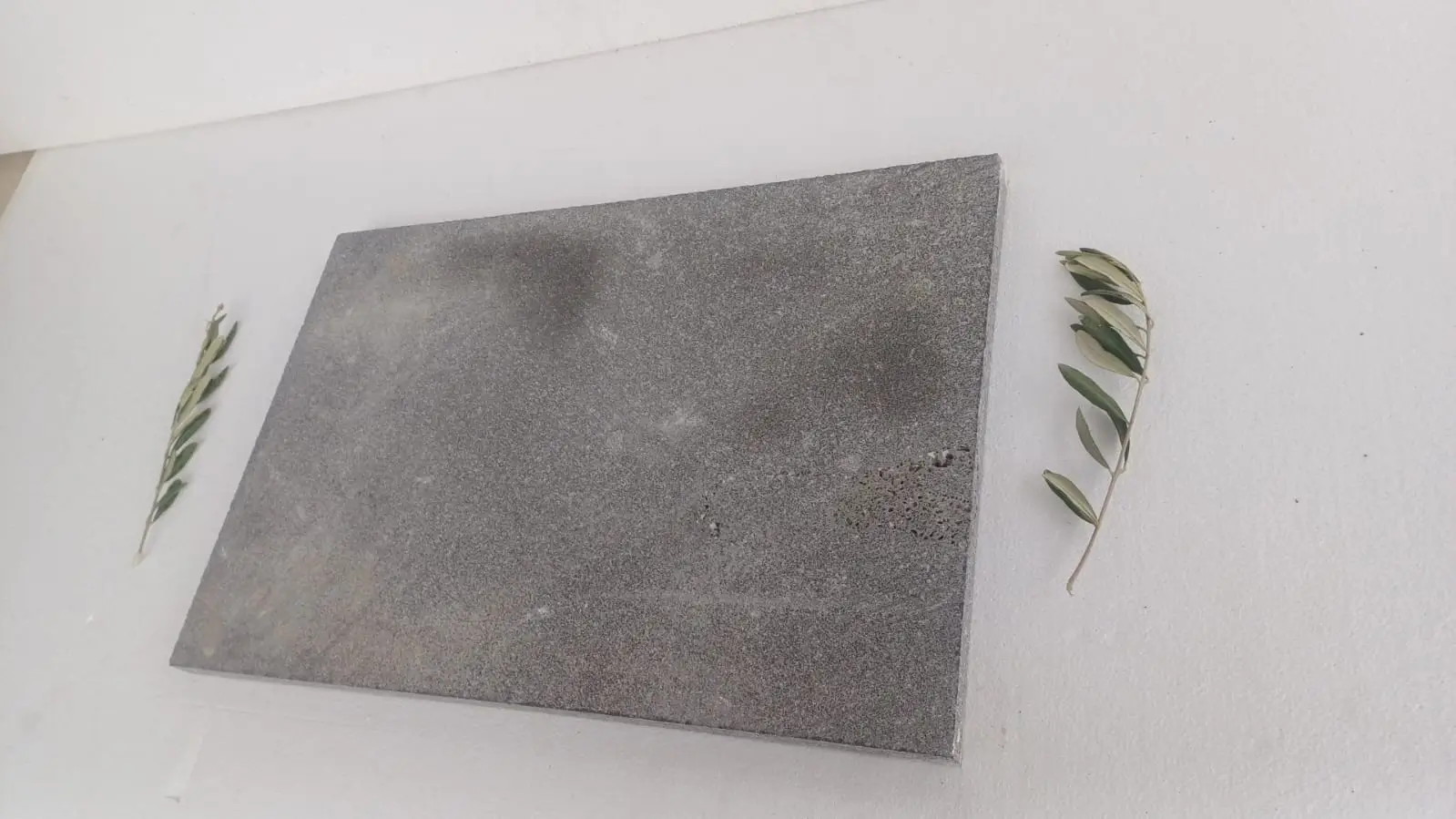
Arizona’s Seasonal Windows for Large Format Slab Work
Two primary installation windows exist in Arizona, and understanding them precisely changes how you plan labor, order materials, and schedule inspections. The first runs from mid-October through early April — the low-desert sweet spot where ambient temperatures stay between 55°F and 85°F for most of the day and substrate temperatures remain manageable. The second, shorter window opens briefly in late September after monsoon season winds down, provided overnight lows have dropped below 75°F consistently.
The summer corridor from May through mid-September is not a viable large format installation period in most of Phoenix and the surrounding valley. Substrate surface temperatures on concrete slabs or compacted aggregate bases routinely reach 140–160°F by midday, well above the threshold where most polymer-modified mortars begin losing plasticity before you can fully seat and level a 600×600 slab. Scheduling outdoor paving installation across Arizona patios during these months results in accelerated skin formation on the mortar bed, which creates a weak bond plane regardless of how carefully you work.
- Mid-October to early April: optimal window for adhesive mortars and natural stone bedding compounds
- Late September: viable only when overnight lows stabilize below 75°F and daytime peaks stay under 95°F
- May through mid-September: high failure risk for large format work — adhesive open times drop to under 8 minutes on exposed beds
- December through February: excellent temperatures but watch for early morning moisture on substrates in higher elevations
Morning vs. Afternoon Scheduling — The Detail Most Projects Miss
Even within the optimal seasonal windows, Arizona’s diurnal temperature swings demand that you structure your workday deliberately. Substrate temperatures at 7 AM in November can sit at 52°F — actually too cold for some rapid-set mortars to hydrate properly — while by 1 PM that same substrate reaches 88°F. The thermal shift over a single workday is larger here than in most other installation climates, and it directly affects your mortar behavior from one pallet of slabs to the next.
Your practical approach should divide the workday into two phases. In the cooler months, delay adhesive application until the substrate has warmed to at least 50°F — typically 8–9 AM — and complete all bedding work before the surface temperature exceeds 90°F. That gives you a 3–4 hour productive window for laying large format stone slabs in Arizona without compromising open times. In the transitional months of October and March, that productive window tightens to 2–2.5 hours on south-facing and west-facing surfaces.
- Check substrate temperature with an infrared thermometer at the start of every session — not just ambient air temperature
- West-facing patios heat up 25–35°F faster than north-facing surfaces on the same property
- Shading the work area with temporary canopy structures extends your usable window by 30–45 minutes
- Afternoon work in spring requires batch-size discipline — mix only what you can place and seat in 6–8 minutes
- Pre-wet the substrate lightly in dry winter months to prevent the base from drawing moisture out of the mortar bed prematurely
How Seasonal Temperature Affects Adhesive and Mortar Performance
Standard C2 polymer-modified adhesive mortars tested in laboratory conditions at 70°F typically provide 20–25 minutes of open time on the troweled bed. Replicate that troweling in Scottsdale on a March afternoon with a substrate temperature of 98°F and that open time collapses to 8–10 minutes. You’re not applying a different product — the temperature delta is doing the damage. This is the single most common cause of hollow-sounding 600×600 slabs found during post-installation tap testing in Arizona projects.
The specification response to Arizona’s seasonal adhesive behavior requires product selection, not just scheduling. Extended open time mortars — products with 40–50 minute laboratory ratings — effectively deliver a 20–25 minute field window under warm-season conditions, matching the actual working time you need for proper 600×600 slab seating. At Citadel Stone, we consistently recommend extended open time adhesives for all outdoor paving installation across Arizona patios, regardless of which season you’re working in, because even November afternoons can push substrate temps above 80°F on sun-exposed concrete bases.
- Use extended open time (40–50 min lab-rated) polymer-modified adhesive for all Arizona large format work
- Never use rapid-set mortars for 600×600 slabs outdoors — the large format increases positioning time requirements
- Slake your mortar for the full recommended period before use — rushing this step in cold winter mornings reduces plasticity
- Increase your screed depth accuracy to ±2mm — large format slabs are unforgiving of mortar bed inconsistency
Base Preparation Timed Around Arizona’s Soil Behavior
Base preparation timing matters as much as installation timing. Arizona’s native soils — particularly the expansive caliche-influenced clays found across Maricopa County — behave differently depending on the season. Post-monsoon soils from July through September retain elevated moisture that can continue migrating upward through a compacted aggregate base for weeks after the rains stop. Installing your base compaction and concrete substrate during this period, then waiting for the soil moisture to stabilize before laying slabs, is the correct sequencing approach for any Arizona desert-rated large square paving slabs project.
For projects in Tucson, the monsoon season’s soil saturation window extends slightly later into October due to higher elevation and different rainfall patterns than the Phoenix valley. Your compaction testing should confirm moisture content is within 2% of optimum before committing to your concrete substrate pour — this isn’t just structural best practice, it’s the variable that determines whether your 600×600 slab installation experiences differential settlement 18 months after completion. Plan your base work timeline to allow a minimum 3-week moisture stabilization period following the last measurable rainfall.
Curing Conditions and Joint Timing in Arizona’s Dry Climate
Curing is where Arizona’s climate creates a less obvious but equally important timing challenge. The combination of low relative humidity (averaging 10–25% in winter months) and even moderate temperatures accelerates surface drying on fresh mortar beds and grout joints faster than most installation guidelines anticipate. Grouting joints too soon after laying — within 12 hours in summer, within 18 hours in winter — creates a situation where the adhesive mortar hasn’t developed sufficient shear bond strength to resist the mechanical stress of grouting tools moving across the slab surface.
The 600×600 format compounds this issue because the slab’s mass transfers pressure across a larger footprint during grouting. Follow a minimum 24-hour wait post-laying before grouting in cool-season months and 36–48 hours in any period where daytime temperatures exceed 85°F. Mist-curing the mortar bed perimeter by dampening exposed edges with a fine spray helps prevent edge delamination in Arizona’s desiccating conditions. This one field adjustment has measurably extended the service life of outdoor paving installation across Arizona patios by reducing the micro-cracking that typically initiates at the slab-to-grout transition.
- Wait minimum 24 hours before grouting in cool season (October–March)
- Extend to 36–48 hours when daytime highs exceed 85°F
- Mist exposed mortar perimeters every 3–4 hours during curing in low-humidity conditions
- Protect fresh installations from wind with temporary fabric barriers — Arizona’s winter wind accelerates surface drying nearly as much as heat does
- Avoid grouting in direct afternoon sun — morning grouting allows the joint compound to begin curing before peak heat exposure
For material quality and regional availability, your project benefits from working with a supplier who understands Arizona-specific timing requirements. Arizona large format slabs Citadel Stone can confirm current warehouse stock levels so you can synchronize your material delivery with your installation window — a detail that matters when your install window is only 6–8 weeks wide.
Thermal Expansion and Joint Spacing for Arizona Conditions
The thermal differential that 600×600 paving slabs in Arizona experience between a cold December night at 32°F and a June substrate temperature of 150°F represents one of the most extreme cyclic stress scenarios any paving installation faces. Over that 118°F range, a natural stone slab with a thermal expansion coefficient of approximately 4.5–5.5 × 10⁻⁶ per °F will expand and contract by roughly 0.032–0.039 inches across its 600mm length with each full thermal cycle. That sounds small until you’re running 30 linear feet of continuous installation — at which point it adds up to visible movement if your joint spacing doesn’t accommodate it.
Arizona-specific joint spacing for 600×600 large format slabs should target 3mm minimum grout joints for field slabs, with movement joints (backed with a compressible backer rod and flexible sealant) placed every 8–10 linear feet rather than the 15–20 feet often cited in generic installation guides. The 600×600 slab installation guide that AZ homeowners trust most frequently references incorrect joint spacing borrowed from northern climate specifications — those specs were written for environments where the thermal delta is half of what Arizona experiences. Your project needs the Arizona-specific version of those numbers, and specifying Arizona desert-rated large square paving slabs from a supplier familiar with local conditions is the most reliable way to get them.
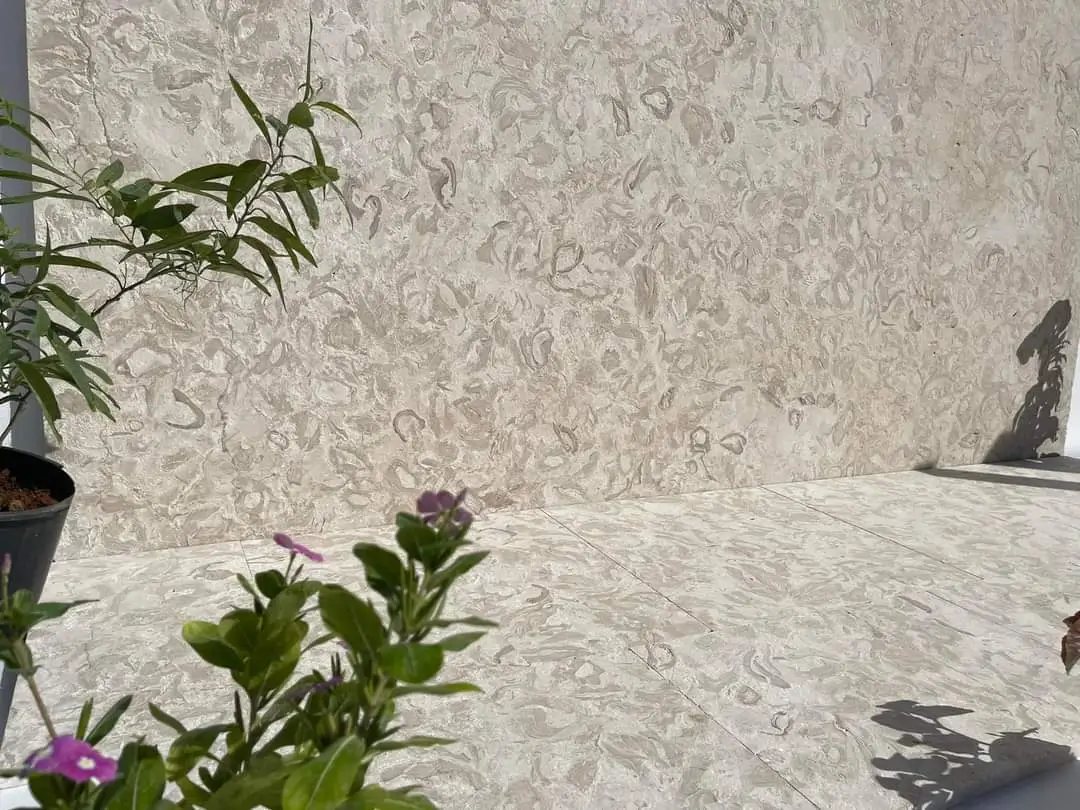
Selecting the Right 600×600 Slabs for Arizona Conditions
Thickness selection directly influences your installation timing options. 20mm slabs are structurally appropriate for pedestrian-only patio applications but require a more precisely prepared mortar bed — any variation in bed depth beyond ±2mm becomes visible in a large format grid. 30mm slabs offer a more forgiving installation tolerance and provide better thermal mass buffering, which slows the rate of surface temperature change and reduces the peak thermal stress on adhesive bond lines. For laying large format stone slabs in Arizona over a 20+ year service horizon, 30mm is the specification that holds up best across the full thermal cycle range the desert climate delivers.
Material density matters alongside thickness. Dense, low-absorption stone — basalt, some granites, and select limestone varieties — absorbs less moisture from the mortar bed during installation, giving you more consistent bond development across varying seasonal humidity levels. Travertine with high void content can act like a sponge in dry winter conditions, pulling moisture from the adhesive faster than the polymer can hydrate properly. The warehouse quality checks our team runs on incoming Arizona large format slab inventory specifically evaluate absorption rates for this reason — a slab that looks identical can behave very differently on a dry January morning in Scottsdale versus a humid August morning elsewhere.
- Specify 30mm thickness for Arizona patios where long-term thermal cycling performance is the priority
- Request absorption rate data from your supplier — target values below 0.4% for optimal adhesive bond consistency
- Dense natural stone varieties outperform high-void materials in Arizona’s extreme drying conditions during installation
- Confirm slab flatness tolerance — a 600×600 slab with more than 1.5mm warpage across its face creates lippage risk in large format grids
Delivery Logistics and Material Staging for Seasonal Projects
Your material ordering timeline should work backward from your installation window, not forward from when you feel ready to order. 600×600 slabs in the larger format categories — particularly natural stone varieties — can carry lead times of 2–4 weeks from warehouse release to site delivery when regional demand is high. The October-to-April installation season creates predictable demand spikes in late September and early October as contractors and homeowners all attempt to enter the optimal window simultaneously. Ordering before mid-September for fall installations avoids the queue.
Truck delivery logistics for large format slabs also deserve scheduling attention. Each full pallet of 600×600 slabs weighs 1,800–2,200 pounds depending on thickness and stone type. Your delivery site needs to accommodate the truck’s turning radius and provide a staging area within reasonable carry distance of the installation zone — carrying heavy-format slabs more than 30 feet on-site significantly slows the installation pace and introduces handling damage risk. Verify driveway access dimensions and clearance heights with your supplier before your truck delivery is scheduled, particularly for projects in older neighborhoods where street access can be narrow.
Decision Points for Your Install 600×600 Paving Slabs Arizona Project
Every project to install 600×600 paving slabs in Arizona comes down to a handful of decisions that carry disproportionate weight — and each one connects back to timing. Choosing your installation window, confirming your adhesive specification matches the expected substrate temperature, sequencing your base work to avoid post-monsoon moisture, and ordering early enough to hit the fall window are the variables that actually determine whether this project performs at the 25-year mark. The slab material choice matters, but it won’t rescue a project where the seasonal timing was ignored.
Plan your project calendar starting with the installation window, work backward to base prep and concrete substrate dates, and then work further backward to your material order date. If that math puts your order in September, place it in August. Arizona’s optimal paving season is not forgiving of last-minute logistics. Beyond 600×600 slab projects, your Arizona hardscape plans may extend to other stone formats and thicknesses — How to Choose 1 Inch Thick Pavers in Arizona: The Complete Buyer’s Guide covers specification considerations for a related format that complements large format slab work in transitional zones and step applications. Homeowners in Phoenix, Chandler, and Peoria rely on Citadel Stone for 600×600 slabs cut to 30mm thickness, a format known for resisting thermal stress in Arizona’s extreme summer conditions.