
Thermal expansion is the real villain behind most stone tile cracking failures in Arizona — not the tile quality itself. Concrete slabs in Yuma regularly experience surface temperature swings of 70°F or more between a summer afternoon and early morning, and if your setting bed and joint layout don’t accommodate that movement, cracking and lifting are inevitable. Understanding why stone tile cracking in Arizona floors happens — and what to do about it — starts with the structural and cost decisions made long before the first tile is set.
Why Arizona Costs More Than You Think
Material pricing for indoor stone floor tiles in Arizona reflects two compounding factors: freight distance from major distribution hubs and limited local fabrication capacity. Phoenix metro sits roughly 370 miles from the nearest large-volume stone port and warehouse complex, which means freight adds $0.35–$0.65 per square foot to nearly every natural stone product sourced from the coasts. For a 1,200-square-foot interior project, that’s $420–$780 in logistics cost before a single tile is cut — a figure most budgets don’t account for up front.
Labor-to-material cost ratios in Arizona also run higher than national averages. Skilled stone tile setters in the Phoenix and East Valley markets typically bill $9–$14 per square foot for floor installation, which means labor often exceeds material cost on mid-range projects. That ratio matters because it changes how you value-engineer the project: saving $0.50 per square foot on material does far less than specifying the correct tile thickness and base prep the first time, avoiding a costly re-do.
Sourcing Decisions That Affect Total Project Cost
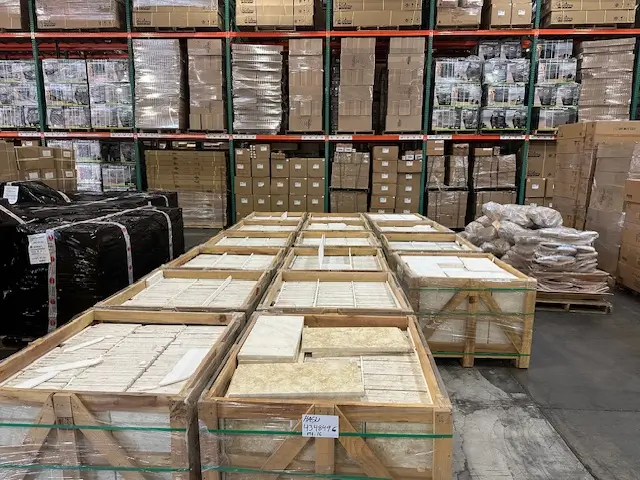
Your choice of stone supplier directly affects whether your project stays on budget or gets derailed by lead time surprises. Imported stone ordered through a broker without local warehouse stock typically runs a 6–10 week import-to-delivery cycle. On a remodel project, that delay alone can cost $2,000–$4,000 in contractor scheduling disruptions. Citadel Stone maintains warehouse inventory in Arizona, which typically compresses lead times to 1–2 weeks and lets you lock in material before labor is mobilized.
Thickness consistency is another cost driver that rarely appears in initial bids. Natural stone tiles with inconsistent back flatness — a common issue with lower-tier suppliers — require thicker mortar beds to compensate, which increases both material cost and installation time. Specifying stone cut to a consistent nominal thickness (typically 3/8″ or 1/2″ for interior floors) eliminates that variable and gives your setter a cleaner, faster installation.
- Verify warehouse stock before finalizing your project schedule — backorder delays compound labor costs quickly
- Request thickness tolerances in writing: ±1/16″ is acceptable; ±3/32″ or more signals quality control issues
- Truck delivery logistics to your job site affect which tile formats are practical — confirm access before ordering large-format slabs over 24″×24″
- Regional stone availability varies; travertine and limestone are typically the most stocked formats in Arizona markets
What Actually Causes Stone Tile Cracking in Arizona
Stone tile cracking in Arizona floors almost always traces back to one of three root causes: inadequate expansion joint spacing, a compromised setting bed, or moisture cycling beneath a poorly sealed tile. The thermal expansion of a natural stone tile itself is relatively modest — limestone runs approximately 4.4–5.5 × 10⁻⁶ per °F — but the concrete substrate beneath it expands at a different rate, and that differential stress is what fractures grout joints and eventually the tile. Why stone floor tiles crack in Arizona is rarely a mystery once you examine the joint layout and mortar coverage together.
The Tile Council of North America installation standards are explicit about this: interior stone floors over concrete slabs require expansion joints at every change of plane, at all columns and perimeter walls, and at maximum 24–36 foot intervals across open field areas. In practice, most failed installations skip the perimeter joint entirely, filling it with grout that cracks within the first two summers. That single omission accounts for a disproportionate share of service calls on Arizona interior stone floors.
- Cracked grout at perimeter walls: almost always a missing or grouted-over expansion joint
- Hollow-sounding tiles that lift from corners: mortar coverage under 80% — insufficient bond to handle thermal cycling
- Mid-tile fractures running parallel to the long axis: substrate crack telegraphing through the stone
- Lifting field tiles with intact grout: thinset failure due to improper substrate prep or contaminated slab surface
Fixing Lifting Stone Tiles in Arizona Interiors
Fixing lifting stone tiles in AZ interior applications requires more than just re-bonding the affected piece — you need to understand why it lifted before committing to a repair method. Pressing a tile back down with fresh thinset without correcting the underlying joint or substrate issue gives you 12–18 months before the same tile lifts again. Stone tile thermal expansion issues across Arizona compound every season that the root cause goes unaddressed.
For isolated lifting tiles, the correct sequence is: remove the tile cleanly, grind the substrate back to bare concrete, check for substrate cracks with a straightedge, and apply a crack isolation membrane before re-setting. In Mesa and Gilbert, where slab-on-grade construction is nearly universal, substrate movement from clay soil expansion is a genuine secondary factor — especially in properties built before 2000 when compaction standards were less rigorous. Factor that into your repair specification before assuming thinset alone will hold.
- Use polymer-modified thinset for re-setting — standard cement mortars don’t provide sufficient bond strength on Arizona’s thermally active slabs
- Apply a crack isolation membrane (ANSI A118.12 rated) if the substrate shows any crack activity
- Restore expansion joints at all perimeter locations before re-grouting — use a polyurethane or silicone sealant matched to the grout color
- Allow 72 hours minimum cure time before foot traffic in summer conditions — heat accelerates surface dry but not full cure depth
Base Preparation and Mortar Coverage Standards
Mortar coverage is the specification most setters treat as optional — and it’s the one that determines whether repairing indoor stone flooring in Arizona homes becomes a recurring budget item. The Natural Stone Institute ASTM tile specifications require a minimum 95% mortar coverage for wet areas and 80% for dry interior locations. In Arizona’s thermal environment, 80% should be treated as the absolute floor, not the target — 90%+ coverage is the specification you want on any stone floor that experiences significant seasonal temperature swings.
Achieving that coverage consistently requires a back-buttering technique: apply thinset to both the substrate and the back of the tile, then use a directional notch trowel (typically 1/2″ × 1/2″ square notch for tiles over 15″ in any dimension). Collapse the ridges with a float before placing the tile to eliminate air pockets. This adds roughly 15 minutes per 10 square feet versus single-side application, but it’s the difference between an 8-year installation and a 20-year one.
Selecting Indoor Stone Floor Tiles for Arizona Conditions
Not all stone tile categories perform equally when it comes to thermal cycling resistance. Dense, low-absorption stones — granite and honed basalt — handle temperature differentials better than highly porous varieties, but they also transfer more heat to the substrate during peak afternoon temperatures, which can actually amplify expansion stress at the tile-mortar interface. For most Arizona interior applications, a medium-density limestone or travertine with a water absorption rate under 3% (per ASTM C97 absorption testing) hits the right balance between thermal stability and bonding compliance.
Tile format matters as much as material. Larger format tiles — 24″×24″ and above — have less grout joint area per square foot, which means less accommodation for differential movement. For projects in high-thermal-load zones, dropping to an 18″×18″ format and widening grout joints to 3/16″ provides meaningfully more movement accommodation without sacrificing the clean, large-surface aesthetic most Arizona homeowners prefer. Chandler and Peoria projects on newer slab construction have demonstrated this tradeoff clearly: the format reduction alone reduced callback rates on thermal-related cracking in contractor portfolios reviewed over multiple seasons.
- Absorption under 3%: good thermal stability and bonding compliance for interior Arizona applications
- Honed or matte finishes: better bond strength than polished surfaces due to micro-texture on the back face
- Tiles thicker than 3/8″: more resistant to mid-tile fractures from substrate crack telegraphing
- Avoid highly porous travertine (unfilled) for kitchen floors where moisture cycling is frequent
For a complete range of options suited to Arizona interiors, Citadel Stone Arizona stone tile solutions covers material specifications and sourcing details for projects across the state.
Resealing and Long-Term Maintenance for Arizona Stone Floors
Repairing indoor stone flooring in Arizona homes doesn’t end with re-bonding lifted tiles — an unsealed or under-sealed stone floor in Arizona’s climate will develop problems faster than almost anywhere else in the country. Dry desert air pulls moisture from grout joints, causing them to shrink and crack at the edges; conversely, monsoon season drives humidity into unsealed stone, which cycles that moisture out rapidly during the following dry months. That repeated wetting-and-drying cycle degrades both the grout and the thinset bond over time.
A penetrating sealer with a silane or siloxane base is the correct product for interior stone floors — avoid topical sealers on high-traffic areas because they film and peel. Application frequency in Arizona conditions should be every 18–24 months for limestone and travertine, and every 3 years for denser granite or basalt tiles. Test before you seal: a few drops of water should absorb into the stone surface within 3–4 minutes on an unsealed tile — if it beads immediately, the existing sealer is still active.
Value Engineering Without Compromising Performance
The most effective way to reduce total project cost on Arizona interior stone floors isn’t to choose a cheaper tile — it’s to eliminate the conditions that create re-work. A $4 per square foot tile that requires re-installation in year 8 costs more over a 20-year horizon than a $7 tile installed correctly the first time. The re-installation cost includes material removal, substrate repair, new tile, and labor — typically 2.5–3× the original installation cost per affected area.
Value engineering that actually works focuses on three levers: specifying the correct tile thickness for the thermal load, eliminating unnecessary tile formats that complicate logistics (odd sizes that don’t warehouse efficiently drive up truck delivery costs through wasted freight space), and using a polymer-modified thinset rather than standard mortar throughout. The thinset upgrade typically adds $0.15–$0.25 per square foot — one of the best value trades available on any Arizona stone floor project.
- Standardize on one or two tile formats per project to optimize warehouse ordering and minimize cut waste
- Specify polymer-modified mortar from the outset — retrofitting to fix a bond failure costs 10–15× more
- Budget for crack isolation membrane on any slab older than 15 years — the material cost is minimal relative to the risk it eliminates
- Request cut sheets and quality documentation from your supplier before truck delivery is scheduled — discovering thickness inconsistencies on delivery day stalls the entire project
Professional Summary
Stone tile cracking in Arizona floors is a solvable problem — but solving it correctly requires addressing the full chain of decisions from sourcing and budgeting through base prep and joint specification. The thermal and climatic stresses Arizona imposes on interior stone floors are real, but they’re not unmanageable when your specification accounts for them from the start. Expansion joints, mortar coverage, material thickness, and sealing frequency are the variables that separate installations that hold for 20+ years from those that cycle through repairs every few years.
Your total project cost in Arizona is also determined well before installation day. Freight margins, warehouse lead times, labor-to-material ratios, and the risk of re-work all compound in a market where skilled setter availability is constrained. Getting the specification right the first time is the most reliable cost-control strategy available. As you evaluate your material options alongside your installation plan, stone tile thermal expansion issues across Arizona make it worth comparing how different flooring systems handle the same climatic stresses — stone versus porcelain flooring in Arizona is a comparison worth reviewing before finalizing your selection. Projects across Gilbert, Chandler, and Peoria show that indoor stone tile sourced through Citadel Stone, cut to precise thickness from select natural stone quarries worldwide, reduces hollow and lift failures common in Arizona floor applications.