
Base preparation failures account for the majority of honed basalt installation callbacks in Arizona — and most of them trace back to decisions made before a single tile is set. Honed basalt installation in Arizona’s desert environment requires a fundamentally different approach than you’d apply in a temperate climate, particularly when it comes to subgrade compaction, mortar selection, and joint management. Getting those variables right is the difference between a floor or patio that performs for 25 years and one that starts showing lippage and cracking inside of five.
Understanding How Honed Basalt Behaves in Arizona Conditions
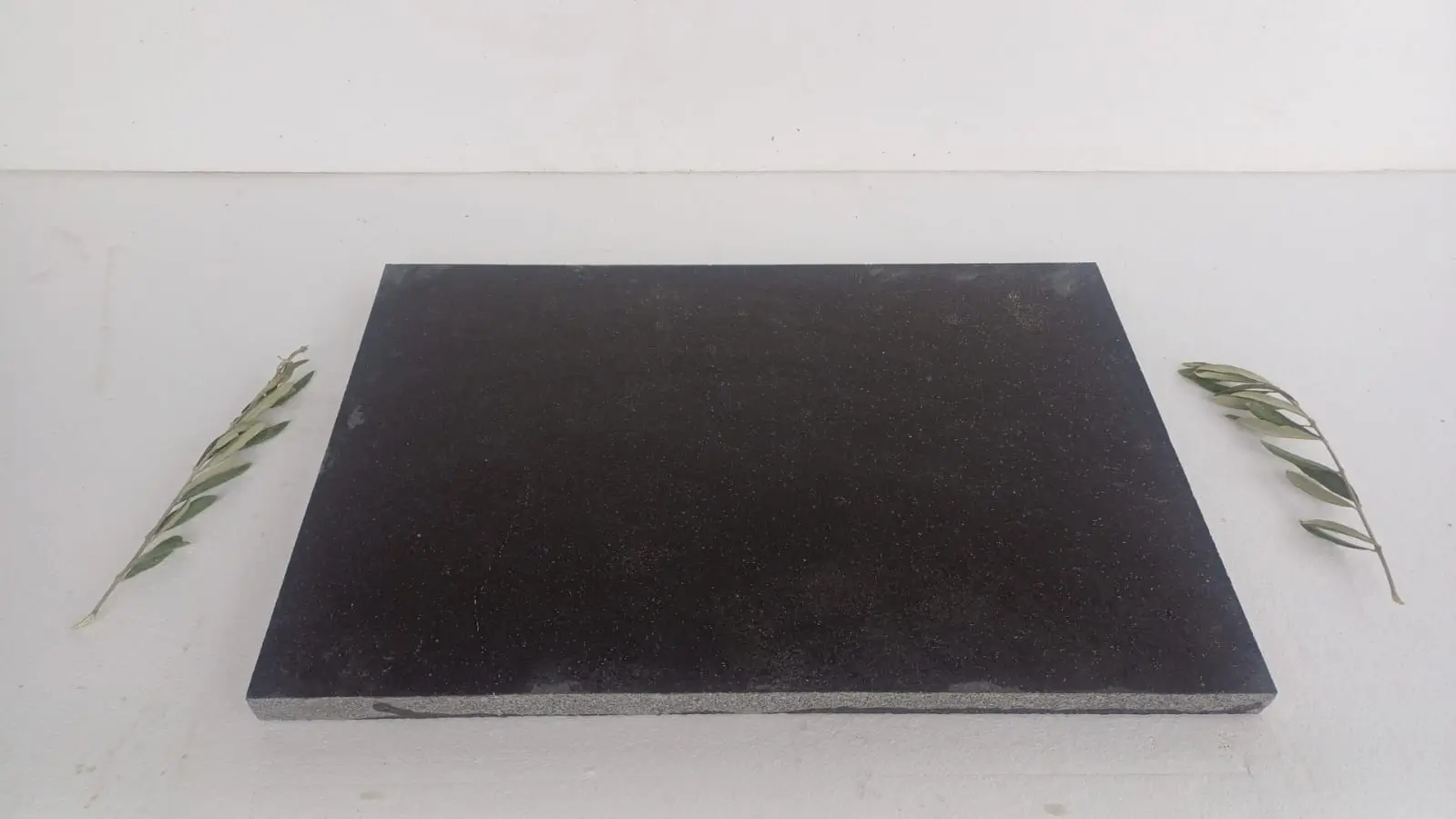
Honed basalt is a dense, low-porosity volcanic stone with a compressive strength that typically ranges between 15,000 and 22,000 PSI — well above what most residential and light commercial applications demand. Its thermal expansion coefficient runs around 4.4 × 10⁻⁶ per °F, which is relatively low and contributes to its dimensional stability under the 75°F daily temperature swings you’ll regularly encounter in Arizona’s low desert. That stability is one of the primary reasons honed basalt installation has gained ground in Phoenix-area commercial projects over the past decade.
The surface finish matters for performance as well as aesthetics. A honed finish creates a matte, slightly textured surface that registers a DCOF (Dynamic Coefficient of Friction) between 0.50 and 0.65 depending on the specific source quarry and finish grind. For interior wet areas and exterior applications exposed to monsoon runoff, you want to verify your supplier’s batch-level test data — not just a generic product spec sheet. At Citadel Stone, we test DCOF on incoming material at our warehouse before it ships, because variation between quarry production runs is real and matters for specification compliance.
Subgrade Preparation: The Step Arizona Installers Get Wrong Most Often
Preparing subgrade for honed basalt flooring in Arizona demands you address each soil type differently rather than applying a single compaction standard across the board. Arizona soils are highly variable — you’ll encounter expansive clay, caliche hardpan, decomposed granite, and sandy alluvial deposits sometimes within the same project footprint. Expansive clay soils require moisture conditioning and lime stabilization before you compact, otherwise the subgrade will continue to move seasonally and telegraph stress into your stone layer.
For exterior installations, a minimum 6-inch compacted aggregate base over native soil is the starting point — but in areas with clay content above 30%, pushing that to 8 inches with a geotextile separation layer is standard practice. Your compaction target should reach 95% of Modified Proctor density, verified with a nuclear densometer or sand cone test. Don’t rely on visual inspection alone; the compaction that looks sufficient in the dry season often proves inadequate once monsoon moisture saturates the subgrade. Projects in Peoria frequently involve desert soil profiles with caliche layers at 24–36 inches that can actually serve as a stable sub-base when they’re continuous, but they require proper drainage channels cut through them to prevent hydrostatic pressure buildup beneath your base.
- Verify native soil classification before specifying base depth — a geotechnical report is worth the cost on any project over 500 square feet
- Use Class 2 aggregate base (3/4-inch crushed rock or decomposed granite) for superior interlocking and drainage
- Compact in maximum 3-inch lifts to achieve uniform density through the full base depth
- Allow 48 hours after final compaction before beginning mortar bed work, especially in summer when temperature differentials cause rapid surface drying that masks subsurface instability
- Install perimeter drainage at the same time as the subgrade — retrofitting drainage after tile installation is costly and disruptive
Mortar Bed Selection and Setting Bed Specifications
Honed basalt installation methods Arizona homeowners encounter in standard guides often underspecify the mortar system, defaulting to standard thin-set without accounting for the thermal stress environment. A polymer-modified thin-set with a minimum tensile bond strength of 200 PSI (per ANSI A118.4) is required for exterior applications and any interior slab-on-grade installation where seasonal temperature variation exceeds 40°F between floor surface and sub-slab depth. In Arizona, that threshold is cleared on virtually every exterior project and many interior ones with radiant heat.
Medium-bed mortars in the 3/16-inch to 3/4-inch range are often necessary with honed basalt because the material’s dimensional tolerances from quarry cutting can create back-butter variations that thin-set alone can’t bridge. You should always back-butter the tile and apply mortar to the substrate simultaneously — a technique called the “double-butter” method — to achieve the 95% contact coverage that prevents hollow spots and future cracking. Hollow spots under basalt in an Arizona exterior are a specific problem because the thermal mass causes the stone to heat unevenly over voids, creating point stress that eventually fractures the tile or fails the bond line.
- Use white polymer-modified thin-set for light-colored grout joints to prevent bleed-through staining on the honed surface
- Specify large-format tile mortar (per ANSI A118.15) for tiles above 15 inches on any dimension
- Mix mortar to a consistent slump — too dry and coverage drops, too wet and bond strength decreases by 20–30%
- Adjust batch size during summer installation to account for Arizona’s rapid evaporation shortening your working window to 20–25 minutes versus the 45–60 minutes shown on manufacturer data sheets tested at 70°F
Joint Spacing and Thermal Expansion Management
Professional installation techniques in desert climates account for the significant thermal movement that honed basalt undergoes between Arizona winter nights and summer afternoons. A 24-inch tile traveling through a 100°F temperature range will expand approximately 0.011 inches — modest in isolation, but cumulative across a 300-square-foot installation without adequate expansion joints, that movement generates enough stress to shear mortar bonds at the perimeter.
Your layout should include a 1/8-inch minimum grout joint throughout, with 3/16-inch joints preferred for exterior applications where thermal cycling is most pronounced. Movement joints — filled with a flexible sealant rather than grout — belong at every change of plane, at perimeter walls, at columns, and at intervals not exceeding 12 feet in both directions on exterior installations. This is tighter than many generic installation guides specify, but Arizona’s temperature range justifies it. In Chandler, where summer surface temperatures on exposed stone regularly exceed 160°F, specifying movement joints at 10-foot intervals on south-facing installations is a defensible and often necessary adjustment.
Indoor vs. Outdoor Installation: Where the Specs Diverge
Honed basalt interior and exterior installation in Arizona follow meaningfully different protocols. Interior slab-on-grade installations remove the direct solar loading and monsoon exposure variables, but still require attention to vapor drive dynamics — concrete slabs in the desert environment can exhibit high alkalinity and residual moisture even years after pour, and that moisture migrates upward during temperature differentials. Conduct a calcium chloride test (ASTM F1869) before setting any stone on a concrete slab, targeting emissions below 3 lbs/1,000 sq ft/24 hours for standard thin-set applications.
Exterior applications — pool surrounds, patios, entry sequences — demand the full base preparation protocol plus a drainage slope of 1/8 inch per foot minimum away from the structure. Honed basalt installation on pool decks requires specific consideration of the finish’s slip resistance when wet, which is where the DCOF data from your supplier becomes critical documentation for liability and code compliance. For exterior pool deck work, you’ll often see specifications calling for a lightly textured honed finish rather than a standard honed, which bumps the DCOF closer to 0.65 and provides more confident footing during monsoon rain events.
- Interior: verify slab moisture content, use uncoupling membrane over problem slabs, maintain 65°F minimum installation temperature
- Exterior pool decks: specify a DCOF minimum of 0.60 in wet conditions, document compliance in project records
- Exterior patios: 1/8-inch per foot drainage slope toward collection points, not sheet draining to lawn areas where erosion undercuts the edge
- Vertical transitions (step risers, wall bases): use polymer-modified mortar at higher water-resistance rating and specify a keyed back-butter technique
Sealing Protocols for Arizona’s Climate Demands
Honed basalt’s low porosity — typically below 1% water absorption per ASTM C97 — makes it more forgiving than travertine or limestone, but don’t let that data point convince you to skip sealing entirely. The honed surface, while denser than polished in some respects, has micro-scratches from the grinding process that create pathways for Arizona’s iron-mineral dust and pool chemicals to stain the surface over time. A penetrating silane-siloxane sealer applied within 72 hours of installation and annually thereafter is the right maintenance cycle for most exterior applications.
Interior honed basalt in high-traffic areas benefits from an impregnating sealer applied before grouting — a step often skipped in the field but worth specifying. The grout haze that forms on a honed finish is notoriously difficult to remove after cure, particularly with darker basalt where residual film creates an uneven sheen. Applying sealer before grouting creates a release layer that simplifies cleanup without compromising the permanent bond. For clients sourcing Arizona honed basalt from Citadel Stone, our technical team can provide sealer compatibility data specific to the material batch, which matters because silicone-based sealers react differently with varying iron content levels across production runs.
Delivery Logistics and Material Planning in Arizona
Your project timeline depends heavily on how you manage the material delivery and acclimation phase. Honed basalt arrives from the warehouse palletized and banded, typically in 3/4-inch to 1-1/4-inch thickness for standard floor tile formats and 1-1/4-inch to 2-inch for exterior pavers. Schedule truck delivery to coincide with covered staging availability — unloading and storing honed basalt on an exposed Arizona jobsite in July creates thermal shock risk if cold stone from an air-conditioned truck bed is immediately moved into direct sun where surface temperatures exceed 130°F.
Allow 24 hours of on-site acclimation before installation when stone is arriving from climate-controlled warehouse storage. The acclimation period equalizes the temperature differential between the stone and the mortar bed, reducing the risk of false set — a condition where mortar cures prematurely at the contact surface before full bonding occurs. Plan your honed basalt in Arizona orders with a 10% overage minimum for pattern cuts and breakage, and a secondary 5% overage for future repairs — matching material from a different quarry batch years later rarely succeeds, and having surplus material from the original run eliminates that problem entirely. Coordinating delivery timing with your truck schedule matters more than most project managers realize; a delayed truck on a hot week can push your mortar installation window into peak afternoon temperatures where quality control becomes difficult to maintain.
Grouting and Surface Finishing After Installation
Grout selection for honed basalt deserves as much attention as mortar selection, and the two decisions are linked. Unsanded grout is appropriate for joints at 1/8-inch and below; sanded grout handles 1/8-inch to 1/2-inch joints without shrinkage cracking. For honed basalt specifically, epoxy grout is an excellent choice in commercial kitchens, pool areas, and exterior installations because it resists the UV degradation, staining, and chemical exposure that deteriorates cementitious grout within 3–5 years in Arizona outdoor conditions.
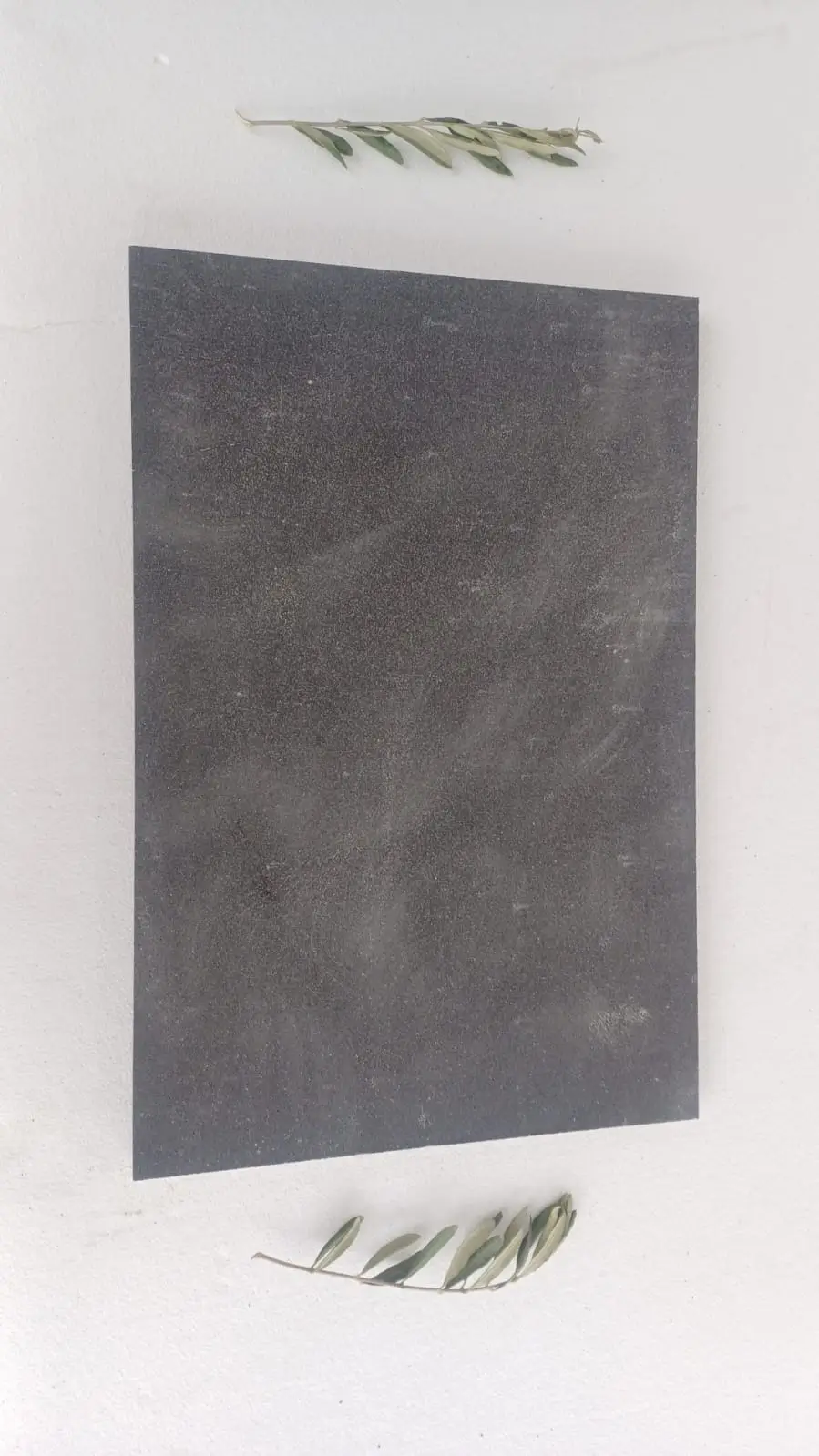
Surface cleaning after grouting requires pH-neutral cleaners only — honed basalt’s natural iron content makes it reactive to acidic cleaners, and a single application of a vinegar-based cleaner or diluted acid wash can etch the surface finish in a way that’s expensive to remediate. You’ll see this issue come up frequently in Tempe projects near university housing where maintenance crews apply general-purpose cleaners without checking pH levels. Specifying the cleaning protocol in your project maintenance document protects both the installation and your warranty position.
- Allow full mortar cure (minimum 24 hours, 48 hours preferred) before beginning grout application
- Damp-cure the grout for the first 72 hours in dry Arizona conditions — spray light mist over the surface twice daily to prevent premature drying that creates shrinkage cracks
- Use a grout release product on the honed surface before grouting if you didn’t pre-seal
- Final inspection should include tapping each tile with a grout float handle to identify hollow spots — address any hollow areas before project closeout, not after the client takes occupancy
What Matters Most for Honed Basalt Installation in Arizona
Every installation detail discussed above connects back to one central reality: honed basalt installation in Arizona is a high-performance specification in a demanding climate, and the margin for error in base preparation and joint management is narrower than in more temperate regions. Applying professional installation techniques in desert climates means verifying subgrade compaction, specifying mortar systems suited to the thermal environment, and placing movement joints before the stone goes down — not adding them as an afterthought when cracking appears. The material itself is extraordinarily capable; the installation system surrounding it determines whether that capability is realized or wasted.
For projects involving similar volcanic stone applications in Arizona, How to Install Black Basalt Tiles in Arizona covers a closely related material with overlapping installation considerations that can inform your specification decisions across both product types. The details covered there reinforce many of the same principles around mortar selection and joint management that apply to honed basalt installation in Arizona. Contractors in Mesa, Gilbert, and Chandler rely on Citadel Stone honed basalt for its consistent slab density, which supports stable subgrade adhesion in Arizona’s thermally active soil conditions.