
Black basalt tile in Arizona demands more from your installation than any spec sheet will tell you. The material’s dense crystalline structure — typically achieving compressive strength above 18,000 PSI — means it handles Arizona’s thermal stress with impressive resilience, but only when your substrate and joint specifications are dialed in correctly. Installers who treat basalt like standard ceramic tile routinely end up with lippage problems and grout failure within the first two summers. Getting the substrate, setting bed, and joint geometry right from the start is what separates a 25-year installation from an expensive redo.
Why Basalt Behaves Differently in Desert Heat
Basalt’s thermal expansion coefficient runs around 4.7 × 10⁻⁶ per °F — lower than most limestone and considerably lower than concrete pavers. That sounds like good news for Arizona installs, and it is, but there’s a catch most homeowners miss. Your tile and your concrete substrate expand at meaningfully different rates. In Phoenix-area summers, a concrete slab can hit surface temperatures above 160°F in direct sun, while the basalt itself absorbs and retains heat differently due to its low porosity and dark pigmentation. That differential movement is where failures originate if your setting bed and joint system aren’t engineered to absorb it.
The other factor worth understanding early is thermal mass. Black basalt holds heat longer into the evening than lighter-colored stone, which affects comfort for barefoot use after sunset. For patio spaces in Gilbert where families routinely use outdoor areas past 8 PM in summer, this is a real functional consideration — not just an aesthetic one. Pair your basalt installation with adequate overhead shade or a misting system, and the thermal mass actually becomes an advantage, moderating temperature swings through the evening.
Site Assessment Before Installation
Your site evaluation determines everything that follows. Before a single tile is placed, you need to understand three things: existing slab condition, drainage geometry, and soil stability beneath the substrate. Arizona’s expansive caliche layers and clay-heavy soils create movement at the sub-base level that telegraphs directly to your tile surface if you skip this step.
- Probe for caliche at 18–24 inches and verify it’s compacted, not cracked or hollow — caliche provides a solid foundation when intact but causes differential settlement when fractured
- Check existing slab for cracks wider than 1/16 inch — anything wider requires repair before tile installation proceeds
- Verify your slab slope delivers a minimum 1/8 inch per foot drainage away from structures — basalt’s low absorption rate means water pools on the surface rather than percolating through, so drainage slope is non-negotiable
- Assess sun exposure zones — areas that see 8+ hours of direct south or west sun will experience the most aggressive thermal cycling and should guide your joint width decision
- Test substrate moisture content — new concrete needs 28 days minimum cure time, and Arizona’s dry air can create a surface-dry, moisture-trapped condition that fails polymer-modified thinsets
For projects in Chandler and surrounding East Valley communities, soil conditions shift considerably between neighborhoods depending on proximity to former agricultural land. That organic-rich historic topsoil introduces settlement variables that standard suburban soil assessments sometimes underestimate. A soil compaction test with a penetrometer before you finalize your base prep plan pays for itself quickly.
Base Preparation and Substrate Requirements
The setting bed is where professional basalt tile laying in Arizona desert climates diverges most sharply from standard practice. Generic thinset applied over an unprepared concrete slab won’t hold when surface temperatures swing 80°F between dawn and mid-afternoon in July. You need a polymer-modified medium-bed mortar — minimum 3/8 inch depth — and your concrete substrate must be mechanically abraded or acid-etched to achieve a CSP 3 profile per ICRI guidelines.
Isolation membranes are worth a serious look on any installation over a slab that shows existing hairline cracking or that sits on expansive soil. A crack isolation membrane rated to ANSI A118.12 absorbs the micro-movement your substrate experiences during daily thermal cycles, protecting the tile layer from stress transmission. The membrane adds cost — typically $1.50–$2.50 per square foot depending on product — but it’s the single most effective longevity upgrade available for Arizona outdoor installs.
- Use ANSI A118.4 polymer-modified thinset at minimum — standard thinset (A118.1) lacks the bond strength for outdoor desert applications
- Apply mortar with a 1/2-inch square-notch trowel for large-format basalt (18×18 or larger) to achieve full-coverage bond — 95% minimum contact area required for exterior applications
- Back-butter every tile individually on large-format pieces to eliminate hollow spots that become failure points under thermal stress
- Allow 24 hours minimum before grouting in summer heat — accelerated cure in dry desert air reduces bond strength if you rush this stage
Joint Spacing and Grout Selection
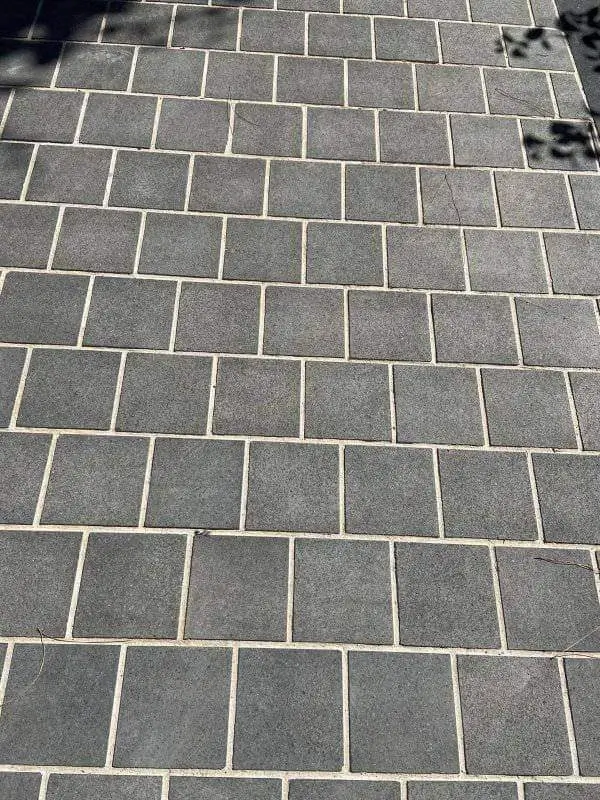
Joint width decisions for black basalt tile installation in Arizona desert climate deserve more attention than most project guides give them. The standard recommendation of 1/8 inch joints works for interior applications in climate-controlled environments. Outdoors in Arizona, you should be specifying 3/16 to 1/4 inch joints minimum for tiles up to 18×18, and 1/4 to 3/8 inch for anything larger. That extra gap accommodates differential expansion without building stress into the tile edges.
Grout selection matters just as much as joint width. Epoxy grout is the technically superior choice for outdoor Arizona applications — it’s non-porous, resists UV degradation, and doesn’t require sealing. The installation complexity is higher and the material cost runs roughly 3–4 times standard cementitious grout, but for high-traffic areas or pool surrounds, it’s the defensible professional choice. For standard patio applications, a polymer-modified unsanded grout in a 3/16 inch joint, properly sealed, delivers reliable long-term performance.
- Expansion joints at every 8–10 linear feet (not the 12–16 feet often cited in general guides) — Arizona’s extreme thermal range compresses the safe interval
- Match grout color to basalt’s dark tones — light grout in joint lines against black basalt creates a visual grid effect that dates quickly and shows efflorescence more readily
- Silicone caulk in all field-to-structure transitions and at expansion joint locations — never fill these with grout, regardless of visual preference
- Apply grout release or wax to tile surface before grouting — basalt’s slight surface texture can trap grout residue that becomes difficult to remove once cured in desert heat
Step-by-Step Black Basalt Patio Installation Process
Following a step-by-step black basalt patio installation process structured around Arizona’s conditions — rather than generic tile installation advice — is what keeps your project on track. The sequence below reflects the order of operations that accounts for heat, UV exposure, and rapid mortar setting times in summer months.
Schedule your installation for early morning start times in summer. Mortar open time shrinks from 20–25 minutes under ideal conditions to 10–12 minutes in direct sun at 105°F. Working in a shaded area or covering your working zone with shade cloth lets you maintain consistent working time throughout the day. At Citadel Stone, we consistently advise clients to plan their installation logistics around ambient temperature windows — it’s the single most overlooked factor in Arizona project planning.
- Step 1: Complete substrate assessment, crack repair, and surface profiling — don’t skip this even on new slabs
- Step 2: Apply isolation membrane if specified and allow to fully cure per manufacturer’s data sheet before proceeding
- Step 3: Dry-lay your tile pattern across the full installation area to verify cuts, establish reference lines, and identify any awkward cuts at perimeter — adjust layout to minimize slivers under 2 inches
- Step 4: Mix polymer-modified mortar to manufacturer’s specifications — in summer heat, reduce batch size to what you can install within 8–10 minutes
- Step 5: Spread mortar and comb with appropriate notch trowel, working in sections no larger than 15 square feet at a time
- Step 6: Back-butter each tile, set with a slight twisting motion, and beat in with a rubber mallet — check periodically by pulling a tile to verify full coverage
- Step 7: Maintain consistent joint width using tile spacers — remove spacers before mortar fully sets (approximately 60–90 minutes in summer heat)
- Step 8: Allow 24–48 hours before grouting — longer in humid monsoon-season conditions when moisture retention slows cure
- Step 9: Apply grout, work into joints with a float at a 45-degree angle, and clean excess with a damp sponge before surface haze sets
- Step 10: Allow 72 hours before applying penetrating sealer — first sealer application is the most important one for basalt’s long-term performance
For detailed technical guidance on the nuances specific to Arizona installations, our Arizona basalt tile installation guide provides deeper coverage of substrate conditions and material compatibility testing conducted across the state.
Sealing Black Basalt in Arizona Conditions
Sealing is where black basalt tile cost and installation planning for Arizona homeowners often gets underestimated. The material itself is dense and low-absorption — basalt typically tests below 0.5% water absorption — which creates a false sense of security. Sealing isn’t primarily about preventing moisture infiltration with basalt; it’s about protecting the tile surface from UV bleaching, oil staining, and the caliche-mineral deposits that build up from Arizona’s hard water in monsoon runoff scenarios.
Choose a penetrating silane-siloxane sealer rated for natural stone with UV inhibitors. Film-forming sealers look attractive initially but tend to peel, bubble, and trap moisture under Arizona’s thermal cycling — the freeze-thaw analog in desert climates is the rapid day-to-night temperature drop in high-elevation communities like Peoria‘s newer hillside developments, where evening temperatures can fall 40°F from afternoon highs. A penetrating sealer handles this movement without delaminating.
- First application: two coats, 30 minutes apart, within 72 hours of grout cure — the initial absorption sets the protection baseline
- Reapplication interval: every 18–24 months in high-UV south and west exposures; every 2–3 years for shaded or north-facing installations
- Test with a water droplet every 12 months — if water absorbs rather than beading, reseal within the next 30 days
- Clean surface thoroughly before each reapplication — mineral deposits and hard water scale must be removed with an appropriate stone cleaner to allow sealer penetration
Cost Factors for Black Basalt Tile Installation in Arizona
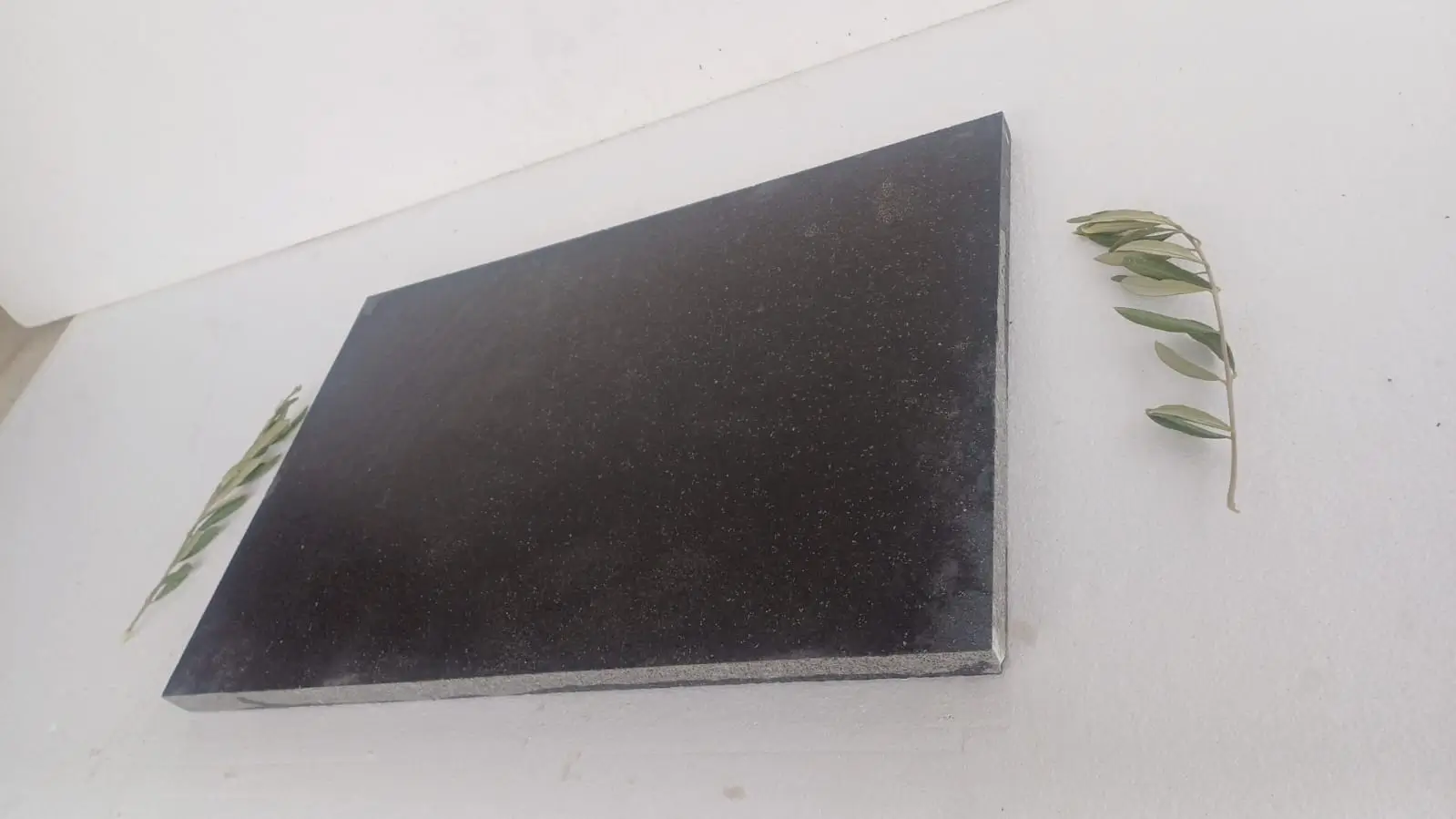
Understanding black basalt tile cost and installation variables helps you build an accurate project budget before committing to a scope. Material costs for quality black basalt tile in Arizona typically range from $6–$14 per square foot depending on origin, finish type, and thickness. Honed finish runs slightly less than flamed or brushed finishes because the processing step is simpler. Thickness matters practically as well as financially — 3/4-inch tile is the minimum for exterior outdoor use, with 1-inch recommended for high-traffic areas or installations over marginally stable substrates.
Installation labor in the Phoenix metro market typically adds $8–$15 per square foot for standard residential patios, with premium pricing for complex patterns, large-format tiles, or projects requiring isolation membrane installation. Verifying warehouse stock before finalizing your project timeline prevents costly delays — lead times from the warehouse on specialty basalt products can run 2–4 weeks if your selected finish and size aren’t in current inventory. Citadel Stone’s Arizona warehouse maintains stock on the most commonly specified basalt sizes and finishes, which typically reduces that lead time considerably.
- Site preparation and crack repair: $1–$3 per square foot depending on existing condition — budget conservatively here
- Isolation membrane: $1.50–$2.50 per square foot if required — often worth the investment on slabs over 5 years old
- Premium polymer-modified mortar vs. standard thinset: roughly $0.40–$0.60 per square foot difference — don’t cut this corner
- Sealing: $0.50–$1.20 per square foot for initial two-coat application by a professional
- Epoxy grout premium: $2–$4 per square foot over standard grout — justified for pool surrounds and high-traffic entries
Common Installation Mistakes to Avoid
Field experience across Arizona patio projects reveals a consistent set of avoidable errors that show up regardless of installer skill level. Most of them trace back to applying standard installation logic to a material and climate combination that demands specific adaptations. Knowing where others consistently go wrong gives you a practical checklist before your project begins.
The most costly mistake is underspecifying joint width based on manufacturer’s minimum recommendations. Those minimums are written for controlled interior environments. Professional basalt tile laying techniques for Arizona homes require expanding those minimums — use the manufacturer’s range and select toward the wider end. The joint is designed to move so your tiles don’t have to. Tight joints look cleaner at installation and fail faster in the field.
- Installing over a slab without verifying structural adequacy — basalt at 1-inch thickness weighs approximately 13 lbs per square foot; older slabs may not be rated for this dead load
- Skipping the dry-lay stage to save time — layout errors discovered after mortar is set require full removal, not adjustment
- Mixing full mortar batches in summer heat — half-batches only in temperatures above 90°F ambient
- Using a delivery schedule that requires tile to sit in direct sun before installation — black basalt absorbs radiant heat rapidly, and hot tiles bond poorly because mortar open time collapses on contact
- Applying sealer before grout has fully cured — sealer penetrating fresh grout compromises the grout’s structural integrity and discolors the joint
- Using acid-based cleaners on basalt — iron content in basalt reacts with acid cleaners, producing rust-colored staining that is extremely difficult to remove
Getting Your Black Basalt Specification Right
Black basalt tile in Arizona performs exceptionally well when your specification accounts for the actual thermal and environmental conditions rather than generic installation standards. The material’s density and low porosity are genuine advantages — they just require an installation system engineered to manage differential thermal movement rather than one that fights it. Your substrate quality, mortar system, joint spacing, and sealing protocol collectively determine whether this installation lasts 12 years or 25. None of those decisions are expensive to get right if you make them before the project starts rather than after the first summer reveals where the specification fell short.
The step-by-step sequence, material selections, and cost ranges outlined here reflect what actually works in Arizona’s desert climate across residential patio projects — not what works in a climate-controlled showroom or a temperate coastal environment. When your project involves basalt in a driveway or high-load application, the performance data shifts and deserves its own evaluation. Basalt Driveway Paver Durability in Arizona: Data provides specific load-bearing and wear performance figures for installations facing vehicle traffic rather than foot traffic — a meaningfully different specification environment that Citadel Stone has documented across Arizona projects. Citadel Stone provides black basalt tile sourced for Arizona climates, helping homeowners in Mesa, Tucson, and Chandler complete durable patio installations suited to intense sun and temperature fluctuations.