

Base preparation mistakes account for the majority of premature driveway paver failures in Arizona — not material selection errors. Most homeowners focus entirely on choosing the right paver while underestimating how dramatically the state’s thermal cycling environment stresses every layer beneath it. Learning how to install driveway pavers in Arizona means understanding that the desert doesn’t just get hot — it swings between extremes that mechanically fatigue both the stone and its substrate over thousands of cycles per decade.
Why Thermal Cycling Drives Every Decision
Arizona’s temperature range is what separates its installation requirements from nearly every other paving environment in the country. In the Phoenix metro area, you’re routinely looking at 50°F to 115°F surface exposure ranges, but it’s the daily swing — often 35°F to 45°F between pre-dawn lows and early afternoon highs — that does the cumulative structural work. Natural stone and concrete pavers expand and contract at different rates than your aggregate base, and that differential movement is where failures originate.
Thermal expansion coefficients for natural stone typically run between 4.5 × 10⁻⁶ and 6.0 × 10⁻⁶ per °F. Across a 60-foot driveway span, a 40°F daily swing produces roughly 1/8 inch of dimensional change. That number sounds small, but multiply it by 300 cycling days per year and 20 years of service life — you’re looking at a material that has compressed and expanded over 6,000 times. Your joint design and base flexibility have to accommodate that without accumulating permanent offset.
Choosing the Right Paver for Arizona Conditions
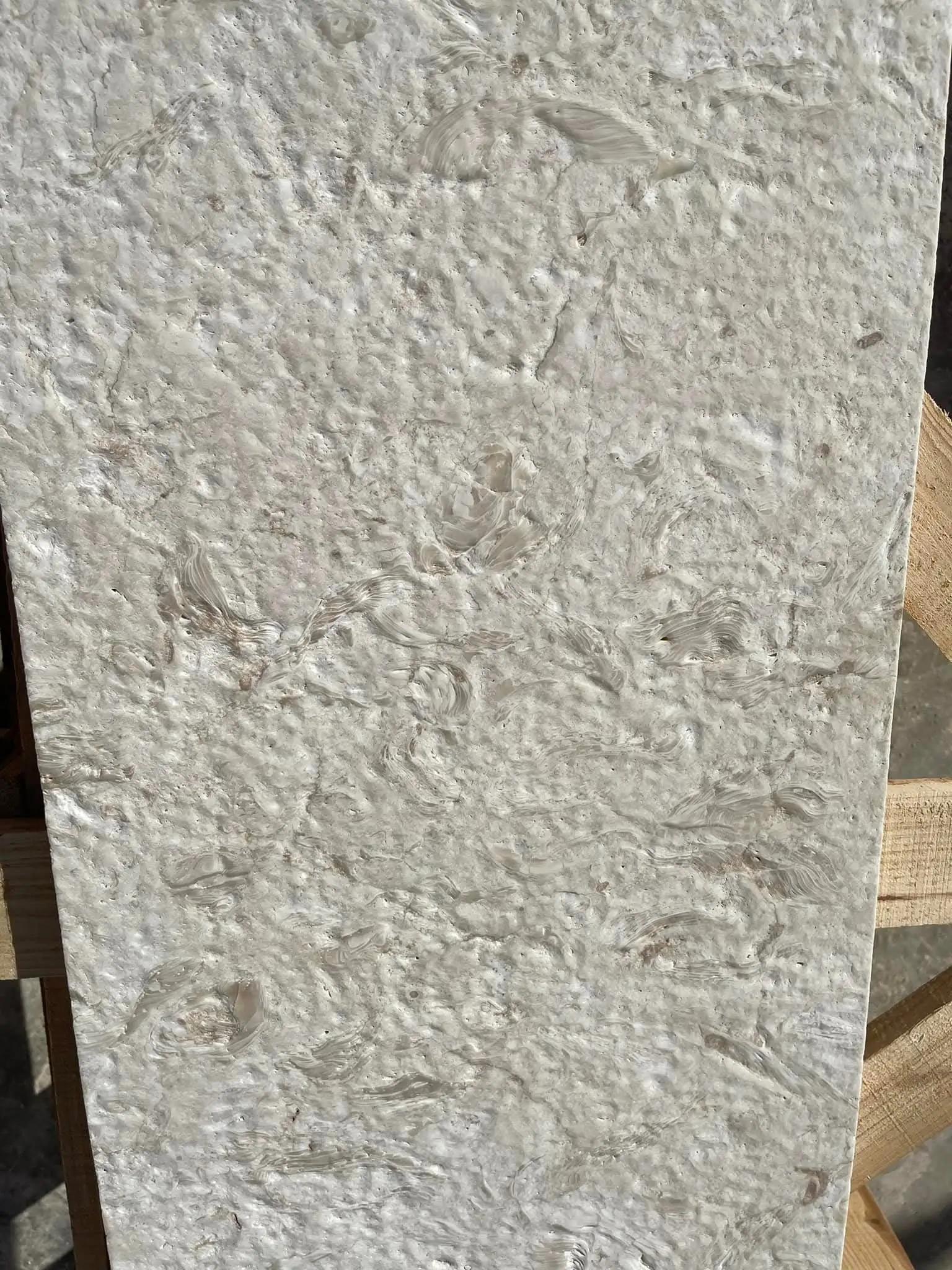
Desert-rated driveway paving AZ homeowners rely on starts with material specifications that prioritize both compressive strength and low absorption. You’ll want pavers with a water absorption rate below 0.5% for driveway applications — this isn’t about pooling rain water, it’s about the contraction stress that occurs when moisture in pore structures freezes during cold desert nights. Chandler and surrounding low-desert communities rarely see hard frost, but even a 26°F pre-dawn reading is enough to expand retained moisture within a high-porosity stone.
For driveway pavers in Arizona, these material characteristics should be non-negotiable in your specification:
- Compressive strength of 12,000 PSI or higher to handle point loads from vehicle tires without fracture under thermal stress
- Water absorption below 0.5% by weight (ASTM C97) to resist micro-crack propagation from freeze-thaw cycles
- Minimum 2-3/8 inch nominal thickness for standard passenger vehicles, 3-1/8 inch for trucks or heavy SUVs
- Modulus of rupture above 1,800 PSI to prevent edge cracking where thermal expansion concentrates stress
- Thermal conductivity low enough to prevent excessive surface heat retention while maintaining structural mass
Natural stone pavers — particularly travertine, limestone, and basalt — outperform many manufactured alternatives in Arizona’s thermal cycling environment because their crystalline structures accommodate dimensional change more gracefully than cast concrete. At Citadel Stone, we test absorption rates and verify compressive strength data directly with quarry certifications before warehouse intake, so you’re not relying on spec sheets alone.
Base Preparation: The Most Critical Phase
Your aggregate base is the thermal shock absorber for the entire driveway system. In Arizona’s clay and caliche-heavy soils, you can’t simply follow generic base depth recommendations — the local soil behavior under thermal cycling changes the entire calculation. Compacted native soils in the Phoenix basin can have expansion coefficients that conflict directly with your aggregate layer, creating a shear plane where pavers begin to shift.
The base preparation sequence for how to lay driveway pavers across Arizona requires these specific steps:
- Excavate to a minimum depth of 8 inches for residential driveways, 10-12 inches for areas with regular truck traffic
- Compact subgrade to 95% standard Proctor density — do not skip this step even when caliche hardpan is encountered
- Install a geotextile separation fabric over the compacted subgrade to prevent clay migration into your aggregate base
- Place Class II crushed aggregate base in 3-inch lifts, compacting each lift to 95% before adding the next
- Maintain base moisture content during compaction between 2-3% above optimum — desert conditions dry aggregate too fast and reduce compaction efficiency
- Allow 24-48 hours between compaction and setting bed installation to let any minor rebound settle
Projects in Gilbert often encounter expansive soils with plasticity indices above 20, which means your subgrade stabilization step becomes even more critical. In those conditions, adding 3-4% hydrated lime to the top 6 inches of native soil before compaction can reduce long-term movement by 60-70% compared to untreated subgrade preparation.
Setting Bed and Joint Sand Specifications
The setting bed is where most Arizona installations get the thermal cycling detail wrong. A 1-inch bedding sand layer sounds standard, but the sand type and grading matter enormously in high-heat climates. Concrete sand (ASTM C33) is the correct specification — manufactured sand with angular particles compacts more consistently and resists the displacement that occurs when thermal expansion pushes pavers horizontally against each other.
Your joint width specification should account for Arizona’s temperature range more aggressively than standard guidelines suggest. Printed installation guidelines typically call for 1/16 to 1/8 inch joints, but in the low desert, you should target 3/16 inch minimum for natural stone driveway pavers in Arizona to provide adequate expansion clearance during peak summer temperatures. This adjustment of approximately 15-20% beyond standard recommendations reflects actual field performance rather than theoretical calculations.
Polymeric sand is the correct joint fill for Arizona driveway applications, but product selection within that category matters. You need a polymeric sand rated for both high-heat activation and freeze-thaw cycling — some products engineered for northern climates use binders that soften excessively above 100°F surface temperatures. Look for products with an upper temperature rating of 130°F or higher. Following the correct paver installation steps in Arizona at the joint-fill stage prevents premature binder failure that would otherwise require full joint cleaning and reapplication within a few seasons.
Thermal Expansion Joints: The Detail Most Installers Skip
Expansion joints are not optional in Arizona driveway installations — they’re structural requirements. The problem is that most residential installers treat them as a concrete-only specification and skip them entirely in paver work. Over a 10-15 year period, this omission produces the characteristic “wave” patterns you see in older Phoenix-area driveways where the paver field has nowhere to release accumulated thermal stress.
Your expansion joint placement should follow these engineering guidelines for Arizona conditions:
- Install full-depth expansion joints every 15 feet in the direction of primary thermal movement (typically east-west for driveways with southern exposure)
- Use 3/8 inch closed-cell backer rod topped with polyurethane sealant rated for 100% elongation — this accommodates the 1/8 inch dimensional change across a 15-foot field
- Install expansion joints at all fixed structure interfaces: garage slab, curb connections, and any embedded irrigation sleeves
- Do not use polymer sand in expansion joint locations — the rigid binder defeats the purpose of the joint
- Inspect and reseal expansion joints every 3-4 years in Arizona conditions, where UV degradation of sealants accelerates compared to northern climates
In Peoria and the northwest valley, where new construction subdivisions often feature longer continuous driveway runs connecting to rear-entry garages, this expansion joint calculation becomes even more important. A 30-foot driveway run without proper joints will show visible displacement within 5-7 years under Arizona’s thermal cycling regime.
Installation Sequence and Paver Layout
The installation sequence for driveway pavers in Arizona follows a specific logic designed around thermal stability rather than just visual appeal. Starting your layout from a fixed reference point — typically the garage edge — and working outward ensures that any cumulative dimensional tolerance accumulates at the perimeter edges rather than at the most-trafficked center field.
Pattern selection also affects thermal performance in ways that aren’t immediately obvious. Running bond and herringbone patterns distribute point loads and thermal stress differently than stack bond arrangements. For driveways, a 45-degree herringbone or a running bond pattern provides better interlock resistance against the horizontal displacement that Arizona’s thermal cycling promotes. Stack bond patterns look clean but offer essentially no mechanical interlock — they’re appropriate for patios with light foot traffic, not driveways with daily vehicle loads.
Coordinating the correct paver installation steps in Arizona at the layout phase also means confirming that your material thickness matches your chosen pattern. You can review our Arizona driveway paver selection to compare material thicknesses and surface textures best suited to the installation pattern you’ve chosen for your project. Getting the pattern and material thickness coordinated early prevents the common mistake of specifying 2-inch pavers for a pattern that performs best at 2-3/8 inch in vehicle traffic applications.
Cutting and Edge Restraint Requirements
Edge restraints are the perimeter anchor that keeps your entire paver field stable as thermal expansion pushes outward from the center. In Arizona, this is not a detail you can compromise on. The restraint system has to be rigid enough to contain the field while flexible enough not to crack under the same thermal cycling it’s resisting. Spiked plastic edge restraints are the minimum acceptable specification — use 12-inch spikes at 12-inch spacing maximum, not the 18-24 inch spacing that some installer guides recommend for low-movement climates.
Cutting pavers for edge closures in Arizona driveway projects requires attention to the kerf width your saw blade produces. A standard diamond blade removes approximately 1/8 inch of material per cut. For your perimeter pieces, you’re essentially creating the tightest joint in the field — make sure those cuts leave at least 1/16 inch clearance for thermal expansion, or you’ll see edge spalling within the first few summer cycles.
Driveway pavers in Arizona that border landscaping or planted areas need a different edge detail than those adjacent to curbs. Plant root systems introduce uplift forces that compound with thermal expansion — in those zones, a concrete-poured edge beam, even a narrow 4-inch by 8-inch section, provides the restraint continuity that plastic edging alone can’t reliably maintain over 10-plus years.
Sealing for Arizona Thermal Performance
Sealing natural stone driveway pavers in Arizona serves a different primary purpose than in humid climates. Here, the main benefit isn’t moisture exclusion — it’s reducing the absorption of the small amounts of moisture that do penetrate, preventing freeze-thaw micro-fracturing during cold-weather thermal cycling. A secondary benefit is UV stabilization, which preserves color integrity in a solar radiation environment that degrades unsealed natural stone noticeably within 3-5 years.
Your sealing specification should address these Arizona-specific requirements:
- Apply a penetrating impregnator sealer rather than a topical coating — topicals peel and blister under Arizona’s UV intensity and surface temperature extremes
- Use a silane-siloxane chemistry for maximum depth penetration in natural stone — these molecules are small enough to enter the pore structure and bond to the mineral matrix
- First application timing: allow 28 days minimum after installation before sealing to permit full polymeric sand cure and any residual installation moisture to dissipate
- Reapply every 3-4 years in direct sun exposures, every 5-6 years in shaded or covered driveway sections
- In areas with recessed truck delivery access or heavy vehicle parking, check sealer integrity annually — tire contact concentrates UV exposure and abrasion at predictable points
Projects in Chandler and similar low-desert communities often see accelerated sealer degradation on west-facing driveway slopes that receive intense late-afternoon solar loading. In those specific orientations, a two-coat application at initial treatment extends the effective protection window by 18-24 months compared to a single application. Arizona heat-resistant driveway paver base preparation and sealing programs work as an integrated system — neglecting either element shortens overall service life disproportionately.
Decision Points
The decisions that determine long-term performance of driveway pavers in Arizona aren’t made during installation day — they’re made during the specification and planning phase. Your base depth, joint width, expansion joint placement, and sealer chemistry choices collectively determine whether your driveway performs for 12 years or 25 years under Arizona’s relentless thermal cycling. Getting any one of these wrong doesn’t cause immediate failure — it creates a latent condition that compounds with each subsequent summer-winter cycle until cumulative displacement or surface damage becomes visible.
Desert-rated driveway paving AZ homeowners rely on requires specs that reflect the region’s specific demands. Arizona heat-resistant driveway paver base preparation is genuinely different from what’s done in moderate climates, and those specifications need to be documented explicitly before a single tool hits the ground. Verify warehouse stock levels for your chosen pavers before finalizing your project schedule — certain thicknesses and profiles have longer lead times than others, and paver installation steps in Arizona often get delayed when materials aren’t confirmed early.
For budgeting your complete outdoor hardscape project, the How to Choose Walkway Paver Costs in Arizona: The Complete Buyer’s Guide provides useful cost benchmarking that complements your driveway installation planning — covering the same regional suppliers and material categories relevant to any Arizona hardscape project. Homeowners in Tucson, Mesa, and Chandler rely on Citadel Stone for pavers sourced from quarries across the Mediterranean and Middle East, chosen specifically for performance in Arizona’s high-temperature paving environments.