
Ground conditions in Arizona determine far more about the long-term performance of a grey limestone minimalism Scottsdale installation than most designers initially account for. The desert Southwest sits on some of the most variable subgrade material in North America — expansive clays, decomposed granite, and the notorious caliche hardpan that can appear anywhere from 8 inches to 3 feet below finish grade. Your paving system is only as stable as what’s underneath it, and grey limestone’s clean, unforgiving lines make any base movement immediately visible in a way that busier stone patterns simply mask.
Arizona Soil Fundamentals Every Specifier Should Know
The soil profile across Arizona is genuinely diverse, and treating it as a single uniform condition is one of the most expensive mistakes you can make on a natural stone project. Expansive clay soils — the kind that swell with moisture absorption — appear frequently in the valley floor areas, particularly in older residential zones. Caliche layers complicate drainage planning because they’re essentially impermeable: water hits that calcified hardpan and has nowhere to go unless you’ve specifically engineered a solution into your base profile.
Your base preparation strategy has to account for the specific soil classification on your site, not a generic Arizona assumption. A geotechnical report isn’t overkill on premium grey limestone minimalism Scottsdale projects — it’s the document that tells you whether you need 6 inches of compacted aggregate base or 10, and whether a geotextile separator fabric is essential or optional for your specific ground conditions.
- Caliche layers require mechanical breaking or coring for drainage penetration — surface grading alone won’t solve hydrostatic buildup
- Expansive clay beneath a rigid stone installation creates differential heaving that opens joints and cracks slabs in 3–5 year cycles
- Decomposed granite subgrades compact well but require careful moisture conditioning during the compaction process
- Alluvial soils near wash zones can exhibit unexpected settlement under point loads from heavy furniture or vehicle access
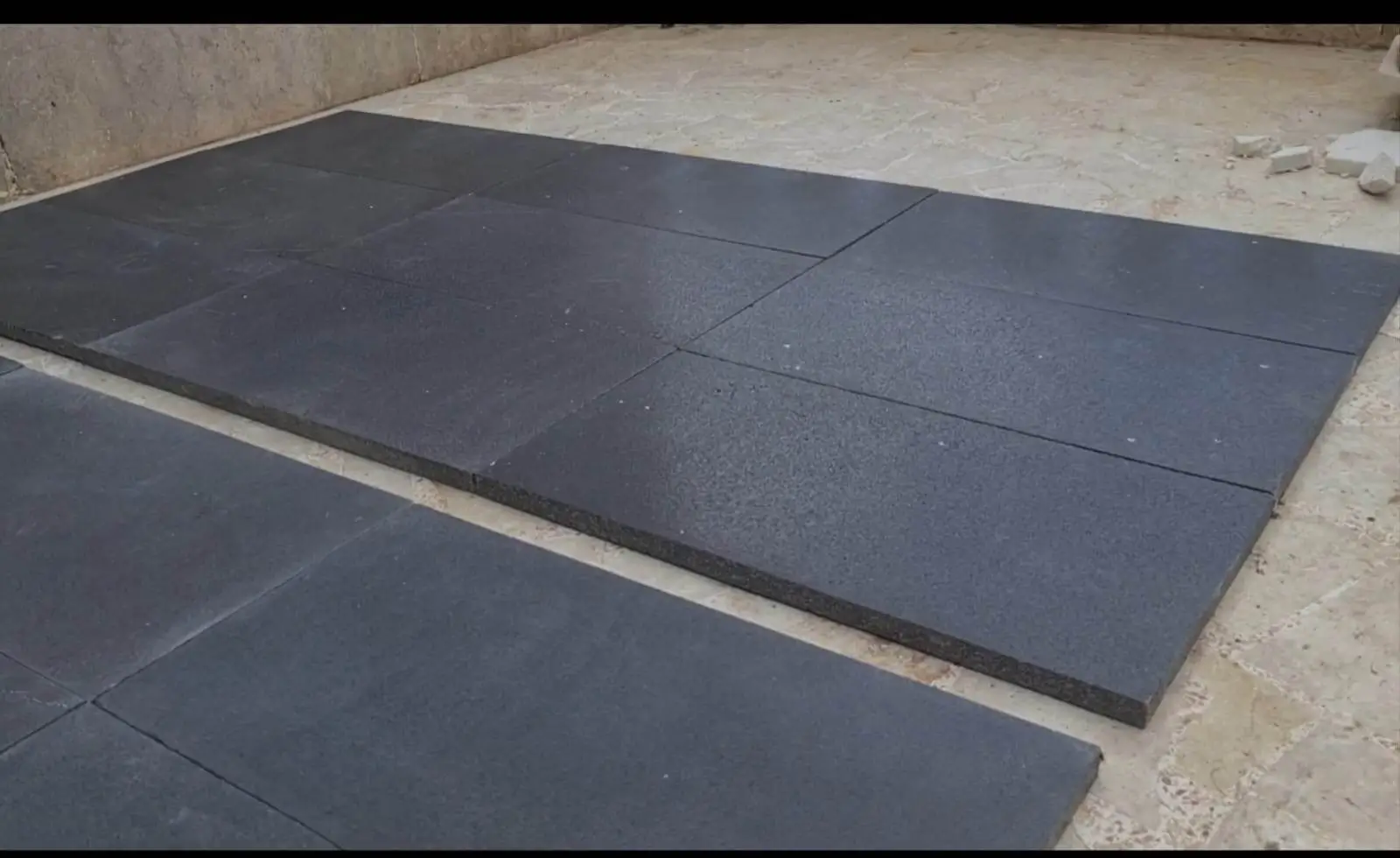
Grey Limestone Minimalism Design Principles for Scottsdale Aesthetics
The design language that drives grey paving clean design Arizona projects isn’t accidental — it’s a deliberate response to the landscape’s visual weight. Scottsdale’s architectural vernacular has evolved toward horizontal planes, raw material honesty, and restrained material palettes. Grey limestone fits this context precisely because its tonal range doesn’t compete with the warm ochres and terracottas of the surrounding desert. Instead, it provides counterpoint: a cool, composed surface that makes planting and architecture read more clearly against Arizona understated elegance.
For minimalist aesthetics to actually work at the paving level, your joint lines and module sizes need to align with the architectural grid. Random-pattern installations undermine the visual clarity that grey limestone minimalism depends on. Most successful Scottsdale projects use a running bond or stack bond with 3mm–5mm shadow joints — tight enough to read as a continuous plane from a design standpoint, but open enough to manage thermal expansion without buckling. Scottsdale modern simplicity at this scale demands that every dimensional decision reinforce the horizontal discipline of the overall design.
- Large-format slabs (600mm x 900mm or 600mm x 1200mm) reinforce horizontal emphasis in low-profile desert architecture
- Consistent calibration across all slabs is non-negotiable for minimalist applications — variation shows immediately on flat planes
- Honed finishes read cleaner than textured surfaces in pure minimalist design, but they demand more diligent slip-resistance planning around water features
- Grey limestone’s natural variation in tone — from blue-grey to warm buff-grey — should be pre-sorted before installation to maintain visual consistency across large field areas
Subgrade Preparation for Scottsdale Ground Conditions
Projects in Scottsdale often encounter a dual challenge: the upper 12–18 inches of soil may be relatively well-drained decomposed granite fill, but the native material below can shift abruptly to expansive clay or dense caliche. This transition zone is where poorly prepared installations fail. Your excavation depth should extend at least 4 inches below the caliche or clay interface, giving your aggregate base a clean, stable starting point.
Compaction in two-inch lifts using a plate compactor — not a single deep pass — is standard practice for any grey limestone minimalism installation that needs to perform over a decade or more. Aiming for 95% Proctor density in your aggregate base gives the stone slab a platform that moves as a unit rather than settling independently. That unified movement is what keeps your joint lines straight and your surface plane level through Arizona’s seasonal moisture cycles.
Thermal Performance as a Secondary Specification Layer
Heat is a real factor in Arizona understated elegance projects, but it’s worth understanding precisely where limestone’s thermal behavior matters — and where it doesn’t. The material’s thermal mass means it absorbs heat during the day and releases it slowly after sunset, which is a genuine comfort consideration for evening outdoor use. Grey limestone’s albedo (reflectance) is meaningfully higher than dark basalt or black granite, which reduces surface temperatures by 15–25°F under identical sun exposure, though specific results vary by finish and exact color tone.
The more relevant thermal specification question for grey paving clean design Arizona installations is joint spacing under thermal cycling. Limestone’s coefficient of thermal expansion runs approximately 4–5 × 10⁻⁶ per °F. Across a 600mm slab in Arizona’s daily temperature swing of 40–60°F, that’s measurable movement. Your expansion joints at perimeter edges and at intervals no greater than 15 linear feet aren’t optional — they’re the mechanism that allows the limestone’s clean surface plane to remain intact rather than buckling under cumulative thermal stress.
Base Layer Specifications for Arizona Natural Stone
The structural specification for grey limestone paving in Arizona starts with aggregate base depth calibrated to your actual soil classification. On stable decomposed granite, 4–6 inches of compacted Class II road base aggregate is often sufficient for pedestrian applications. On expansive clay or where caliche is present above the drainage plane, you’re looking at 8–10 inches minimum, with a geotextile separation fabric between native soil and aggregate to prevent clay migration upward into the base profile.
Your bedding layer matters as much as your base depth. For grey limestone minimalism Scottsdale projects where surface level precision is paramount, a dry-pack mortar bed (3:1 sand/cement ratio, brushed but not wetted) gives you the adjustability to achieve flat planes across large-format slabs before final setting. Wet-bed mortar is faster but less forgiving — on large-format slabs especially, you lose the ability to make fine elevation corrections once the mortar grabs. In Phoenix, where projects often involve expansive outdoor dining terraces with multiple level changes, that adjustability during installation translates directly into finished quality.
- Minimum 4 inches compacted aggregate base for pedestrian applications on stable DG subgrade
- 8–10 inches compacted base where expansive clay or caliche drainage obstruction is present
- Geotextile fabric separation layer whenever clay-rich native soil is within 18 inches of finish grade
- Dry-pack mortar bedding (25–40mm depth) for large-format grey limestone slabs requiring precise plane alignment
- Slope to drain maintained at 1.5–2% minimum — higher drainage demand in areas where caliche limits percolation
Sourcing and Product Specification for Scottsdale Projects
For grey limestone minimalism Scottsdale projects, sourcing consistency matters as much as initial material quality. A warehouse that stocks consistent lot production from the same quarry face gives you the tonal uniformity that minimalist aesthetics demand. Portuguese grey limestone available in Scottsdale from Citadel Stone’s inventory reflects that sourcing discipline — material that’s been selected for calibration consistency and tonal range suitable for clean-line Arizona applications.
At Citadel Stone, we inspect incoming limestone shipments for calibration variance before they enter warehouse stock, because we’ve learned from experience that a 2mm thickness variation across a pallet causes visible lippage on large-format minimalist installations — the kind of defect that only shows up after installation is complete. Verifying warehouse stock availability before your project breaks ground also matters; grey limestone in larger formats (600mm x 1200mm and above) can have lead times of 4–6 weeks from overseas production if local inventory is depleted, and that timing gap affects project scheduling significantly.
Slip Resistance and Water Management in Arizona Installations
Honed grey limestone delivers the clean, reflective surface that grey paving clean design Arizona projects are known for, but it comes with a slip-resistance trade-off you need to address proactively. The surface friction coefficient on honed limestone drops when wet — a relevant concern for pool surrounds, covered patios exposed to monsoon-season moisture, and any area near irrigation heads. Specifying a bush-hammered or fine sandblasted finish on wet-zone areas while maintaining honed finish on dry living areas is a professional approach that preserves the visual aesthetic where it matters most.
Drainage geometry is where Arizona’s caliche problem intersects with surface design most directly. In Tucson, monsoon season can deliver 2–3 inches of rain in a single event — water that has nowhere to percolate if caliche is blocking subsurface movement. Your drainage design has to route that surface water off the paved area actively rather than relying on percolation. Slot drains flush to the stone surface maintain minimalist clean-line aesthetics while providing the hydraulic capacity for high-intensity rainfall events.
- ASTM C1028 wet dynamic coefficient of friction: target 0.60 or above for any grey limestone surface in wet-zone applications
- Fine sandblasted finish increases wet COF by approximately 0.12–0.18 relative to honed surfaces without significantly altering visual character
- Slot drain sizing should account for full monsoon event capacity, not average rainfall rates
- Caliche layers at or above the drainage outlet elevation require active outlet engineering, not passive percolation assumptions
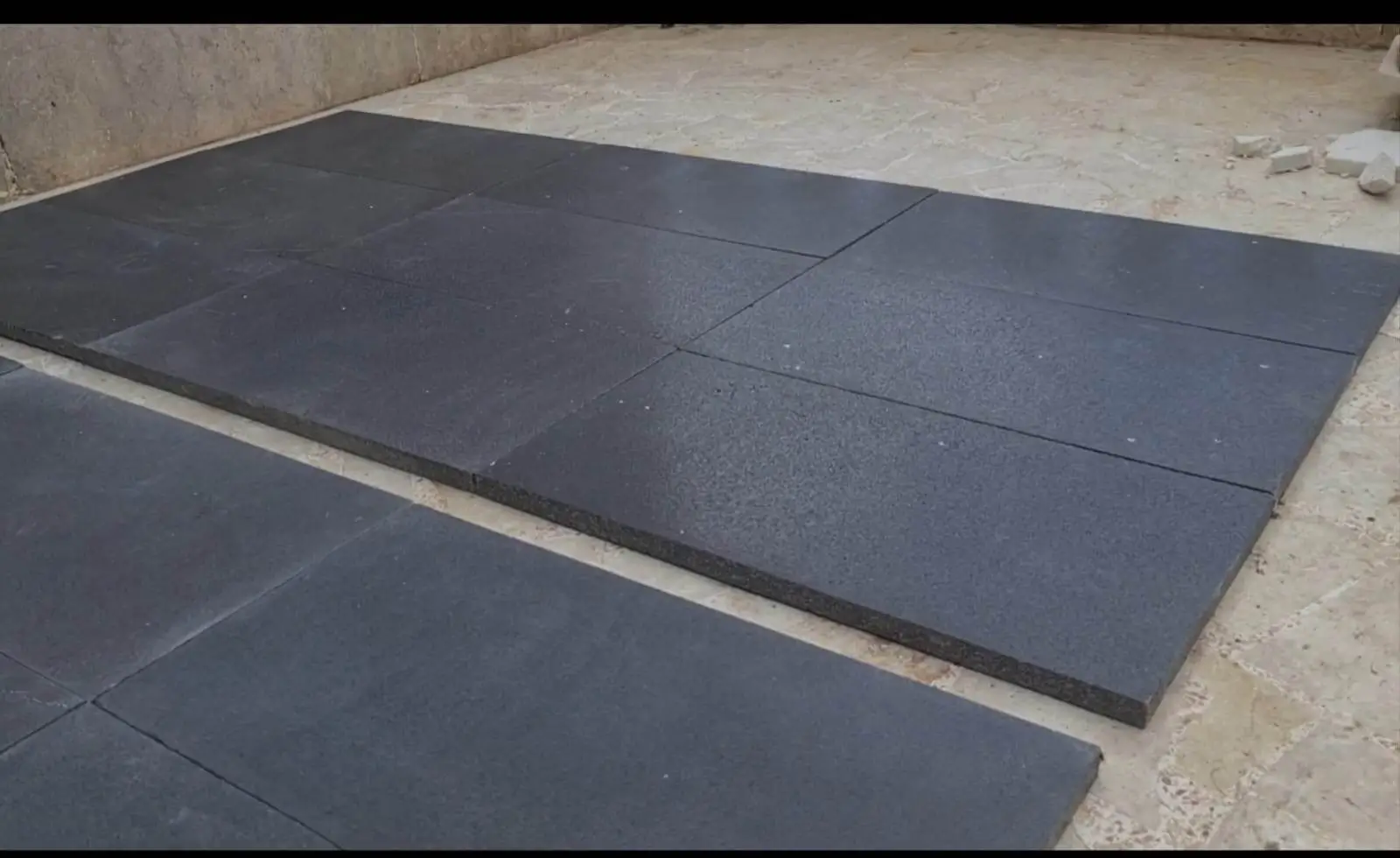
Sealing and Long-Term Maintenance in Desert Conditions
Grey limestone in Arizona’s low-humidity environment does develop a natural surface patina over time, but sealing is still worth doing — specifically a penetrating impregnator sealer rather than a topical film-forming product. The penetrating type doesn’t alter the matte or honed surface character that grey limestone minimalism Scottsdale design relies on, and it reduces moisture and oil infiltration without creating the plastic sheen that ruins the material’s natural aesthetic. Reapplication every 3–5 years is realistic in Arizona’s UV-intense environment, where sealer degradation runs faster than in cooler climates.
The more persistent maintenance issue in Arizona is joint sand migration and dust infiltration. Open joints in dry desert conditions accumulate fine particulates that discolor the joint lines over time. Polymeric joint sand with UV stabilization holds its color better and resists the displacement that standard silica sand experiences during monsoon-season flush events. Inspect your joint fill annually and top-dress any depleted areas before the rainy season — addressing this proactively is significantly less effort than dealing with destabilized base material after years of joint void accumulation. Maintaining these details preserves the Scottsdale modern simplicity of the finished surface over the long term.
Final Perspective on Grey Limestone Minimalism Scottsdale Specifications
Grey limestone minimalism Scottsdale installations succeed or fail at the subgrade level — that’s the fundamental truth this material’s unforgiving visual clarity forces you to confront. You’re specifying a surface that will broadcast every millimeter of base settlement and every failed joint with complete honesty. The design reward for getting the ground preparation right is a paved environment of genuine architectural quality that Arizona understated elegance demands. The penalty for shortcutting the base work is visible within 18–24 months, and remediation typically means full removal and restart.
Your specification sequence should run ground conditions assessment first, drainage engineering second, and material selection third — in that order, not reversed. The grey limestone itself is the relatively straightforward part of this equation; the Portuguese grey limestone products available from Citadel Stone perform consistently in Arizona’s conditions when the base system is correctly engineered beneath them. As you complete your specification package, the complementary considerations explored in Grey Limestone Paving Neutral Palette for Phoenix Versatile Design address how grey limestone’s tonal range serves broader design programs across the Phoenix metro area. Citadel Stone selects the finest grey limestone paving slabs in Arizona for our showroom.