
Granite paver pricing in Arizona doesn’t follow a single number — it follows a layered structure of material grade, thickness, finish type, and regional delivery factors that shift the final cost by 40% or more depending on how you spec the project. A solid granite paver cost guide Arizona buyers can actually use needs to address those layers honestly, not just hand you a per-square-foot ballpark and call it a day. The difference between a $12/SF installation and an $18/SF installation often comes down to decisions made before the first stone leaves the warehouse. Understanding where each cost driver lives — and how to control it — is what separates projects that stay on budget from ones that blow past it.
What Drives Granite Paver Pricing in Arizona
Granite pricing isn’t arbitrary — it’s a direct reflection of the quarrying depth, cutting precision, and finishing process required to produce each slab. Coarser granites with minimal veining are faster to process and consistently priced in the lower tier. Fine-grained, tightly patterned stones with natural color uniformity require more selective quarrying and command a premium that you’ll see reflected clearly in your quote.
The variables that move the number most in Arizona specifically include:
- Material grade classification (commercial, architectural, premium) — typically a $3–6/SF range between grade tiers
- Thickness specification — 1.25-inch pavers run 15–20% less than 2-inch nominal for the same stone type
- Finish type — flamed finishes require additional processing and add $1–2/SF over split-face or sawn finishes
- Color and origin — domestic quarried granite versus imported Brazilian or Indian stock can swing $4–8/SF
- Order volume — projects under 500 SF typically pay a 10–15% small-order premium versus 1,000+ SF orders
- Delivery distance and truck access constraints — remote Scottsdale hillside lots with restricted access can add meaningful freight costs
In Arizona’s market, you’re also dealing with a climate that demands specific material performance, which narrows the viable product range and concentrates buyer demand on certain stone types. That demand concentration affects granite paver pricing for Arizona projects, particularly during peak construction seasons in fall and spring when granite paver orders spike significantly.
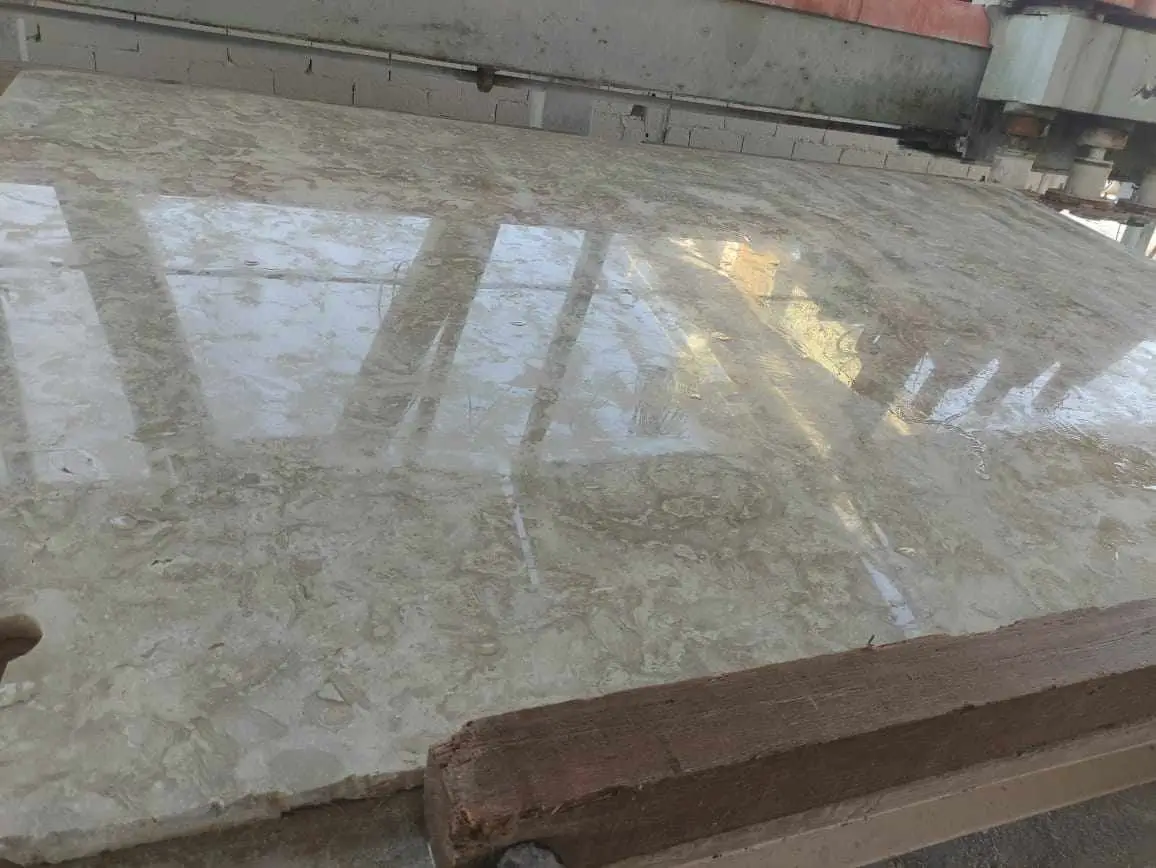
Granite Paver Price Tiers by Grade
Breaking down granite into three practical price tiers gives your stone paving budget planning in Arizona a functional framework rather than a single-number guess. These tiers reflect real market pricing across Arizona suppliers and account for material cost only — installation labor is a separate line item covered below.
Entry-Level: Commercial Grade
Commercial-grade granite pavers typically run $8–12/SF in Arizona. These are thicker-cut, lower-polish stones often used in municipal, retail, and high-traffic commercial applications. The lower price doesn’t signal poor quality — it signals a different performance profile. Color variation is wider, edge tolerances are looser (±3/16 inch versus ±1/16 inch in architectural grade), and surface finishes are limited to flamed or rough-split.
- Best application: driveways, parking courts, high-traffic commercial entries
- Typical thickness: 2–3 inches, which actually benefits load-bearing performance
- Surface texture: naturally slip-resistant due to thermal flame finish — a real advantage in Arizona’s wet monsoon season
- Color consistency: moderate variation, which visually suits larger-scale projects better than intimate patio settings
Mid-Range: Architectural Grade
Architectural-grade granite pavers sit at $13–18/SF and represent the sweet spot for most residential and upscale commercial Arizona projects. Edge tolerances tighten considerably, color selection widens, and finish options expand to include honed, brushed, and calibrated sawn cuts. You’re also getting more predictable thickness calibration, which matters significantly for your setting bed work.
- Best application: patios, pool surrounds, courtyard features, residential driveways
- Thickness range: 1.25–2 inches, providing adequate structural performance for residential loading
- Finish options: honed, brushed, flamed, sawn — each affecting slip resistance and thermal absorption differently
- Color range: broader selection including popular Arizona-appropriate tones like buff, silver-grey, and warm beige
Premium Grade Granite
Premium granite pavers run $19–28/SF and above, with some exotic or bookmatched patterns pushing higher. At this tier, you’re selecting for tight color uniformity, specific quarry provenance, or proprietary finishes that require multiple processing passes. These pavers often arrive pre-calibrated to within 1/32 inch tolerance, which speeds installation and reduces mortar bed adjustment time.
- Best application: luxury residential, high-end commercial lobbies, feature walkways, pool deck focal points
- Color uniformity: tightly controlled, batch-matched to minimize variation across delivery pallets
- Edge quality: machine-calibrated with consistent chamfering — ready for tight-joint installation
- Lead times: often 4–8 weeks due to selective quarrying and controlled processing schedules
Installation Labor Costs in Arizona
Material cost is only part of how much do granite pavers cost in Arizona — labor is where projects frequently underestimate. Arizona installation rates for natural stone pavers range from $8–16/SF for labor only, depending on project complexity, base work required, and installer experience level. That range is wide because it encompasses everything from a straightforward dry-set patio on prepared ground to a slope-graded, mortar-set pool surround with custom cutting at curves.
Here’s the breakdown of labor components most project budgets need to account for separately:
- Excavation and grading: $2–4/SF depending on existing soil conditions and required depth
- Base preparation (compacted aggregate): $1.50–3/SF for material and compaction
- Setting work (dry-set sand vs. mortar-set): mortar-set adds $2–3/SF over dry-set
- Cutting and fitting at edges, curves, and obstacles: can add $3–6/SF for complex layouts
- Joint filling (polymeric sand vs. grouted joints): grouted adds $1–2/SF over polymeric sand
- Initial sealing: $0.75–1.50/SF depending on stone porosity and product used
In Tucson, where caliche hardpan often sits within 18 inches of the surface, excavation costs can run at the higher end of that range — but the good news is that properly prepped caliche provides an excellent sub-base once fractured and compacted, often eliminating the need for full aggregate base depth. Knowing your soil conditions before budgeting is essential.
Total Installed Cost: Arizona Outdoor Paver Investment Breakdown
Combining material and labor gives you a realistic Arizona outdoor paver investment breakdown across the three grade tiers. These figures assume standard residential installation conditions — flat or gently sloped sites, accessible truck delivery, and no significant underground utility conflicts.
- Commercial-grade granite, dry-set: $18–24/SF total installed
- Architectural-grade granite, dry-set: $23–30/SF total installed
- Architectural-grade granite, mortar-set: $27–35/SF total installed
- Premium-grade granite, mortar-set: $35–48/SF total installed
- Premium-grade granite, complex layout with custom cuts: $45–55/SF total installed
For most residential Arizona projects — a backyard patio, a pool surround, or a front entry walk — the architectural-grade dry-set range at $23–30/SF represents the most cost-effective entry point for long-term value. Stepping up to mortar-set is justified when you’re working over structural slabs or in areas with significant elevation change where paver movement would be a maintenance concern.
For detailed material pricing before you engage a contractor, reviewing our Arizona granite paver cost guide gives you the per-square-foot figures organized by stone type and finish — useful for generating accurate contractor comparison quotes without starting from scratch each time.
Thickness Selection and Its Cost Impact
Thickness is one of the more underappreciated cost levers in granite paver specification. The common assumption is that thicker equals better, but that’s only true when the loading application actually requires it. Residential foot-traffic patios don’t need 3-inch pavers — 1.25-inch calibrated granite handles those loads comfortably when the base is properly engineered. Specifying unnecessary thickness adds material cost, freight weight, and installation complexity without delivering proportional performance benefit.
Arizona’s extreme thermal cycling does argue for slightly heavier specification than you’d see in mild-climate markets. The daily temperature swings — 40°F or more between pre-dawn lows and afternoon highs in summer — create cumulative stress at joint interfaces. Thicker pavers carry more thermal mass and distribute that stress differently than thin-calibrated formats.
- 1.25-inch (32mm): residential patios, walkways, pool surrounds — standard residential specification
- 1.5-inch (38mm): light vehicular use, extended heat exposure areas, mortar-set applications
- 2-inch (50mm): driveways, parking areas, commercial entries, high point-load zones
- 2.5–3-inch: heavy commercial, light truck traffic, municipal applications
The cost differential between 1.25-inch and 2-inch in architectural grade runs roughly $3–5/SF in material alone. Over a 500 SF patio, that’s $1,500–2,500 in material cost for thickness that a residential application doesn’t require. Your money is better spent on higher-grade stone at appropriate thickness than lower-grade stone at excessive thickness.
Finish Options and Pricing for Arizona Conditions
The finish you select affects three things simultaneously: installed price, long-term maintenance requirements, and safety performance — specifically slip resistance in Arizona’s monsoon season. These three factors don’t always point in the same direction, which is why finish selection deserves more budget discussion than most project specs give it.
Flamed Finish
Flamed granite is produced by passing an intense flame across the sawn surface, causing mineral crystals to fracture and pop away, leaving a rough, slightly undulating texture. It’s the most slip-resistant option available and handles Arizona’s monsoon rainfall without becoming a hazard. The processing adds $1–2/SF over a basic sawn finish. For pool surrounds and outdoor stair applications in Scottsdale, where summer entertaining means wet surfaces throughout the day, flamed finish is the most defensible specification.
Honed Finish
Honed granite has a smooth, matte surface without reflective polish. It’s attractive for contemporary designs and sits in the mid-price range. The practical downside in Arizona’s intense UV environment is that honed surfaces show surface dust and airborne mineral deposits more visibly than textured finishes. You’ll be cleaning it more frequently in dusty desert settings.
Brushed Finish
Brushed granite splits the difference — textured enough for moderate slip resistance, smooth enough for refined aesthetics. It’s processed by running diamond wire brushes across the surface after sawing, which opens the grain slightly and creates a worn, aged appearance. Pricing typically runs $0.75–1.25/SF above honed.
Ordering Logistics, Lead Times, and Delivery Planning
Any complete granite paver cost guide Arizona buyers rely on must include logistics — because delivery constraints and lead times directly affect project timelines and can create hidden costs when not planned correctly. Granite pavers ship on pallets, typically 2,000–3,500 lbs per pallet depending on thickness. Most residential projects require 3–8 pallets, which demands a freight truck with liftgate capability or on-site forklift access.
Your site access conditions matter more than most buyers anticipate. A narrow driveway, low-clearance entry, or gated community with delivery restrictions can require a shuttle transfer from a staging area — adding delivery cost and time. Flag these constraints when requesting quotes so freight is priced accurately from the start.
- In-stock warehouse items: 1–2 week lead time for most standard grades and colors
- Special-order colors or premium grades: 4–8 weeks depending on quarry availability
- Large-volume orders (2,000+ SF): may require phased delivery to manage site storage constraints
- Custom sizing or cut-to-dimension orders: add 2–4 weeks to standard lead times
At Citadel Stone, we maintain warehouse inventory of core granite grades across standard Arizona-appropriate formats, which typically compresses lead times to 1–2 weeks for the most common specifications. Our technical team can also confirm whether your required volume is in current warehouse stock before you commit to a contractor schedule — a step that prevents the costly timeline gaps that happen when material arrives three weeks after the crew is ready to set.
Long-Term Cost of Ownership: Maintenance and Resealing
The Arizona outdoor paver investment breakdown doesn’t end at installation — granite requires periodic maintenance that represents a real lifecycle cost you should factor into material selection decisions. Granite is one of the lowest-maintenance natural stone options available, but “low maintenance” isn’t “no maintenance” in Arizona’s intense UV and thermal environment.
Granite pavers in Arizona typically need resealing every 3–5 years depending on exposure and the sealer type used. Penetrating silane-siloxane sealers are the standard recommendation for Arizona’s climate — they don’t alter surface appearance, resist UV degradation better than topical coatings, and allow vapor transmission that prevents subsurface moisture pressure buildup. Expect to pay $0.50–1.00/SF for professional resealing service, or handle it yourself with commercially available penetrating sealers at roughly half that cost.
- Annual maintenance: joint sand replenishment ($0.10–0.25/SF per year for polymeric sand topping)
- 3–5 year maintenance: full reseal application ($0.50–1.00/SF professionally applied)
- 10-year inspection: check for settled sections, regrade drainage if needed ($200–800 typical service call)
- Unexpected maintenance: efflorescence treatment if subsurface moisture issues develop ($150–400 per treatment)
In Flagstaff, elevation introduces freeze-thaw cycling that low-desert Arizona projects don’t experience. Flagstaff’s granite paver installations require a tighter resealing schedule — every 2–3 years — and specific attention to joint integrity, since freeze expansion in water-saturated joints accelerates paver movement in ways Phoenix-area installations simply don’t encounter.
Granite Pavers Versus Alternative Materials: Cost Comparison
Understanding granite paver pricing for Arizona projects makes the most sense when you see it against alternatives with similar performance profiles. Concrete pavers, travertine, and porcelain are the most common comparisons in the Arizona market — and each has a legitimate place depending on project requirements and budget constraints.
- Concrete pavers: $6–10/SF material, $14–20/SF installed — lower upfront cost, but UV fading and surface spalling become visible within 8–12 years in Arizona’s intense sun
- Travertine: $9–16/SF material, $20–30/SF installed — excellent thermal performance, but requires more frequent sealing and has higher porosity than granite
- Porcelain pavers: $10–18/SF material, $22–34/SF installed — zero porosity and excellent UV stability, but no thermal mass advantage and cold underfoot in shaded areas
- Granite pavers: $8–28/SF material depending on grade, $18–48/SF installed — highest compressive strength, lowest long-term maintenance cost, excellent thermal performance
Granite’s compressive strength — typically 15,000–25,000 PSI depending on stone type — outperforms all common alternatives. That structural margin matters in driveway applications where concrete pavers frequently crack under vehicle point loads over time. The higher upfront cost amortizes favorably when you’re calculating total cost of ownership across 25–30 years, which granite installations routinely achieve with standard maintenance.
Granite Paver Specification: Decision Points Before You Budget
Your granite paver budget needs to account for grade tier, thickness, finish, installation method, and lifecycle maintenance as separate line items — not a single number. The range of $18–55/SF total installed across the full Arizona market is wide precisely because those variables interact in ways that shift cost significantly depending on how you specify each one. Getting the specification right before you solicit bids protects your stone paving budget planning in Arizona more effectively than negotiating labor rates after the fact.
For the physical installation work that follows your purchasing decision, How to Install Granite Pavers in Arizona: Step-by-Step Guide covers the base preparation, setting methods, and joint treatment details that determine whether your investment performs at the high end of its service life range or the low end. Both documents together give you the full picture from budget through completion.
Granite pavers remain the most durable and lowest long-term-cost natural stone option available for Arizona’s demanding outdoor environments when properly specified and installed. The upfront investment is higher than concrete alternatives, but the performance gap over a 20-year horizon — in surface appearance, structural integrity, and maintenance frequency — consistently justifies the premium for projects where longevity matters. Buyers in Tucson, Yuma, and Gilbert find that Citadel Stone’s tiered granite paver inventory allows accurate per-square-foot budget planning before a single stone is ordered.