
When you specify flagstone edge finishing options Arizona for your outdoor hardscape project, you’re making a decision that affects aesthetics, safety, and long-term performance. Edge profiles determine how water sheds from surfaces, how comfortable barefoot traffic feels, and whether your installation looks refined or unfinished. Your choice between natural, sawn, chiseled, and custom edge profiles impacts material costs by 15-30%, installation labor by 20-40%, and maintenance requirements over the project’s 25-year lifespan. You need to understand how Arizona’s extreme temperature swings—from 20°F winter nights in Flagstaff to 118°F summer days in Yuma—interact with different edge treatments to cause spalling, chipping, or premature wear patterns that compromise both appearance and structural integrity.
The edge profile you select influences thermal stress concentration points where flagstone is most vulnerable to failure. Natural edges distribute thermal expansion forces irregularly, creating unpredictable stress patterns. Sawn edges concentrate stress along geometric planes that require you to adjust joint spacing by 10-15% compared to natural-edge installations. You’ll find that edge finishing decisions cascade through your entire specification—affecting base preparation depth, joint width requirements, sealer penetration needs, and even the skill level your installation crew must possess to achieve specification compliance.
Natural Edge Profiles: Characteristics and Performance
Natural edge flagstone maintains the stone’s original fracture lines as they occurred during quarrying. When you specify natural edges, you’re working with irregular, organic perimeters that create rustic visual character but introduce installation complexity. The edge geometry varies stone-to-stone, requiring your installation crew to perform extensive field fitting to achieve acceptable joint consistency. You should expect 30-40% more installation time compared to sawn-edge material, which directly affects labor costs on projects exceeding 500 square feet.
Natural edges exhibit thickness variations of ±1/4 inch along the perimeter, creating lippage challenges during installation. Your base preparation must accommodate these irregularities through additional leveling compound or adjustable pedestal systems. In Arizona’s clay-heavy soils common around Phoenix and Tucson, the uneven bearing surface of natural edges concentrates point loads that can cause subsurface settlement over 3-5 year periods. You need to increase your base aggregate depth by 1-2 inches when working with natural-edge material to distribute these concentrated loads.
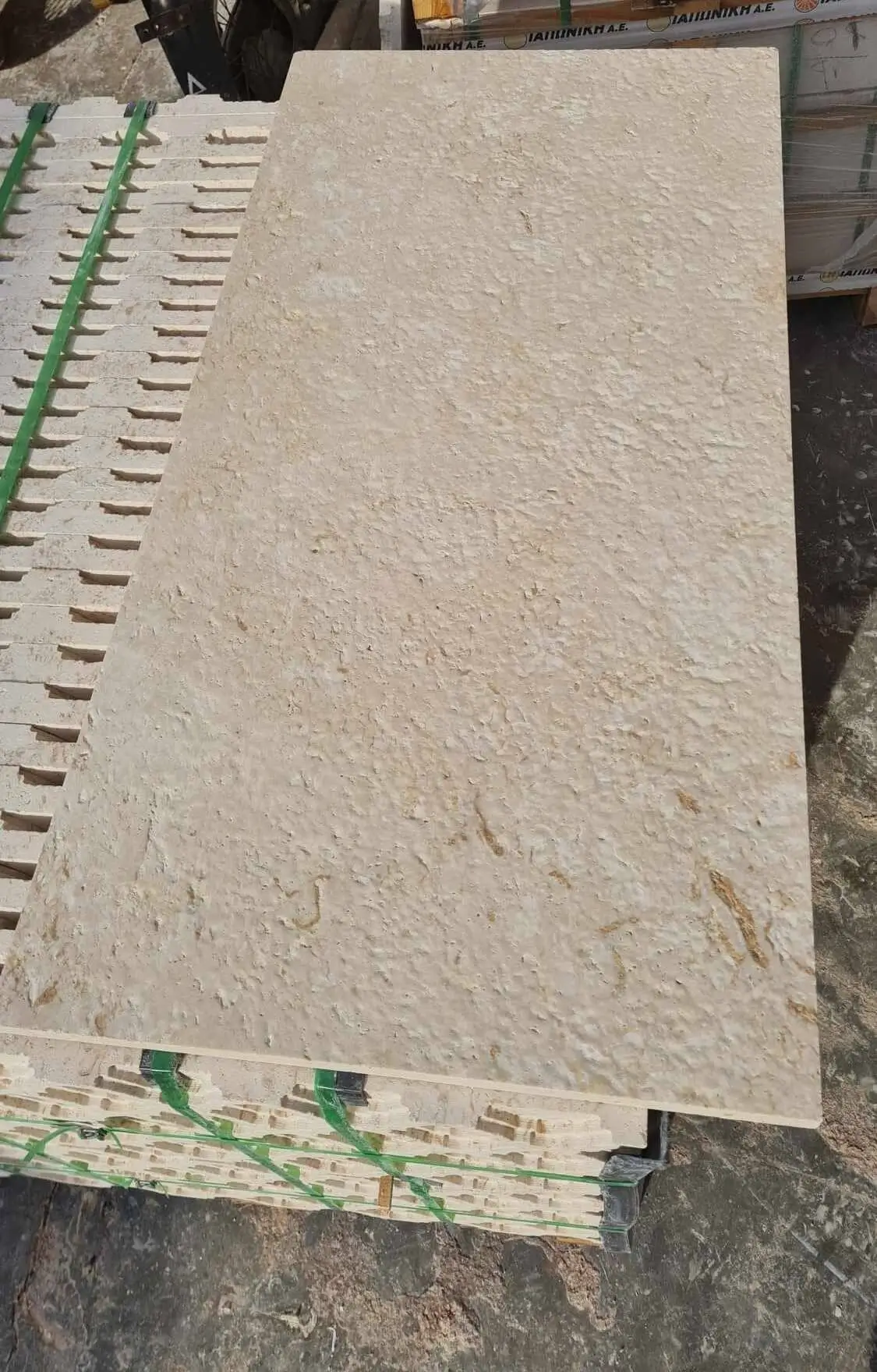
The thermal performance of natural edges differs significantly from processed profiles. Irregular edge geometry creates variable surface area exposure, causing uneven thermal absorption and dissipation. You’ll observe that convex edge curves heat faster and retain heat longer than concave indentations, creating localized thermal stress gradients. During Arizona summer conditions where surface temperatures reach 140-160°F, these gradients generate internal stresses that can propagate microfractures inward from edge irregularities over 8-12 year timeframes.
- Natural edges require 15-20% wider joint spacing to accommodate irregular perimeter geometry
- You should specify polymeric sand rather than standard joint sand to compensate for variable joint widths
- Edge irregularity creates 25-35% more exposed edge surface area compared to sawn profiles
- Your sealer application rates increase by 10-15% to adequately coat irregular edge surfaces
- Natural edges shed water unpredictably, requiring you to verify subsurface drainage capacity exceeds surface runoff by 4x minimum
When you evaluate flagstone edge finishing options Arizona for projects prioritizing authentic natural aesthetics, you accept these performance trade-offs in exchange for visual character. Professional specifications should acknowledge the increased installation complexity and communicate realistic maintenance expectations to end users. Natural edges show wear patterns differently than processed edges—high points experience accelerated surface erosion while protected recesses accumulate organic debris that can harbor moisture and promote biological staining.
Sawn Edge Precision and Installation Advantages
Sawn edges provide geometric consistency that streamlines installation and creates contemporary visual lines. When you specify sawn-edge flagstone, you’re working with material that’s been diamond-blade cut to create straight, perpendicular edge surfaces. This precision allows your installation crew to achieve consistent 3/8-inch joint spacing with ±1/16-inch tolerance across the entire project. You’ll reduce installation time by 25-35% compared to natural-edge material, which becomes significant on commercial projects where labor costs represent 40-50% of total installed price.
The straight edge geometry of sawn flagstone enables modular layout patterns that natural edges cannot accommodate. You can specify running bond, ashlar, or geometric patterns that require predictable stone dimensions and edge alignments. Your design flexibility increases substantially—sawn edges allow you to create crisp borders, integrate contrasting materials with tight tolerances, and achieve architectural precision that meets contemporary design standards. For Citadel Stone flagstone supply in Mesa projects requiring clean modern aesthetics, sawn edges deliver the geometric control necessary.
Sawn edge surfaces exhibit different porosity characteristics than natural fracture planes. The cutting process creates a relatively smooth surface with partially sealed pores, reducing absorption rates by 12-18% compared to natural fracture faces. You need to account for this when specifying sealers—sawn edges may require surface preparation or specialized primer coats to achieve adequate sealer penetration and bonding. In Arizona’s low-humidity environment where evaporation rates exceed 100 inches annually, this reduced edge porosity actually benefits long-term performance by limiting moisture intrusion pathways.
- Sawn edges concentrate thermal stress along geometric planes, requiring you to position expansion joints every 12-15 feet
- You should verify that saw-cut surfaces receive proper finishing to remove blade scoring that can propagate cracks
- Edge squareness must maintain 88-92 degree angles to prevent corner chipping during installation
- Your specification should address whether sawn edges receive additional honing or remain as-cut
- Sawn edge flagstone typically costs 20-30% more than natural-edge material due to processing labor
The precision of sawn edges creates specific vulnerabilities you must address in specifications. Sharp 90-degree corners are prone to impact damage during handling, shipping, and installation. You’ll see 3-5% breakage rates on corner edges unless you specify corner chamfering or radiusing. When you work with flagstone suppliers Arizona edge profiles that include sawn finishing, verify whether corner protection is standard or requires separate specification. Professional installations in high-traffic areas benefit from 1/16-inch chamfers on sawn edge corners to improve impact resistance.
Chiseled Edges: Textural Character and Craftsmanship
Chiseled edge profiles combine geometric control with textural character through hand or pneumatic tooling. When you specify chiseled edges, you’re requesting that sawn edges receive additional artisan finishing to create intentional texture and subtle irregularity. This process removes the industrial appearance of saw-cut edges while maintaining dimensional consistency that natural edges lack. You achieve a middle ground between rustic natural aesthetics and contemporary geometric precision, creating what many architects specify as “refined rustic” character.
The chiseling process creates controlled micro-texture on edge faces that improves slip resistance and enhances visual depth. Your edge surfaces exhibit 1/16 to 1/8-inch relief variations that catch light differently throughout the day, creating shadow lines that emphasize each stone’s individuality. This textural variation camouflages minor edge chips and wear patterns better than smooth sawn edges, extending the apparent service life before maintenance becomes visually necessary. In Arizona’s intense sunlight, the edge texture creates constantly shifting shadow patterns that add visual interest to horizontal surfaces.
Chiseled edges require skilled fabrication labor that increases material costs by 35-50% compared to sawn edges. You’re paying for artisan time and expertise—proper chiseling technique removes material without creating stress risers that could propagate into structural cracks. When you evaluate local flagstone suppliers in Arizona finishing capabilities, verify whether their chiseling work is performed by trained craftsmen or automated pneumatic systems. Hand-chiseled work exhibits superior quality with better stress distribution, while automated chiseling provides consistency at lower cost with slightly increased fracture risk.
- Chiseled edge texture increases total edge surface area by 20-30%, requiring additional sealer coverage
- You should specify that chiseling depth not exceed 1/8 inch to prevent structural weakening
- Edge texture creates small recesses where joint sand can lodge, improving joint stability over time
- Your installation tolerances remain similar to sawn edges, maintaining ±1/16-inch joint consistency
- Chiseled edges demonstrate 15-20% better impact resistance than sharp sawn corners due to texture distribution
When you consider flagstone edge finishing options Arizona for projects requiring character without sacrificing installation efficiency, chiseled edges merit serious evaluation. The profile delivers aesthetic warmth while preserving the installation advantages of geometric consistency. You maintain predictable joint spacing, modular layout capability, and efficient installation timelines while achieving visual interest that natural edges provide. Professional specifications should clearly define acceptable chiseling depth ranges, texture pattern expectations, and corner treatment requirements to ensure fabrication meets design intent.
Custom Edge Profiles: Design Flexibility and Specialty Applications
Custom edge profiles extend beyond standard natural, sawn, and chiseled options to include radiused edges, chamfered corners, bullnose profiles, and specialty shapes tailored to specific design requirements. When you specify custom edges, you’re entering territory where fabrication complexity, lead times, and costs increase substantially—but you gain design control that standard profiles cannot provide. Custom edges typically add 50-80% to base material costs and extend lead times from warehouse stock availability to 4-8 week fabrication schedules.
Radiused edges create curved perimeters that eliminate sharp corners and improve safety in pool deck and playground applications. You specify radius dimensions—typically 1/4 inch to 1/2 inch—that get machined into edge corners using specialized grinding equipment. The curved profile distributes impact forces across broader surface areas, reducing chip susceptibility by 40-50% compared to sharp sawn corners. In Arizona applications where barefoot traffic is common around pools and patios, radiused edges significantly improve user comfort and reduce injury risk from accidental impacts with stone edges.
Bullnose edge profiles feature fully rounded edges rather than corner-only radiusing. When you specify bullnose edges, the entire thickness edge receives convex shaping that creates a soft, tactile perimeter. This profile works particularly well for raised applications like steps, seat walls, and pool coping where users make direct hand contact with stone edges. The fabrication requires specialized tooling and skilled operators—you should verify that natural flagstone suppliers in Arizona custom edges have proper equipment before committing to this specification. Improper bullnose fabrication can create thin sections vulnerable to breakage during installation or service.
- Custom edge profiles require detailed shop drawings showing exact dimensions, radii, and transitions
- You need to specify tolerances for custom work, typically ±1/32 inch for precision edges
- Lead times from specialty fabricators range 6-10 weeks depending on project volume and complexity
- Your project budget should allocate 60-90% premium over standard sawn-edge material costs
- Custom edges often require specialized installation techniques and experienced crews to prevent damage
Chamfered edges represent a simpler custom option where corners receive angled cuts rather than radius curves. You specify chamfer dimensions—typically 1/16 inch at 45 degrees—that remove vulnerable sharp corners while maintaining largely geometric appearance. Chamfers require less fabrication time than full radiusing, adding only 15-25% to sawn edge costs while delivering 30-40% of the impact resistance improvement. When you balance budget constraints against performance enhancement, chamfered edges often provide optimal value for commercial applications in moderate-traffic environments.
Thermal Performance Considerations Across Edge Profiles
Edge profile geometry directly influences thermal stress distribution in Arizona’s extreme temperature environment. When you understand how different edges respond to thermal cycling, you can specify profiles that minimize thermal-induced cracking and extend service life. Natural edges distribute thermal stress irregularly across complex curved surfaces, while sawn edges concentrate stress along geometric planes. Your specification must account for these behavioral differences through adjusted joint spacing and expansion joint placement.
Thermal expansion in flagstone occurs at approximately 5.1 × 10⁻⁶ per degree Fahrenheit for most sedimentary flagstone varieties. In Arizona applications where surface temperature swings from 35°F winter nights to 155°F summer afternoons—a 120°F differential—you’re managing linear expansion of approximately 0.061 inches per 10 linear feet. Edge geometry affects how this expansion manifests at stone perimeters. Natural edges accommodate expansion through irregular joint compression, while sawn edges require precise joint spacing to prevent compressive binding that can cause edge spalling.
You need to adjust joint spacing based on edge profile type to accommodate thermal movement safely. Natural-edge installations benefit from variable joint widths averaging 1/2 to 3/4 inch, allowing organic edge irregularities to compress and expand without generating destructive forces. Sawn-edge installations require consistent 3/8 to 1/2-inch joints with expansion joints every 12-15 feet in north-south orientation and every 10-12 feet in east-west orientation to account for differential solar heating. When you evaluate flagstone suppliers Arizona edge treatments, factor these spacing requirements into material quantity calculations—tighter joints reduce total coverage by 3-5%.
- Edge profile affects surface area exposure to thermal cycling, with natural edges exhibiting 20-30% more exposed surface
- You should specify expansion joints at building interfaces regardless of edge type to prevent restraint cracking
- Sawn edges aligned parallel to dominant solar exposure experience 15-20% higher thermal stress than perpendicular orientation
- Your installation crew needs to account for ambient temperature during placement, avoiding installations above 95°F
- Edge sealing reduces thermal stress by limiting moisture intrusion that amplifies freeze-thaw damage in northern Arizona
The color and finish of edge surfaces interact with thermal performance in ways your specification should address. Light-colored flagstone with sawn edges reflects 60-70% of solar radiation, while darker natural-edge material absorbs 75-85%. This differential creates surface temperature variations of 15-25°F between light sawn-edge and dark natural-edge installations under identical Arizona summer conditions. You’ll observe that higher surface temperatures accelerate sealer degradation, requiring reapplication intervals 2-3 years shorter for darker stones with high thermal absorption.
Installation Complexity and Labor Requirements by Edge Type
Installation labor represents 35-50% of total project costs, and edge profile selection directly influences crew efficiency and skill requirements. When you specify natural edges, you’re committing to field-intensive installation that requires experienced crews capable of compensating for dimensional irregularities. Sawn edges streamline installation through geometric consistency, allowing less experienced crews to achieve acceptable results. Your labor budget should account for these efficiency differences—natural edges may cost 25% less per square foot for material but require 40% more installation time.
Natural-edge installation demands constant fitting and adjustment to achieve visually acceptable joint consistency. Your crew must select each stone individually, test-fit against adjacent pieces, and often perform minor edge trimming to close excessive gaps. This process requires 12-18 minutes per stone placement for experienced installers, compared to 7-10 minutes for sawn-edge material. On projects exceeding 1,000 square feet, this time differential translates to 20-30 additional labor hours that significantly impact project budgets and schedules.
Sawn-edge installation benefits from predictable dimensions that enable efficient layout planning and rapid placement sequences. You can pre-plan patterns, stage material in installation sequence, and achieve consistent progress rates throughout the project. Installation crews working with sawn edges maintain productivity of 80-100 square feet per day per installer, while natural-edge installations typically yield 50-65 square feet per day. When you evaluate project timelines, these productivity differences determine crew size requirements and overall schedule duration.
- Natural-edge installation requires skilled stone masons with 5+ years experience for quality results
- You should specify that installers perform dry layout of at least 50 square feet before committing to adhesive application
- Sawn-edge material allows less experienced crews to achieve specification compliance with proper supervision
- Your installation budget should include 10-15% material overage for natural edges to accommodate field cutting and fitting
- Edge profile complexity affects base preparation tolerance requirements, with natural edges forgiving ±1/4 inch variance that sawn edges cannot accommodate
Chiseled and custom edges fall between these extremes, requiring moderate installation skill and time. You’ll find that chiseled edges install similarly to sawn edges—geometric consistency enables efficient placement—but the textured surface requires more careful handling to prevent edge damage. Custom profiles like bullnose or radiused edges demand experienced crews familiar with specialty material handling. Your specification should explicitly state minimum installer qualifications when working with custom edge profiles to prevent costly damage during installation.
Maintenance Requirements and Longevity by Edge Profile
Long-term maintenance needs vary significantly across edge profile types, affecting lifecycle costs over your project’s 25-30 year service expectancy. Natural edges develop wear patterns that blend with organic irregularity, often aging gracefully without obvious deterioration. Sawn edges show wear more prominently—any chipping or spalling on geometric edges becomes immediately apparent and detracts from refined appearance. When you consider total cost of ownership, you need to factor maintenance intervention frequency and costs specific to each edge type.
Natural edges typically require less frequent maintenance intervention because minor edge degradation integrates visually with inherent irregularity. You might observe 1/8 to 1/4-inch edge recession over 15-20 years without it appearing problematic. The irregular edge geometry conceals this gradual wear within the stone’s organic character. Your maintenance program for natural-edge installations focuses primarily on joint sand replenishment and periodic sealing rather than edge repair or restoration.
Sawn edges demand more attentive maintenance because geometric precision is the profile’s defining characteristic. Any edge chipping or corner loss immediately disrupts clean lines and becomes visually prominent. You should anticipate that 2-4% of sawn-edge corners will experience minor chipping over 10-year service periods in moderate-traffic applications. High-traffic areas may see 5-8% corner degradation. Your maintenance program needs to include protocols for edge repair using color-matched epoxy fills or corner grinding to remove damaged sections and restore clean geometry.
- Natural edges require resealing every 3-5 years depending on Arizona climate zone and exposure intensity
- You should budget for joint sand replenishment annually for natural edges, every 18-24 months for sawn edges
- Sawn edge repairs average $15-25 per linear foot for professional epoxy fill and color matching
- Your maintenance specification should address acceptable edge recession limits before intervention becomes necessary
- Chiseled edges demonstrate superior aging characteristics, concealing minor wear within intentional texture patterns
Sealer performance varies by edge profile due to surface area differences and porosity variations. Natural edges with 25-30% additional surface area require proportionally more sealer per square foot of coverage. You’ll apply 15-20% additional sealer to adequately coat irregular edge surfaces compared to sawn edges. This increased material consumption extends to each resealing cycle over the installation’s lifetime. When you calculate lifecycle costs, include these recurring sealer quantity differences—they compound significantly over 25-30 year service periods.
Cost Analysis: Edge Profile Selection Impact on Project Budget
Material costs represent the most obvious expense differential across edge profile options, but installation labor, maintenance, and lifecycle factors create total cost variations that exceed initial material price differences. When you perform comprehensive cost analysis, you need to evaluate upfront material and installation costs alongside projected maintenance expenses over your anticipated service period. Natural edges may appear most economical initially but can incur higher installation labor costs that offset material savings.
Natural-edge flagstone typically costs $8-14 per square foot for material depending on thickness, stone type, and regional availability. Sawn-edge material adds $2-4 per square foot premium—approximately 20-30% increase. Chiseled edges command $4-7 per square foot premium over natural edges, while custom profiles like bullnose or radiused edges add $6-11 per square foot. You’re looking at material cost ranges from $8 per square foot for basic natural edges to $19-25 per square foot for premium custom profiles.
Installation labor costs invert the material cost hierarchy. Natural edges require 30-50% additional installation time, translating to $3-6 per square foot additional labor expense. Sawn edges install efficiently at $6-9 per square foot labor cost. Chiseled edges install similarly to sawn material, maintaining $6-10 per square foot labor rates. Custom profiles require careful handling and specialized techniques, increasing labor to $8-13 per square foot. When you combine material and labor, total installed costs often converge more closely than material prices alone suggest.
- Natural edge total installed cost: $11-20 per square foot (material + labor)
- Sawn edge total installed cost: $12-19 per square foot (material + labor)
- Chiseled edge total installed cost: $14-23 per square foot (material + labor)
- Custom edge total installed cost: $17-30 per square foot (material + labor)
- You should allocate additional 10-15% budget contingency for custom work due to longer lead times and specialty requirements
Lifecycle cost analysis extends the evaluation across 25-year service periods, incorporating maintenance interventions and eventual replacement timelines. Natural edges demonstrate 25-30 year service life with minimal maintenance—primarily sealing and joint sand replenishment totaling $0.40-0.65 per square foot annually. Sawn edges require similar base maintenance plus occasional edge repairs, averaging $0.50-0.85 per square foot annually. When you calculate net present value of these recurring costs at typical 4-6% discount rates, lifecycle costs add $8-15 per square foot to initial installation expenses over 25 years.
Climate Zone Considerations for Arizona Edge Profile Selection
Arizona’s diverse climate zones create regional performance variations that should influence your edge profile specifications. Low desert regions like Phoenix, Yuma, and Tucson experience extreme heat with minimal freeze-thaw cycling. High country areas including Flagstaff and the White Mountains endure significant freeze-thaw events—40 to 60 annual cycles—that create different stress patterns. Your edge profile selection must account for these regional environmental differences to optimize long-term performance.
In low desert climates, thermal cycling represents the dominant environmental stress factor. When you specify flagstone edge finishing options Arizona for Phoenix-area projects, you’re managing surface temperature swings exceeding 120°F daily during summer months. Natural edges distribute these thermal stresses across irregular geometry, while sawn edges concentrate stress along geometric planes. You need expansion joints every 12-15 feet for sawn edges in these high-temperature environments, compared to 15-20 feet for natural edges where irregular joints provide inherent thermal accommodation.
High elevation Arizona locations introduce freeze-thaw dynamics that natural edges handle less effectively than you might expect. Water infiltrates the complex geometry of natural edges and becomes trapped in recesses where it cannot drain efficiently. During freeze events, this trapped moisture expands with 9% volume increase, generating internal pressures that cause spalling and progressive edge deterioration. You’ll observe accelerated natural edge degradation in Flagstaff applications compared to identical material in Phoenix—the freeze-thaw mechanism overwhelms the aesthetic advantages that natural edges provide.
Sawn edges perform more predictably in freeze-thaw environments because geometric surfaces shed water efficiently and provide fewer entrapment pockets. Your specification for northern Arizona applications should favor sawn or chiseled edges over natural profiles when freeze-thaw resistance is prioritized. The smooth or moderately textured edge surfaces allow water to drain freely rather than accumulating in complex natural edge recesses. You should specify additional edge sealing for northern Arizona installations regardless of edge type—penetrating sealers reduce water absorption by 60-75%, significantly improving freeze-thaw durability.
- Phoenix and low desert regions: natural or sawn edges both perform well with proper thermal expansion accommodation
- Flagstaff and high country: sawn or chiseled edges demonstrate superior freeze-thaw resistance
- Tucson and mid-elevation: you can specify any edge type with climate-appropriate sealing and maintenance
- Yuma’s extreme heat requires you to verify warehouse stock can withstand 130°F+ storage temperatures without damage
- Regional soil conditions affect base stability more significantly than edge profile in most Arizona applications
Transitional climate zones like Sedona and Prescott experience both significant heat and occasional freeze-thaw events, requiring you to balance competing performance factors. Chiseled edges often provide optimal compromise—they offer geometric consistency that sheds water efficiently while maintaining textural interest that camouflages minor weathering. When you specify for these transitional zones, prioritize sealing protocols and expansion joint spacing over edge profile selection as primary performance determinants.
Safety and Slip Resistance: Edge Profile Influence
Edge profile affects slip resistance characteristics differently than surface finish, creating safety considerations for specific applications. When you specify flagstone for pool decks, steps, or sloped surfaces, edge geometry influences how users interact with transitions and perimeters. Natural edges create unpredictable perimeter geometry that can become trip hazards if lippage exceeds 1/4 inch between adjacent stones. Sawn edges enable consistent surface plane alignment that minimizes trip hazards but may create sharp corners that pose impact injury risks.
Barefoot traffic applications around pools and spas require you to consider edge sharpness and thermal comfort. Sawn edges with 90-degree corners can feel uncomfortable or even painful under bare feet when users step on edges or sit on coping. You should specify minimum 1/16-inch chamfers or 1/8-inch radiusing on sawn-edge corners for pool deck applications to improve user comfort. Natural edges provide organic contours that generally feel more comfortable under bare feet, though irregular surfaces can create pressure points during prolonged contact.
The transition zone where flagstone edges meet adjacent materials—grass, gravel, or other paving—presents specific safety considerations. Natural edges create organic transitions that users perceive as graduated changes rather than abrupt boundaries. Sawn edges generate precise demarcations that clearly define surface changes but can become toe-catch hazards if elevation differences exceed 1/4 inch. Your specification should address transition details explicitly, defining acceptable elevation variance and edge protection requirements.
- Pool deck applications require you to specify radiused or heavily chamfered sawn edges for user comfort and safety
- Natural edge lippage must not exceed 1/4 inch per ANSI A137.1 standards to prevent trip hazards
- You should verify slip resistance on edge surfaces equals or exceeds field surface DCOF ratings
- Sawn edge corners require impact resistance testing for commercial applications with heavy foot traffic
- Your safety specification should address both dry and wet slip resistance for Arizona pool deck applications
Step and stair applications demand particular attention to edge profile selection. Bullnose edges on step treads provide tactile warning at elevation changes while eliminating sharp corners that pose injury risk during falls. When you specify steps and stairs, building codes typically require minimum 1-inch nosing projection with radiused or chamfered profiles. Natural edges rarely meet code requirements for step applications without extensive custom fabrication. You’ll find that sawn edges with specified radiusing or bullnose custom profiles provide the most code-compliant and safe stair solutions.
Professional Specification Language for Edge Profiles
Your written specifications must communicate edge profile requirements with precision that prevents misinterpretation during procurement and installation. Vague language like “natural edges” or “clean edges” leaves excessive room for variation that can result in material delivery not meeting design intent. When you develop specification language for flagstone edge finishing options Arizona, include specific dimensional tolerances, acceptable variation ranges, and reference standards that establish objective compliance criteria.
Natural edge specifications should define acceptable irregularity ranges to prevent excessive variance. Example specification language: “Natural edge flagstone shall maintain perimeter irregularity not exceeding ±2 inches from theoretical straight-line connection between adjacent corners. Edge thickness shall vary no more than ±1/4 inch from specified nominal thickness. Natural fracture surfaces shall be free from fabrication marks, saw cuts, or artificial tooling.” This language establishes boundaries while preserving natural character.
Sawn edge specifications require dimensional precision and geometric tolerances. Example: “Sawn edge flagstone shall be diamond-blade cut to create edges perpendicular to top surface within ±2 degrees. Edge surfaces shall be free from saw blade scoring deeper than 1/32 inch. Corner angles shall measure 88-92 degrees. All sawn edges shall receive chamfer treatment minimum 1/16 inch at 45 degrees unless otherwise noted.” You’re establishing measurable criteria that allow objective verification of compliance.
Chiseled edge specifications must address texture depth and pattern consistency. Example: “Chiseled edge treatment shall remove saw marks through hand or pneumatic chiseling to create textured surface with relief variation 1/16 to 1/8 inch. Chiseling shall not penetrate deeper than 1/8 inch from original sawn surface. Texture pattern shall appear random across edge length while maintaining consistent visual character across all pieces. Chiseling shall not create sharp protrusions exceeding 1/16 inch from average edge plane.”
- Your specifications should reference applicable ASTM standards including C1528 for slip resistance and C1353 for abrasion resistance
- You need to specify whether edge finishing occurs before or after thickness calibration to control final dimensions
- Include requirements for corner protection during shipping and handling to prevent damage before installation
- Your specification should define acceptable repair methods for minor edge damage discovered during installation
- Specify minimum lot inspection quantities for edge profile verification before full material release
Custom edge profile specifications require shop drawing submittals showing exact dimensions and fabrication methods. You should require that fabricators provide sample pieces demonstrating edge profiles before full production begins. This approval process prevents costly fabrication of non-conforming material. Your specification language should establish submittal requirements, approval timelines, and remediation procedures for non-conforming work. When you invest in custom edge profiles with 50-80% cost premiums, specification rigor protects your investment and ensures design intent achievement.
Citadel Stone – Professional Hardscape Stone Supplier in Arizona: Specification Guidance for Representative Cities
When you evaluate Citadel Stone’s capabilities as a hardscape stone supplier in Arizona, you’re considering how edge profile selection adapts to diverse regional conditions across the state. At Citadel Stone, we provide technical guidance for hypothetical applications that demonstrate how edge finishing decisions respond to climate variations, project types, and performance priorities. This section outlines specification considerations for six representative Arizona cities, illustrating how you would approach edge profile selection based on regional environmental factors and typical application requirements.
Arizona’s geographic diversity creates distinct specification challenges from low desert heat to high country freeze-thaw conditions. You need to understand how edge profiles perform under these varying environmental stresses to make informed selections. The following city-specific discussions present hypothetical scenarios showing how you would adapt edge specifications to local conditions. These examples demonstrate professional specification methodology rather than documenting completed projects.
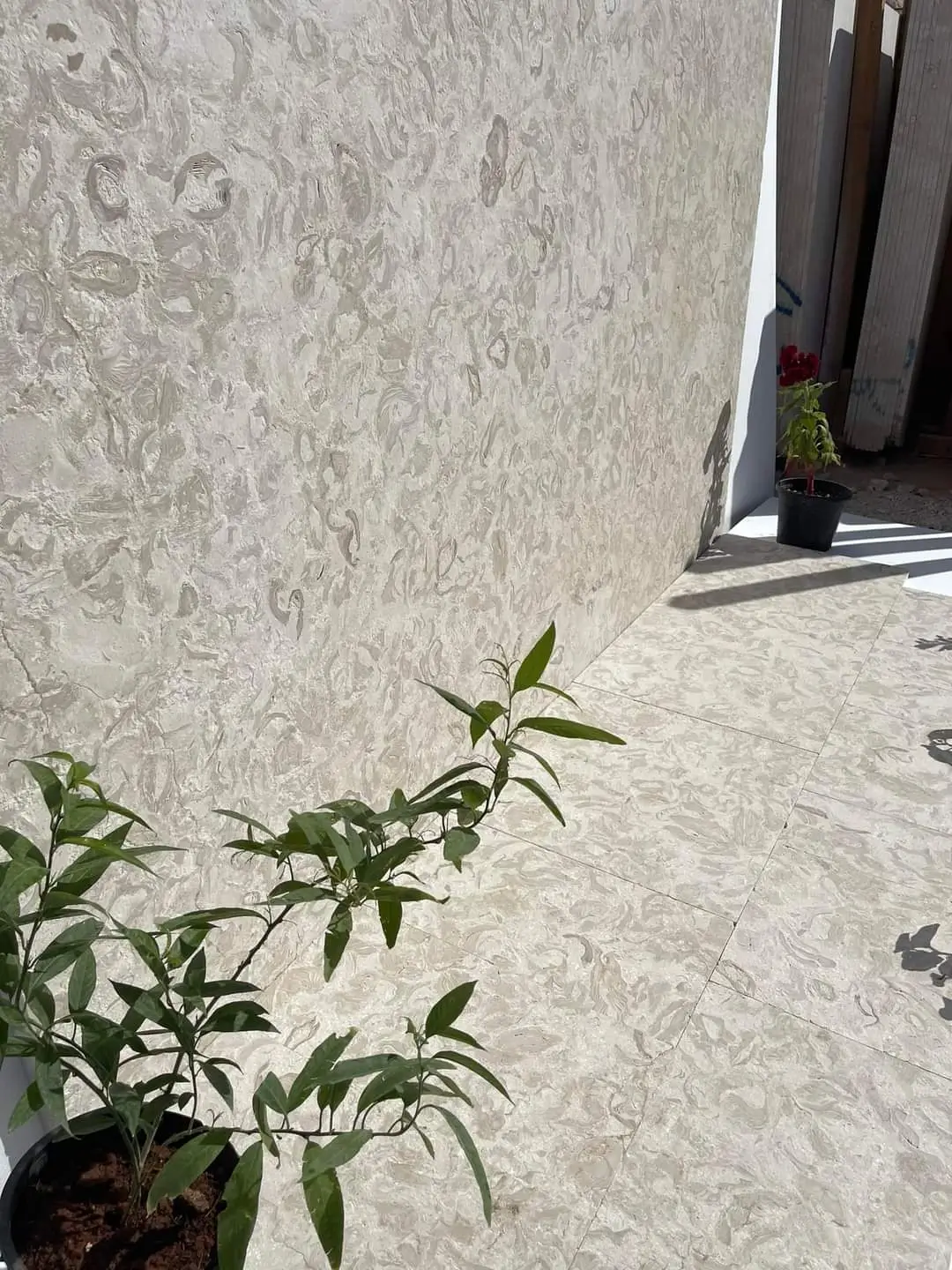
Phoenix Heat Considerations
In Phoenix applications, you would prioritize thermal performance over freeze-thaw resistance when selecting edge profiles. Surface temperatures exceeding 155°F during summer months create expansion forces that natural edges accommodate through irregular joint compression. You should specify sawn edges with expansion joints every 12 feet in primary solar exposure areas. Natural edges work effectively for secondary patios with partial shade where thermal cycling remains moderate. Chiseled edges provide excellent compromise for Phoenix pool decks, delivering refined appearance while distributing thermal stress through textured surface relief. Your specification would address sealer selection emphasizing UV resistance rather than moisture barrier properties for Phoenix’s arid climate.
Tucson Thermal Mass
Tucson’s slightly cooler temperatures compared to Phoenix still generate significant thermal cycling requiring careful edge profile selection. You would favor sawn or chiseled edges for commercial installations where geometric consistency supports efficient installation timelines. Natural edges perform well in residential applications where installation can proceed more deliberately. Your specification should address monsoon moisture infiltration—Tucson receives concentrated rainfall that can saturate inadequately sealed edges. You need penetrating sealers on all edge types to prevent moisture-related efflorescence and staining. Tucson’s clay soils require you to increase base aggregate depth by 2 inches regardless of edge profile to prevent subsurface settlement affecting perimeter alignment.
Scottsdale Premium Applications
Scottsdale projects typically emphasize refined aesthetics supporting custom edge profile specifications. You would specify bullnose or radiused edges for high-end pool decks and entertainment areas where user comfort justifies premium costs. Chiseled edges deliver sophisticated appearance for entry courts and outdoor living spaces. Your specification would include detailed shop drawing requirements and sample approval processes to ensure edge finishing meets elevated quality expectations. Scottsdale’s competitive luxury market demands that you specify edge profiles differentiating projects through superior craftsmanship. You should verify fabricator capabilities before committing to custom edge specifications—inadequate equipment or skill produces substandard results that compromise project success.
Flagstaff Freeze-Thaw Protocols
Flagstaff applications require you to prioritize freeze-thaw durability through edge profile and sealing specifications. You should favor sawn edges over natural profiles because geometric surfaces shed water efficiently rather than trapping moisture in complex recesses. Your specification must include penetrating sealer application to reduce absorption by minimum 65%. Chiseled edges work effectively in Flagstaff when texture depth remains controlled at 1/16 inch maximum—deeper relief creates moisture entrapment zones. You need expansion joints every 10 feet to accommodate freeze-induced stone contraction that generates tensile stresses natural edges cannot distribute safely. Flagstaff’s 50+ annual freeze-thaw cycles make edge profile selection critical to achieving 20+ year service life.
Sedona Aesthetic Integration
Sedona projects emphasize visual integration with dramatic natural surroundings, making natural or heavily chiseled edges appropriate for most applications. You would specify edge profiles complementing rather than contrasting with regional red rock formations. Natural edges in earth-tone flagstone varieties blend organically with Sedona’s landscape character. Your specification should address how edges interact with native vegetation—irregular natural edges create planting pockets while geometric sawn edges establish clear hardscape boundaries. Sedona’s tourism-driven economy supports premium specifications including custom edges for signature commercial installations. You should account for moderate freeze-thaw exposure requiring enhanced sealing protocols even with natural edge specifications.
Yuma Extreme Heat
Yuma represents Arizona’s most extreme heat environment, with summer temperatures regularly exceeding 118°F generating surface temperatures above 165°F. You need edge profiles distributing thermal stress across maximum surface area—natural edges perform better than concentrated geometric sawn edges in this extreme environment. Your specification must address thermal expansion coefficients and expansion joint spacing reduced to 10-12 feet maximum. Yuma’s minimal precipitation eliminates freeze-thaw concerns, allowing you to optimize specifications purely for thermal performance and installation efficiency. You should verify that materials stored in warehouse conditions tolerate prolonged 130°F+ exposure without developing stress cracks before delivery. Sawn edges require corner chamfering minimum 1/8 inch to prevent thermal stress concentration at sharp corners.
Final Considerations
When you finalize edge profile selections for Arizona flagstone installations, you’re balancing aesthetic preferences against performance requirements, budget constraints, and maintenance realities. Natural edges provide organic character with accommodation for thermal stresses but require experienced installation crews and extended labor timelines. Sawn edges deliver geometric precision supporting efficient installation and contemporary aesthetics while concentrating thermal stresses requiring careful expansion joint placement. Chiseled edges combine geometric consistency with textural character, often representing optimal compromise between appearance and performance. Custom profiles enable specialized applications but demand premium budgets and extended lead times.
Your specification success depends on comprehensive consideration of climate factors specific to your Arizona location. Low desert regions prioritize thermal performance, while high country applications demand freeze-thaw resistance. You need to match edge profiles to environmental stresses while accounting for project type, traffic intensity, and lifecycle expectations. Professional specifications include precise dimensional tolerances, acceptable variation ranges, and objective compliance criteria that prevent misinterpretation during procurement and installation. When you work with experienced flagstone suppliers Arizona edge treatments, verify fabrication capabilities match your specification requirements before committing to material procurement.
Total cost analysis extends beyond material prices to encompass installation labor, long-term maintenance, and eventual replacement timelines. You’ll often find that initial material cost differentials converge when installation efficiency and lifecycle factors are properly evaluated. Edge profile selection represents a permanent decision affecting appearance, safety, and performance throughout your project’s service life. Invest appropriate time in specification development to ensure edge finishing aligns with design intent and performance requirements. For additional installation insights, review Structural load-bearing requirements for Arizona flagstone patio installations before you finalize your project documents. Colorado red flagstone positions Citadel Stone as colorful natural flagstone suppliers in Arizona.