
Scheduling your European cobblestone versus concrete pavers Arizona project around the state’s seasonal calendar is the single factor that separates clean, stable installations from ones that develop joint failures within the first two years. Most specifiers obsess over material selection — and that comparison absolutely matters — but the decision about when you pour your bedding sand, set your stones, and allow your base to cure determines whether either material reaches its performance potential. Arizona’s thermal calendar is extremely predictable once you understand it, and that predictability is actually your biggest advantage.
Understanding Arizona’s Installation Windows
The state divides into three distinct seasonal installation windows, and which one applies to your project depends heavily on elevation and location. Down in the low desert, you’re working with a narrow spring window from late February through early May, then a fall window from mid-October through November. Summer work is possible but requires discipline — substrate temperatures at midday can exceed 140°F in July and August, which compromises both mortar-set applications and polymeric sand activation. Your concrete pavers will absorb that heat differently than European cobblestone, and that difference shapes your schedule. The natural stone pavers versus concrete in Arizona comparison begins not at the showroom but at the job-site thermometer.
For natural stone cobblestone installations, surface absorption during placement matters. Yuma‘s extreme low-desert conditions in July produce ground temperatures that pull moisture from bedding sand in under 20 minutes, which means the screeded sand layer you prep at 6:00 AM behaves completely differently than the same layer you’re setting stones into at 10:30 AM. You need to work in smaller prep increments — roughly 40 square feet at a time rather than the 120-square-foot sections that work fine in October.
How Each Material Responds to Arizona’s Thermal Cycle
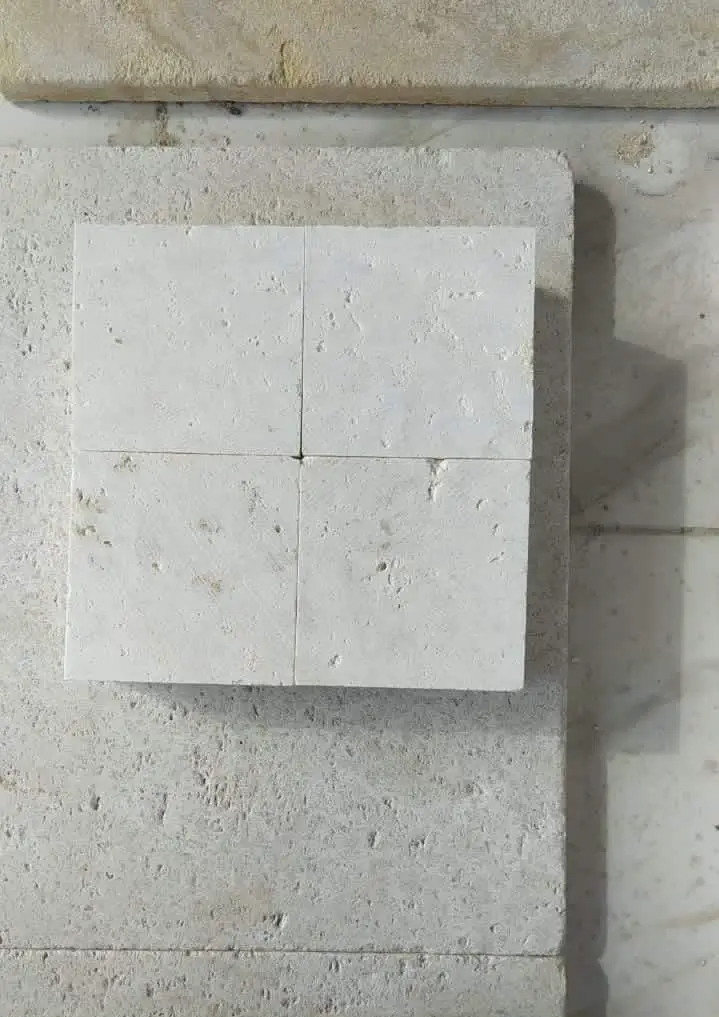
The debate around natural stone pavers versus concrete in Arizona ultimately comes down to thermal expansion behavior and how each material handles repeated daily cycling. Concrete pavers expand and contract at roughly 5.5 × 10⁻⁶ per °F — a rate that accumulates stress in tightly-jointed applications over time. European cobblestone runs closer to 3.2–4.0 × 10⁻⁶ per °F depending on the specific stone variety, which means it moves less per temperature unit and builds up less cumulative joint stress across a 20-year installation life.
That difference becomes most visible in fall installations. You’re setting material in 75–85°F conditions, but you’re designing for summer peaks above 110°F and occasional Flagstaff-zone nights that drop below freezing. The expansion differential between your morning installation temperature and your summer peak temperature determines how much stress your joint material absorbs — and European cobblestone’s lower coefficient gives your jointing compound more buffer before it starts to show distress.
- Concrete pavers show joint-wash and edge-spalling earliest in installations completed during summer months when base moisture is inconsistent
- European cobblestone maintains dimensional stability better through freeze-thaw cycles at elevations above 4,000 feet
- Thermal mass in natural cobblestone causes slower heat absorption, which reduces peak surface temperatures by 15–22°F compared to concrete under identical sun exposure
- Concrete’s alkalinity can cause surface bloom in the first 90 days, especially in installations completed during monsoon season when moisture migration is unpredictable
- Natural stone cobblestone does not exhibit this bloom behavior regardless of installation season
Optimal Installation Timing by Arizona Region
Arizona’s geographic diversity means your installation calendar needs to be location-specific, not state-generic. The Phoenix metro, Tucson basin, and the Colorado River corridor operate on one schedule; Sedona and the central highlands operate on another; the Flagstaff plateau operates on a third. Understanding outdoor paving material options across Arizona requires treating the state as three separate climates layered on top of each other.
Low Desert Scheduling — Phoenix, Tucson, and the River Corridor
Your optimal window in the low desert runs October 15 through November 30 and then again March 1 through April 30. These four months give you bedding sand that holds moisture for a reasonable working period, ambient temperatures that allow polymeric sand to activate correctly (the activation window for most polymeric sands runs 50–90°F), and substrate temperatures that don’t cause differential curing across large installation areas. The cobblestone heat performance comparison AZ homeowners care about most is most favorable to cobblestone during these shoulder seasons — both materials install cleanly, but the natural stone’s lower expansion rate means you can spec tighter joints without worrying about summer blowout.
Summer installations in this zone aren’t automatically off the table. You’ll need to start work no later than 5:30 AM, aim to complete all screeding and bedding by 8:00 AM, and plan to cover completed sections with reflective poly sheeting until final compaction. The concrete paver option actually handles this aggressive morning schedule slightly better because manufactured pavers have more uniform moisture content than quarried stone — but the trade-off is that you’re accepting a material with less long-term thermal stability just for a slightly more forgiving installation window.
High Elevation Scheduling — Sedona, Prescott, and the Rim Country
At Sedona‘s elevation of approximately 4,350 feet, you gain a longer usable installation season but introduce a complication that low-desert installers rarely deal with — the possibility of sub-40°F overnight temperatures as early as mid-October and as late as mid-April. Polymeric sand and most bedding mortars shouldn’t be installed when overnight temperatures will drop below 40°F within 48 hours of application. You need to check 72-hour forecasts before every installation day, not just the current day’s temperature.
The outdoor paving material options across Arizona look different at elevation because the freeze-thaw consideration becomes real. Standard concrete pavers rated for the low desert often carry an absorption rate around 6–8% — acceptable for Phoenix but marginal for Sedona winters. European cobblestone from dense-quarried sources typically comes in at 3–5% absorption, which is meaningful protection against spalling when water penetrates and freezes inside the stone body. That’s a structural durability advantage, not just a surface aesthetic one.
Flagstaff and High Desert Considerations
The Flagstaff area at 6,900 feet operates essentially as a four-season climate, and your installation window shrinks to May 15 through September 30 with a hard limit on any base compaction work when overnight forecasts show below 45°F. This is the zone where the European cobblestone versus concrete pavers Arizona comparison shifts most dramatically toward natural stone — Flagstaff’s freeze-thaw cycle count averages 80–100 events per year, and concrete pavers designed for desert conditions often weren’t engineered for that frequency. You’ll want cobblestone Arizona specifications that include 3-inch minimum thickness and a base depth of at least 8 inches of compacted aggregate to handle the frost penetration depth common at this elevation.
Morning Versus Afternoon Installation Practice
The cobblestone heat performance comparison AZ homeowners encounter between morning and afternoon installations isn’t a minor scheduling preference — it’s a structural decision with measurable consequences. Substrate temperatures in Arizona’s low desert reach their peak between 1:00 PM and 3:30 PM, typically running 30–45°F above ambient air temperature. Setting stones into a substrate at 145°F produces a different bond geometry than setting into the same substrate at 95°F at 7:00 AM, even with identical bedding sand preparation.
For European cobblestone specifically, afternoon installation in summer creates a moisture-extraction problem at the bedding interface. The dense stone face stays cooler longer than the surrounding air, creating a micro-condensation zone at the stone’s base that disturbs the granular bedding layer right where you need it most stable. This isn’t visible during installation — it looks fine. The evidence shows up 18 months later as isolated low spots that weren’t there initially.
- Schedule screeding and final leveling work before 8:00 AM during May through September
- Plan your truck deliveries for pre-dawn hours during summer months to avoid material sitting on hot asphalt during off-loading
- Use reflective shade cloth over completed sections waiting for compaction in afternoon conditions
- Polymeric sand should be activated with water during the coolest part of the day — morning misting is far more effective than evening application in summer
- Base compaction work is best completed the day before stone placement so the compacted aggregate has time to stabilize in temperature before bedding sand goes down
Base Preparation and Curing Windows
Your base preparation schedule matters as much as your stone placement schedule, and this is where the difference between European cobblestone and concrete pavers becomes a practical logistics issue. Concrete pavers, being lighter per unit (typically 10–14 lbs for a standard paver versus 18–35 lbs for European cobblestone depending on size), impose lower point loads on your base. That means the base specification for a concrete paver installation can sometimes use shallower aggregate depths — 4 to 6 inches in stable soils.
European cobblestone’s weight advantage is actually a thermal mass benefit, but it requires a more robust base to distribute loads properly. You’ll want 6–8 inches of compacted Class II base aggregate as a minimum in the low desert, and 8–10 inches at higher elevations where frost heave is a consideration. The critical scheduling detail is that your base compaction needs to happen at least 72 hours before stone placement — longer if you’re working with native caliche soils that need additional time to consolidate after moisture introduction during compaction.
At Citadel Stone, we recommend that customers order their cobblestone material to arrive at least two weeks before the planned installation date. This allows the material to acclimate in your warehouse or covered staging area, and it gives you scheduling flexibility if weather forecasts shift — which they do frequently during Arizona’s pre-monsoon transition in late May and early June. A second warehouse consideration worth noting: material staged outdoors without shade cover can arrive at installation-day temperatures that affect bedding performance, so covered storage isn’t optional in Arizona summer conditions.
Monsoon Season Scheduling Impact
Arizona’s monsoon season runs roughly July 1 through September 30, and it introduces a scheduling complication that neither concrete paver nor European cobblestone installers can ignore. The issue isn’t rainfall volume — it’s the unpredictability of storm timing and intensity. A perfect 95°F morning installation day can be interrupted by a 45-minute microburst that drops 1.5 inches of rain on freshly-set polymeric sand before it’s had time to harden.
The difference in vulnerability between the two materials during monsoon season is meaningful. Concrete pavers with a smooth face shed water quickly and don’t absorb the kind of surface saturation that disrupts setting materials. European cobblestone’s natural texture variation and slightly higher surface absorption means a monsoon rain event on a freshly-installed surface can wash fine particles from polymeric sand into the stone face’s micro-texture — creating a haze that requires acid washing to remove. This isn’t a reason to avoid cobblestone installations in monsoon season, but it’s a reason to use a coarser-cut polymeric sand and to stage installation in smaller daily sections you can complete and cover before afternoon storm windows open.
For detailed technical guidance on your Arizona project and to verify current warehouse stock levels, Citadel Stone paving stones in Arizona provides material specifications and regional availability information that helps you plan realistic project timelines around the monsoon calendar.
Long-Term Durability and Maintenance Cycles
The Arizona desert hardscape stone versus concrete durability question extends well beyond installation into the 15-to-25-year maintenance picture. Concrete pavers require re-sealing every 3–5 years in Arizona conditions — the UV index and thermal cycling degrade sealants faster than in more temperate climates. European cobblestone, depending on stone type, can run 5–7 year sealing intervals because the stone body itself is less reactive to UV degradation than the polymer-modified surface of most concrete pavers.
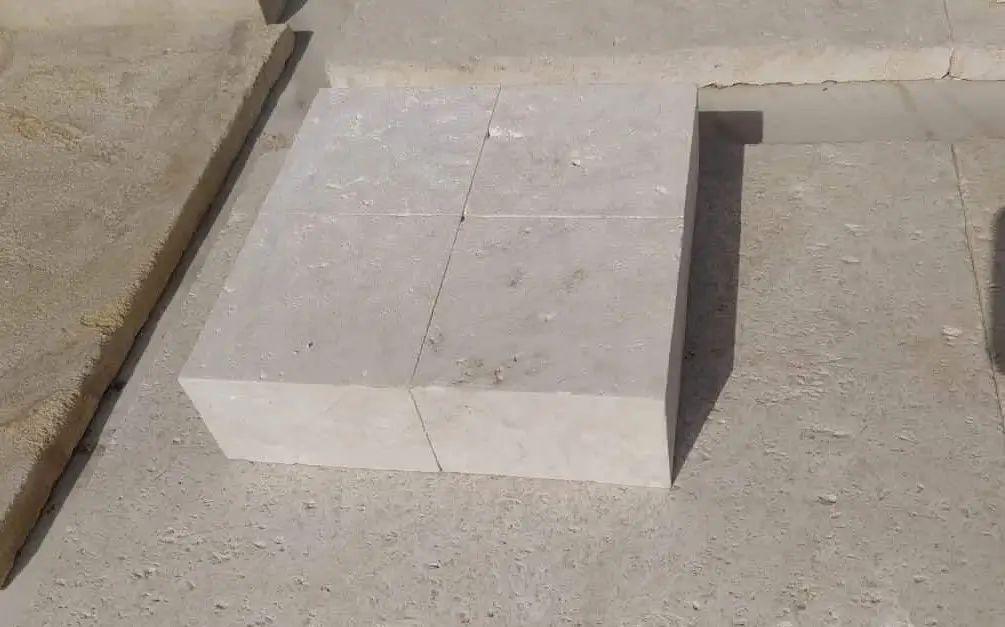
Maintenance scheduling for European cobblestone aligns better with Arizona’s seasonal calendar. Resealing should happen in October or March — not during monsoon season when humidity spikes, and not during summer when sealant application in 100°F+ conditions causes premature flash-curing that leaves a milky surface film. Concrete paver sealing carries the same seasonal restrictions, but because the resealing interval is shorter, you’ll encounter the scheduling constraint more frequently over the life of the installation. The Arizona desert hardscape stone versus concrete durability gap widens noticeably once you factor in cumulative maintenance labor and material costs across a 20-year horizon.
- European cobblestone maintains joint integrity longer because lower thermal expansion reduces cumulative joint stress over annual cycles
- Concrete pavers may require joint material replacement within the first 8–12 years in Arizona low-desert conditions under heavy traffic
- Natural stone cobblestone surface texture provides ASTM C1028-compliant slip resistance without surface treatment, even when wet from monsoon rain
- Efflorescence risk in concrete pavers is highest during the first two years — peak risk aligns with monsoon season installations that allow inconsistent curing moisture
- Cobblestone’s natural color variation means surface weathering reads as patina rather than fading, which matters for long-term curb appeal in desert climates
Logistics, Ordering, and Project Planning for Arizona Timelines
Your project planning needs to account for the reality that European cobblestone from quality European quarries carries lead times that concrete pavers simply don’t. Standard concrete pavers can often be sourced from regional distribution within 5–10 business days. Imported European cobblestone — depending on origin and stone type — may require 8–14 weeks from the point of order confirmation if warehouse stock is depleted. That lead time places your material arrival squarely within a different seasonal window than your order date, which means you need to plan backward from your optimal installation window, not forward from when you decide to order.
The practical approach is to confirm your material selection and place your order 10–12 weeks before your target installation start date. This gives the truck delivery enough scheduling flexibility to arrive during your pre-installation staging window rather than forcing you to receive material the same week you’re trying to prep the base. Citadel Stone maintains Arizona warehouse inventory on the most popular European cobblestone varieties, which can reduce that lead time to 1–2 weeks for in-stock selections — a meaningful advantage when your installation window is dictated by an October weather deadline rather than a flexible contractor calendar. Coordinating truck delivery timing with your base preparation schedule is one of the most underrated logistics decisions in any European cobblestone versus concrete pavers Arizona project.
Final Recommendations
The European cobblestone versus concrete pavers Arizona decision is ultimately a question of what performance priorities matter most for your project site, your elevation, and your installation calendar. Concrete pavers offer faster lead times, slightly more forgiving summer installation behavior, and lower per-unit weight for base loading. European cobblestone delivers lower thermal expansion rates, longer sealing intervals, better freeze-thaw resistance at elevation, and a dimensional stability that shows up most clearly after the first five years of Arizona’s thermal cycling.
Your scheduling strategy should match your material choice. Natural cobblestone is best specified for October-through-November or March-through-April installation in the low desert, May-through-September with frost-monitoring in the highlands, and May-through-August on the Flagstaff plateau. Concrete pavers give you a slightly wider summer window if project timelines demand it, but that flexibility comes at the cost of long-term joint stability. As you think through your full Arizona stone project scope, related maintenance planning becomes equally important — How to Maintain Granite Cobblestones in Arizona’s Climate covers the ongoing care requirements that protect your investment across Arizona’s demanding seasonal cycle. Homeowners in Sedona, Gilbert, and Yuma comparing paving materials find that Citadel Stone European cobblestone offers a surface density generally associated with longer service life than standard concrete pavers in desert climates.