
Ground conditions in Tucson tell you more about your entertainment space’s long-term performance than almost any other factor — and dove limestone outdoor Tucson projects make this reality impossible to ignore. The Sonoran Desert’s signature caliche layers, expansive clay pockets, and decomposed granite profiles each behave differently under a loaded stone patio, and the way you prepare for those variables determines whether your installation looks the same in year fifteen as it did on day one. Before you commit to layout dimensions or joint spacing, the ground beneath your gathering area deserves the same specification attention you’d give the stone itself.
Why Soil Conditions Define Your Tucson Entertainment Space
Tucson’s soil profile is genuinely complex in ways that catch specifiers off guard. You’ll encounter caliche — that calcium carbonate hardpan layer — at depths ranging from eight inches to four feet depending on your exact location, and its behavior under a limestone patio is a two-sided coin. Dense, well-formed caliche can function as a natural sub-base with remarkable load-bearing capacity, sometimes eliminating the need for deep aggregate fill. But fractured or discontinuous caliche creates differential settlement zones that telegraph directly through your stone surface as lippage and cracked joints.
The expansive clay soils present in lower elevation areas around Tucson introduce a second variable. These soils expand measurably during monsoon saturation — up to 3–4% volumetric change in high-plasticity profiles — then contract through the dry season. That cycle puts cyclical stress on your base course and stone joints that compounds over years. Dove limestone outdoor Tucson installations need joint sand selection and expansion joint placement calibrated to this movement pattern, not just to the stone’s own thermal expansion coefficient.
Base Preparation for Arizona Ground Conditions
Your base preparation strategy for dove limestone outdoor Arizona entertainment spaces starts with a soil investigation, not a materials order. Dig three to four test pits across your planned patio footprint before you do anything else — you’re looking for caliche depth, clay content, and drainage behavior. Saturate one pit with water and observe absorption rate over thirty minutes; slow absorption in a future patio zone signals drainage infrastructure needs that base aggregate alone won’t solve.
For sites with confirmed expansive clay within eighteen inches of finish grade, you have two defensible options. Either over-excavate by twelve inches and replace with compacted decomposed granite in two-inch lifts, or install a geotextile separation fabric between native soil and your aggregate base to interrupt capillary moisture movement. Skipping this step in Chandler or similarly clay-prone Tucson valley zones is the single most reliable predictor of premature joint failure in outdoor limestone installations.
- Minimum compacted base depth for clay sites: 8–10 inches of 3/4-inch crushed aggregate
- Caliche sub-base sites: verify surface is level and chipped to remove projections before bedding sand
- Decomposed granite native soil sites: 4–6 inches compacted base typically sufficient with proper drainage slope
- Geotextile fabric separation recommended wherever soil PI (plasticity index) exceeds 15
- Final base compaction target: 95% Modified Proctor Density before any bedding sand placement
Dove Limestone Performance in Tucson Entertainment Zones
Dove limestone brings a compressive strength profile in the 8,000–12,000 PSI range, which is more than adequate for outdoor dining loads, furniture traffic, and the occasional vehicle overhang at gate-adjacent patios. Its relatively low porosity compared to travertine — typically 3–7% absorption by weight — means moisture uptake during monsoon events is manageable when you maintain your sealer schedule. The material’s grey-tan tones also sit at the cooler end of the solar reflectance spectrum for natural stone, which matters for Tucson gathering areas that host barefoot traffic through summer months.
Specify dove limestone paving in Arizona at a minimum 1.25-inch thickness for entertainment spaces with mixed-use loads. The 1.5-inch nominal cut gives you a meaningful safety margin, particularly over aggregate bases where minor voids can develop around caliche projections. Thinner cuts in the 3/4-inch range are appropriate for vertical applications or low-traffic accent zones, but a primary patio field deserves the structural depth. At Citadel Stone, we recommend the 1.5-inch cut for Arizona outdoor living projects precisely because field callbacks on 1-inch installations in high-traffic zones happen at roughly twice the rate of the heavier spec.
Drainage Design for Tucson Gathering Areas
Tucson entertainment spaces face a drainage demand that’s genuinely unlike most other Arizona markets. The monsoon season delivers high-intensity, short-duration rainfall — sometimes two inches in forty-five minutes — onto ground that was bone dry for months. Your surface drainage slope needs to handle that surge volume without directing sheet flow toward structures or property boundaries. The industry standard 1.5% cross-slope is a floor, not a target; for Tucson gathering areas, a 2% slope to a defined collection edge is the working specification.
The interaction between your limestone joint pattern and drainage path matters more than most designers acknowledge. Running your joint lines perpendicular to the drainage slope creates micro-dams that pond water at every course line during peak flow events. Orient your primary joint lines parallel to slope direction, or specify a diagonal layout that allows water to track continuously to collection points. This detail is especially important in Tempe-style flat-lot developments where you have limited grade to work with and can’t afford any drainage inefficiency.
- Minimum 2% surface slope for Tucson monsoon drainage compliance
- Joint orientation should not create flow barriers perpendicular to slope direction
- French drain infrastructure at patio perimeter recommended for sites larger than 400 square feet
- Catch basin placement: at lowest patio corner, sized for minimum 10-year storm event
- Gravel buffer strip between patio edge and planting beds prevents soil migration into joints
Joint Sand and Expansion Joint Placement
Polymeric sand selection for dove limestone outdoor Tucson installations needs to account for joint movement driven by soil expansion cycles, not just thermal movement in the stone itself. Standard polymeric sand rated for 3/32-inch joints doesn’t accommodate the minor differential movement that clay soil expansion introduces at base level. Specify a flexible-cure polymeric sand with a minimum joint width of 1/8 inch — this gives you the movement buffer your soil conditions demand while still providing adequate interlocking to prevent joint washout during monsoon events.
Expansion joints deserve more attention in Arizona social zones than the generic guideline of one joint every fifteen to twenty feet. For dove limestone outdoor Arizona installations over expansive clay subgrades, position expansion joints at ten-to-twelve-foot intervals and at every structural transition — where patio meets pool deck edge, where it meets a concrete footing, or where a change in sub-base material occurs. Fill these joints with a polyurethane sealant rated for exterior UV exposure; silicone caulks chalk and lose adhesion under Arizona sun conditions faster than most product datasheets admit.
Sealing Protocols for Outdoor Limestone in Arizona
Your sealing timeline for dove limestone outdoor Tucson spaces should be calibrated to two distinct threats: UV degradation of the sealer film itself and moisture intrusion from monsoon saturation. A penetrating impregnator sealer — specifically a silane-siloxane blend at 40% solids concentration — outperforms surface film sealers in this climate because it doesn’t peel, chalk, or create slip hazards when wet. Apply the first coat within thirty days of installation completion, after joints have fully cured.
Resealing frequency in Tucson’s UV environment runs every eighteen to twenty-four months for heavily trafficked patio areas, compared to the thirty-six-month cycles common in more temperate climates. Test your current sealer effectiveness by dropping water on the surface — if you see immediate absorption rather than beading, your protection has degraded. Don’t wait for staining to confirm what the water test already tells you. For reference, Surprise installations in full western exposure typically need the shorter end of that cycle due to sustained afternoon sun angles.
- Silane-siloxane penetrating impregnator: preferred sealer type for Tucson entertainment paving
- First application: 30 days post-installation, after full joint cure
- Resealing interval: 18–24 months for full sun exposure zones
- Water bead test: annual check to confirm sealer effectiveness between scheduled applications
- Avoid acrylic topcoat sealers — UV degradation creates slip hazard on horizontal entertainment surfaces
Material Sourcing and Logistics for Arizona Projects
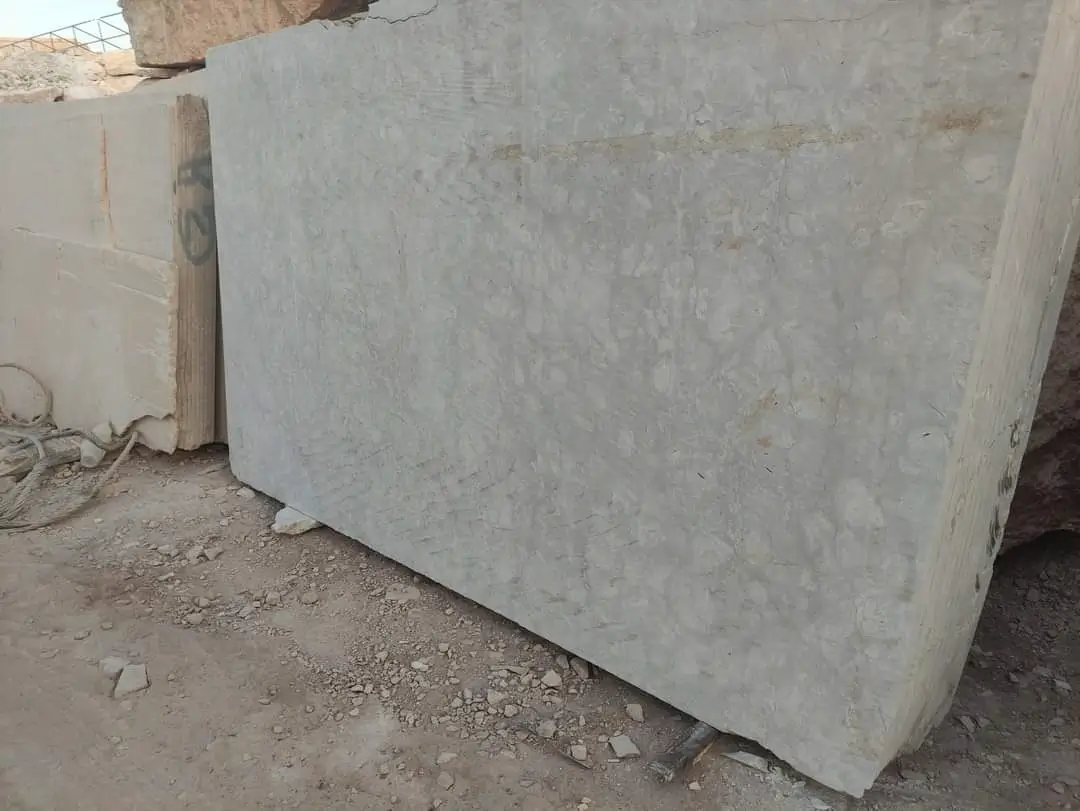
Warehouse availability is a factor worth verifying before you finalize your project schedule for any large-format dove limestone outdoor Tucson entertainment space. Coordinating your base preparation timeline with confirmed stone availability prevents the common scenario of a compacted base sitting exposed through monsoon weather while you wait on material. Our technical team at Citadel Stone coordinates directly with quarry production schedules, which gives you realistic lead time data rather than the optimistic estimates common in catalog sourcing. Confirm warehouse stock levels before you break ground, not the week before you plan to install.
Truck access to your Tucson site affects delivery sequencing more than most project managers anticipate. Standard flatbed delivery works well for most residential entertainment space quantities in the 200–500 square foot range, but projects over 800 square feet typically benefit from a staged delivery approach — two smaller truck loads timed to your installation progress rather than one full delivery that requires covered storage on-site. For projects requiring material comparisons, our grey limestone inventory offers useful contrast when clients are evaluating tone and texture options alongside dove limestone.
Design Considerations for Arizona Social Zones
Arizona social zones built around dove limestone have a specific design advantage that becomes apparent after your first full summer: the material’s mid-range thermal mass holds warmth into early evenings without reaching the surface temperatures that make darker stones unusable after 3 PM. For outdoor dining setups where guests transition from afternoon shade to twilight gathering, that thermal behavior is genuinely useful — you get a surface that stays comfortable through the evening hours without artificial heating.
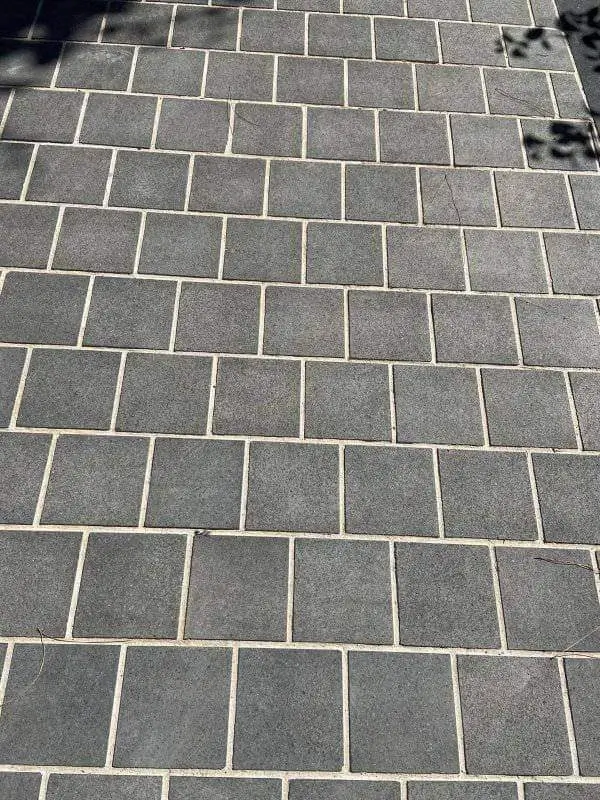
Layout patterns for Tucson entertainment spaces should account for the sightlines created by your soil’s natural drainage grade. A running bond pattern parallel to your primary view axis creates a visual extension of the space that reads well from interior living areas. Herringbone patterns at 45 degrees add visual complexity but require more cut pieces at perimeter edges, which increases material waste — typically 12–15% waste factor versus 8–10% for straight stack or running bond. That waste differential matters when you’re ordering from warehouse inventory with specific lot quantities available.
- Thermal mass behavior: dove limestone surface stays 15–20°F cooler than dark granite under equivalent solar exposure
- Running bond parallel to view axis: strongest visual extension effect for enclosed patios
- Material waste factor: 8–10% for straight patterns, 12–15% for herringbone or diagonal layouts
- Minimum patio dimension for comfortable entertaining: 12 feet × 16 feet for four-person dining plus circulation
- Transition zones between patio and pool deck: specify matching grout joint width to avoid visual interruption
What Matters Most for Dove Limestone Outdoor Tucson Projects
The specification decisions that define dove limestone outdoor Tucson entertainment spaces almost always trace back to what happened below the stone, not at its surface. Your drainage geometry, base depth relative to caliche or clay profile, expansion joint spacing, and sealer chemistry collectively determine whether you’re replacing grout and resetting stones in year eight or still hosting gatherings on a flawless surface in year eighteen. Get those foundational details right, and the natural beauty of the stone handles everything else.
For clients considering related Arizona stone applications, Dove Limestone Paving Contemporary for Prescott Modern Aesthetics covers how dove limestone performs in a higher-elevation Arizona context with different soil and climate variables. The specification principles overlap substantially, but the specific base depth and sealing schedule differences are worth understanding if your project portfolio spans multiple Arizona regions. Our dove grey limestone paving in Arizona complements both wood and metal elements.